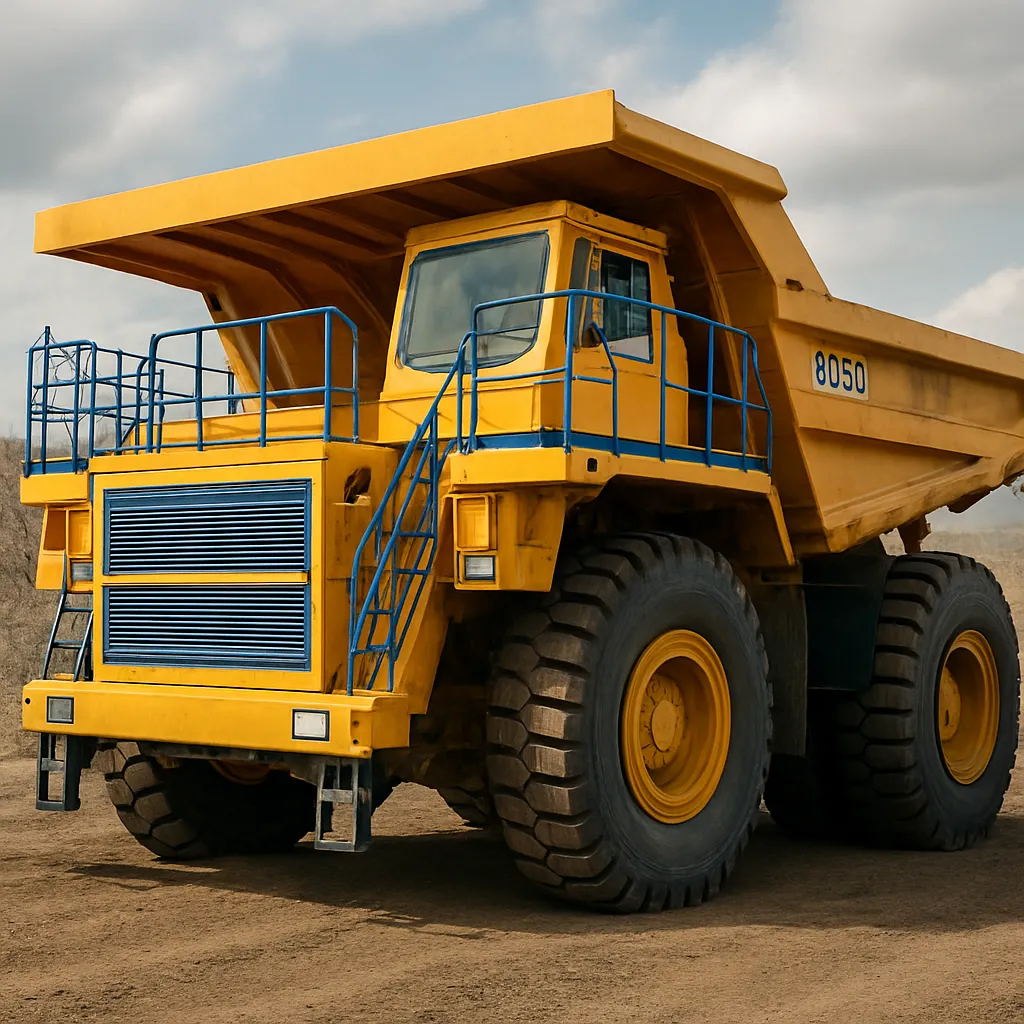
The BelAZ 7530 series represents a family of heavy-duty off‑road haul trucks produced by the Belarusian manufacturer BelAZ. Designed primarily for open‑pit mining and large earth‑moving projects, these machines combine a robust frame, high payload capability and components tailored for harsh environments. This article explores the origins, technical characteristics, typical applications, operational considerations and broader impacts of the BelAZ 7530 trucks, offering both practical insights and contextual data where available.
Overview and development
The BelAZ enterprise, based in Zhodino, Belarus, has a long history of producing mining and construction vehicles. The BelAZ 7530 family sits in the manufacturer’s lineup as a series of large-capacity haul trucks intended for medium-to-large open‑pit mines and heavy construction sites. Over successive upgrades, the 7530 platform has been adapted with multiple powertrain, body and suspension configurations to meet different site requirements.
Key development drivers for the 7530 series were durability in harsh climates, simplified maintenance for remote operations and competitive life‑cycle costs. The platform’s modular approach allowed mine operators to select between diesel mechanical, diesel‑electric and sometimes hybrid powertrain solutions as technology and customer demand evolved. BelAZ has positioned the 7530 series as a versatile option between smaller 70–100 tonne trucks and ultra‑class machines that exceed 300 tonnes of payload.
Technical characteristics and typical specifications
Specifications for the BelAZ 7530 series vary by variant, customer configuration and optional equipment. Below are typical ranges and representative details that characterize the family:
- Payload capacity: commonly ranges from approximately 90 to 220 tonnes depending on configuration and body size. Mid-range 7530 variants frequently appear in the 120–180 tonne class.
- Engine power: depending on the choice of prime mover, engines typically provide output in an approximate range of 900 to 2,000 kW (roughly 1,200–2,700 hp). Diesel and diesel‑electric drives are most common.
- Gross vehicle weight: combined empty weight and payload place gross vehicle weights commonly between 150 and 450 tonnes.
- Dimensions: length typically ranges from ~10 to 13 meters, width from ~5 to 8 meters and height from ~4 to 6 meters; dimensions depend on body design and wheel/tyre setup.
- Top speed: unloaded speeds can exceed 50 km/h on level haul roads; loaded speeds are typically limited to maintain safety and reduce brake and drivetrain wear, often in the 30–40 km/h range.
- Fuel consumption: highly variable with load and driving cycle; indicative fuel burn can range from several hundred liters per hour under heavy load to lower values during lighter duty. Sites typically model fuel consumption in terms of liters per tonne‑kilometer for cost planning.
- Tyres and suspension: the 7530 series uses large off‑road tyres and heavy‑duty suspension; tyre choices (radial vs bias, size and compound) are selected to balance payload, ride comfort and life‑cycle cost.
Variants and customization
BelAZ supplies the 7530 family with multiple customization options. Customers can choose truck bodies (steel grades and wear packages), cab layouts (single or double, climate control for extreme temperatures), telematics suites, and enhanced safety systems such as automatic braking and collision avoidance sensors. Optional powertrain variants may include diesel engines from different suppliers, diesel‑electric drivetrains with AC traction motors, and auxiliary power units for electrical loads.
Primary applications and operating environments
The BelAZ 7530 is engineered primarily for open‑pit mining, quarrying and large civil engineering projects. Typical applications include:
- Loading and hauling overburden and ore from benches to crushers and waste dumps.
- Support of large‑scale infrastructure projects where bulk earth movement is required (dams, road construction and land reclamation).
- Use in challenging climates, including extreme cold and high dust environments, where machine robustness and maintainability are critical.
Operating environments are often remote, with long haul roads, steep grades and abrasive materials. This places premium demands on chassis strength, drivetrain cooling, brake systems and tyre life. BelAZ designed the 7530 range with these constraints in mind, offering reinforced structures, improved filtration and modular systems for field servicing.
Performance, efficiency and maintenance
Performance of the 7530 series is assessed through cycle productivity (tonnes per hour moved), fuel efficiency, uptime and maintainability. Mines measure productivity not only by payload per truck but by cycle time — the time to load, haul, dump and return. The 7530 trucks aim to optimize that balance via powerful engines, responsive drivetrains and ergonomic cabs that reduce operator fatigue.
Uptime and maintenance strategies
In remote mining operations, maintenance strategy is as important as the machine specification. BelAZ and operators typically follow a preventive maintenance regime that includes:
- Scheduled inspections of load-bearing components (axles, frames, suspension linkages).
- Frequent oil and filter changes tailored to site contamination levels.
- Monitoring tyre wear patterns and managing rotational schedules to extend tyre life.
- Using telematics and condition‑based monitoring to detect early signs of component degradation.
Structured maintenance and spare parts provisioning can keep fleet availability high. Typical service intervals for critical components are planned in operating hours, and many operators maintain on-site workshops to handle major repairs quickly.
Safety, ergonomics and operator features
Safety is integral to modern haul truck design. The BelAZ 7530 series includes features aimed at protecting operators and site personnel. Common safety and ergonomic attributes include:
- Reinforced cabs with rollover protection and advanced seat restraint systems.
- Ergonomic controls, adjustable seating and climate control to reduce operator fatigue during long shifts.
- Visibility aids such as rear and side cameras, proximity sensors and high‑intensity lighting for night operations.
- Integrated telematics for remote monitoring of vehicle health and operator behavior to support safe driving practices.
Enhancements like payload monitoring systems and automated overload protection help reduce the risk of structural damage and improve cycle efficiency. Operator training programs and documented safety procedures remain essential complements to vehicle features.
Economic, environmental and lifecycle considerations
Economic decisions for a haul truck fleet center on acquisition cost, operating expense (fuel, tyres, maintenance), and residual value. The BelAZ 7530 is marketed to provide competitive total cost of ownership in many regions due to its robust build and the availability of local service networks in countries where BelAZ trucks are widely used.
Environmentally, large haul trucks have a significant footprint due to fuel consumption and tyre waste. Strategies to reduce impact include:
- Optimizing fleet scheduling to reduce empty runs and idling time.
- Adoption of more efficient powertrains (diesel‑electric hybrids) where available to reduce fuel burn.
- Implementing tyre recycling programs and selecting longer‑life tyre compounds.
- Upgrading filtration and exhaust aftertreatment systems to meet evolving emission standards.
Over a typical lifecycle — often exceeding 10–15 years in heavy mining applications with appropriate maintenance — the ability to refurbish major components (engines, drive systems, and bodywork) is crucial to maintain cost efficiency. BelAZ and aftermarket providers commonly offer reman programs to extend the effective service life of 7530 trucks.
Global deployment and competitive landscape
BelAZ trucks, including the 7530 family, are used worldwide in countries with extensive mining operations. Primary markets historically include Eastern Europe, Central Asia (including Kazakhstan and Russia), parts of Africa, and some projects in Asia and Latin America. The manufacturer maintains export and service relationships to support these operators.
Competition in the large haul truck market comes from global manufacturers such as Caterpillar, Komatsu, Liebherr and Hitachi. The 7530 series competes on a mix of payload options, price, local service availability and customization flexibility. For mines prioritizing regional serviceability and specific cost structures, BelAZ can be an attractive choice.
Operational case examples
- Large open‑pit copper and coal mines commonly deploy 7530 trucks in fleets of tens to hundreds, depending on production scale.
- Construction projects that feature bulk earthworks for dams and highways have used 7530s for high‑volume haulage where off‑road stability is required.
- Reclamation and mining waste management sites utilize these trucks for transporting overburden to permanent dumps.
Key strengths and known limitations
Strengths of the BelAZ 7530 include:
- Robust construction suited to abrasive and dusty conditions.
- Flexible configuration options for powertrain and bodywork.
- Competitive total cost of ownership for many operators.
- Strong load‑carrying capability aligned with medium‑to‑large haul cycles.
Limitations to consider:
- Availability of authorised service and parts may be regionally constrained compared to global incumbents in certain markets.
- Fuel consumption and emissions are significant considerations; some sites require retrofits or upgraded exhaust controls to meet local standards.
- Large initial footprint and infrastructure requirements (haul road geometry, pit design) are necessary to maximize efficiency and safety.
Maintenance best practices and operational tips
For operators planning to deploy or manage 7530 series trucks, the following practices improve longevity and reduce costs:
- Establish a condition‑based maintenance program using telematics to monitor key parameters (engine hours, coolant temps, oil analysis and tyre pressures).
- Train operator crews on best practices for loading, braking on grades and speed management to reduce mechanical stress and tyre wear.
- Maintain a well‑stocked parts inventory for high‑wear items (brake components, tyres, filters) to minimize downtime.
- Conduct periodic structural inspections for frame cracks or fatigue, particularly in high‑impact loading or aggressive hauling routes.
When properly managed, these trucks deliver predictable performance and long service life in demanding operations.
Conclusion
The BelAZ 7530 series occupies a vital niche in the world of heavy haul trucks: offering robust, configurable and cost‑competitive solutions for medium‑to‑large open‑pit operations. While exact technical specifications vary across models and customer options, the 7530 family is characterized by substantial payload capability, durable construction and a focus on maintainability in remote or harsh operating environments. For mining operators, the choice to deploy 7530 trucks is balanced between upfront acquisition, lifecycle operating costs and the availability of local support. With careful maintenance planning and attention to haul road and cycle optimization, fleets based on the BelAZ 7530 can deliver high productivity and reasonable lifecycle economics.


)
)