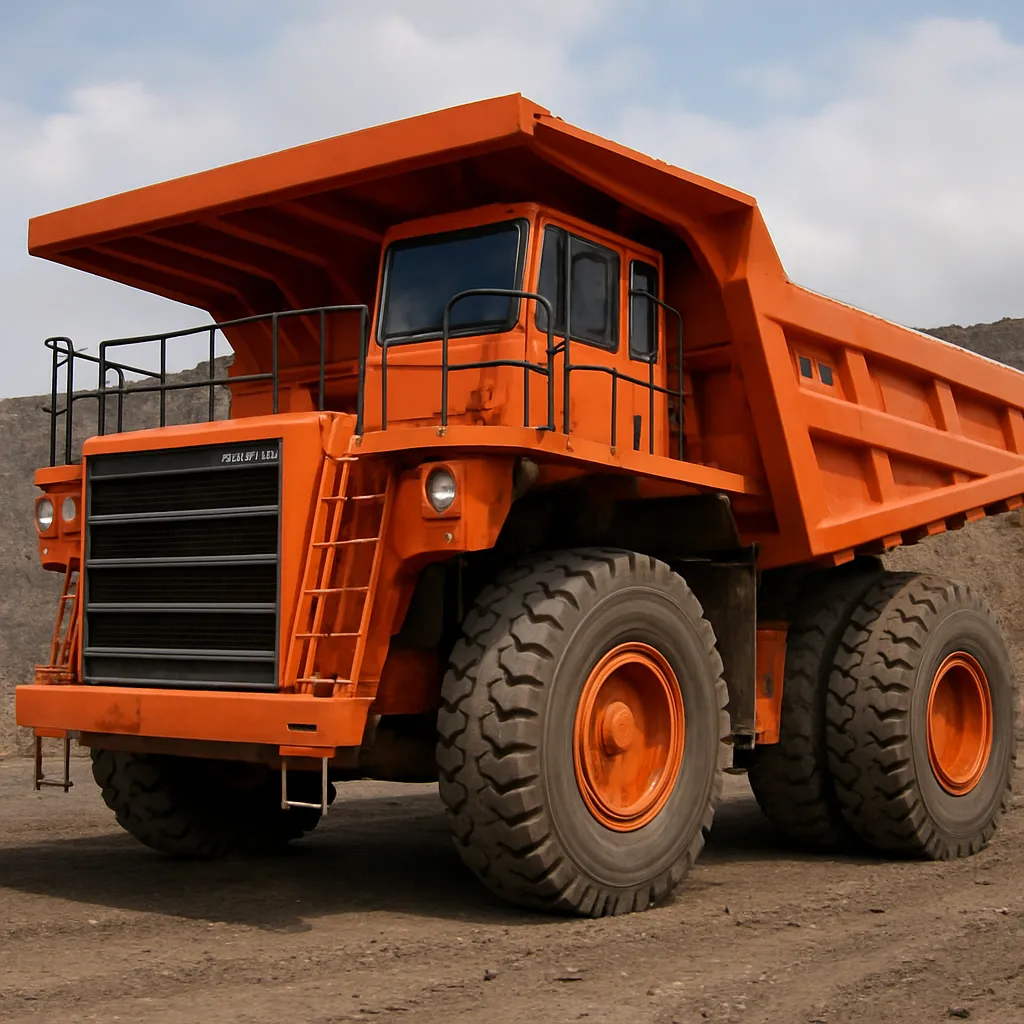
The Hitachi EH1700 is a heavy-duty rigid-frame haul truck commonly found in large-scale open-pit mines and major earthmoving projects worldwide. Designed to move massive volumes of overburden and ore efficiently, the EH1700 combines robust construction with operator-focused features and integrated fleet management options. In the following sections we explore the machine’s design, typical applications, technical characteristics, operational considerations, and the economic and environmental context that surround its use. Wherever helpful, typical figures and ranges are given; exact specifications may vary by model year, optional equipment and regional configuration.
Design and core technical characteristics
The EH1700 belongs to the class of heavy haul trucks whose primary purpose is to carry large payloads over short to medium distances inside mining sites. Its design emphasizes structural strength, serviceability, and stable performance in harsh conditions.
Basic configuration
- Rigid-frame chassis optimized for high torsional strength and long service life.
- Conventional rear-dump body with a heavy-duty box frame and abrasion-resistant liners available as an option.
- High-capacity axles and wheel-end assemblies built to withstand frequent heavy-load cycles.
Powertrain and performance
The EH1700 typically uses a high-output diesel engine mated to either a mechanical transmission or an electric/diesel-electric drivetrain depending on the variant and model year. While precise engine outputs vary, haul trucks in the 150–200 tonne payload class generally employ engines in the range of several hundred to over a thousand kilowatts, delivering the torque necessary to move fully loaded bodies up steep ramps and through variable ground conditions. Typical on-site top speeds are higher when unloaded and reduced when fully loaded for safety and drivetrain longevity.
- Payload: approximately 160–180 metric tonnes (model-dependent).
- Operating weight: varies widely, often several hundred tonnes when loaded.
- Top speed: typically up to 50–60 km/h unloaded; reduced under load for safety.
- Braking systems usually include service brakes, retarders, and multi-element cooling systems to maintain performance under heavy duty cycles.
Operator environment and controls
Hitachi emphasizes operator comfort and productivity. The cab is designed with ergonomic controls, adjustable seating, climate control and noise suppression. Modern EH1700 units often include digital displays for machine diagnostics, payload monitoring, and camera systems to increase visibility around the vehicle. Safety systems like ROPS/FOPS-certified cabs, seatbelt interlocks, and operator presence detection are standard features in most mining spec configurations.
Typical applications and working environments
The EH1700 is engineered for environments that demand the reliable movement of very large material volumes. Its main uses include:
- Open-pit mining — transporting ore and waste rock between blast sites, crushers and stockpiles.
- Quarry operations — hauling large quantities of stone and aggregate.
- Major civil engineering and earthworks — bulk excavation and transport in dam and infrastructure projects.
- Logistics within large industrial sites where high payload capacity shortens cycle times and reduces unit transport costs.
Work cycles in such settings generally consist of repeated short hauls up and down haul roads, loading by large shovels or loaders, and dumping into crushers, feeders or stockpiles. The EH1700 excels where high uptime, simple integration with loading equipment and predictable cycle times directly improve project productivity.
Operation, maintenance and safety
Operational best practices
- Route management: maintaining well-graded haul roads reduces wear and fuel use and extends tire life.
- Coordinated loading to match shovel bucket size to truck bed capacity optimizes cycle efficiency and reduces overloading risks.
- Operator training in fuel-efficient shifting, appropriate use of retarders and controlled acceleration reduces operating costs and mechanical stress.
Maintenance approach
Maintenance for a machine like the EH1700 focuses on maximizing availability and controlling operating costs. Typical strategies include:
- Preventive maintenance intervals for engine, transmission and hydraulic systems based on operating hours and load cycles.
- Predictive condition monitoring using oil sampling, vibration analysis and thermal imaging to detect developing issues before they become failures.
- Scheduled replacement of high-wear items (brake elements, tires, suspension bushings) and quick access service points to minimize downtime.
Many operators pair the EH1700 with fleet telemetry systems that transmit machine health and productivity metrics in real time. This enables centralized scheduling of maintenance windows, parts provisioning and targeted troubleshooting.
Safety systems and workplace integration
Large haul trucks operate in close proximity to other machines and personnel. The EH1700 is typically fitted with a range of safety technology:
- High-visibility mirrors, cameras and proximity detection systems.
- Collision avoidance and automatic speed-limiting features tied to geofencing when integrated with site management systems.
- Comprehensive lighting packages for night operation and adverse weather.
Enforcement of site procedures and the use of integrated safety systems significantly reduce the risk of incidents and improve overall fleet throughput.
Economic and productivity considerations
Choosing a machine like the EH1700 is a capital-intensive decision that hinges on matching truck capability to mine requirements. Economic considerations include acquisition cost, lifecycle operating cost, payload efficiency and resale value.
Productivity metrics
- Payload efficiency: moving more tonnes per truck means fewer trucks are needed for a given production target, reducing labor and non-productive equipment costs.
- Cycle time: minimizing loading and haul times through matching shovel size and optimizing road design improves fleet productivity.
- Availability: uptime, measured as the proportion of scheduled hours the machine is ready to operate, directly impacts project schedules and unit costs.
Total cost of ownership
TCO for haul trucks includes fuel, tires, maintenance, parts, operator wages and financing. Fuel is often the largest variable cost. Measures that improve fuel economy—engine tuning, operator training, intelligent cruise and idle management—have rapid payback in high-hour mining operations. Tire costs are also significant; optimizing payload to avoid overloading and using tires matched to operational severity extend tire life.
Environmental impact and trends
Large haul trucks are energy-intensive and contribute to a mining operation’s carbon footprint. The industry focus on sustainability has driven several trends relevant to the EH1700 class:
- Emission standards: modern engines meet increasingly stringent local and international emissions standards (e.g., Tier or Stage regulations), reducing NOx and particulate emissions.
- Fuel efficiency measures: drivetrain improvements, optimized vehicle mass and smarter operations (reduced idling, route optimization) lower fuel consumption.
- Electrification and hybridization: while full battery-electric haul trucks are more common in smaller classes or fixed-site applications, hybrid and trolley-assist systems are growing in larger fleets. Integration with electric-drive systems can offer significant reductions in greenhouse gas emissions, especially where electricity can be sourced from low-carbon generation.
Operators often balance performance, cost and emissions by selecting engine options, exhaust aftertreatment systems and incorporating site-level measures such as electrified shovels or renewable-energy-backed power plants.
Fleet integration and digitalization
One of the most significant advances in modern mining is the integration of heavy equipment into digital fleet management systems. The EH1700 is commonly outfitted with telematics and can be integrated into broader mine-control platforms.
- Telematics: real-time tracking of position, fuel burn, payload, and fault codes helps fleet managers allocate trucks to tasks and predict maintenance needs.
- Payload monitoring systems record loaded mass per cycle, enabling accurate productivity reporting and preventing overloading.
- Autonomy: while full autonomy is most common in newer fleets and specific models, retrofit automation solutions and semi-autonomous features (e.g., assisted braking, automated retarder control) are increasingly applied to conventional trucks.
Comparisons and alternatives
In the 150–200 tonne payload class, the EH1700 competes with models from other major manufacturers. Key selection criteria typically include:
- Payload capacity and matched shovel compatibility.
- Fuel efficiency under local operating conditions.
- After-sales support network and availability of parts and qualified service technicians.
- Resale value and the potential to upgrade drivetrains or safety systems.
Some operators choose slightly larger or smaller classes to better match loading equipment and haul distances, but the 170-tonne class represented by the EH1700 often strikes a balance between unit cost and tonnage moved per cycle.
Practical case notes and operational lessons
From field experience across many mining operations, a few recurring lessons stand out for machines like the EH1700:
- Matching loading equipment to truck capacity is essential. Undersized shovels increase cycle time and reduce machine productivity while consistently overfilling a truck reduces tire life and increases maintenance.
- Road maintenance matters: Haul road design, drainage and regular grading reduce fuel consumption and structural stress on the truck.
- Operator training and retention yield measurable gains in both safety and fuel economy. Experienced operators reduce harsh maneuvering, avoid unnecessary idling and execute safer dump cycles.
- Proactive parts management: having a local stock of critical spares saves days of downtime and can be a deciding factor when selecting truck brands for remote projects.
Summary
The Hitachi EH1700 serves as a workhorse for heavy mining and large-scale earthmoving, offering robust construction, a productive payload envelope, and modern operator amenities and fleet integration options. Its value to an operation depends on correct matching to loading equipment, disciplined maintenance and the effective use of digital tools to monitor health and productivity. As the mining industry evolves, trends toward greater efficiency, lower emissions and higher automation are likely to shape the future iterations and fleet roles of machines in this class.
Key terms emphasized: payload, powertrain, efficiency, reliability, durability, operator comfort, telemetry, safety, maintenance, productivity.


)
)