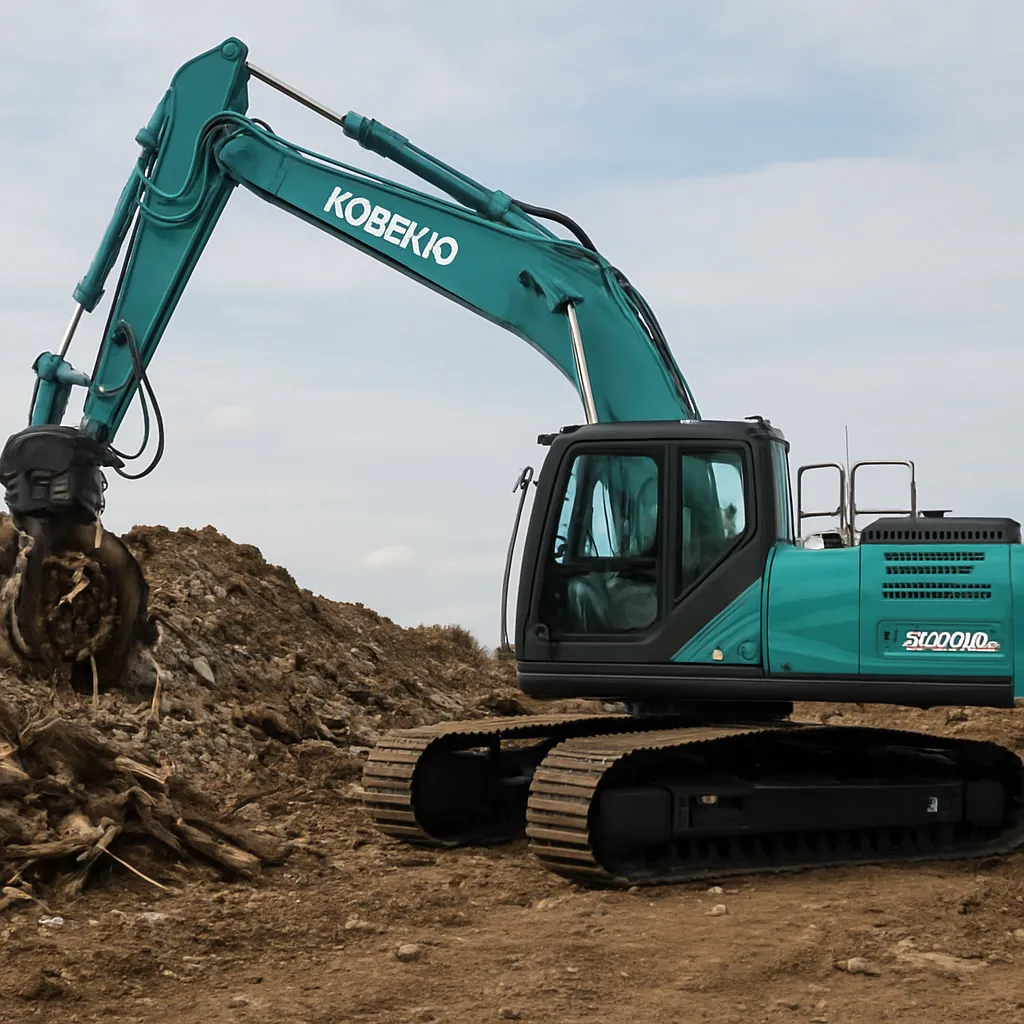
The Kobelco SK210D material handler is a versatile machine designed to bridge the gap between traditional excavators and purpose-built material handling equipment. Combining proven hydraulic technology with specialized superstructures, booms, and attachments, the SK210D in a material-handler configuration is widely used for scrap processing, recycling, timber handling, port operations, and demolition tasks. This article examines the machine’s design, typical specifications, practical applications, operational performance, safety features, and maintenance aspects to give a complete picture of why the SK210D material handler remains a valuable asset for many industries.
Overview and background
Kobelco, a manufacturer with a long heritage in hydraulic excavators, has produced a number of models adaptable to material handling. The SK210D began life as a mid-size excavator platform that proved robust and adaptable enough to be converted into a specialized material-handler variant. In material-handling guise, the SK210D typically features an elevated cab, extended or purpose-designed boom and stick, reinforced undercarriage or outriggers, and a range of attachments such as grapples, thumbs, demolition shears, and magnets.
The appeal of the SK210D material handler lies in its balance between size and capability. It is large enough to handle demanding loads at moderate reach, yet compact and agile enough to operate in congested yards, scrap yards, and urban demolition sites. Operators benefit from a machine that offers both the hydraulic power needed to move heavy loads and the precision required for sorting and placement tasks.
Design features and structural adaptations
Superstructure and cab
Material-handler conversions of the SK210D typically include a raised or rotated cab to improve visibility over piles of material and to place the operator above potential hazards. The cab is often equipped with reinforced glazing, air-conditioning, specialized seating, and extended glazing for 360-degree visibility. Many operators opt for additional cameras and monitoring systems to further increase situational awareness.
Boom, stick, and attachments
The basic SK210D boom and stick are replaced or reinforced for material-handling work. Options can include a mono-boom with a long stick for extended reach, offset joints for improved side reach, or multi-piece booms to maximize flexibility. Attachments commonly fitted include:
- Hydraulic grapples for scrap and bulk handling
- Magnet attachments for ferrous metal recovery
- Low-profile grapples for timber and pallet work
- Shears and pulverizers for selective demolition
- Sorting claws and orange-peel buckets for recycling facilities
Undercarriage and stabilization
Material handlers often require a stable base to resist tipping during heavy lifts at reach. The SK210D conversions may include wider track gauges, additional counterweight, or hydraulic outriggers/stabilizers that can be deployed when stationary. These adaptations trade some mobility for greatly improved lifting stability and safety during handling operations.
Typical specifications (approximate and configuration-dependent)
Specifications for the SK210D material handler vary with conversion packages, regional variants, and equipment choices. The values below are representative ranges and should be verified with the OEM or local dealer for a given unit.
- Operating weight: approximately 20,000–24,000 kg (varies with counterweights and attachments)
- Engine power: roughly 110–130 kW (150–175 hp), depending on local engine tuning and emissions standards
- Hydraulic system pressure: high-flow systems often rated in the 300–350 bar range for heavy attachments
- Maximum reach (material handler boom): commonly 8–12 meters, with specialized long-boom options extending beyond 12 m
- Lifting capacity at mid-reach: typical rated lifts might range from 2–6 tonnes depending on boom, counterweight, and stabilizers
- Bucket/grapple capacity: for grapples and orange-peel attachments, 0.6–1.8 m3 is common
- Fuel tank: around 300–380 liters, depending on configuration
- Track width: variable; standard crawler base with widened options for stability
These figures illustrate that the SK210D material handler serves as a mid-sized, powerful machine with sufficient reach and lift for many industrial applications. Exact numbers change considerably with attachment choice, whether the machine retains tracks or is adapted with mobile bases for port or rail operations, and whether it is fitted with optional counterweights.
Primary applications and industry use cases
The SK210D material handler excels in environments where heavy, irregular loads must be lifted, sorted, or moved with precision. Common sectors and tasks include:
- Scrap yards and metal recycling: Sorting mixed metal piles, feeding shredders, and loading trucks. Magnetic attachments paired with hydraulic grapples provide rapid separation and loading.
- Demolition and selective dismantling: Controlled removal of structural elements using shears and pulverizers; the elevated cab helps reduce operator exposure to debris.
- Timber yards and forestry operations: Handling logs, pallets, and bundled timber with dedicated grapples or thumbs.
- Ports and intermodal yards: Moving bulk cargo, scrap, and breakbulk goods from ship to shore or to storage areas. The machine’s moderate footprint allows operation where larger material handlers would be impractical.
- Waste management and transfer stations: Sorting residual waste, handling bulky items, and loading compactors or transport vehicles.
- Construction and urban sites: Site clearance, material sorting, and selective demolition where maneuverability and precision are critical.
Operational performance and productivity
Several factors influence the SK210D’s on-site productivity: hydraulic efficiency, operator skill, attachment choice, and site layout. Material-handler-specific hydraulic circuits often include additional flow capacity and responsive control valves to provide smooth grapple movements and fast cycle times, both crucial for throughput.
Productivity is enhanced by:
- High-flow hydraulics for instant attachment response
- Proportional controls that let operators modulate speed and force precisely
- Quick-coupler systems for fast attachment changes
- Telematics and performance monitoring to optimize cycles and fuel consumption
When used in recycling and scrap applications, a skilled SK210D operator with the right grapple and magnet can move several hundred tons per 8-hour shift, depending on material density and logistics. In demolition applications, production rates are more variable but the machine’s precision reduces secondary sorting and rework, often improving overall project timelines.
Fuel efficiency and emissions
Modern variants of the SK210D platform are equipped with engines that meet regional emissions regulations, such as Tier 4 Final (US) or Stage V (EU), depending on model year and market. Fuel efficiency improvements come from optimized hydraulic pumps, auto-idle and auto-shutdown features, and electronic engine management that matches power output to load.
Key points regarding fuel and emissions:
- Idle-reduction systems and eco-modes can reduce consumption during non-productive periods.
- Regenerative hydraulic circuits on some material handlers recover energy during boom lowering, lowering overall fuel use.
- With proper operator training and machine tuning, fuel consumption in material handling applications can be reduced by 10–20% compared with unoptimized operation.
Safety features and operator ergonomics
Safety is a central concern in material handling due to the elevated positions of loads and the irregular nature of materials handled. The SK210D material handler tends to include a number of safety-focused adaptations:
- Reinforced cabs with laminated glass, FOPS/ROPS certification, and additional screens to protect against flying debris
- Visibility aids such as rear and side cameras, mirrors, and 360-degree awareness systems
- Load-moment indicators and stability assistants that warn operators when reaching safe lifting envelopes
- Hydraulic safety locks and emergency shutoffs for attachment failures
- Operator-assist features including proportional joystick controls and adjustable seats to reduce fatigue
Ergonomically designed cabs reduce operator strain during long shifts and improve control precision, which in turn reduces accidental impacts and improves material placement accuracy.
Maintenance, lifecycle, and total cost of ownership
A machine’s lifecycle cost is often a more important metric than purchase price. The SK210D material handler is valued for components that are familiar to service personnel and for a modular design that simplifies parts replacement.
- Planned maintenance: Regular lubrication of bearings on booms and grapples, hydraulic oil and filter changes, and track/undercarriage inspections form the backbone of reliable operation.
- Wear components: Grapple tines, shear blades, and grapple cylinders are consumables; stocking common replacement parts reduces downtime.
- Telematics: Many units come with remote monitoring to track hours, fluid health, and error codes, which supports predictive maintenance and lowers unscheduled downtime.
- Resale value: Well-maintained SK210D handlers retain value due to robust construction and a steady market demand in recycling and demolition sectors.
Operators and fleet managers should expect routine service intervals measured in hundreds of hours for oil changes and specific checks at 500, 1,000, and 2,000 hour points, with major overhauls typically after several thousand hours depending on use intensity.
Market context and comparative considerations
The market for material handlers includes purpose-built platforms from manufacturers that specialize in scrap and port equipment as well as conversions of conventional excavators. The SK210D occupies a niche where buyers want the reliability of a mainstream excavator combined with the adaptations required for handling tasks.
When comparing the SK210D material handler to competitors, consider:
- Attachment ecosystem: Availability of specialized grapples, magnets, and shears from OEM or aftermarket suppliers
- Service network: Local dealer support for parts and warranty work
- Conversion quality: Factory or certified conversion packages generally offer better integration than ad-hoc modifications
- Operational footprint: Whether the jobsite requires a compact footprint or a higher-capacity, larger-handler alternative
In many regions, the SK210D’s combination of size, power, and flexible configuration positions it as an economical choice compared with larger purpose-built handlers that carry higher acquisition and operational costs.
Case studies and real-world examples
Examples of how the SK210D material handler is used in practice illustrate its strengths:
- Scrap recycling yard in Northern Europe: An SK210D with a 10 m boom and magnetic separator processed mixed ferrous scrap, increasing loading throughput by 30% after replacing an older, less agile machine. Improved operator visibility and control reduced damage to downstream conveyor systems.
- Urban demolition project: In a constrained site, an SK210D material handler equipped with shears selectively dismantled structural elements over several weeks, minimizing noise, dust, and collateral damage compared with larger demolition rigs.
- Port operations: A mid-size terminal used an SK210D to handle breakbulk and scrap loads. The machine’s moderate weight allowed it to operate on pier surfaces without the need for costly reinforcement works required by heavier handlers.
Choosing the right configuration
Selecting an SK210D material handler requires a clear understanding of application demands. Key decision points include:
- Required reach and lifting envelope: Longer booms increase reach but reduce lifting capacity at the tip; evaluate typical load weights and placement distances.
- Attachment types: Match hydraulic flow and pressure options to the demands of grapples, magnets, or shears.
- Mobility vs. stability: If frequent repositioning is necessary, retain a crawler undercarriage; if mostly fixed-station lifting is needed, consider outriggers and a dedicated pedestal base.
- Environmental and emissions requirements: Confirm engine compliance with local regulations to avoid retrofit costs.
Conclusions and outlook
The Kobelco SK210D material handler represents a pragmatic blend of excavator reliability and material-handling specialization. Its adaptability through varied booms, attachments, and stabilization options makes it suitable for scrap yards, recycling centers, ports, demolition, and timber handling. While precise specifications vary by conversion and market, the platform’s mid-size class provides a compelling balance of reach, lift, and agility that often yields strong productivity and reasonable total cost of ownership.
Advances in telematics, hydraulic efficiency, and emissions controls will likely continue to improve the SK210D platform family, while specialized conversion providers and OEM-certified packages will keep expanding the machine’s applicability. For operators seeking a machine that can handle heavy, awkward loads with precision in relatively confined spaces, the SK210D material handler remains a solid choice.
Note: The numerical specifications in this article are approximate and depend on configuration, regional model variations, and aftermarket conversions. For precise data and detailed lifting charts, consult the manufacturer’s datasheets or an authorized Kobelco dealer.


)
)