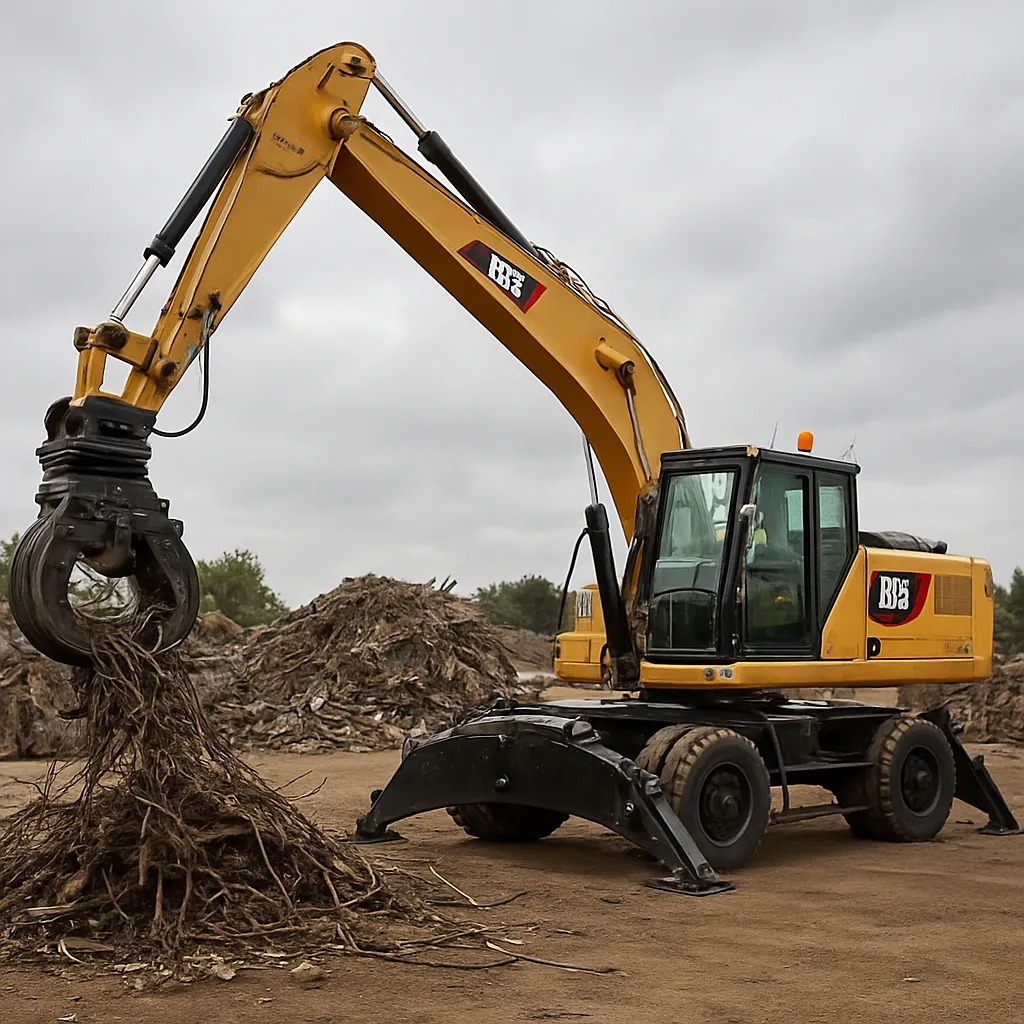
The CAT MH3026 is a versatile heavy-duty machine designed for handling large volumes of bulk materials in demanding environments. Built on proven Caterpillar engineering principles, this class of machine is optimized for tasks where lifting, sorting and moving heavy loads quickly and safely are essential. In this article we will explore the machine’s design and capabilities, common applications, key attachments and features that affect productivity, as well as maintenance and operational considerations. Where exact manufacturer numbers are not universally published, typical ranges and practical statistics for this class of material handlers are provided.
Design and core features
The CAT MH3026 combines a robust undercarriage and upper structure with a purpose-built boom and stick to deliver the long reaches and lifting capacities required by ports, scrap yards and recycling facilities. At the heart of the machine’s performance is a carefully engineered hydraulic system that supplies smooth, high-flow power to attachments while allowing precise control for delicate sorting operations.
Key design elements include a reinforced boom geometry optimized for lift capacity and stability, an exchangeable attachment mounting interface, and a cab or raised house that provides exceptional visibility over the work area. Caterpillar often integrates electronic control systems and telematics to enhance operational efficiency and remote monitoring.
- CAT MH3026 typically features a 360-degree rotating upper structure to work efficiently in confined yards.
- The machine’s structural components are designed to withstand continuous cyclic loading found in scrap and recycling operations.
- Modular attachment couplers allow rapid change between clamshell buckets, grapples and magnets to adapt to different tasks.
Hydraulics, powertrain and controls
A high-capacity hydraulic system is one of the most important performance drivers for a material handler. The MH3026 class machines generally use load-sensing or electronically controlled hydraulics that deliver strong lifting and simultaneous-function performance while minimizing energy loss. The powertrain is commonly based on a reliable diesel engine that meets current emissions standards for the markets where it is sold, coupled to pumps and valves sized to match the expected attachment load.
Modern operator controls include proportional joysticks, adjustable foot pedals and multiple preset modes for power and economy. Advanced variants may offer selectable work profiles (for example, heavy-lift, high-reach and transport modes) that adjust software parameters to balance performance and fuel efficiency.
Applications and industry uses
The primary role of the MH3026 is to move, load and sort bulk materials. Its adaptability makes it valuable across several industries:
- Scrap yards and metal recycling — sorting, loading shredders and feeding shears
- Ports and terminals — handling bulk cargo, breakbulk, and container loading/unloading when fitted with specific attachments
- Timber yards — handling logs, loading trucks and stacking timber with specialized grapples
- Waste and transfer stations — moving municipal solid waste, bulky items and organizing loads for transfer
- Demolition sites — selective demolition and sorting, often combined with demolition-specific attachments
In scrap handling, for instance, the ability to rapidly swap from a multi-tine grapple to an electromagnet makes the MH3026 extremely useful. The electromagnet handles ferrous scrap quickly and cleanly, whereas the grapple excels at irregular-shaped or mixed materials. The machine’s reach allows it to load high-sided trailer bodies and feed shredders from staging piles without repositioning.
Typical tasks and productivity examples
Operational productivity is highly dependent on attachment choice, operator skill and site logistics. Example use-cases:
- Loading scrap into a shredder: an experienced operator using an optimized grapple can load material at a rate of several tens of tonnes per hour, depending on material density and flow.
- Port bulk handling: when equipped with a clamshell bucket, cycle times and bucket sizes determine throughput; medium-class machines can move hundreds of tonnes per shift under favorable conditions.
- Demolition sorting: precision picking of reusable materials can reduce landfill disposal and increase recovered material value.
Attachments, cab features and safety
One of the strongest advantages of a material handler like the MH3026 is its wide ecosystem of attachments and operator-focused features. Caterpillar and third-party suppliers offer specialized tools that convert the base machine into a very task-specific asset.
- Grapple options — orange-peel grapples for scrap, multi-tine sorting grapples for bulky waste, and log grapples for forestry applications.
- Electromagnets — for rapid pickup and release of ferrous metals in recycling and port operations.
- Clamshell buckets — ideal for bulk materials and clean loading into hoppers or trucks.
- Demolition shears and hydraulic breakers — for controlled dismantling and secondary concrete processing.
- Quick couplers — reduce downtime by enabling faster attachment swaps.
Operator ergonomics and safety are essential in heavy-material environments. Typical cab features include climate control, vibration-damped seats, and panoramic glazing to maximize visibility over piles and equipment. Safety technologies often include:
- Rear and side cameras, sometimes combined with proximity sensors.
- ROPS/FOPS certified cabs and optional reinforced guarding for high-risk scrap handling.
- Automatic swing lock or boom alarms to protect ground personnel.
- Telematics integration for remote alerts and geofencing.
Operators benefit from modern assistive features such as load moment indicators, on-screen diagnostics, and programmable limiters that reduce the risk of overloading and increase site safety. Emphasizing safe operation can significantly reduce downtime from incidents and repair needs, improving overall productivity.
Maintenance, lifecycle costs and environmental considerations
Lifetime operating costs determine the real value of a material handler much more than initial purchase price. The MH3026 and similar machines are designed for long service intervals, but effective preventive maintenance is critical.
- Regular hydraulic oil and filter changes maintain pump and cylinder life; contaminants drastically shorten component life.
- Greasing pivot points and checking pins and bushings reduces unplanned wear.
- Monitoring engine air filters and cooling systems prevents overheating under heavy duty cycles.
- Telematics systems (e.g., Cat Product Link) enable condition-based maintenance by transmitting hours, fuel use and fault codes.
From an environmental standpoint, newer material handlers are engineered to meet stricter emissions standards (such as Stage V in Europe or Tier 4 Final in North America) via selective catalytic reduction (SCR), diesel particulate filters or other aftertreatment. These systems reduce NOx and particulate emissions significantly, which is particularly important in urban ports and transfer facilities.
Fuel consumption varies with duty cycle, attachment type and operator behavior. Typical fuel-use indicators for mid-size material handlers in heavy-duty operations might range from tens to hundreds of liters per day; precise fuel data should be gathered via on-board telematics for accurate fleet-level planning. Investments in operator training and machine modes that favor economy can reduce fuel costs and emissions.
Market position and statistical insights
Specific global sales figures for the CAT MH3026 are not always publicly disclosed at a model level, but some general observations apply to the material handler market:
- The material handling equipment segment has seen steady growth driven by increased recycling, infrastructure work and port expansions worldwide.
- Caterpillar occupies a strong portion of the heavy equipment market due to its dealer network, parts availability and broad attachment portfolio.
- Lifecycle costs and uptime are major purchasing criteria; machines offering strong telematics and service support tend to retain higher residual values.
If you consider typical performance metrics for machines in this size and capacity bracket, useful benchmark figures include operating hours, utilization rates and availability:
- Average annual utilization for heavy material handlers often falls between 1,200 and 2,400 hours per year, depending on the operation (higher in 24/7 port operations, lower in seasonal recycling yards).
- Planned availability targets for professional fleets commonly aim for 90% or higher, with maintenance windows scheduled to minimize impact on throughput.
- Replacement intervals for major components (hydraulic pumps, swing drives) typically span several thousand hours—actual timelines depend heavily on working conditions and maintenance discipline.
Resale values for well-maintained machines with telematics history and documented service tend to be robust. In many markets, a used, well-serviced material handler can retain a considerable portion of its initial value because of the high demand for reliable sorting and loading equipment.
Operational tips and best practices
To get the best performance from an MH3026-class material handler, operators and fleet managers should focus on a few practical areas:
- Match attachments to the job — the right grapple or magnet dramatically improves cycle times and reduces wear.
- Use machine control modes — choose power or economy settings depending on the task to balance responsiveness and fuel use.
- Implement a telematics-driven maintenance program — monitoring engine hours, fault codes and fuel consumption reduces unplanned downtime.
- Train operators regularly — proficient operators can increase throughput and reduce aggressive maneuvers that cause premature component wear.
- Plan yard layout — minimizing repositioning and optimizing pile access reduces cycle times and fuel burn.
Additional safety steps, such as creating exclusion zones for ground personnel, using spotters during complex lifts and maintaining clear communication protocols, are essential on busy sites.
Conclusion and practical outlook
The CAT MH3026 represents a class of material handlers designed to combine reach, lifting capability and attachment flexibility for demanding industrial applications. When properly specified and maintained, machines in this category deliver strong throughput in recycling, port and demolition roles while offering the adaptability necessary for multi-purpose yards. Key decision factors when selecting and operating such equipment include attachments, operator skill, telematics-enabled maintenance and attention to fuel and emissions best practices. Emphasizing these areas will maximize uptime, lower total cost of ownership and ensure safe, efficient operation in challenging material-handling environments.
Note: Specifications such as fuel consumption, exact engine power, operating weight and precise reach depend on the final machine configuration and regional emissions packages; consult the local Caterpillar dealer or official product literature for model-specific data and certified statistics.


)
)