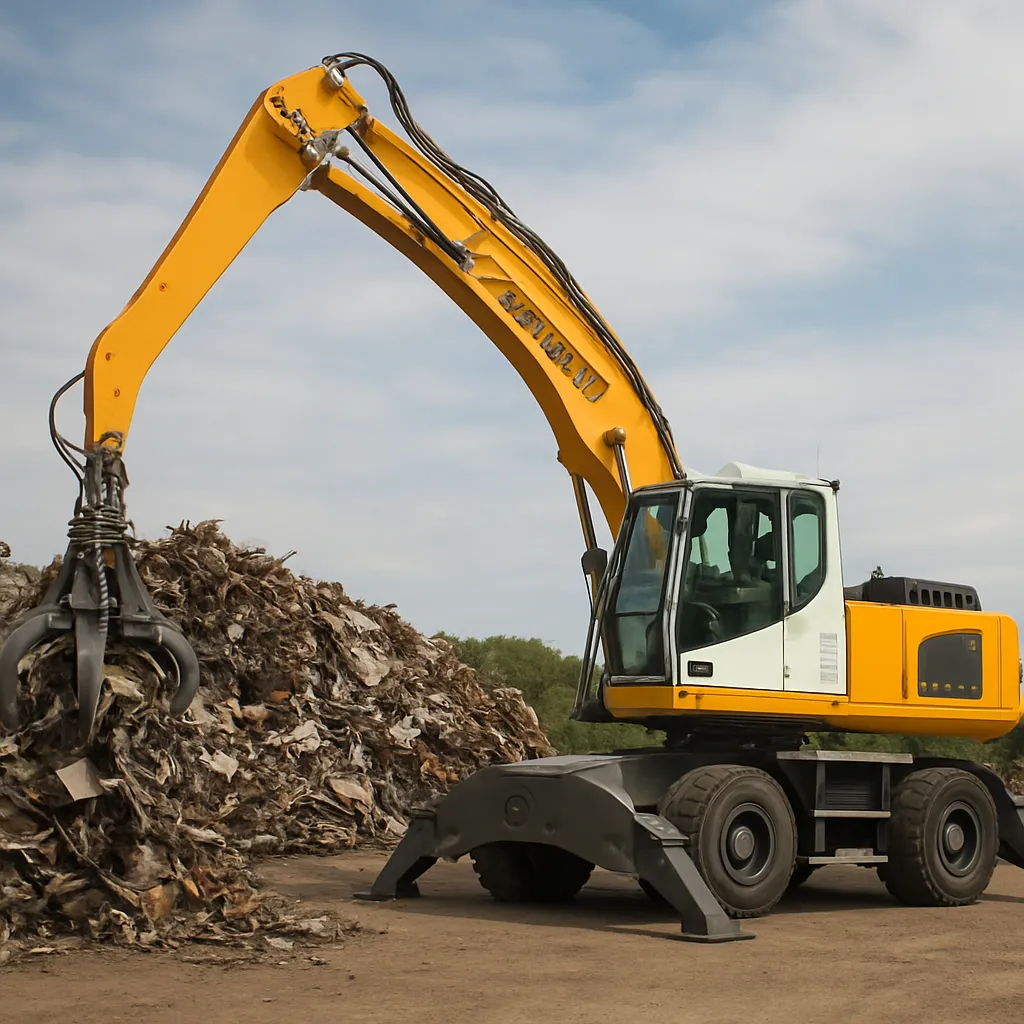
The following article provides an in-depth look at the Liebherr LH 110 material handler, exploring its design, typical applications, technical characteristics, and operational advantages. Designed for bulk handling, recycling, and port work, the LH 110 is part of a family of machines that combine reach, precision, and robustness. This piece covers practical uses, common attachments, operator features, maintenance considerations, and market context. Where exact numbers vary by configuration or regional specification, typical ranges and examples are provided to give a realistic picture of performance and capabilities.
Overview and design philosophy
The Liebherr LH 110 is engineered specifically for handling loose materials and large, irregular loads in industrial environments. Unlike standard excavators, the LH series is optimized for continuous rotation, extended reach and precision control when sorting, loading, or stacking materials. The chassis and undercarriage can be configured to suit jobsite requirements: tracked bases for stability in rough terrain or wheeled/mobile carriers for fast repositioning in ports and yards.
The machine’s design prioritizes visibility, durability and serviceability. The cab is positioned and glazed to give the operator an unobstructed view of the work area, while the structure channels stress away from the boom and stick to ensure long-term reliability in cyclic loading conditions typical of scrap and bulk handling. Modular boom sections and quick-change attachment interfaces allow operators to switch between tools such as grapples, clamshells, and magnets with minimal downtime.
Typical technical characteristics and performance
Technical specifications for the LH 110 differ between model years and customer configurations. The following figures represent typical ranges for machines in this class, which can be used as a guideline when evaluating capacity and performance:
- Operating weight: typically between 16 and 24 tonnes depending on undercarriage, counterweight and attachment fitted.
- Engine power: commonly around 110–150 kW (150–200 hp) in many configurations, though some market versions are tuned to meet local emissions and performance needs. The engine choice balances fuel efficiency with torque for sustained hydraulic performance.
- Maximum reach: reach configurations are offered that commonly extend to 9–12 metres; bespoke boom assemblies can increase reach for stacking or ship-loading duties.
- Lifting capacity: lift performance varies with reach and attachment; at short radii the machine may lift several tonnes, while at maximum reach the safe working loads reduce substantially—typical safe handling capacities might range from 1–8 tonnes depending on geometry and counterweight.
- Hydraulic flow and pressure: high-flow systems designed for continuous operation and precise control. Exact figures depend on pump configuration but favor sustained torque and smooth cycle control rather than brief peak power.
- Attachment volumes: grapples and buckets in the class commonly range from 1.0 m3 to 3.5 m3 for general-purpose handling; orange-peel grapples and scrap grapples are dimensioned for material density and job requirements.
Because the LH 110 is a purpose-built material handler, performance is optimized for continuous load cycles rather than earthmoving. This means robust cooling systems, reinforced hydraulic circuits, and duty-cycle rated components are standard. Special-purpose options such as strengthened undercarriages, enhanced corrosion protection and weatherized cabs are available for marine or aggressive industrial environments.
Primary applications and industry uses
The LH 110 excels where high reliability, reach, and precision are required. Principal applications include:
- Ports: Loading and unloading bulk materials such as coal, aggregates, and scrap metal from ships, barges, and railcars. The machine’s long reach and stable platform make it suitable for ship-to-shore operations and quay-side material handling.
- Recycling: Sorting mixed waste streams, handling scrap metal, and transferring materials to shredders or bunkers. The ability to handle irregular loads and perform repeated pick-and-place cycles makes the LH 110 valuable in recycling yards.
- Scrap yards and metal processors: Efficient in feeding shears, balers and processing lines. Magnetic and hydraulic attachment options enable quick switching between tasks.
- Timber and biomass: Loading and stacking logs, moving wood chips and biomass feedstock for bioenergy plants or pulp mills.
- Bulk material handling at terminals and stockyards: Building stacks, reclaiming bulk product and loading trucks or rail wagons.
- Demolition and construction support: Handling demolition debris and sorting mixed materials — though heavier demolition duties typically use larger models in the LH family.
In every application, the machine’s combination of reach, rotation, and precise hydraulics reduces cycle times and improves ergonomics for operators, leading to measurable gains in site productivity.
Attachments and tool options
One of the LH 110’s strengths is attachment versatility. Commonly used tools include:
- Grapples (orange-peel, demolition or multi-tine) for scrap, timber and bulky goods handling.
- Clamshell buckets for bulk material loading and digging in constrained spaces.
- Electromagnets for ferrous scrap handling and sorting in metal processing facilities.
- Hydraulic thumbs and sorting grabs for precision sorting tasks.
- Specialized rotating rotators and tilt joints to orient loads for accurate placement.
Quick-coupler systems minimize downtime between tool swaps. Attachment sizing is selected to match the material density and desired cycle rate; for example, light-density material like wood chips can be handled in larger buckets, while dense scrap requires smaller, more robust grapples.
Operator comfort, controls and safety
Operator performance is central to the LH 110 concept. Cab ergonomics are tailored to long shifts and precision work:
- Elevated and widely glazed cab with adjustable seat and climate control for comfort in all seasons.
- Joystick controls and hydraulic damping tuned for smooth operation during continuous cycles.
- 360-degree visibility combined with camera systems for blind spots and quay-side operations.
- Integrated safety systems such as load moment indicators, swing alarms, and emergency stop functions.
Some units can be specified with reinforced cabs or FOPS/ROPS protection for applications with falling-object risk. Ergonomic features, combined with advanced controls, reduce operator fatigue and contribute to safer work environments.
Maintenance, lifecycle costs and telematics
Maintenance design is a major consideration for fleet managers. The LH 110 typically offers:
- Ground-level daily service points for fuel, oil and filters to reduce downtime and improve safety during checks.
- Modular component access for hydraulic pumps, coolers and the engine to speed repairs and reduce labor time.
- Consumable items and wear parts—booms, pins, bushings and hoses—designed for straightforward replacement in the field.
Many modern Liebherr handlers are compatible with proprietary telematics systems (for example, LiDAT from Liebherr), which allow remote monitoring of machine hours, fuel consumption, location, service intervals and fault codes. Telematics aids in predictive maintenance, reducing unexpected failures and improving uptime. Typical fleet managers report that telematics can reduce maintenance-related downtime by enabling condition-based servicing versus purely scheduled interventions.
Environmental considerations and emissions
Environmental performance is addressed through modern engine technologies and optional packages to meet local emissions standards (such as Stage V in Europe or Tier 4 Final in North America where applicable). Fuel-efficient hydraulic systems and intelligent engine control reduce consumption during idle and light-load cycles. For port and urban applications, low-noise packages, particulate filters, and selective catalytic reduction can be specified to comply with stricter local requirements.
Electrification and hybrid solutions are emerging trends in material handling; while the LH 110 is typically diesel-powered, hybridized powertrains or fully electric platforms are being developed across the industry and may be available in future versions or as bespoke customer solutions for zero-emission zones.
Operational metrics and typical performance figures
Operational performance depends heavily on attachment choice, material density and operator skill. Typical productivity indicators for machines in the LH 110 class include:
- Cycle times for simple pick-and-drop tasks: often under 20 seconds for short lifts using a compact grapple, depending on operator experience and layout of the yard.
- Throughput rates: for bulk handling using a clamshell or large grapple, single-machine throughput can range from tens to several hundred tonnes per hour depending on material characteristics and stacking/reclaiming patterns.
- Fuel consumption: heavily dependent on duty cycle. In continuous heavy-duty bulk handling, daily fuel use might be in the tens of liters per hour range; light or intermittent work will be substantially lower. Telematics and eco modes can reduce fuel consumption materially over a year.
These figures are indicative; specific jobsite testing with representative attachments and materials gives the most reliable estimate of real output and fuel use.
Comparative advantages and market positioning
Compared with general-purpose excavators, the LH 110 offers several benefits for material handling tasks:
- Optimized swing and rotation for 360-degree continuous operations.
- Specialized hydraulic tuning for steady, controllable flow suited to grapples and magnets rather than breakout force.
- Enhanced operator sightlines and dedicated cab arrangements for better oversight of sorting and loading operations.
- Options for maritime and port corrosion protection, and for rapid attachment change to meet multi-shift requirements.
In the marketplace, the LH 110 sits as a mid-range handler: more nimble and lower-cost to operate than very large class handlers, yet offering sufficient reach and payload capacity for most medium-scale port, recycling and yard applications. Its modularity and wide choice of attachments make it attractive to contractors and operators who need a flexible asset.
Case studies and real-world examples
While specific fleet deployments vary, typical case study outcomes reported by operators include:
- Ports: reduced ship-loading times through improved reach and fewer repositioning moves; operators cite better stacking and a reduction in manual re-handling.
- Recycling yards: higher throughput and improved sorting accuracy thanks to rotators and precision grapples; decreased machine downtime with routine telematics-driven maintenance.
- Scrap processing: faster feed rates to shears and shredders and improved safety when using magnetic attachments to separate ferrous material.
Quantitative improvements depend on baseline conditions, but gains of 10–30% in cycle efficiency or throughput are commonly reported when replacing older, less-specialized equipment with a modern material handler such as the LH 110.
Purchase considerations and residual value
When evaluating the acquisition of an LH 110, buyers should consider:
- Application match: confirm that reach, lifting capacity and attachment compatibility meet the primary tasks.
- Operating environment: specify corrosion protection, air filters, and cooling packages for coastal or dusty environments.
- Service network and parts availability: a strong dealer network shortens downtime for repairs and maintenance.
- Telematics and remote diagnostics: inclusion improves uptime and fleet management capability.
- Resale value: well-maintained handlers from established manufacturers typically retain value, especially when service records and telematics logs are available.
Leasing, rental and progressive financing options are commonly available and can ease fleet upgrades while preserving capital.
Summary
The Liebherr LH 110 is a versatile mid-sized material handler designed to deliver reliable, high-precision performance across ports, recycling yards, scrap processing facilities and other bulk-material environments. Key strengths include robust hydraulics, adaptable attachment options, operator-focused cab design and compatibility with telematics for improved fleet management. While exact specifications vary by configuration, the machine typically offers a balance of reach, lifting capability and fuel efficiency that makes it a strong candidate for organizations seeking to improve throughput and reduce operational costs. For any specific application, on-site trials and consultation with dealer specialists are recommended to match the machine configuration to the job’s demands and regulatory environment.


)
)