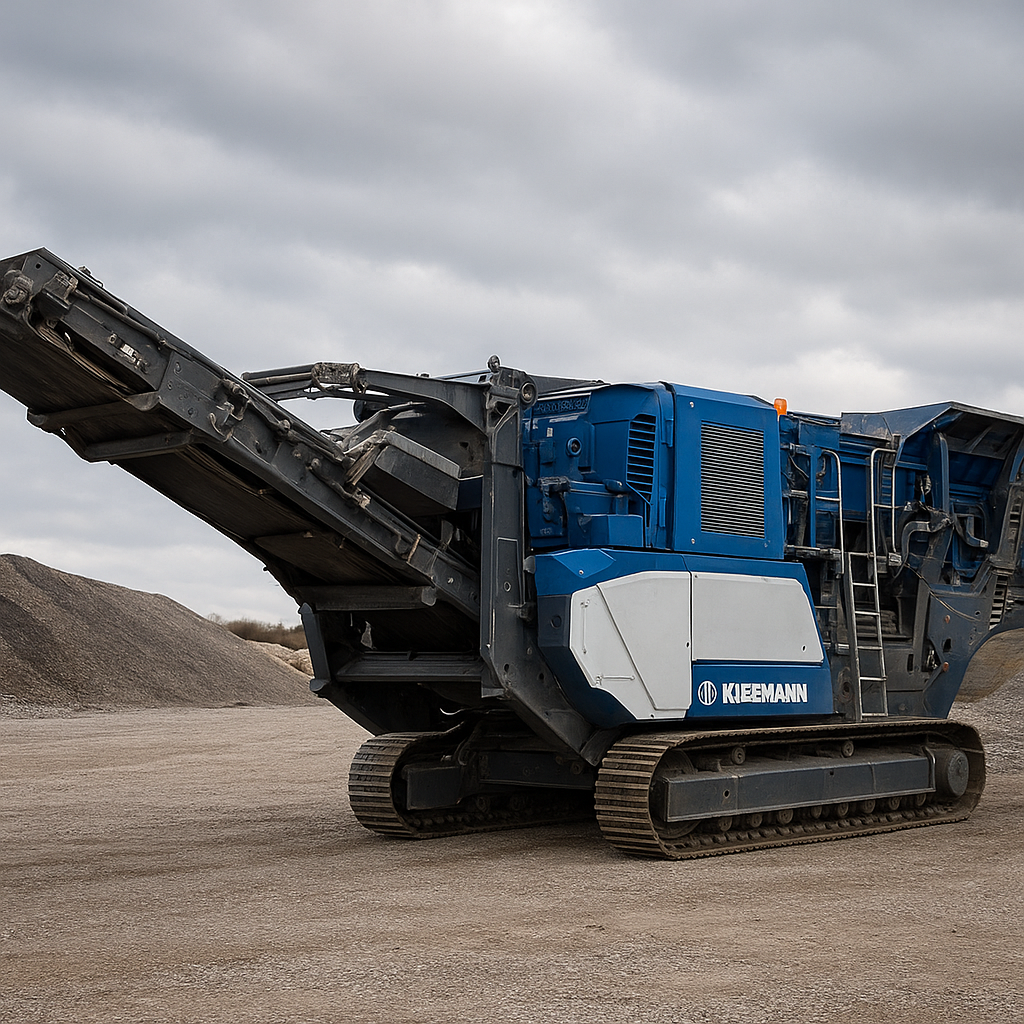
The Kleemann MOBIREX MR 130 is a well-regarded example of a modern, heavy-duty mobile crusher designed to serve a wide range of applications in quarrying, demolition, recycling and road construction. Combining robust mechanical design with flexible transportability and operational options, the MR 130 is intended to deliver high throughput, reliable performance on demanding sites and the capability to produce consistent product sizes for downstream processes. This article provides a detailed look at the MR 130’s design and technical characteristics, typical use cases, operational advantages, maintenance considerations and the broader economic and environmental impacts of deploying this class of machine on a project.
Design and technical overview
The Kleemann MOBIREX MR 130 centers around a heavy-duty jaw crushing unit built for continuous operation under harsh conditions. The machine combines a robust crusher frame with a powerful drive train, a high-capacity feed arrangement and integrated or optional screening and conveyor systems to deliver finished product directly from a mobile footprint. Key components and attributes typically include:
- Jaw crusher geometry optimized for primary crushing of natural rock, concrete and demolition material. The jaw chamber is designed to accept large feed sizes while maintaining a controlled final product gradation.
- Large feed hopper and vibrating feeder to ensure steady, metered material feed and to reduce shock loads to the crusher. On many configurations, a pre-screen or scalping screen can be fitted to remove fines in advance of the primary crusher.
- Diesel power unit, often meeting modern emission standards (Stage V / Tier 4 Final on recent machines) and sized to manage crusher drives, conveyors and hydraulic systems. Electrical drive options are available for fixed-site or hybrid power setups.
- Integrated conveyors for product and fines handling, facilitating direct stockpiling of multiple size fractions without extensive additional equipment.
- Robust undercarriage or tracked chassis for mobility on site, plus folding conveyors and compact transport dimensions to comply with road-tow regulations in many markets.
Exact performance figures for the MR 130 can vary by model year and configuration. Typical primary jaw crushers of this class often handle average production rates ranging from the low hundreds to several hundred tonnes per hour under normal operating conditions, with peak capacities dependent on feed material, crusher setting and auxiliary screening. Machine curb weights are commonly in the multi-ton range (tens of tonnes), and feed openings are large enough to process substantial pieces of raw material. For precise technical numbers — such as feed opening dimensions, horsepower, and maximum throughput — consult the manufacturer’s specification sheet for the specific MR 130 variant (EVO, EVO2 or later generations) or the supplying dealer, as those data points are updated over model cycles.
Applications and typical use cases
The MR 130 is suitable for a diverse set of industry tasks where robust primary crushing capacity combined with mobility is required. Typical applications include:
- Quarrying and aggregate production — primary crushing of blasted rock to produce feed for secondary crushers and screens, or direct supply of coarse aggregate.
- Demolition and building site recycling — crushing concrete and masonry on site to produce reusable base material and aggregates, reducing transportation and disposal costs.
- Roadworks and infrastructure projects — in-situ crushing for sub-base production, enabling faster program execution and reduced imported material usage.
- Mining operations — as a movable primary crusher for small-to-medium operations or for pre-crushing oversize material in support of the processing plant.
- Remote or short-term projects — sites without permanent crushing infrastructure that benefit from a transportable crushing solution to produce material where it is needed.
Because of its mobility, the MR 130 is particularly useful in projects where the crushing location moves over time (e.g., expanding quarries or long linear projects such as road or pipeline construction). It is also valuable in recycling contexts where reducing the carbon footprint associated with material transport is a priority.
Operational advantages and notable features
The MR 130 is engineered to combine durability with operational flexibility. Important advantages and features that operators and fleet managers typically cite include:
- High mobility and compact transport — the machine is designed to be towed between sites with minimal disassembly, featuring folding conveyors and compact transport dimensions to comply with road regulations in many regions.
- Quick setup and tear-down — hydraulically folding components and simplified connections reduce the time required to place the crusher into production.
- Integrated screening options — many configurations provide an optional pre-screen or integrated post-screening to improve product gradation and reduce recirculating loads on secondary equipment.
- Operator ergonomics and control — modern control systems for monitoring and adjusting crusher speeds, feed rate and settings, often with remote-control capability for safe and efficient operation.
- Wear part accessibility — jaw plates, cheek plates and other consumable components are designed for ease of replacement to minimize downtime.
- Advanced drive concepts — efficient power transfer from engine to crusher with protective systems to prevent damage from tramp material or overloads.
In practice, these features translate into higher machine availability, safer working environments and lower total cost of ownership per tonne of produced material when the machine is properly matched to the application.
Performance, productivity and maintenance
Achieving the best performance from an MR 130 requires appropriate configuration, correct matching to material characteristics and consistent maintenance. Key operational and maintenance considerations include:
- Feed control: Maintaining a consistent feed rate and avoiding underfeeding or overfeeding is essential for steady crushing and optimal throughput.
- Jaw settings and gradation: Adjusting the jaw gap and crushing angle influences both product size distribution and throughput. Fine-tuning for the desired final product reduces the need for secondary processing.
- Wear monitoring: Regular inspection of jaw plates, toggle plates and liners helps anticipate replacements and schedule planned maintenance windows.
- Lubrication and hydraulic service: Adherence to recommended service intervals for lubrication systems, hydraulic circuits and fuel/air filters extends component life and reduces unexpected failures.
- Dust and water management: Dust suppression and proper drainage protect components and maintain safe visibility for operators; they also reduce environmental impact on adjacent areas.
Typical production rates depend heavily on material type (hardness, abrasiveness, moisture content), feed size distribution, crusher setting and operator practice. Mobile primary crushers in this class commonly produce anywhere from a couple of hundred tonnes per hour up to several hundred tonnes per hour in favorable conditions. Throughput optimization often yields improved fuel economy — a critical operating cost — since efficient crushing produces more material per litre of diesel consumed.
Environmental and economic considerations
Deploying a mobile crusher such as the MR 130 can yield both environmental and economic benefits when integrated into a broader materials strategy:
- Reduced transport emissions — crushing and recycling demolished concrete or asphalt on site reduces truck movements and associated CO2 emissions.
- Material reuse — processing demolition material into reusable aggregate lowers the demand for virgin aggregates and reduces landfill pressures.
- Lower total project cost — producing base material on site can significantly reduce material purchase and transport costs, shorten schedules and simplify logistics.
- Emissions compliance — newer machines are fitted with engines that comply with local and international emissions standards, reducing particulate and NOx outputs compared with older diesel engines.
- Noise and dust control options are commonly available, helping projects meet local environmental regulations and reduce community impact.
From a lifecycle perspective, a well-maintained MR 130 will offer attractive return on investment by enabling contractors and quarry operators to reduce input costs and increase flexibility. Strategic use in urban demolition projects or constrained sites often realizes the most immediate financial advantages.
Integration, automation and digital features
As construction and quarry fleets modernize, integration and digitalization become increasingly important. The MR 130 and comparable platforms typically offer options for telemetry, remote monitoring and wear-part tracking. Useful digital and automation features include:
- Remote diagnostics and machine health monitoring to reduce downtime and improve maintenance planning.
- Production and fuel consumption logging for job costing and performance benchmarking.
- Automated crusher protection systems that detect overloads or tramp material and either divert material or temporarily halt operation to prevent damage.
- Interfaces with site management systems for fleet coordination and logistics planning.
These capabilities help fleet managers measure machine productivity in near real time, identify inefficiencies and prioritize maintenance tasks, thereby increasing equipment availability and profitability.
Practical examples and typical project scenarios
Real-world scenarios where the MR 130 adds clear value include:
- Urban demolition: On congested city sites where hauling debris out is costly and disruptive, on-site crushing produces material for sub-bases and backfill while minimizing truck trips.
- Quarry infill and expansion: As a quarry expands, a mobile primary crusher can be moved to the face, reducing haul distances and enabling staged production without permanent infrastructure.
- Road rehabilitation: Milling asphalt and crushing old pavement materials on site to create recycled base layers is both economical and sustainable.
- Short-term mining or exploration camps: Portable crushing minimizes the need for heavy permanent infrastructure and allows operations to follow ore or aggregate deposits with minimal environmental footprint.
In each of these cases, the combination of mobility, production capacity and integrated screening/storage conveyors simplifies logistics and helps projects meet schedule and budget goals.
Buying, leasing and lifecycle considerations
When evaluating an MR 130 for purchase or lease, consider these practical points:
- Matching machine capacity to expected peak and average production needs — oversizing wastes capital and under-sizing causes bottlenecks.
- Evaluating dealer support and spare parts availability — timely support for wear parts, hydraulic components and engine service is critical for uptime.
- Assessing transport costs and regulatory compliance for movement between jurisdictions (permitting, pilot vehicles, transport dimensions).
- Deciding between purchase, finance or hire options based on project duration, capital availability and expected future use.
- Considering refurbishment and resale values — machines from well-known manufacturers with documented service histories tend to retain value better.
Leasing options can be particularly attractive for contractors with intermittent demand, enabling access to modern emission-compliant machines without large capital outlay. Long-term buyers should incorporate planned maintenance, operator training and parts provisioning into total cost models to maximize lifecycle value.
Safety and operator training
Safe operation of a high-capacity mobile crusher is essential. Key safety and training points include:
- Comprehensive operator training on feed control, emergency stops and safe approach zones around conveyors and crushing chambers.
- Routine safety inspections for guarding, emergency shutdown systems, fire suppression readiness and electrical safety.
- Traffic-management on site to separate loading equipment, haul trucks and personnel from crusher operating areas.
- Dust and noise mitigation procedures to protect worker health and comply with regulations.
Manufacturer-provided or dealer-facilitated training combined with an internal competency program significantly reduces risk and improves crusher productivity.
Conclusion
The Kleemann MOBIREX MR 130 represents a powerful and flexible solution for primary crushing needs across quarrying, recycling and civil construction. By combining a heavy-duty jaw crusher with mobile transportability, integrated material handling and modern control features, machines of this class allow contractors and operators to reduce costs, increase on-site flexibility and support sustainable materials strategies. While precise performance metrics depend on the specific MR 130 variant and the materials processed, the machine’s core advantages — mobility, durability, and the ability to produce consistent product grades — make it a valuable asset on projects where moving material efficiently and responsibly is a priority.


)
)