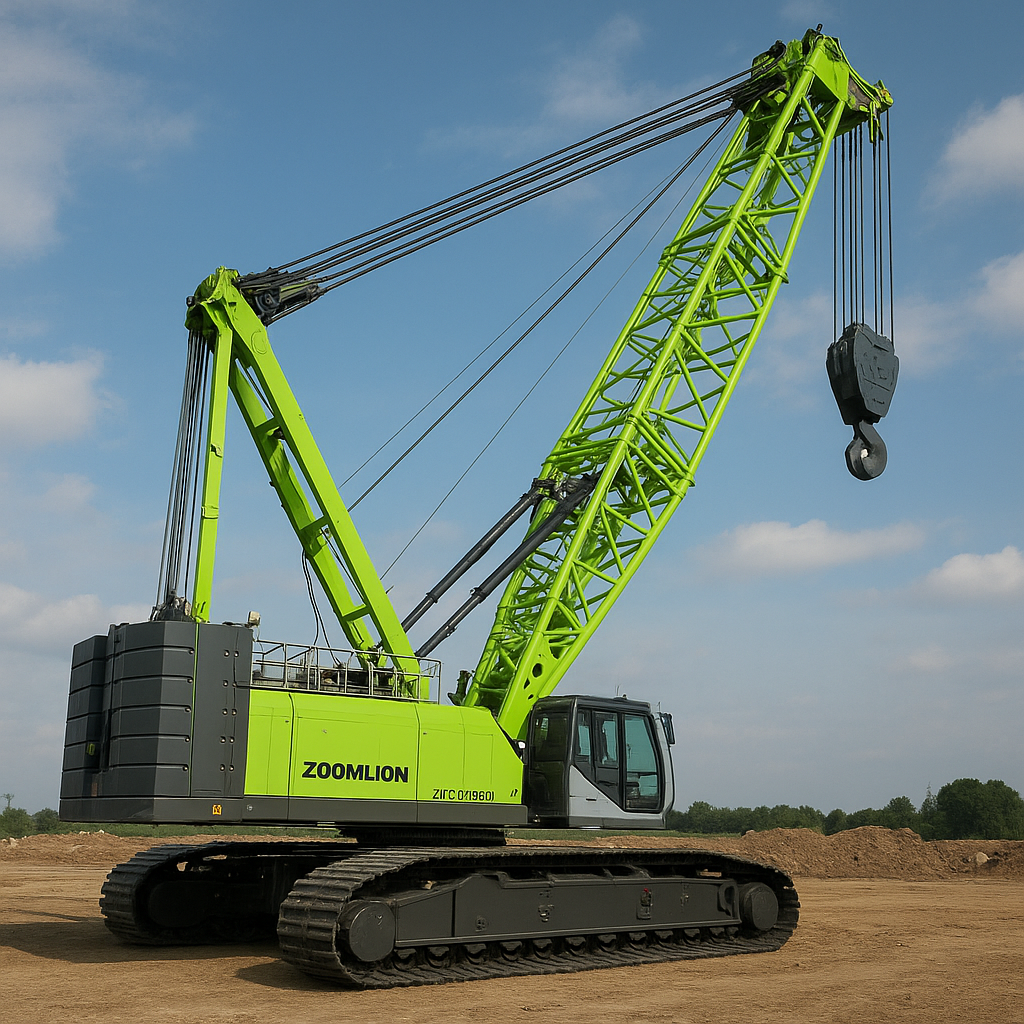
The Zoomlion ZCC32000 is a flagship heavy-lift crawler crane developed by the Chinese manufacturer Zoomlion. Designed for the most demanding lifting tasks in large-scale construction, energy and civil infrastructure projects, the ZCC32000 represents a milestone in modern engineering by combining vast lifting capacity with modular transportability and advanced control systems. This article examines the machine’s background, key technical data, typical applications, operational challenges and notable deployments, giving a broad and practical view of what makes the ZCC32000 an important asset for heavy construction and industrial projects.
Overview and development
The ZCC32000 was developed as part of Zoomlion’s strategy to compete in the ultra-heavy crane market dominated historically by European and Japanese makers. The model name reflects its design focus on extremely high capacity — the numeric portion indicating its headline rated capacity class. The machine is a large-scale crawler platform crane, which means it travels on crawler tracks rather than wheels, providing exceptional site mobility across soft ground and the stability required for enormous lifts.
Key goals for the design included:
- Delivering a high headline lifting capacity while maintaining modular shipping dimensions;
- Providing a flexible boom and derrick system able to handle both heavy-line and high-reach lifts;
- Incorporating modern control and safety features to improve setup times and operational reliability;
- Optimizing logistics so components could be transported by standard heavy-haul vehicles and assembled on site.
As with other cranes in its class, Zoomlion targeted markets such as petrochemical plants, offshore platform construction, large bridge segments, power plant components (including nuclear and thermal), and heavy civil works for dams and wind turbines. The ZCC32000 was positioned to compete with other ultra-heavy models from well-known manufacturers by offering a balance between raw capacity, modular assembly, and competitive pricing.
Technical specifications and performance
Specifications for ultra-heavy crawler cranes vary depending on configuration, counterweight, and boom/derrick arrangement. The following figures reflect the widely reported and published technical characteristics commonly associated with the ZCC32000 family in its typical advertising and technical briefings. Where exact values can change by configuration, the text clarifies typical ranges.
Rated capacity and lifting systems
- Rated maximum lifting capacity: approximately 3,200 tonnes (metric) in optimal derrick configuration — this is the headline figure often quoted for the model.
- Main and auxiliary winches: multiple hoist drums with high-line pulls to handle both single-line heavy lifts and high-line multi-part reeving for increased reach.
- Hook heights and reach: with various boom and heavy-duty derrick combinations, hook heights and radii can be configured for either maximum capacity at short radius or extended reach at reduced capacity.
Boom, jib and derrick
- Main boom: modular lattice sections allow main booms of varying lengths to be assembled on site. Typical maximum main boom lengths reported for cranes of this class can exceed 80–100 meters in standard configurations.
- Derrick/rope system: the derrick system enables the crane to achieve its maximum capacity by taking advantage of low-radius, high-block-line lifts using a heavy-duty derrick mast and multiple reeving lines.
- Jib options: offset jibs and lattice jibs can be fitted to extend reach for higher hook heights or to handle awkward load geometries.
Counterweight, tracks and ballast
- Counterweight: modular counterweight blocks allow operators to assemble the precise ballast required for a given lift. Total counterweight mass in top configurations is substantial and forms a crucial part of achieving rated capacities.
- Track system: wide, heavy-duty crawler tracks distribute the crane’s enormous self-weight and load reactions across a large footprint, reducing ground pressure and enabling movement on prepared sites.
- Overall machine weight: fully ballasted and configured for heavy lifts, the gross weight of the system can reach several thousand tonnes depending on counterweight and boom choices.
Powertrain, hydraulics and controls
- Power sources: multi-engine arrangements or centralized high-power diesel engines provide propulsion and hoisting power. Redundant systems and high-capacity hydraulic power units support efficient hoist and swing operations.
- Control systems: modern ZCC cranes typically include electronic load monitoring, anti-two-block protection, programmable lift profiles, and operator displays for safe, precise lifting operations.
- Safety features: integrated load moment indicators (LMI), wind-speed monitoring, and structural strain monitoring enhance workplace safety and compliance with lift planning requirements.
Applications and industries
The ZCC32000 is targeted at projects where extremely large components must be lifted, placed or assembled. Typical sectors and specific uses include:
- Energy and power: installation of heavy generators, steam turbine rotors, nuclear reactor components, and transformer banks. The ability to lift multi-hundred-ton components and position them accurately makes the ZCC32000 suitable for power plant construction and refurbishment.
- Offshore and petrochemical: construction and maintenance of offshore platforms, onshore module lifts for refineries and LNG plants, where large pre-fabricated modules weighing several hundred to thousands of tonnes must be handled.
- Bridge and civil infrastructure: erection of long-span bridge segments, placing precast concrete segments, and heavy dam components. For large infrastructure lifts where stability and precision are critical, high-capacity crawlers are often the machine of choice.
- Wind and renewable energy: installation of very large onshore turbine components and assembly of foundations or transition pieces for offshore turbines when land-based heavy lifts are required prior to float-over operations.
- Industrial plant relocation and heavy manufacturing: movement of large presses, vessels, and industrial equipment during plant assembly or relocation projects.
Logistics, transport and site setup
One of the design challenges for ultra-heavy cranes is logistics — transporting massive lattice sections, counterweights and crawler assemblies to site. Zoomlion addressed this by modularizing the crane into truckable components. Typical logistical and setup considerations include:
- Transport: boom and derrick sections, crawler assemblies and counterweight blocks are transported on heavy-haul trailers. Components are designed to fit within local transport regulations where possible, reducing the need for special permits or escorts.
- Assembly time: large crawler cranes require carefully sequenced assembly operations with smaller support cranes and lifting equipment. Planning and site preparation (bearing pads, crane mats) are essential to ensure safe setup.
- Ground preparation: despite the low ground pressure provided by wide crawlers, very heavy counterweights and lifting loads often necessitate ground improvement, crane mats or timber raft systems to achieve a stable bearing surface.
- Mobility: once assembled, the crawler base allows limited site relocation under its own power, enabling repositioning without full disassembly for some moves.
Operational considerations and safety
Operating an ultra-heavy crawler crane like the ZCC32000 requires specialized personnel, meticulous planning and strict adherence to safety standards. Important operational aspects include:
- Lift planning: every heavy lift needs a detailed lift plan, including load charts for the exact configuration, site ground assessment, weather forecasts and contingency procedures.
- Certified crews: operators, riggers and signalers must be trained and often certified for heavy-lift operations. Coordination between multiple teams (site, crane, transport) is critical.
- Maintenance: due to the mechanical complexity and high loads, routine inspections, structural monitoring and preventative maintenance programs are essential to maintain reliability and safety.
- Regulatory compliance: operations must comply with national and local regulations concerning heavy lifting, transport, and noise/environmental restrictions on construction sites.
Economic and environmental impact
From an economic perspective, deploying an ultra-heavy crane is costly but often more efficient than alternative approaches (e.g., splitting large modules into smaller parts or using multiple lifts) because it reduces project time and on-site assembly. Benefits include faster installation cycles and improved alignment/fit-up quality for massive prefabricated components.
Environmental considerations include:
- Reduced on-site fabrication: by lifting larger prefabricated modules, the number of workdays and the on-site footprint can be reduced, lowering temporary infrastructure demand and associated emissions.
- Fuel consumption: large cranes consume significant diesel fuel during assembly, positioning and lifting. Efficient engine and hydraulic system design, as well as operation best practices, help manage fuel use.
- Noise and disturbance: careful scheduling and mitigation measures are important in populated areas to limit noise and traffic disruption during transport and assembly.
Notable projects and case examples
While project-specific disclosure varies, cranes in the 3,000–3,200-ton class have been used in high-profile energy and infrastructure projects worldwide. Typical examples where a ZCC32000-class crane would be chosen include:
- Installation of large reactor pressure vessels and containment modules at nuclear power projects.
- Placement of huge prefabricated modules and jackets for offshore platforms and onshore module skids.
- Erection of major bridge segments where single-piece lifts improve fit and reduce joint complexity.
- Assembly of massive steel structures in petrochemical and heavy process plants.
Specific project announcements by Zoomlion and contractors often highlight the crane’s ability to reduce assembly time and increase safety margins for the most complex heavy lifts.
Comparisons with competing models
In the market for ultra-heavy crawlers, several manufacturers offer cranes with capacities from around 1,600 tonnes to over 3,000 tonnes. The ZCC32000’s closest peers are machines from established manufacturers that emphasize extreme capacity and engineered modularity.
When comparing models, key differentiators include:
- Maximum rated capacity and how that rating is achieved (derrick vs. boom configurations).
- Transportability of components and the number of heavy-haul loads required for mobilization.
- On-site assembly time and the requirement for auxiliary lifting equipment.
- Availability of local support, parts and service networks — an important consideration for global projects.
Maintenance, lifecycle and resale value
The lifecycle of a heavy crawler crane depends on usage patterns, maintenance regimes, and technological upgrades. Well-maintained cranes of this class often remain valuable assets for decades because demand for heavy lifting equipment in power, petrochemical and infrastructure projects continues.
- Routine inspections: periodic non-destructive testing (NDT) of structural components, track and undercarriage services, and hydraulic system checks are essential.
- Refurbishment: major overhauls extend service life—replacing key components, reconditioning crawlers, and updating control systems can significantly improve resale value.
- Resale market: there is an active secondary market for large cranes, but resale values depend heavily on condition, hours of operation, and the availability of local service expertise.
Summary and final observations
The Zoomlion ZCC32000 represents a strategic step in making ultra-heavy lifting capacity more accessible worldwide. By combining modular transport, advanced control systems and a design focused on extreme lifting tasks, the ZCC32000 is engineered for projects that demand the handling of very large, heavy components with precision and safety. While deployment requires significant logistical planning, ground preparation and experienced crews, the benefits—reduced project timelines, improved on-site safety, and the ability to lift entire modules in single operations—make machines in this class indispensable for the most challenging construction and industrial projects.
For contractors and project planners, choosing a crane like the ZCC32000 involves balancing upfront mobilization costs against schedule savings and the complexity of alternative erection methods. When heavy, single-piece lifts or high-capacity short-radius lifts are required, a crane of this caliber is often the most practical and economically viable solution.
)
)