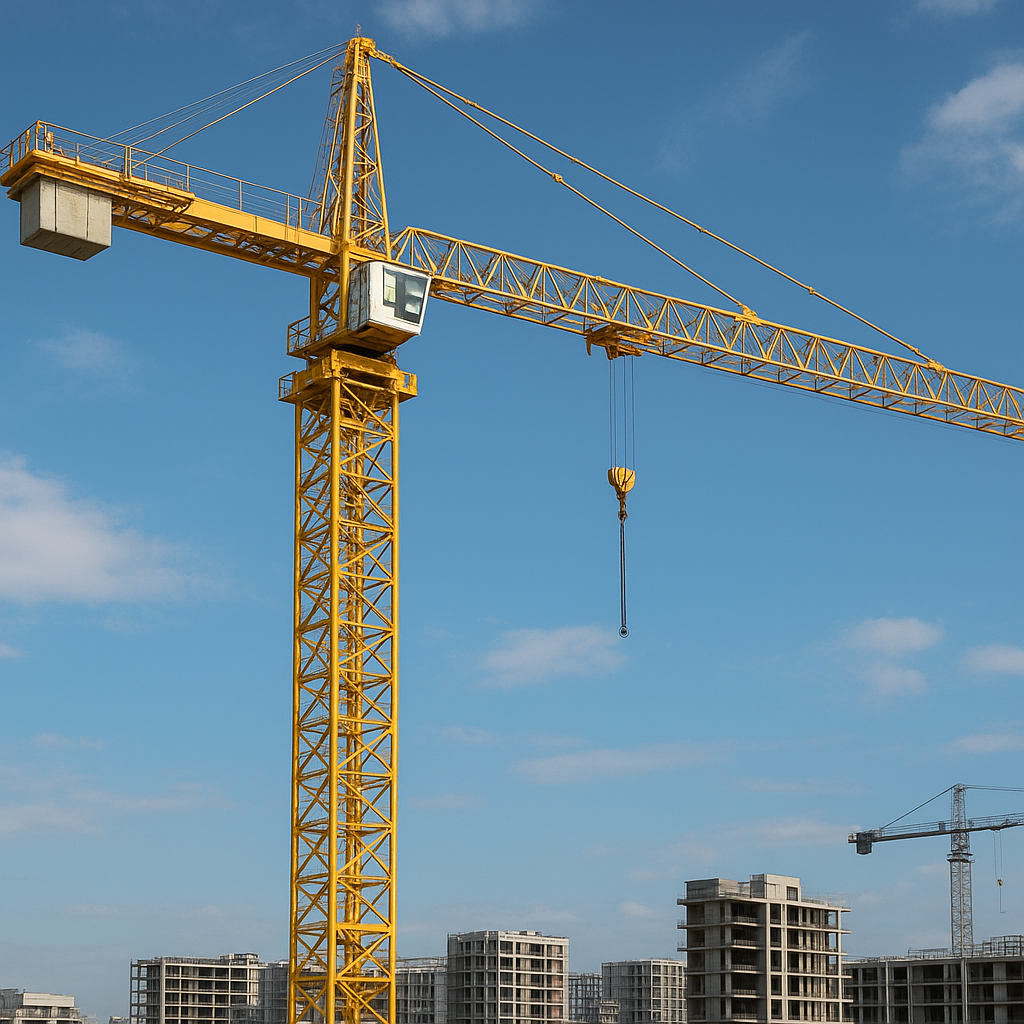
The XCMG XGT10000-600 is a high-capacity tower crane designed to meet the demands of modern heavy-construction projects. Combining robust lifting capability with modular design and advanced control systems, this model is intended for sites that require substantial reach, high pick-and-carry performance and reliable uptime. Below you will find a detailed look at the machine’s intended uses, typical technical characteristics for cranes of this class, operational considerations, safety and maintenance priorities, and market and project applications where the XGT10000-600 excels.
Overview and purpose
The XCMG XGT10000-600 is part of XCMG’s lineup of large tower cranes aimed at high-rise construction, heavy industrial installations and major infrastructure projects. As a product from one of the world’s leading construction-equipment manufacturers, the crane is engineered to provide a balance of lifting power, reach and installation flexibility. Its main roles include heavy lifting of prefabricated structural elements, placing large concrete panels, lifting mechanical equipment in power plants and industrial facilities, and supporting the assembly of other large construction components.
Key intended applications
- High-rise building construction and core assembly for skyscrapers
- Bridge and viaduct construction, including launching and positioning large segments
- Industrial plant installation (power, petrochemical, steel), where heavy-module lifting is required
- Wind-turbine foundation and nacelle installation support in onshore projects
- Large-scale civil engineering projects and port infrastructure works
Designed for demanding environments, the XGT10000-600 provides project managers with the capacity to lift heavy, awkward loads with precision. The machine’s modularity facilitates transport and site assembly, while modern control systems improve operational efficiency and safety.
Design features and engineering highlights
The XGT10000-600 combines traditional tower-crane architecture with contemporary improvements in materials, hydraulics and electronic control. Below are notable design attributes that make the model attractive for large projects.
Structural design and materials
- Modular mast and jib sections for flexible configuration and scalable height
- High-strength steel components to reduce weight while maximizing structural stiffness
- Optimized counterweight arrangement for improved stability across the working radius
Hoisting, slew and trolley systems
- Robust hoist winch with multi-speed control for precise load handling
- Efficient trolley drive system engineered for smooth and accurate load positioning
- 360-degree slewing gearbox and drives built to withstand repetitive heavy-duty cycles
Control systems and operator ergonomics
- Electronic load-moment monitoring (LMI) and anti-collision systems to reduce operator error
- Ergonomically designed cab with good visibility and climate control for longer shifts
- Optional remote-control capability and telematics enable remote diagnostics, fleet management and preventive maintenance alerts
Transportability and on-site erection
- Crane sections sized for standard road transport where possible; larger components shipped with escort or via special transport
- Self-climbing or external climbing options to increase tower height as a building grows
- Pre-engineered foundation and anchoring systems for faster commissioning
Technical characteristics (typical for this class)
Exact specifications for the XGT10000-600 should be verified in the manufacturer’s datasheet for the particular configuration supplied to a project. The following technical characteristics represent the typical ranges and parameters for a large tower crane in the same class and are useful for planning and comparison.
- Rated lifting capacity: Large tower cranes in this class commonly provide maximum rated capacities that can range from several tens of tonnes at the least favorable radius up to significantly higher values when the load is brought inboard. Capacity decreases as radius increases.
- Jib length and reach: Typical jib lengths for heavy-duty tower cranes vary, with commonly available lengths in the 40–80 m range. Configurable jib sections allow adaptation to site layouts.
- Max hook height: With mast sections and climbing units, hook heights can be extended to well over 100 m above ground; for major high-rise projects the system can be configured for much greater heights.
- Rated overturning moment (lifting moment): A large-class tower crane is engineered with a lifting moment adequate to lift heavy modules at the specified radius; values are provided in manufacturer tables and must be checked against project requirements.
- Hoist and trolley speeds: Variable-speed hoist systems provide controlled lifting with fine positioning. Typical hoist speeds include low-speed/high-torque and faster transit speeds for non-loaded moves.
- Power supply: Electrically powered with provisions for site power connection; optional diesel-driven or hybrid arrangements exist for sites with limited grid access.
- Foundations and anchoring: Depending on tower height and load cycles, foundation design can range from mass concrete pads to piled footings with tie-in anchoring against adjacent structures.
When planning for the XGT10000-600 or similar cranes, engineers must consult the specific load charts supplied for each jib length, mast configuration and counterweight package to ensure compliance with lifting demands and ground conditions.
Operational advantages and competitive strengths
This model offers several competitive strengths that respond to the common needs of large construction projects. These strengths include:
- High utilization flexibility — modular configurations allow the crane to be adapted for either maximum reach or maximum capacity depending on the phase of construction.
- Improved safety systems — modern LMI and anti-collision systems reduce risk of overload and site incidents.
- Operational efficiency — efficient winches and trolley drives reduce cycle times and increase daily lifts, supporting tighter schedules.
- Lower lifecycle cost — robust components and accessible maintenance points reduce downtime and service costs over the crane’s operational life.
Safety, monitoring and compliance
Safety is a principal concern for any heavy-lifting operation. The XGT10000-600 is normally delivered with an array of safety and monitoring equipment to ensure legal compliance and safe operation:
- Load moment indicators that continuously measure the boom load and provide audible/visual alarms
- Anti-collision systems for sites operating multiple cranes to prevent overlapping work envelopes
- Wind and weather monitoring to enforce safe operating limits based on gusts and sustained wind speed
- Emergency lowering systems and redundant braking to safely remove suspended loads in the event of power failure
- Operator training and certification requirements as per local regulations and manufacturer recommendations
Rigor in inspection, pre-lift planning and operator competency is essential: the complexity and scale of operations increase the importance of documented lift plans, taglines, and qualified rigging personnel.
Installation, transport and site logistics
Efficient transport and erection are crucial for minimizing site mobilization time and cost. The XGT10000-600 is engineered for modular transport and staged assembly, but large projects will require detailed logistical planning.
Transport considerations
- Modular components shipped in containers or on flatbeds; heavy sections may require special permits and escorts
- Site access, crane erection area and laydown space must be secured early in project planning
Erection and climbing
- Initial erection often performed with auxiliary mobile cranes or derrick systems
- Climbing units allow the crane to grow with the building; climbing requires coordination with building works and temporary tie-ins
- Contractors must plan for anchor removal and reinstatement as the structure progresses
Maintenance and lifecycle service
- Routine checks on wire ropes, brakes, gearboxes and electrical systems are required at defined intervals
- Fleet telematics can schedule predictive maintenance and reduce unexpected downtime
- Availability of spare parts and certified service technicians influences total cost of ownership
Case studies and typical projects
While specific named projects for the XGT10000-600 depend on deliveries and local procurement, cranes of this class are routinely used in the following project types:
- Construction of mixed-use high-rises where concrete core segments and prefabricated façade units are rapidly lifted into position
- Large petrochemical plant installations where heavy equipment and piping skids are lifted into place
- Bridge segment lifting and placement for segmental bridge construction
- Urban redevelopment projects with tight site footprints that require precise lifting within a congested work envelope
Examples from industry practice show that proper selection of jib length and counterweight, combined with detailed lift planning, enable such cranes to complete complex lifts that previously required multiple specialized lifting operations.
Economic and environmental considerations
Choosing a crane like the XGT10000-600 involves trade-offs between upfront cost, lift capability, and project schedule performance. Operators should consider:
- Time savings — a single high-capacity tower crane can eliminate the need for multiple smaller cranes or repeated lifts, accelerating schedule and reducing mobilization/demobilization costs
- Fuel and energy use — electrically driven hoist systems are generally more energy-efficient than diesel-powered alternatives; remote diagnostics can improve fuel efficiency and reduce idle time
- Emissions — electric operation and efficient site logistics help reduce the carbon footprint of lifting operations; some operators are adopting CO2-accounting for major lifts
- Resale and fleet flexibility — well-maintained cranes from major manufacturers retain resale value and can be redeployed across projects
Market context and manufacturer background
XCMG is a major global manufacturer of construction equipment, and its tower-crane products compete in markets dominated by a mix of long-established European brands and growing Asian producers. Key market drivers for large tower cranes include the pace of urbanization, infrastructure spending and the move toward modular construction techniques that rely heavily on heavy-lift capability.
For procurement teams, considerations when evaluating the XGT10000-600 should include the manufacturer’s global service network, availability of spare parts, and warranty/support packages. Telematics and digital service offerings are increasingly important differentiators that reduce lifecycle costs and increase operational transparency.
Best practices for operation and lift planning
Successful use of an XGT10000-600 requires rigorous planning and site coordination:
- Conduct detailed site surveys and soil investigations to design appropriate foundations and anchor systems
- Develop comprehensive lift plans for all critical lifts including rigging diagrams, taglines and contingency plans
- Coordinate sequencing with other trades, especially when climbing operations are required
- Implement a preventive maintenance program supported by telematics for condition monitoring
- Ensure operators and rigging crews are trained and certified for heavy and complex lifts
Limitations and risk management
Despite strong capabilities, large tower cranes have limitations and risks that project teams must manage:
- Wind sensitivity — large jibs present significant sail area; sustained and gust winds can limit lift operations
- Site space constraints — erecting, anchoring and operating a large tower crane requires significant space that may be scarce in dense urban sites
- Logistics of oversized components — transporting large jib sections or counterweights can increase project complexity
- Safety risk due to human factors — adherence to procedural controls and effective communication are essential to prevent incidents
Conclusion
The XCMG XGT10000-600 represents a class of heavy-duty tower cranes engineered for major construction and industrial projects that demand both reach and load-bearing capability. Its modularity, modern control systems and design focus on durability and serviceability make it well suited to large-scale urban construction, infrastructure and industrial installations. Exact technical data and configuration options should be obtained from XCMG or authorized distributors for project-specific planning, and detailed lift charts must be consulted to ensure safe and compliant lifting operations.
Key terms: XCMG, XGT10000-600, tower crane, capacity, jib, height, safety, maintenance, installation, performance
)
)