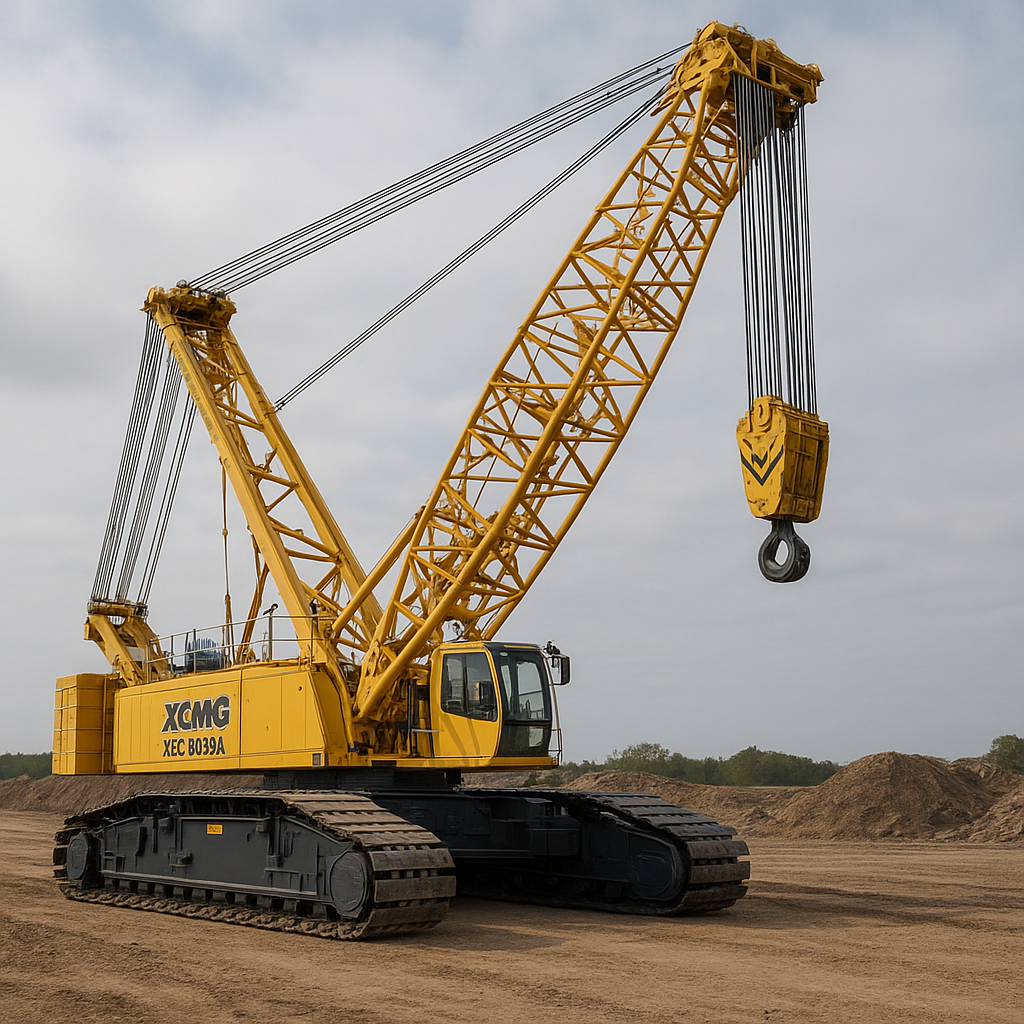
The XCMG XGC15000A represents a class of modern heavy-lift machinery engineered to meet the demanding needs of large-scale construction, energy and industrial projects. As a flagship crawler crane in XCMG’s portfolio, it combines high capacity, modularity and contemporary control systems to perform complex lifts that were once possible only with the very largest global manufacturers. In the following sections, the machine’s characteristics, typical applications, operational considerations and market relevance are discussed in detail.
Overview and key characteristics
The XCMG XGC15000A is a purpose-built, high-capacity crawler crane designed for heavy and ultra-heavy lifting. Its model designation signals a nominal capacity class around 1500 tonnes in standard configurations, placing it among the world’s heavy-lift mobile crawler cranes. Manufactured by XCMG, a prominent Chinese heavy equipment maker, the XGC15000A aims to offer a competitive alternative to established global competitors by combining robust mechanical design with modern electronics and service support.
Core attributes that distinguish the XGC15000A:
- High lifting capacity (rated capacity around 1500 tonnes in primary configurations).
- Modular lattice boom and jib systems enabling a wide range of working heights and radii.
- Large counterweight options and flexible ballast arrangements to optimize stability for different lifts.
- Tracked undercarriage for superior site mobility and onsite positioning on uneven terrain.
- Advanced control systems and safety features such as load moment indicators, anti-two-block protection, and electronic monitoring.
Design and technical specifications
The XGC15000A follows the established design principles of modern large crawler cranes: a heavy-duty lower carriage with wide crawlers, a powerful main winch and hoist system, and a modular superstructure and boom that can be adapted to project needs. While exact configuration data can vary by customer order and optional packages, typical technical points include:
- Rated capacity: ~1500 tonnes (depending on boom and counterweight configuration).
- Boom system: Lattice main boom with multiple section lengths; modular jib options to extend height and outreach.
- Hoisting and boom hoist systems sized for high-line pull and long rope lengths to support heavy lifts at significant radii.
- Hydraulic and electro-hydraulic controls for precise load handling and smooth motion profiles.
- Robust slewing gear and large-diameter slewing ring to manage high overturning moments.
- Operator cab ergonomics with multi-function controls, visibility enhancements and digital displays for load, range and safety data.
The crane’s modular nature is deliberate: sectional lattice booms and detachable swing jibs allow transport on standard heavy-haul vehicles and reduce onsite assembly complexity. Counterweights are typically made up of discrete blocks that can be added or removed to meet specific stability and transport constraints. Electronic load-control systems provide real-time monitoring of load, radius, boom angle and other crucial parameters to maximize safety and efficiency.
Primary applications and industry sectors
The XGC15000A is intended for projects that require the movement and placement of exceptionally heavy components. Common applications include:
- Wind energy: Installation of offshore and onshore turbine nacelles, towers and foundation modules, where single-lift installation reduces assembly time and cost.
- Power generation: Erection of heavy components for thermal and nuclear power plants, such as turbines, generators and containment modules.
- Petrochemical and LNG: Lifting large vessels, reactors, heat exchangers and modular skid packages during brownfield upgrades and greenfield constructions.
- Bridge and civil engineering: Placement of pre-cast bridge spans, large girders and heavy structural elements where staged lifting is impractical.
- Shipbuilding and offshore installation: Handling of large blocks and marine structures, including installation of jackets, topsides and subsea modules.
- Heavy industry: Moving large presses, transformers and industrial machinery during installation or relocation projects.
In these sectors the value proposition of a crane like the XGC15000A is the ability to perform single lifts that shorten project schedules, reduce the need for temporary works, and improve overall site safety by minimizing complex rigging and multi-lift sequences.
Operation, transport and assembly considerations
Large crawler cranes require careful logistical and operational planning. The XGC15000A’s modular design helps reduce the complexity of transportation and assembly, but significant planning is still necessary:
- Transport: Boom sections, superstructure, lower carriage and counterweights are transported separately on heavy haul trucks. Modular components are sized to fit legal and practical transport limits where possible.
- Assembly: Erection typically involves a combination of smaller auxiliary cranes, specialized rigging crews and engineered rig plans. Site ground preparation and crane pad design are essential to provide adequate bearing capacity for high loads.
- Positioning and mobility: The crawler track undercarriage allows onsite repositioning without disassembly for moderate distances; for road moves between sites, partial disassembly and transport are customary.
- Lift planning: Every heavy lift requires detailed lift plans, charts for load vs. radius vs. boom length, and contingency plans for wind, ground conditions and other site variables.
- Cycle times and crew: Large cranes operate with specialized crews including certified crane operators, riggers, signalers and engineers who coordinate lift sequencing and safety checks.
Because of their scale, cranes like the XGC15000A are often subcontracted as part of a heavy-lift package including engineering, transport and onsite rigging services. This integrated approach reduces risk and ensures compliance with local regulations and industry best practices.
Safety, control systems and maintenance
Safety is central to the design and operation of modern heavy cranes. The XGC15000A incorporates multiple systems and procedures intended to protect personnel, equipment and assets:
- Electronic monitoring: Load moment indicators, overload protection, and digital displays provide continuous feedback to operators.
- Anti-two-block and radius-limiting systems: Prevent dangerous conditions such as hook block contact with boom tip or overstretching winches.
- Redundant hydraulic and electrical circuits in critical functions to reduce single-point failures.
- Remote diagnostics and telematics options: many modern XCMG units offer remote monitoring for predictive maintenance, fault codes and fleet management.
- Structured maintenance programs: periodic inspections of ropes, sheaves, hydraulic systems, structural components and safety devices are required to ensure long-term safe performance.
Maintenance of high-capacity cranes is intensive and must be documented. Typical regimes include daily pre-start inspections, scheduled lubrication and adjustments, non-destructive testing of critical welds and structural elements, and rhythmical replacement of wire ropes and wear items based on usage hours or load cycles.
Economic and environmental aspects
Investment in a high-capacity crane like the XGC15000A is significant, and for many companies it is more economical to hire such equipment on a project basis rather than purchase outright. Key economic considerations include:
- Capital cost: New ultra-heavy crawler cranes are a major capital investment often quoted in the multi-million-dollar range; exact pricing depends on configuration and optional equipment.
- Operating cost: Fuel, transport, crew labor, insurance and maintenance contribute substantially to total cost of ownership.
- Utilization: High utilization rates (multiple projects per year) improve return on investment, while infrequent use favors rental or contract hire.
- Project savings: The ability to perform single heavy lifts can reduce overall project time and cost by minimizing temporary structures and multiple handling operations.
- Environmental factors: Modern engines and control systems aim to improve fuel efficiency; telematics and optimized lift procedures can also reduce idle time and emissions.
For owners and contractors, the decision to use a crane like the XGC15000A must balance upfront and operating costs against schedule savings, risk reduction and the strategic value of owning versus renting specialized lifting capacity.
Market position and comparisons
XCMG has steadily expanded its presence in the global heavy-lift crane market. The XGC15000A is positioned to compete with offerings from other manufacturers by emphasizing value, local service networks and adaptability to large projects worldwide. When comparing the XGC15000A to alternatives, consider:
- Capacity class: The ~1500-ton rating puts it in a tier that addresses heavy industrial, power and civil projects; competitors in this range may offer different boom packages, transport footprints or service arrangements.
- Local support: XCMG’s global dealer and service network can be a decisive factor for operators in regions where timely parts and field service matter.
- Configuration flexibility: The variety of boom and counterweight options influences onsite adaptability and transport logistics.
- Technology and digital services: Features like remote diagnostics, operator-assist systems and fleet management software create operational advantages that vary by manufacturer.
While brand reputation and historical performance play a role, many large project owners select cranes based on a combination of technical fit, price, availability and proven performance on similar projects.
Practical case examples and use scenarios
Typical project scenarios where a crane like the XGC15000A adds value:
- Installing an entire wind turbine nacelle and top section in a single lift on a challenging offshore platform, eliminating the need for temporary works and multiple lifts.
- Setting a steam turbine and generator package into a new power plant unit where heavy components must be aligned precisely with minimal tolerance.
- Placing complete bridge girder sections on a long-span river crossing where access and staging are restricted, requiring long outreach and fine load control.
- Hoisting large petrochemical reactors or columns into place within a congested refinery site during turnaround windows.
In each scenario, pre-lift engineering and experienced rigging crews are essential. The crane’s load charts, configuration options and site-specific data define feasible lift plans that meet safety factors and regulatory requirements.
Summary and outlook
The XCMG XGC15000A is a representative example of the modern heavy-lift crawler crane: powerful, modular and equipped with electronic systems that enhance safety and productivity. With a rated capacity in the region of 1500 tonnes, modular lattice boom systems and contemporary monitoring features, it is well-suited to high-stakes projects in power, energy, infrastructure and heavy industry. Decisions to deploy such a crane should be informed by detailed logistical planning, lift engineering and lifecycle cost analysis. As XCMG and other manufacturers continue to develop larger and more efficient units, the availability of capable heavy-lift cranes will increasingly enable projects that require single, precise, high-capacity lifts while improving safety, schedule predictability and overall project economics.
)
)