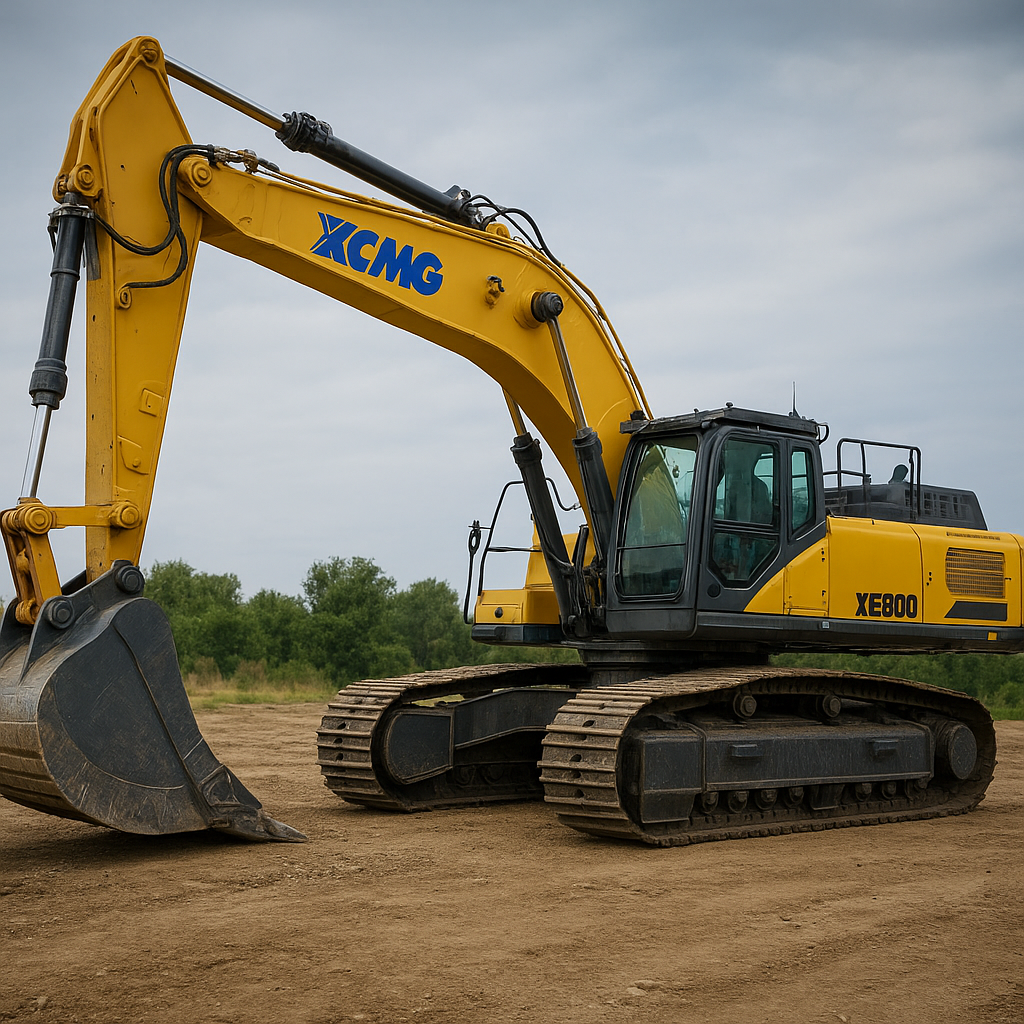
The XCMG XE900 is a heavyweight hydraulic excavator designed for demanding earthmoving, quarrying and mining tasks. Built by XCMG — one of the world’s largest construction machinery manufacturers — the XE900 is positioned where raw digging force, long-term reliability and high material-handling throughput are essential. In this article you will find a detailed technical and practical overview of the machine, typical applications and operating environments, performance and efficiency considerations, maintenance and lifecycle aspects, and relevant market and statistical context. The aim is to present both the capabilities and the real-world factors that influence the value of the XE900 on large-scale projects.
Design and technical overview
The XCMG XE900 is engineered as a heavy-duty, crawler-mounted hydraulic excavator with an emphasis on robust structural components, efficient hydraulic systems and a spacious operator cabin. At the heart of its capability is a combination of strong structural design and modern powertrain integration that translate into high digging forces and material lift capacity.
Chassis and structure
- The undercarriage is built for extended service life in abrasive environments: wide track shoes and reinforced track frames provide stability and reduced ground pressure for heavy lifts and deep digging.
- Boom, arm and linkage are fabricated from high-tensile steel and typically subjected to stress-relief and heat-treatment processes; pins and bushings are oversized where loads concentrate to extend component life.
- Counterswing and base frame reinforcements help resist torsional stress during swing and loading cycles, which is especially important in quarry and mining applications where the boom frequently reaches high loads at extended radii.
Powertrain and hydraulics
The XE900 class machines normally use a high-output diesel engine and a hydraulics system sized to deliver strong continuous and peak flows for digging, crowding and lifting. The engine choice and tuning emphasize a balance between torque, fuel economy and emissions compliance in the markets where XCMG sells the machine.
- Hydraulic pumps are generally variable-displacement axial piston types that optimize flow and pressure to actuators depending on load conditions, improving overall efficiency while maintaining responsiveness.
- High-capacity hydraulic oil coolers and filtration systems help maintain consistent performance in elevated ambient temperatures or long duty cycles.
- Advanced electro-hydraulic control architectures permit multiple working modes (e.g., economy, heavy, and precise) and often include integration with on-board monitoring for flow, pressure and component temperatures.
Cab, controls and ergonomics
Operator comfort and control precision are key to sustained productivity. The XE900’s cabin is typically fitted with climate control, vibration-damped seating, and ergonomic joysticks. Visibility, camera systems and optional monitoring displays enhance safety and situational awareness.
- Modern cabins include multifunction displays that present engine parameters, hydraulic status and maintenance reminders.
- Noise suppression and anti-vibration mounting reduce operator fatigue during long shifts, increasing effective productive hours.
- Optional telematics packages allow remote diagnostics, fleet tracking and performance analysis — helpful for large operations seeking to reduce downtime through predictive maintenance.
Applications and use cases
The XE900 is targeted at heavy commercial, industrial and extraction environments where its sheer mass and hydraulic power provide a decisive advantage. Typical applications include:
- Mining and open-pit operations: large excavators like the XE900 are used to remove overburden, load haul trucks and handle continuous digging cycles in quarry faces and mine benches.
- Quarry and aggregate handling: for breaking and loading stone, sand and gravel, the XE900’s bucket capacity and lifting power enable larger payloads per cycle, improving load-out productivity.
- Major civil engineering projects: in large-scale earthworks for dams, highways and ports, heavy excavators move vast quantities of material, dig deep trenches and place structures where big reach and force are required.
- Bulk material handling in ports and terminals: with suitable attachments such as grapples or clamshells, an XE900 can transfer bulk commodities efficiently between stockpiles and transport vehicles.
- Specialized demolition and heavy lifting: with appropriate attachments and counterweights, the machine can be adapted to selective demolition tasks and infrastructure dismantling that demand stability and reach.
Attachments significantly expand the XE900’s versatility. Common options include heavy-duty buckets (rock, skeleton), hydraulic breakers for secondary breaking, multi-tine grapples for sorting, and quick couplers for rapid tool changes. Choosing the right attachment and matching the arm and boom configuration to the job is critical for achieving the best cycle times and minimising wear.
Performance, productivity and statistics
When evaluating a large excavator like the XE900, contractors and fleet managers look at key performance indicators such as cycle time, bucket fill factor, fuel consumption per tonne moved, and availability. Exact numbers for these metrics depend on application, material characteristics and operator skill, but typical expectations for a machine in this class are useful for benchmarking.
Typical operational metrics
- Operating weight: machines in the 80–100 tonne range are common for the XE900 class. Exact configurations, counterweights and heavy-duty undercarriage options affect final weight.
- Bucket capacity: depending on material density and application, buckets are commonly sized between approximately 4.5 and 8.0 cubic meters. Heavier materials require smaller buckets to keep truck loading within axle limits.
- Digging force and breakout: boom and arm hydraulic geometry is optimized to deliver high breakout torque for compacted soils and weathered rock; crowding force typically scales with pump flow and cylinder size to maximize penetration.
- Reach and digging depth: reach is usually in the range of 12–14 meters for standard boom and arm configurations, while maximum digging depth often approaches 8–9 meters for typical excavator setups in this weight class.
- Engine power: engines in this category commonly provide several hundred kilowatts of output (often in the 350–600 kW range depending on market and emission stage), delivering the torque necessary for heavy digging and hydraulic demands.
- Fuel consumption: fuel burn varies widely; on heavy duty cycles a machine like the XE900 might average tens of liters per hour. Fuel efficiency is improved with load-sensing hydraulics and operator training.
Please note that the figures above are indicative and meant to reflect the typical performance envelope for large hydraulic excavators comparable to the XE900. Exact model specifications provided by XCMG for a particular variant will give precise numbers for operating weight, engine power, hydraulic flow and attachment compatibility.
Productivity factors
Several factors directly influence productivity on-site:
- Material characteristics: soft soils allow faster cycles and higher fill factors; dense rock reduces achievable bucket fill and increases wear.
- Operator proficiency: a skilled operator can optimize swing paths, reduce idle time and improve bucket fill, materially improving tonnes moved per hour.
- Matching truck size: matching bucket size to haul truck capacity avoids underloading or multiple passes, optimizing cycle efficiency.
- Terrain and site layout: stable, graded work areas reduce travel time and the risk of bogging or uneven loading that slows operations.
- Maintenance and uptime: machines maintained to schedule with good filters, coolant regimes and component checks sustain nominal performance and avoid unplanned stoppages.
Maintenance, lifecycle and operating costs
For heavy machines like the XE900, lifecycle cost is a major procurement consideration — not just the purchase price. Well-managed maintenance, appropriate component choices and operator practices significantly affect total cost of ownership.
Planned maintenance and serviceability
- Accessible service points: routine maintenance items (filters, drains, grease points) should be easy to reach to reduce downtime during daily checks and scheduled services.
- Hydraulic system care: regular oil analysis, filter changes and monitoring of pump and cylinder leakage preserve system efficiency and prevent costly failures.
- Undercarriage monitoring: track wear, shoe condition and roller life typically represent a significant portion of wear costs on crawler machines. Reversible or replaceable wear parts help manage costs.
- Component modularity: engines, pumps and major hydraulic components designed for modular replacement shorten repair times and make field repairs more practical.
- Telematics and diagnostics: remote monitoring can forecast service needs, detect abnormal consumption patterns and alert to emerging faults — all of which reduce the risk of severe breakdowns.
Operating costs and resale value
Operating costs for an XE900-style excavator are dominated by fuel, wear parts (especially undercarriage and buckets), scheduled maintenance and occasional major component overhauls. Resale value depends on uptime history, maintenance records, hours logged and regional demand for large excavators. In many markets, a machine with a comprehensive service history, well-preserved undercarriage and a documented telematics record commands a premium on resale.
Safety, regulatory and environmental considerations
Large excavators present specific safety and environmental challenges that operators and site managers must control.
- Site safety: clear swing radii, defined exclusion zones and well-sited banks or spoil areas reduce overturn and crush hazards.
- Operator protection: ROPS/FOPS certified cabins, fall-protection points and emergency egress paths are essential design and inspection considerations.
- Emissions and noise: depending on local regulation, engine packages may require aftertreatment systems such as DOC, DPF and SCR to meet emissions stages; noise abatement and muffling help in urban or sensitive environments.
- Spill prevention and fluid management: fuel and hydraulic oil containment measures, proper refuelling protocols and spill kits are standard for environmental compliance.
Market position, procurement and fleet integration
XCMG has expanded its global footprint through a broad dealer network and investment in product support and warranty services. For fleet managers considering the XE900, procurement evaluation should include dealer proximity, parts availability and the availability of trained service technicians.
Fleet integration
- Telematics compatibility: integrating XE900 telematics into a fleet management system provides consolidated fuel usage, productivity metrics and location tracking.
- Operator training programs: manufacturer or dealer-provided training yields better utilization and lower wear rates compared with a lack of formal training.
- Spare parts strategy: stocking critical wear parts and maintaining agreements with the dealer for parts lead times helps maximize machine availability.
Case studies and real-world examples
While specific case data varies, common successes reported by operators of heavy XCMG excavators include improved truck-loading throughput, reduced cycle times on deep benching operations and competitive acquisition costs compared to other global heavy-equipment suppliers. Examples from quarry and mining operations often demonstrate multi-shift use with predictable maintenance cycles and reliable availability when supported by an engaged local dealer network.
Maximizing utilization
- Shift planning: assigning machines to continuous rather than intermittent tasks reduces cold starts and preserves hydraulic temperatures within optimal ranges.
- Matching equipment: pairing the XE900 with appropriately sized haul trucks and support equipment yields higher system-level productivity than optimizing a single machine in isolation.
- Attachment management: tracking wear rates for buckets and breakers and rotating attachments between machines can spread replacement costs and reduce downtime.
Trends and the future for large excavators
The heavy-equipment sector is evolving with advances in automation, electrification and data-driven maintenance. For machines like the XE900, future trends include:
- Increased use of telematics and predictive analytics to optimize maintenance intervals and fuel usage.
- Hybridization and electrification in certain markets to reduce fuel consumption and emissions, particularly in fixed-site operations such as ports and mines with stable power access.
- Incremental automation to assist operators with repeatable tasks (e.g., automated dig-pass sequencing, auto-level and truck-loading aids) that increase overall productivity and reduce operator variability.
- Improvements in hydraulic efficiency and thermal management to sustain performance under heavier duty cycles while lowering operating costs.
Summary and practical recommendations
The XCMG XE900 is suited to environments that demand robust lifting capacity, long-duration digging cycles and the ability to handle heavy attachments. When considering this machine, evaluate the following practical factors to ensure it meets project needs:
- Confirm the match between typical bucket size and haul truck capacity to maximize load-out efficiency.
- Review dealer support and parts availability in the operating region to minimize downtime risk.
- Specify monitoring and telematics options to enable remote diagnostics and enhance maintenance planning.
- Train operators on fuel-efficient and wear-minimizing techniques to reduce overall lifecycle costs and extend component life.
- Plan for undercarriage management as a predictable, recurring cost — schedule inspections and replacements to avoid unexpected downtime.
Key attributes that make the XE900 effective on large projects include its combination of structural durability, hydraulic power, and adaptable tool interfaces. When properly specified and supported, this class of machine contributes significantly to operational throughput in mining, quarrying and large civil projects, while modern control systems and service networks help optimize the total cost of ownership. Evaluating the XE900 in the context of your fleet, site layout and long-term operational plan will determine whether it delivers the expected gains in efficiency and return on investment.
)
)