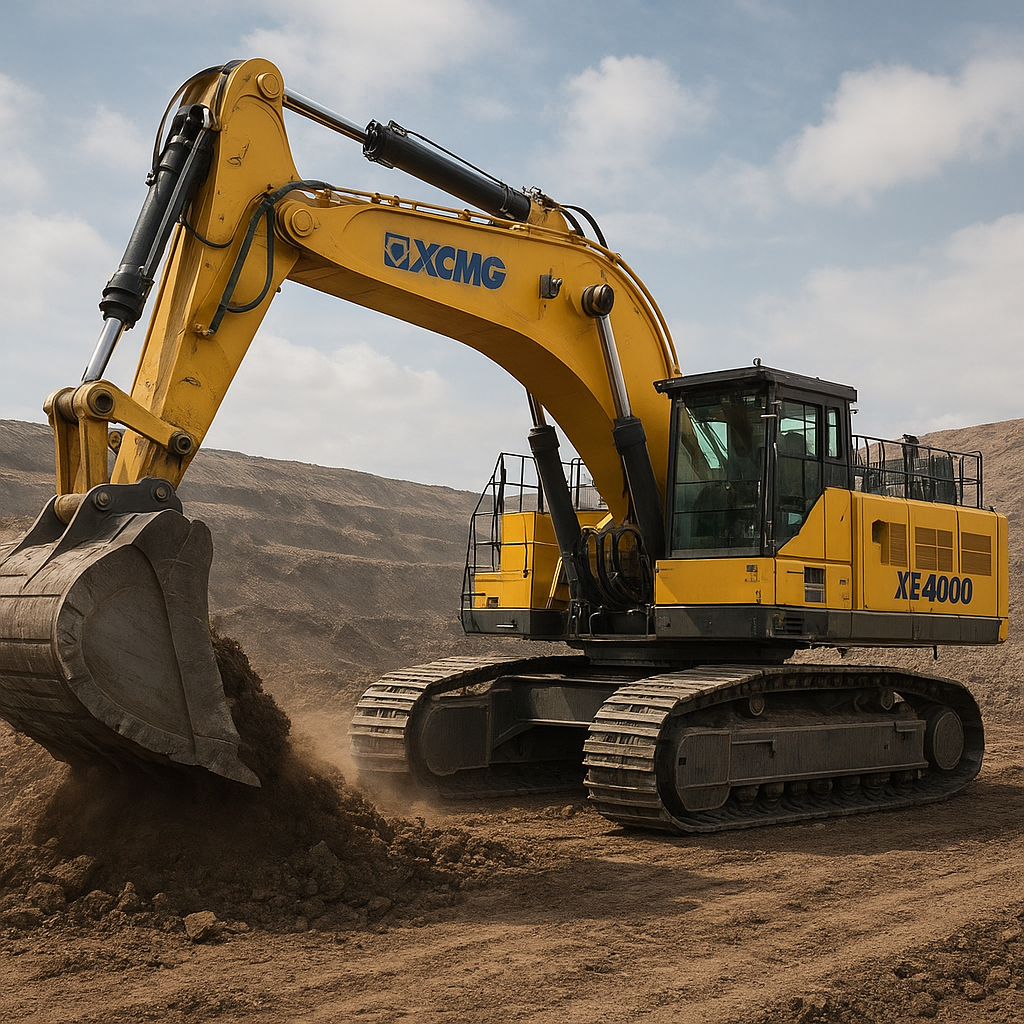
The XCMG XE4000 represents a class of large-scale hydraulic excavators designed for demanding surface mining and heavy-duty earthmoving tasks. Combining robust structural engineering with hydraulic efficiency and operator-focused systems, this machine is built to deliver high productivity, long service intervals, and adaptability to a range of mining environments. The following article examines the XE4000’s design philosophy, typical applications, operational considerations, and broader market and environmental context. Where numerical data is discussed, ranges and typical values for the 400-ton class are provided; exact factory specifications should be confirmed with XCMG or authorized dealers for the latest model variants.
Overview and key features
The XE4000 is part of XCMG’s strategy to compete in the high-capacity mining equipment segment, offering a machine that balances raw digging power with today’s expectations for reliability and operator comfort. At its core, the XE4000 is a hydraulic excavator engineered for continuous, high-intensity operations found in open-pit mines, large-scale quarries, and major infrastructure projects. Its design emphasizes a reinforced undercarriage, heavy-duty boom and stick assemblies, and high-capacity hydraulic systems capable of handling large buckets and attachments.
Notable design priorities include:
- Durability: reinforced structural components, wear-resistant materials at high-stress points, and modular design for easier replacement of major assemblies.
- Hydraulic efficiency: pumps, valves, and cooling systems sized to ensure steady performance under peak loads and long duty cycles.
- Serviceability: access panels, centralized maintenance points, and diagnostic systems to reduce downtime.
- Operator ergonomics: a spacious cab with modern controls, HVAC, and visibility aids to improve safety and reduce operator fatigue.
- Adaptability: compatibility with a range of buckets and specialized attachments (e.g., rock rippers, sorting grabs, and high-capacity coal buckets).
Applications in mining and heavy industries
The primary role of the XE4000 is in surface mining, where units of this class are often deployed as primary loading machines feeding ultra-class haul trucks, conveyors, or crushers. Key application areas include:
- Open-pit mining: loading of large-capacity haul trucks in copper, iron ore, coal, and bauxite operations. In this context, the XE4000 is typically matched with 100–400 tonne haul trucks depending on the mine’s cycle and payload strategy.
- Quarrying: removal of overburden and extraction of dimension stone and aggregate where high bucket capacity can reduce cycle times and cost per tonne.
- Bulk material handling: stockpile reclaim and feed applications in ports or large terminals when fitted with appropriate attachments.
- Major civil projects: dam construction, large foundation excavations, and other earthworks requiring sustained high-volume excavation.
In mining operations, the XE4000 is typically used in a primary loading role: excavating blasted material or soft-to-medium rock faces and placing the load directly into high-capacity haul trucks or onto a primary crusher feed hopper. The machine’s high breakout force, coupled with large bucket volumes, aims to maximize bank cubic meters (BCM) per cycle and lower operating costs per tonne.
Typical technical parameters and performance expectations
Exact specifications for the XE4000 can vary by configuration, options chosen (such as native hydraulic vs. ECO modes, or cold-weather packages), and the specific market variant. Below are typical values and ranges representative of machines in the 400-ton class and often cited in manufacturer literature or industry comparisons. For final procurement decisions, always consult official XCMG documentation.
- Operating weight: typically in the range of approximately 300 to 450 metric tonnes, depending on boom/stick configuration and counterweight options.
- Bucket capacity: common capacities range from about 15 to 35 cubic meters, with specialty buckets available for coal, ore, or loose material applications.
- Engine power: diesel powerplants for machines in this class are frequently rated in a broad band—from roughly 1,000 kW up to 2,200 kW—depending on emission standards and duty cycles.
- Hydraulic system pressure and flow: high-flow pumps and high-pressure circuits are used to ensure rapid cycle times; system design focuses on maintaining performance under extended operation.
- Bucket breakout force: heavy-duty designs produce very high digging and lifting forces to penetrate compacted or moderately cemented materials.
- Fuel consumption: varies widely with load and duty cycle; rough operational averages for machines in this class can be from several hundred liters per hour under full-load conditions to much lower rates under light duty.
- Cycle time: typical loading cycle times (boom down, bucket fill, swing, dump, return) are engineered to match haul truck arrival intervals and minimize truck idle times; exact times are contingent on bucket size, operator technique, and site layout.
Manufacturers often offer multiple configurations for booms and sticks to optimize reach, dig depth, and truck-matching. For instance, a shorter stick may increase breakout force and be preferred for heavy, hard digging, while a longer reach configuration allows loading of wide containers or deeper benches without repositioning the excavator frequently.
Operational considerations: productivity, matching and fleet integration
Maximizing the XE4000’s value on site depends on correct matching with haulage, bench dimensions, cycle coordination, and payload management. Key operational considerations are:
- Truck-excavator matching: selecting bucket capacity to balance load weight and truck body volume avoids underloading or overfilling. Correct matching reduces fragmentation, truck wear, and fuel burn per tonne.
- Bench design: bench heights, haul road geometry, and staging influence excavator placement and swing angles. Optimized benches reduce cycle times and increase safety.
- Payload management: integrated weighing systems and fleet telematics help ensure consistent payloads, improving productivity and reducing variability in truck cycles.
- Operator training: skilled operators extract more uptime and safer, more productive cycles. Virtual training and operator-assist systems (e.g., shovel controls, automated swing limits) can shorten the learning curve.
- Planned maintenance: proactive component life-cycle planning—wear parts, hydraulic hoses, filters, and major service intervals—minimizes unscheduled downtime.
Maintenance, life-cycle costs and reliability
Large mining excavators like the XE4000 are capital-intensive assets; their economic performance depends heavily on uptime and life-cycle costs. Maintenance strategy typically includes:
- Predictive monitoring: oil analysis, vibration monitoring, thermography, and telematics-based fault analytics help detect early signs of component degradation.
- Scheduled overhauls: planned replacement windows for engine, hydraulic pumps, and undercarriage components to avoid catastrophic failures.
- Wear-part management: provisioning of buckets, teeth, adapters, and cutting edges based on wear patterns and material abrasiveness.
- Consumable logistics: stocking critical filters, seals, and hydraulic hoses on site reduces repair lead times in remote operations.
Reliability profiles depend on operating environment: abrasive ores and high cycling in dusty conditions accelerate wear on hydraulic components and undercarriage parts. XCMG and tier-one dealers usually provide extended warranty packages, service contracts, and spare-part support aimed at maintaining availability across the machine’s expected life of many years in heavy-duty service.
Safety systems and operator environment
Safety in large excavators is multifaceted and includes machine-integrated systems and site-level controls. Typical safety features and considerations include:
- Visibility aids: high-mounted cameras, proximity sensors, and beacon systems to detect personnel and obstacles within swing radius.
- Cab safety: ROPS/FOPS-certified structures, ergonomic seating, and climate control to reduce operator fatigue.
- Access and egress: anti-slip surfaces, well-located handrails, and service platforms to facilitate safe maintenance access.
- Emergency systems: fail-safe brakes, hydraulic lockouts for maintenance, and emergency egress protocols.
Beyond machine features, mine site rules—such as controlled approach zones, tag-out procedures for maintenance, and traffic management plans—are essential to ensure safe interaction between large excavators and haul fleets.
Environmental and efficiency considerations
Modern mining operations increasingly emphasize reduced environmental footprint and energy efficiency. For the XE4000 class, key environmental topics include:
- Fuel efficiency: optimized hydraulics, automated idling shutdowns, and engine management systems lower fuel consumption per tonne moved.
- Emissions compliance: engines meeting local emission standards (e.g., Stage/ Tier levels) and optional exhaust after-treatment systems for stringent markets.
- Noise and dust mitigation: acoustic packages and dust suppression measures around loading points reduce community and worker exposure.
- Recycling and end-of-life: recoverability of major components and remanufacturing programs that extend the useful life of booms, reservoirs, and engines.
Operators considering new large excavators often model total cost of ownership (TCO) including fuel, parts, downtime, and resale value to determine the most efficient choice for long-term operations.
Attachments, customization and integration
The XE4000 can be equipped with a variety of attachments to suit specific tasks:
- Buckets: general purpose, coal, rock, and high-capacity coal buckets sized to match dump bodies and cycle expectations.
- Hydraulic breakers and rippers: for secondary breaking and loosening of compacted material.
- Grapples and sorting attachments: for bulk handling, recycling, or specialized material separation tasks.
- Quick-coupler systems: reduce downtime when changing between attachments.
Customization extends to undercarriage track shoe widths, counterweight kits, cold-region packages, and control logic tuned to the mine’s operating profile. Integration with mine-site telematics platforms enhances fleet coordination, predictive maintenance, and production reporting.
Market context and competitive positioning
XCMG has been aggressively expanding its presence in the global mining equipment market, challenging long-established brands by offering competitive pricing, local support networks, and growing R&D investments. The XE4000 competes in a niche where performance, reliability, and dealer support are decisive. Buyers weigh factors like:
- Capital and operating costs: acquisition price versus expected fuel and parts expenditure across service life.
- Support network: availability of trained technicians, spare parts lead times, and local rebuild capabilities.
- Resale and residual value: brand perception and demand for used machines in secondary markets.
For many operators, the decision to adopt newer OEM entrants such as XCMG for large mining machines is driven by demonstrable field performance, trial installations, and comprehensive support agreements that reduce perceived risk.
Case studies and practical deployment notes
While specific site cases vary, some recurring themes emerge from deployments of large excavators like the XE4000:
- Initial teething period: new machines and fleet integrations often require fine-tuning of hydraulic settings, operator procedures, and maintenance schedules to reach projected availability.
- Productivity ramp-up: once optimized, the machines often achieve significant improvements in bank cubic meters per hour, particularly when paired with consistent blasting and truck scheduling.
- Parts and service planning: remote sites benefit from forward stocking of wear parts and prepositioned service teams during the initial operating months.
Typical deployments also highlight the importance of collaborative commissioning between the OEM, the operator, and local service providers to adapt machine settings to site-specific rock characteristics and operational cadence.
Conclusion and procurement advice
The XCMG XE4000 represents a capable option in the high-capacity excavator segment, aimed at mines and projects that require reliable, high-volume loading performance. Key considerations for prospective buyers include assessing true site requirements (bench geometry, material hardness, haulage fleet size), understanding total cost of ownership, and confirming service and parts support in the operating region.
When evaluating an XE4000 or a similar ultra-class excavator, practical steps include:
- Conducting a matched-truck analysis to determine optimal bucket size and boom configuration.
- Requesting site-specific fuel consumption and productivity estimates from the OEM or dealer.
- Arranging field trials or references from similar installations to validate performance claims.
- Securing comprehensive warranty and service agreements, and defining KPIs for availability and throughput.
For large mining operations, machine selection is both technical and strategic: the XE4000 can be a powerful tool for lowering cost per tonne when properly integrated into a well-managed production system.
)
)