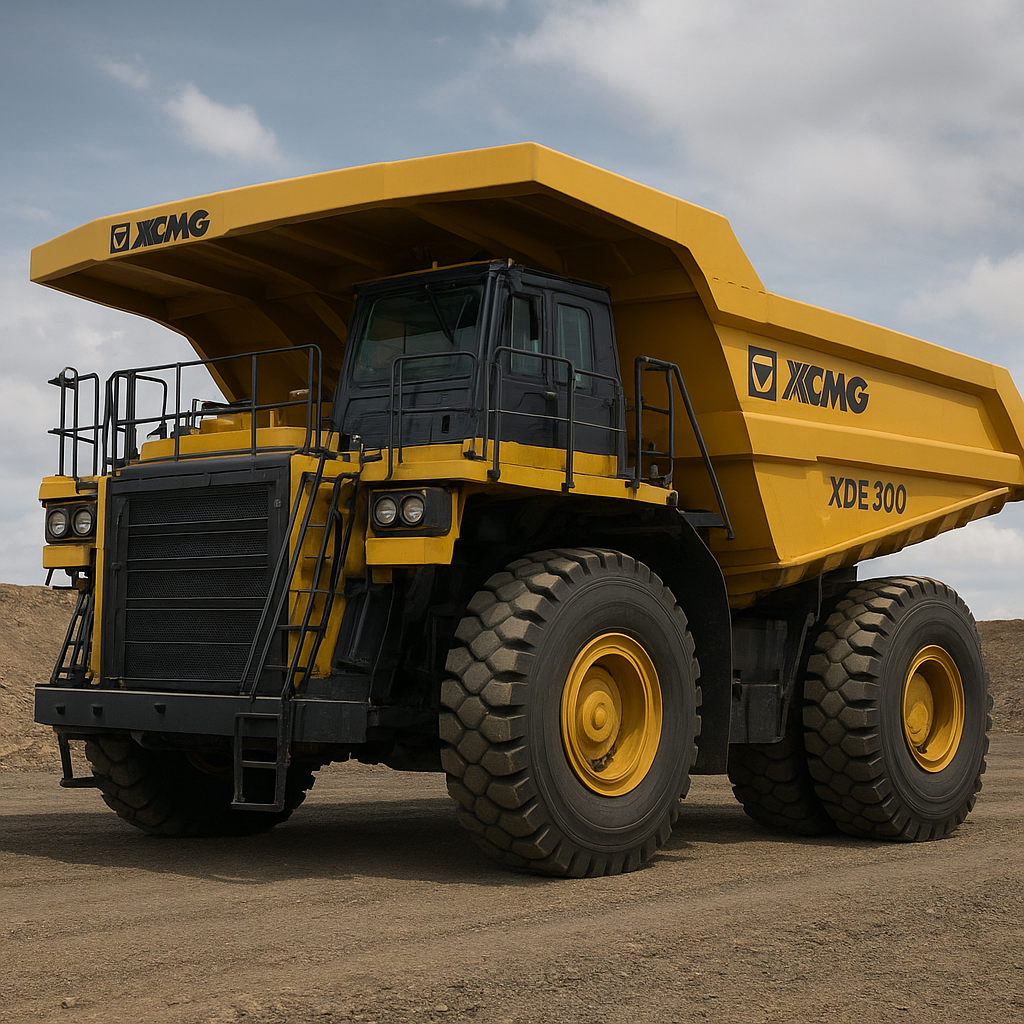
The XCMG XDE300 haul truck represents a significant step in the evolution of large-capacity mining and heavy-duty material handling vehicles. Designed by XCMG—one of the world’s largest construction machinery manufacturers—the XDE300 aims to combine high payload capacity, modular design, and modern powertrain options to meet the demands of open-pit mining, large quarries, and major earthmoving projects. Below are detailed sections covering the machine’s design philosophy, technical characteristics, operational uses, economic and environmental considerations, and its place in the global market.
Overview and design philosophy
The XDE300 is positioned as a high-capacity haul truck intended for heavy mining and bulk-material transport. The model designation XDE300 is commonly interpreted to indicate a machine in the approximately 300-ton payload class, aligning it with other large haul trucks used in surface mining operations around the world. XCMG’s design goals for the XDE300 emphasize robustness, modularity, and the integration of advanced systems for fleet management and safety.
Key aspects of the design philosophy include:
- Modular components that enable streamlined maintenance and reduced downtime.
- Flexible powertrain options to suit different mine energy strategies (diesel-electric, hybrid or full electric where applicable).
- Operator-focused cab ergonomics and advanced monitoring to improve productivity and reduce operator fatigue.
- Scalable electronics and telematics for fleet integration, remote diagnostics, and predictive maintenance tools.
Powertrain and performance characteristics
While specific factory configurations may vary by market and customer, haul trucks at the 300-ton scale are typically engineered with high-output propulsion systems and robust drivetrains. The XDE300 is designed to be competitive in this segment by offering:
- High-capacity driveline components engineered for continuous heavy-duty operation.
- Options for diesel-electric drivetrains, and in certain markets, electrified or electric-drive configurations that reduce particulate emissions and can improve overall energy efficiency.
- Advanced transmission and braking systems, often with regenerative technologies in electrified variants to recover energy during descents.
Performance expectations for a machine in the 300-ton class typically include a combination of high tractive effort, long operational shift durations, and design life spanning many thousands of operating hours. Power output for comparable machines usually falls within a broad range consistent with heavy mining haulage needs; for customers concerned with specific figures (engine ratings, torque, top speeds under load), XCMG’s technical documentation or a direct consultation with the manufacturer or dealer will provide precise, model-specific numbers and optional configurations.
Applications and industries
The XDE300 is built primarily for heavy-duty, high-throughput applications. Typical uses include:
- Open-pit mining for minerals such as copper, iron ore, bauxite, and coal, where large quantities of overburden and ore must be moved efficiently.
- Large-scale quarrying operations requiring frequent, high-capacity hauling of aggregate and rock.
- Major civil engineering projects—dams, airports, and large earthworks—where mass haulage can reduce cycle times and project duration.
- Integrated mine logistics fleets where interoperability with conveyor systems, crushers, and shovels/backhoe loaders is essential.
Because of its size and capacity, the XDE300 is not typically intended for urban construction or small contracting jobs; instead, it is a capital asset in large industrial operations that can leverage its scale to lower unit transport costs and increase overall site efficiency.
Operator environment and safety systems
XCMG invests in operator comfort and safety features for its large machines. The XDE300’s cab and control systems are designed to provide a safe and ergonomic environment that helps maximize uptime and operator effectiveness. Notable features often found in modern haul trucks and expected on the XDE300 include:
- Comfortable, climate-controlled cab with noise insulation and vibration damping to reduce operator fatigue.
- High-visibility glazing, advanced mirrors and camera systems to improve situational awareness and reduce blind spots.
- Integrated collision avoidance, proximity detection, and haul road speed governors to enhance site safety.
- Telematics and fleet management integration for real-time monitoring of vehicle status, location, and operating parameters.
These systems together help reduce the risk of incidents, improve compliance with mine safety regulations, and enable more precise fleet coordination. The inclusion of advanced diagnostics contributes to preventive maintenance strategies, further improving machine durability and availability.
Maintenance, lifecycle and operational economics
For large haul trucks, total cost of ownership (TCO) and availability are critical. The XDE300 is designed to be serviceable in mining environments, with maintenance approaches that aim to lower operating costs and extend equipment life:
- Optimized service access points and component modularity reduce time required for common maintenance tasks.
- Use of standardized parts where possible, facilitating parts availability and reducing inventory complexity for large fleets.
- Predictive maintenance enabled by onboard sensors and telematics helps identify wear trends before failures occur, lowering unplanned downtime.
- For electrified or hybrid variants, reduced fuel usage can substantially affect operating expenses, though the economics depend on local energy prices, duty cycles, and charging or fueling infrastructure.
Operators typically evaluate the XDE300 based on payload delivered per shift, fuel or energy consumption per tonne moved, and the machine’s uptime percentage. These metrics drive purchasing decisions and fleet allocation strategies at mines and quarries.
Environmental and sustainability considerations
Environmental performance is becoming an increasingly important factor for mining customers. The XDE300, especially in its electrified configurations, offers potential benefits for reducing greenhouse gas and particulate emissions at the point of use. Key sustainability aspects include:
- Lower onsite emissions with electric-drive or battery-electric versions, improving air quality in pits and at the mine perimeter.
- Opportunity to integrate with renewable energy sources at mine sites (solar, wind) to reduce lifecycle carbon intensity.
- Regenerative braking systems in electrified configurations that capture energy during downhill travel and feed it back into the system, increasing energy efficiency.
- Potential reductions in noise and vibration compared with traditional large diesel-only trucks, benefiting both workers and nearby communities.
However, the overall sustainability profile depends on the electricity generation mix, battery lifecycle impacts, and the supply chain for components. Mines making sustainability commitments should evaluate the complete life-cycle and energy sourcing when assessing the environmental advantages of electrified haul trucks like the XDE300.
Integration with automation and fleet management
Modern mining operations increasingly deploy automation and digitalization to improve productivity and safety. The XDE300 is designed to be compatible with such trends through:
- Telematics platforms that provide real-time diagnostics, route optimization, and remote monitoring.
- Interfaces that allow integration with mine fleet management systems, enabling coordinated dispatching, loading optimization, and cycle time analysis.
- Potential support for autonomous or semi-autonomous operation in the future, contingent on site automation frameworks and regulatory approvals.
Automation integration can drive significant improvements in tonnage moved per shift and reduce human exposure to hazardous conditions. For operators, the key is to ensure that the XDE300’s electronics and control systems are open or interoperable enough to connect with their chosen automation ecosystem.
Market context, adoption and statistical considerations
Large haul trucks represent a major capital investment and their adoption depends on factors such as orebody scale, haul distances, and site economics. While specific sales figures for the XDE300 may vary by region and over time, general market observations include:
- Growing interest in electrified and hybrid haul solutions as mines seek to reduce operating emissions and energy costs.
- Demand for large-capacity trucks remains strong in regions with expanding metal and mineral production, including parts of Africa, Asia, Latin America and Australia.
- OEMs like XCMG are investing in expanding product portfolios to offer alternatives to the traditional Western suppliers of large haul trucks, which can lead to more competitive pricing and broader aftermarket support options.
From a statistical perspective, mines evaluate haul trucks using metrics such as payload per cycle, fuel or energy consumed per tonne, mean time between failures (MTBF), and availability percentage. For a 300-ton class truck, typical performance targets might include shift availabilities above 85–90% in well-managed fleets and operating lives measured in tens of thousands of hours with appropriate maintenance programs. Exact values depend on site conditions, maintenance regimes, and operator practices.
Siting, infrastructure and logistical requirements
The successful deployment of a machine like the XDE300 requires careful planning beyond simply purchasing the truck. Considerations include:
- Road and ramp geometry engineered to accommodate turning radius, gradient capability, and stopping distances for large loaded trucks.
- Maintenance facilities sized for large components, including heavy-duty lifting equipment and adequate parts storage.
- Fueling or charging infrastructure suitable for the powertrain choice: bulk fueling stations for diesel-electric versions, high-capacity charging systems or mobile charging solutions for electric-drive variants.
- Transport logistics for delivering the truck to site, including disassembly for over-dimensional transport and local reassembly capabilities.
These logistical elements can represent a significant fraction of project costs and timelines and should be incorporated into the total cost-of-ownership analysis.
Comparative advantages and potential drawbacks
Advantages of deploying the XDE300 include:
- High payload potential that lowers unit haul costs in large operations.
- Modern design features that prioritize safety, operator comfort, and telematics integration.
- Possible cost advantages in procurement and local support in regions where XCMG has strong dealer networks.
Potential challenges to consider are:
- Initial capital cost and the need to justify purchase through lifecycle savings and operational gains.
- Infrastructure investment required for electrified variants—charging or power upgrades may be substantial.
- Local training and parts support must be established to achieve expected availabilities and maintain durability.
Future developments and industry trends
The haul truck segment is undergoing rapid change driven by sustainability goals, automation, and digitalization. For the XDE300 and comparable models, future trends likely to influence adoption include:
- Increased electrification as battery and charging technologies improve and become more cost-effective for heavy-duty cycles.
- Greater integration of autonomy and advanced driver-assist features, enabling optimized dispatch and safer operations.
- Smarter predictive maintenance enabled by AI-driven analytics that extend component life and lower unplanned downtime.
- Hybridization strategies that combine diesel and electric systems to provide transitional solutions where full electrification is not yet feasible.
Manufacturers will continue to iterate on component life, modularity, and software capabilities to provide customers with machines that are easier to maintain, more energy-efficient, and adaptable to evolving mine plans.
Conclusion
The XCMG XDE300 haul truck is designed to address the needs of large-scale mining and bulk-material handling operations by providing a high-capacity, robust, and modern platform. Its strengths lie in payload capability, adaptability to different powertrain strategies, and integration with digital fleet management systems. For operators, the decision to include the XDE300 in a fleet will depend on site-specific factors including haul distances, energy strategy, and the availability of service support. When deployed thoughtfully—with proper infrastructure, maintenance planning, and integration into mine operations—the XDE300 can be a central asset in improving tonnage throughput, reducing per-ton costs, and advancing sustainability objectives through reduced onsite emissions and improved energy management.
Key terms highlighted for emphasis: 300-ton, payload, electric, efficiency, emissions, autonomy, safety, durability, maintenance, productivity.
)
)