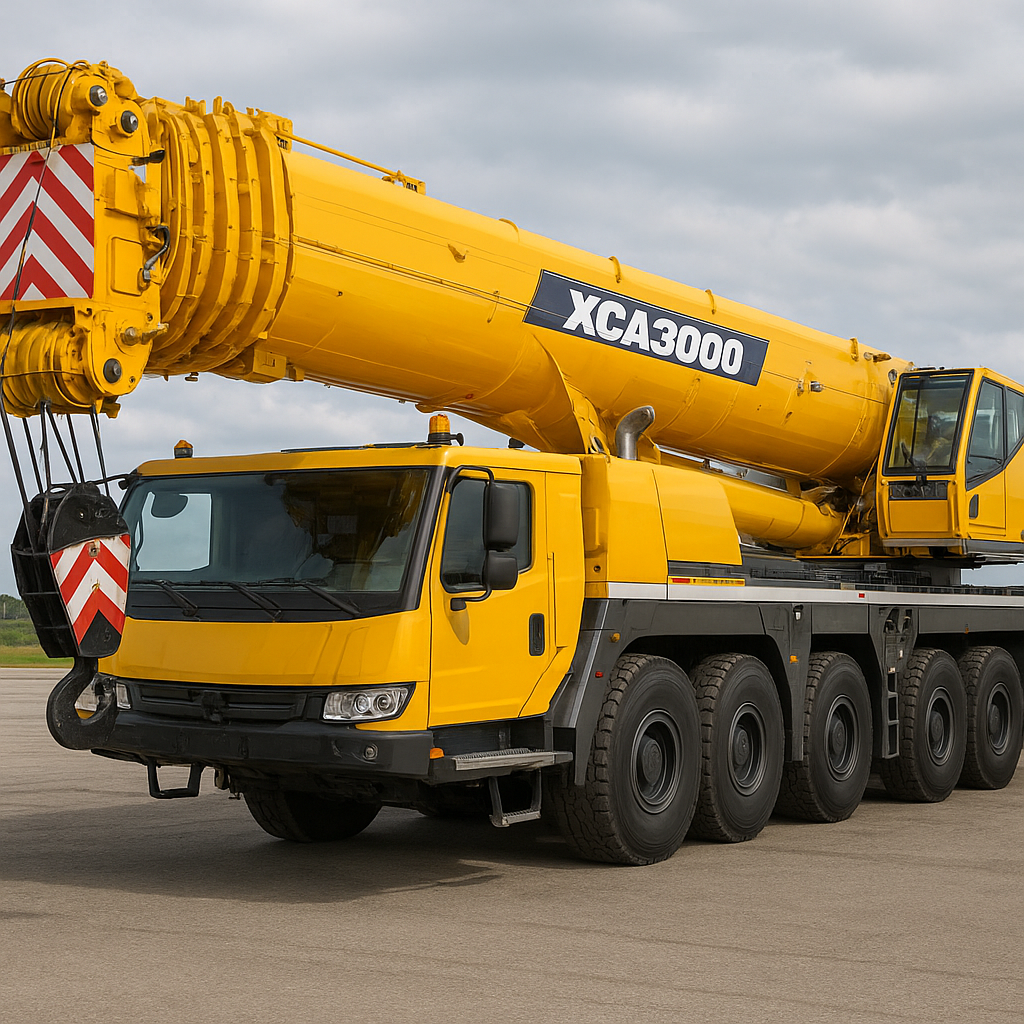
The XCMG XCA3000 is a modern all-terrain crane that blends mobility, lifting power and on-site versatility to serve a wide range of heavy lifting tasks. Designed to travel on public roads and operate on rough jobsite terrain, the XCA3000 is a solution for projects that require both highway mobility and high-capacity lifting performance. This article explores the machine’s design characteristics, typical applications, operational considerations, safety and maintenance aspects, and its place in the global crane market. Throughout the text several key concepts such as capacity, mobility and reliability are emphasized to help owners, operators and project planners understand where this crane adds value.
Design and technical features
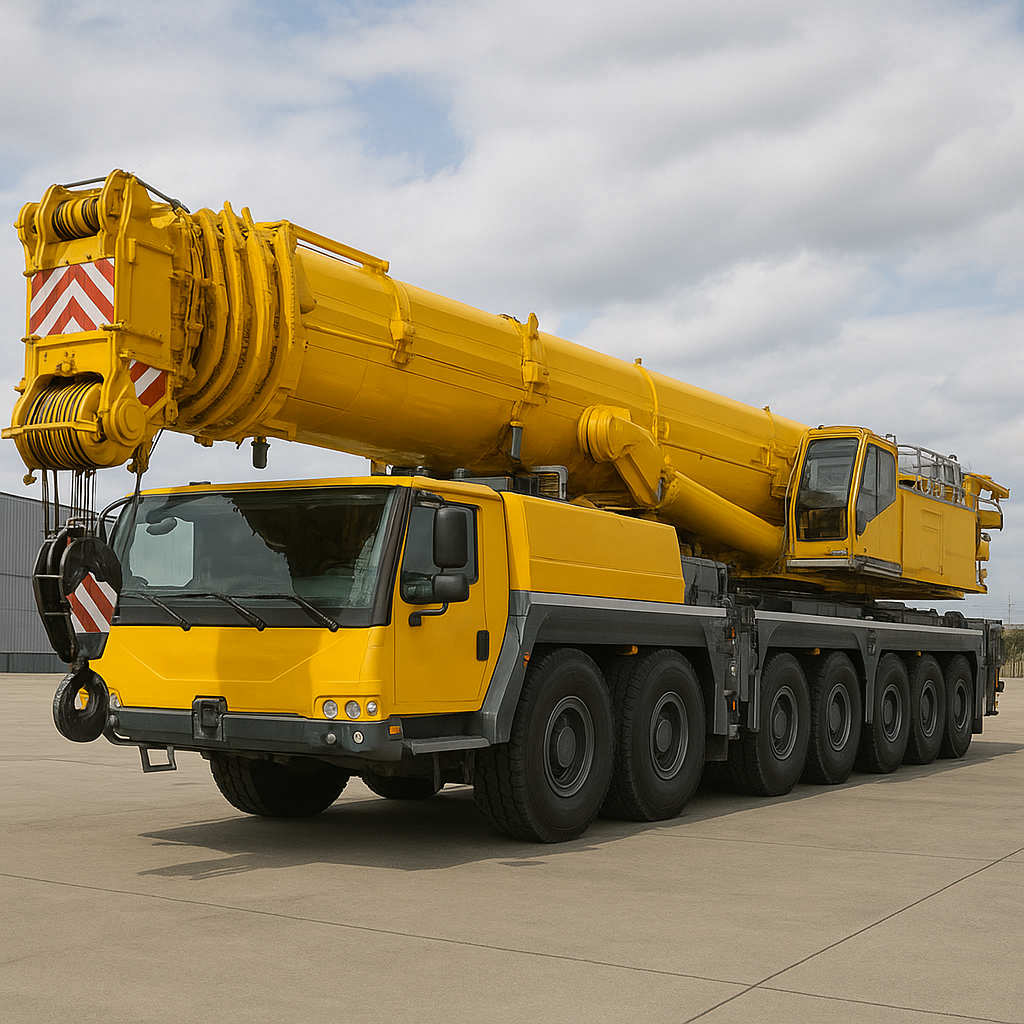
The XCMG XCA3000 is engineered as an integrated carrier and superstructure system that permits travel on roads and rapid setup at lift sites. Its architecture commonly includes a multi-axle carrier chassis, a powerful diesel engine, telescopic boom sections, a lattice or luffing jib option, hydraulic outriggers, and advanced electronic control systems. These components work together to deliver a balance of maneuverability and lifting performance expected of contemporary all-terrain cranes.
Chassis and mobility
The carrier of the XCA3000 is typically built with multiple driven axles and heavy-duty suspension to support the crane’s dead weight and to distribute loads during transport. Features commonly found on all-terrain units of this class include:
- Multi-axle driven carrier with steerable axles to enhance turning radius and highway maneuverability
- Robust hydraulic steering and suspension systems to adapt to varied road and off-road conditions
- Transmission and driveline optimized for both road speed and low-speed torque for winching and positioning
- Compact folding outriggers that stow for road travel and extend to provide stable working footprints
These design choices enable operators to move from site to site rapidly without special transport permits in many jurisdictions, reducing logistics time and cost. The exact axle configuration, top travel speed and road-legal weight vary by market specification and optional equipment.
Boom, jib and lifting systems
At the heart of the XCA3000 is its telescopic boom system, often made of high-strength steel and designed for incremental extension to reach varying lift heights. Typical attributes include:
- Multi-section telescopic boom for quick length adjustment on site
- Optional lattice or fixed jib attachments to increase height and reach for specialized lifts
- High-capacity main winches and auxiliary hoist systems for lifts requiring fine control or tandem operations
- Electronic load moment indicator and anti-two-block systems to protect against overload and hook collision
The telescopic boom provides fast setup for lifts with moderate reach requirements, while lattice jibs or heavy-duty extensions are used when longer reach or higher lifting capacity at greater radius is required. Manufacturers often optimize boom geometry and materials to minimize weight while maintaining structural strength.
Powertrain, hydraulics and control
A reliable diesel engine and hydraulic power system supply the energy necessary for hoisting, slewing, telescoping and steering. The XCA3000 typically integrates:
- Tier-compliant diesel engine to meet regional emissions regulations
- Elec-hydraulic control systems for smooth and precise motion control
- On-board diagnostics and load monitoring for operator assistance
- User-friendly operator cabin with ergonomic controls and clear visibility
Modern variants include CAN-bus communications between the superstructure and carrier, enabling real-time diagnostics and smart load-management features. These systems contribute to safer and more predictable operations, as well as to simplified maintenance routines.
Applications and industries
The XCMG XCA3000 finds its niche in projects where a blend of road mobility and high lifting capacity is required. It is commonly employed by contractors, heavy-lift specialists and rental fleets for a variety of sectors.
Construction and infrastructure
On construction sites the XCA3000 is used for lifting structural steel, precast concrete elements, mechanical plant, HVAC modules and bridge segments. Its ability to travel between sites without special transport makes it valuable for distributed urban projects, where cranes must be fully roadable and quickly deployed.
- High-rise building curtain wall installation and mechanical system lifts
- Bridge girder setting and segmental bridge construction
- Installation of heavy precast concrete panels and beams
Energy sector
Within energy production and distribution, the XCA3000 is frequently used for erecting and maintaining components that require high reach and controlled lift capacity:
- Wind turbine component lifts (nacelles, tower sections and blades) in onshore wind farms, particularly when terrain or road access constrains larger crawler cranes
- Substation transformer installation and replacement of electrical apparatus
- Hydropower plant equipment installation where compact travel and high-capacity lifts are required
Industrial and heavy manufacturing
In heavy industry the crane is used for plant maintenance, assembly of large machinery, and relocation of heavy modules. Its configurable boom and jib options allow precise placement of heavy loads within constrained industrial yards.
Oil, gas and petrochemical
Refineries, petrochemical plants and upstream facilities use the XCA3000 for routine and emergency lifts, including pipe rack installations, modular unit placements, and heavy equipment change-outs. The ability to position heavy equipment precisely is critical in these projects, where downtime is costly.
Operational considerations and site planning
Deploying an XCA3000 effectively requires careful planning around capacity, ground conditions and transport logistics. Understanding the interplay between the crane’s rated capacity and actual jobsite constraints is crucial to safe and economical operations.
Lift planning and charts
Crane selection must begin with accurate lift planning. Each XCA3000 comes with manufacturer-supplied load charts that define permitted lifts at various radii and boom configurations. Key points include:
- Rated capacity is a function of boom length, angle and counterweight configuration
- Outrigger footprint and ground bearing pressure must be considered when selecting permissible load values
- Use of jibs or extensions will change the load chart and may require additional counterweights
Operators and lift planners must apply derating factors for ground slope, dynamic lifts, or environmental forces like wind. Modern on-board safety systems help enforce chart limits, but human oversight remains essential.
Ground conditions and outrigger setup
Correct outrigger deployment is fundamental. The ground must be prepared to distribute the loads safely; this often means using outrigger mats, timber pads or engineered plates to prevent bearing failure. Typical best practices include:
- Assessing soil bearing capacity with geotechnical input for large lifts
- Specifying appropriate outrigger pad sizes and materials
- Ensuring level setup within the manufacturer allowable gradient range
Failure to prepare ground support adequately can reduce effective lifting capacity and increase risk of tipping or structural failure.
Transport and logistics
Although all-terrain cranes like the XCA3000 reduce the need for specialized transport, logistics remain important. Considerations include route surveys for height and weight restrictions, permits for oversized loads, and coordination for disassembly/reassembly where necessary. The crane’s road-legal status depends on regional laws and optional equipment that influence overall dimensions and axle loads.
Safety, maintenance and lifecycle costs
Operators and owners must factor in safety systems, maintenance intervals and total cost of ownership when acquiring and operating an XCA3000 class crane. Proper training, robust maintenance and preventive servicing extend machine life and reduce downtime.
Safety systems and operator training
Key safety systems integrated into the crane include:
- Load moment indicators and automatic cutoffs to prevent overload
- Anti-two-block devices and hoist interlocks to prevent hook block incidents
- Platform stability monitoring and outrigger position sensors
- Emergency stop systems and safe descent features
Comprehensive operator training programs covering both theory and supervised practical experience are essential. Skilled operators can maximize safe productivity while minimizing the risk of equipment stress and accidents.
Maintenance and inspection
Routine maintenance tasks for an XCA3000 involve lubrication, hydraulic system checks, engine servicing, wire rope inspections, periodic non-destructive testing of critical structural elements, and load-testing when required. A rigorous inspection regime typically includes daily pre-start checks, weekly detailed inspections, and scheduled major services based on operating hours.
Well-documented maintenance records help with warranty compliance, resale value and regulatory audits. Predictive maintenance—using telematics and on-board diagnostics—can reduce unplanned downtime and optimize parts inventory management.
Economics and lifecycle planning
Purchasing vs. renting decisions hinge on utilization rates. Large rental fleets often offer XCA3000 units to contractors who need high-capacity lifting for limited durations. Factors that influence lifecycle costs include fuel consumption, spare parts availability, operator training, and the residual value of the machine. Investing in a reputable manufacturer and ensuring access to genuine parts and service networks reduces long-term costs.
Market context, competition and environmental impact
XCMG has positioned the XCA3000 within a competitive segment dominated by global manufacturers of all-terrain cranes. The market values machines that deliver a strong combination of lifting capacity and mobility, while meeting increasingly stringent emissions and safety regulations.
Competitive landscape
The all-terrain crane market includes several established European, North American and Asian brands. Key differentiators often include:
- Availability of different counterweight and boom configurations to match job requirements
- After-sales service network and parts supply
- Integration of digital tools for lift planning and telematics
- Cost-performance ratio, including purchase price and operating costs
XCMG competes by offering modern features at competitive price points and expanding its service infrastructure globally to support customers across continents.
Environmental considerations
Environmental impact is increasingly important in equipment procurement. Modern all-terrain cranes aim to reduce emissions through more efficient engines, improved hydraulics and options for hybrid or electrified subsystems where applicable. Fuel efficiency and the ability to minimize site disturbance with quick setup and precise lifts contribute to lowering the carbon footprint of heavy-lift operations.
Practical examples and case uses
To illustrate the XCA3000 in action, consider a few representative scenarios where this class of crane excels:
- Urban bridge replacement: The crane travels on highways to the worksite, sets up on prepared outriggers, and lifts prefabricated bridge segments into place with minimal disruption to traffic.
- Industrial plant revamp: The crane installs and removes heavy process modules, negotiating confined spaces within a plant while providing stable and precise placements.
- Wind farm erection in remote terrain: The crane transports across rural roads, sets up on variable ground conditions, and lifts nacelles and tower sections to required heights using jib extensions.
These scenarios highlight the XCA3000 strength in applications requiring both mobility and significant lifting capability within constrained or logistically challenging environments.
Final remarks on selection and procurement
Choosing the right all-terrain crane should start with a detailed assessment of project lift profiles, site access constraints and expected utilization. Critical questions to address include:
- What are the maximum weights, radii and heights of planned lifts?
- How frequently will the crane travel between job sites and what are the transport restrictions?
- Do local emissions or noise regulations affect engine selection or require additional mitigation?
- Are spare parts and qualified maintenance personnel available locally?
When configured and managed properly, the XCMG XCA3000 provides an effective tool for contractors and heavy-lift companies that need a reliable all-terrain crane capable of handling demanding lifts with reasonable transportability. Its combination of flexibility, power and modern control systems make it a competitive choice for many infrastructure and industrial projects.
Selected approximate specifications for reference (typical for a 300-ton class all-terrain crane; exact figures depend on configuration and model year):
- Rated lifting capacity: approximately 300 tonnes (varies by boom and counterweight setup)
- Telescopic boom length: commonly in the range of 30 to 60+ metres depending on sections
- Optional jib reach: can extend effective height to over 80–100 metres with lattice or folding jib systems
- Engine power: typically in the range of 250 to 400 kW depending on emissions tuning and market
- Travel speed: designed for highway travel with speeds subject to local regulations
- Outrigger spread: variable configurations to balance footprint and lifting capacity
These reference figures serve as a starting point. For procurement, always consult the manufacturer’s official datasheets and load charts for the specific XCA3000 configuration being considered.
)
)