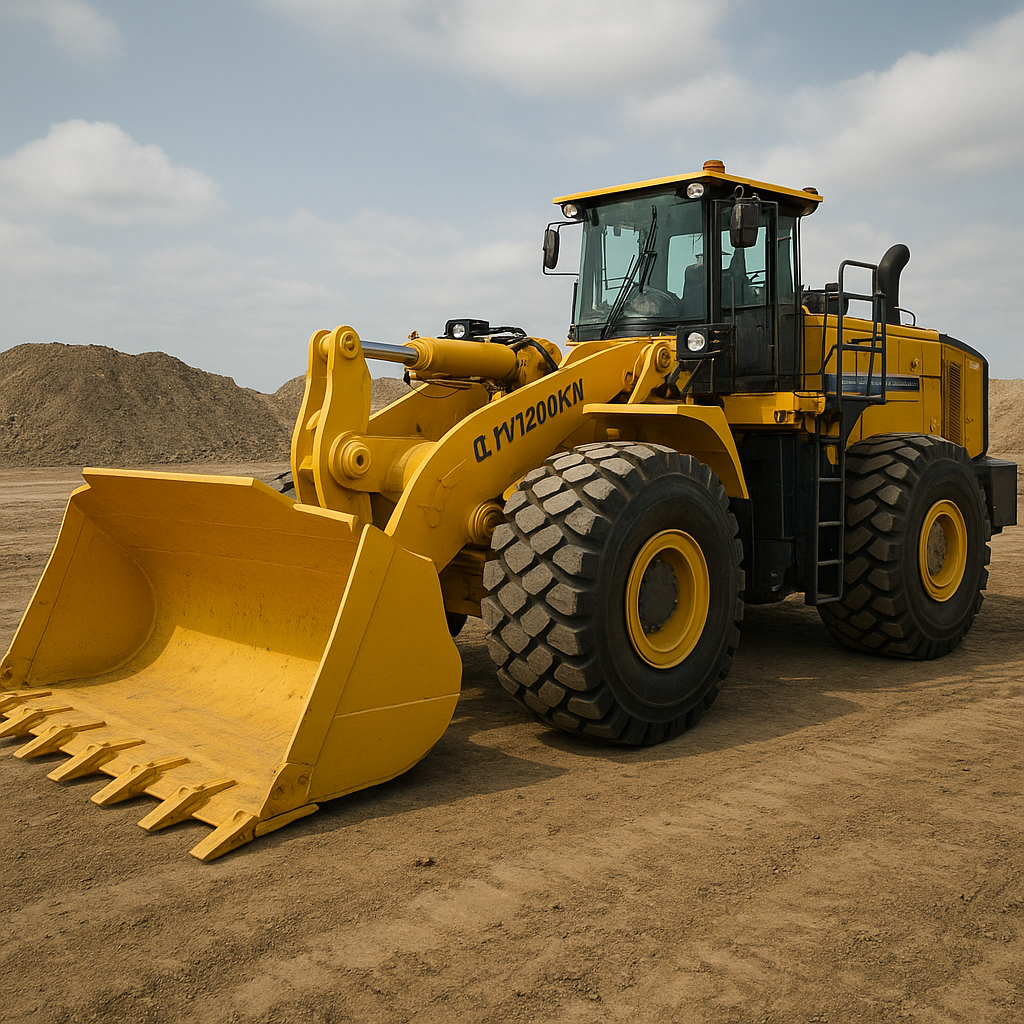
The XCMG LW1200KN is a heavy-duty wheel loader designed for demanding material‑handling tasks across mining, quarrying, large-scale civil engineering and bulk handling operations. Combining robust structural design, versatile attachment options and modern control systems, the LW1200KN aims to deliver stable performance, high productivity and serviceability on jobsites where reliability and uptime are critical. This article examines the machine’s design concepts, typical applications, technical characteristics (with approximate figures where appropriate), operational considerations and practical guidance for buyers and operators.
Overview and design philosophy
The LW1200KN reflects XCMG’s emphasis on blending proven mechanical platforms with updated hydraulic and electronic controls. Built around a reinforced frame and heavy axles, the loader is engineered to handle large loads and repetitive cycles while maintaining structural integrity and predictable handling. Key design priorities include durable components, modular service points for easier maintenance, and operator ergonomics to sustain productivity over long shifts.
- XCMG engineering focuses on scalability—components used in the LW1200KN are often shared across larger and smaller models to simplify parts logistics.
- The machine’s articulation and steering geometry are optimized for balancing maneuverability with stability when carrying maximum loads.
- Cooling, filtration and hydraulic systems are sized for continuous heavy-duty operation in hot and dusty environments typical of quarries and mines.
Primary applications and jobsite roles
The LW1200KN is suited to several high-demand uses where a combination of lifting capacity, breakout force and bucket volume is required. Typical application sectors include:
- Mining and quarry operations — loading haul trucks, feeding crushers and managing dump piles.
- Port and bulk handling — moving aggregates, fertilizers, ores, wood chips and other bulk cargos in terminals.
- Large civil and infrastructure projects — earthmoving, site preparation and material redistribution at dams, highways and airports.
- Recycling and waste management yards — handling processed materials where machine robustness and control are needed.
In these roles the LW1200KN is tasked with high cycle counts, heavy payloads and exposure to abrasive materials. As such, durability of wear parts (bucket, cutting edges, pins and bushes) and the reliability of cooling and filtration systems are crucial performance differentiators.
Technical characteristics and approximate specifications
Exact specifications can vary by market, optional packages and local emissions configurations. The values below are representative ranges for a machine in the 12‑ton class and for the LW1200KN specifically where such estimates are available.
- Operating weight: approximately 11,000–13,500 kg (varies with configuration and counterweight options).
- Bucket capacity: typically 2.5–4.0 m³ for general purpose buckets; larger volumetric buckets are available for light‑density materials.
- Engine power: in the range of 150–220 kW (200–300 hp) depending on rating and emissions package.
- Breakout force and tipping load: designed to match class expectations—strong bucket breakout for hard materials and sufficient tipping load to safely handle full bucket cycles at maximum reach.
- Transmission: powershift or torque‑converter automatic transmissions with multiple forward and reverse speeds to optimize tractive effort and travel speed.
- Hydraulics: high‑flow systems with load‑sensing options to improve cycle times and attachment responsiveness.
- Brakes and axles: heavy‑duty wet disc brakes and reinforced axles to withstand sustained heavy loads.
These parameters place the LW1200KN as a capable mid‑to‑large wheel loader for operations that demand a balance between capacity and maneuverability. Buyers should consult the local XCMG distributor for precise configuration details, weights and certification relevant to their country.
Performance and operational efficiency
Operational efficiency for wheel loaders is measured not only by engine power or bucket volume but by how effectively the machine converts work cycles into tonnes moved per hour. The LW1200KN emphasizes the following efficiency factors:
- Optimized hydraulic flow and valve control to reduce cycle times and deliver consistent bucket fill rates.
- Drive systems tuned for a mix of traction and speed—important when loading large haul trucks or traveling between stockpiles.
- Fuel‑saving features such as electronic engine management, variable fan drives and automated idle reduction that lower fuel consumption over a shift.
In practice, fuel consumption will depend heavily on material type, bucket utilization, terrain and operator behavior. Typical site figures for a machine in this class might be in the range of 18–30 liters per hour under heavy continuous loading, but actual consumption can be both lower (with light duty and eco strategies) or higher (with high idle time and aggressive operation).
Operator environment and controls
Operator comfort and control layout significantly affect productivity and safety. The LW1200KN generally offers:
- A spacious, climate‑controlled cab with good all‑round visibility to the bucket, wheels and rear for safer maneuvering.
- Adjustable seating, column and joystick controls for operator ergonomics.
- Instrumentation that may include a digital display for engine, hydraulic and fault codes and optional telematics for remote monitoring.
Operator cabin design in modern loaders aims to reduce fatigue through vibration isolation, noise control and simple control ergonomics. Training operators to use eco modes, appropriate throttle settings and attachment best practices will improve fuel economy and component life.
Hydraulics, attachments and versatility
Hydraulic performance is central to loader productivity. The LW1200KN typically features a hydraulic system capable of powering a variety of attachments:
- General‑purpose and rock buckets for different materials.
- Multi‑purpose clamshell and grapple buckets for recycling and log handling.
- Fork and pallet attachments for material handling in ports and warehouses.
- Blades, snow‑ploughs and sweepers for municipal and seasonal tasks.
Having an adaptable hydraulic circuit with couplers and quick‑attach systems increases the machine’s utilization across different jobs. Robust hydraulic components and well‑protected lines are important when operating in abrasive or impact‑prone environments.
Maintenance, serviceability and lifecycle costs
Lifecycle cost is often a higher priority than purchase price for fleet managers. The LW1200KN’s serviceability features typically include:
- Ground‑level daily service points (filter access, fluid checks) to speed routine maintenance and reduce downtime.
- Modular components—such as standardized filters, oils and wear parts—that make repairs and parts stocking easier.
- Access panels and swing‑out radiators or cooling cores for cleaning and servicing in dusty environments.
Key maintenance areas to monitor include engine air and fuel filtration, hydraulic oil cleanliness, cooling system integrity and wear components on the bucket and linkage. Predictive maintenance supported by telematics — when equipped — can help schedule interventions before failures occur, improving uptime and reducing emergency repair costs.
Safety systems and operator protection
Safety for the machine and site personnel is achieved through a combination of design features and operational protocols. Common safety provisions include:
- ROPS/FOPS certified cab structures to protect operators from rollovers and falling objects.
- Rear‑view cameras and optional proximity detection systems to reduce blind‑spot incidents.
- Emergency egress, fire suppression provisions (optional), and clear access ladders/handrails for safer ingress and egress.
Operators should be trained in safe load handling, machine stability awareness and pre‑start inspection routines. The use of seat belts, speed limits on site and designated pedestrian exclusion zones also contribute materially to accident prevention.
Market position, variants and comparisons
XCMG positions the LW1200KN as a competitive option in markets seeking robust performance at a lower cost of ownership compared with some global legacy brands. The machine attempts to strike a balance between capability, price and parts availability through an extensive dealer network.
When comparing the LW1200KN to comparable loaders from other manufacturers, consider:
- Standard equipment levels and optional packages (e.g., air conditioning, telematics, heavy‑duty axles).
- Warranty and local dealer support—aftermarket service is crucial for long‑term uptime.
- Total cost of ownership (fuel, maintenance, parts, resale values) rather than purchase price alone.
Environmental and regulatory considerations
Emission standards and fuel type will influence engine choices. XCMG typically offers engines that comply with regional emissions stages (e.g., Tier/Stage or equivalent), but the precise engine specification will depend on market regulations. Operators should verify the emissions certification and available options for diesel particulate filters or SCR kits if required.
Noise and dust control are also relevant in urban or environmentally sensitive projects—additions such as mufflers, dust suppression measures and careful routing of exhausts help meet local restrictions.
Buying considerations and what to inspect before purchase
For buyers considering a LW1200KN—new or used—pay attention to the following checklist:
- Service history and maintenance records; machines with documented preventative maintenance typically outperform those without.
- Condition of wear parts (bucket edges, pins/bushings) and structural elements (boom welds, articulation joints).
- Hydraulic oil cleanliness and the absence of contamination in sight glasses—signs of poor maintenance.
- Engine hours vs. apparent wear—mismatch between low hours and heavy wear can indicate odometer tampering or poor use patterns.
- Availability of local parts and authorized service—check lead times for common consumables.
Common operational best practices
Maximizing the LW1200KN’s lifespan and productivity benefits from these operational practices:
- Use the correct bucket size and shape for the material—overfilling or using undersized buckets increases cycle times and wear.
- Train operators on smooth throttle and hydraulic control to reduce structural shock loads.
- Implement daily checks for leaks, abnormal noises and cooling system performance.
- Rotate tires and monitor inflation pressures for even wear and optimal fuel economy.
Conclusion
The XCMG LW1200KN is a purpose‑built wheel loader aimed at customers needing a reliable, versatile machine for medium to heavy material handling tasks. Its strengths lie in robust mechanical design, adaptable hydraulic systems and an operator environment designed to support long shifts. While precise specifications depend on regional configurations and options, the LW1200KN competes on value by offering a combination of capacity, serviceability and modern features. Potential buyers should evaluate total cost of ownership, dealer support and the exact configuration needed for their application to ensure the machine aligns with production goals.
XCMG LW1200KN wheel loader owners typically prioritize regular maintenance and operator training to fully realize the machine’s potential. Key focus areas for durability and performance are bucket capacity, engine power, the hydraulics package, fuel efficiency, the comfort of the operator cabin, versatility of attachments and proactive maintenance.
)
)