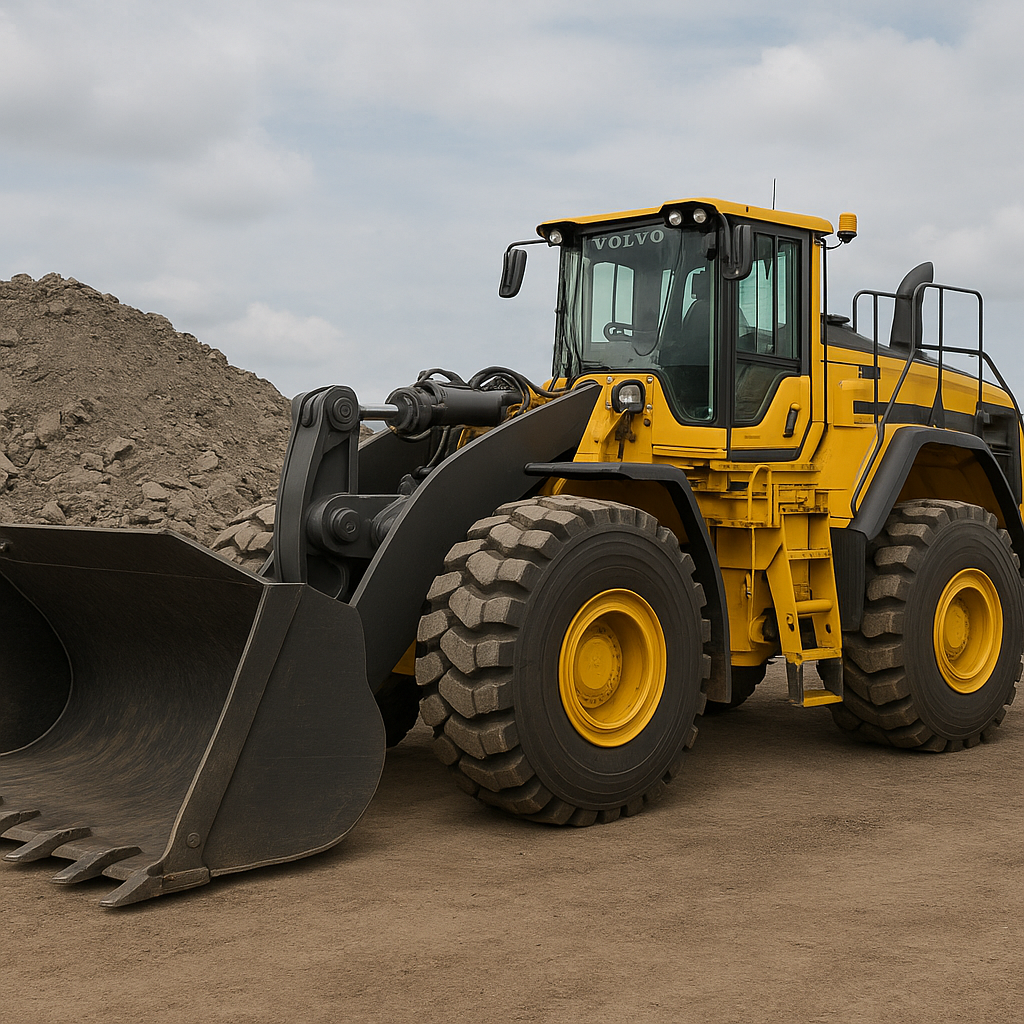
The Volvo L350H is one of the largest and most capable wheel loaders produced by Volvo Construction Equipment. Designed for heavy-duty loading in demanding environments, this machine combines robust mechanical systems, advanced hydraulics, and operator-focused features to deliver high productivity in applications such as quarrying, mining, bulk handling and heavy construction. In the sections that follow, we explore the machine’s design philosophy, typical technical characteristics, common applications, operational and economic considerations, safety and comfort features, and market context.
Design and technical characteristics
The Volvo L350H is engineered to move large volumes of material quickly and reliably. It emphasizes a balance between raw power, structural durability, and hydraulic efficiency to manage heavy buckets and sustained cycles. Key design areas include the powertrain, load-handling front linkage, transmission and torque management, cooling systems, and the reinforced frame and axles needed for prolonged heavy loading.
Powertrain and transmission
- The L350H typically uses a high-displacement diesel engine designed to deliver substantial torque at low rpm to maximize tractive force and breakout capability. Engine outputs for machines in this weight and class often fall in a range that supports heavy-duty tasks—providing a balance between fuel efficiency and continuous power.
- Hydro-mechanical or power-shift transmissions with intelligent shift management are common; they optimize gear changes under load, reducing fuel consumption while maintaining cycle time performance.
Hydraulics and lift system
- The loader’s hydraulic system is sized for fast bucket cycles and precise control under heavy loads. High-capacity pumps and valves help maintain consistent lifting speed when handling large buckets filled with dense material.
- Attachment options—such as high-capacity rock buckets, multi-purpose buckets, and specialized forks—can be mounted depending on the task, and the hydraulic system supports the increased flow and pressure requirements for these accessories.
Chassis, axles and buckets
- To withstand the stresses of hauling large payloads, the L350H is built on a reinforced frame with heavy-duty axles and robust final drives. The machine’s weight and center of gravity are configured to optimize stability while lifting heavy loads to high dump heights.
- Bucket capacities for this class of loader typically range widely depending on configuration—from approximately 8 m3 for dense materials to 13–15 m3 or more for lighter, bulk materials. Bucket choice directly influences cycle times and productivity rates.
Applications and typical uses
The Volvo L350H excels where large, sustained material movements are required. Its principal applications include:
- Quarrying and aggregates: Loading haul trucks and hoppers with shot rock, crushed stone and aggregate, often in high-production, continuous operations.
- Mining (surface/open pit): Moving overburden and ore, loading large-capacity trucks, and working on bench faces where high breakout force and long-term reliability are crucial.
- Bulk material handling: Ports, terminals and stockyards where coal, biomass, fertilizers or recycled materials must be handled quickly and frequently.
- Heavy civil engineering: Large infrastructure projects that require mass earthmoving and efficient handling of excavated material.
In all these environments, the L350H is chosen to maximize tonnage moved per hour, reduce total cost of ownership through uptime, and provide stable, predictable performance in severe conditions.
Performance, efficiency and productivity
Performance metrics for a machine like the L350H are driven by a combination of engine power, hydraulic response, bucket size, and operator technique. Several performance-related points are worth highlighting:
- Cycle times: With large buckets and high hydraulic flow, typical bucket loading and dumping cycles are tuned to minimize empty travel and waiting time for trucks. Efficient sites often aim for short loading cycles paired with optimized truck spotting.
- Payload per cycle: Depending on bucket choice and material density, payloads can vary from several tonnes up to 20+ tonnes per pass. Proper matching of bucket size to truck capacity is essential to avoid under- or overloading.
- Fuel consumption: Fuel use depends heavily on operating conditions. For very large wheel loaders, hourly consumption often ranges from roughly 15 to 40 liters per hour in typical operations, with peaks when pushing heavy loads or working uphill. Actual numbers depend on engine tuning, load profile and duty cycle.
- Operating weight: Machines in this size category commonly have an operating weight between roughly 45,000 and 60,000 kilograms, depending on configuration, attachments and ballast.
When configured and operated correctly, the L350H can deliver high throughput with a favorable balance between fuel use and tons-per-hour. This makes it attractive for operations where maximizing material moved per machine and lowering fleet counts matter.
Safety, operator comfort and technology
Modern Volvo wheel loaders, including the L350H platform, integrate numerous features to protect operators and bystanders while improving machine control and operator productivity.
Cab and ergonomics
- Cab designs focus on visibility, ergonomic controls and noise reduction to reduce operator fatigue. Panoramic windows, optimized mirror placement and camera systems improve sightlines when loading large haul trucks.
- Seats with multiple adjustments, climate control, and well-placed instrumentation support long shifts. Intuitive joystick or lever controls allow precise bucket management.
Active safety systems
- Features commonly available include rear-view cameras, proximity detection, load-sensing hydraulics that prevent sudden movements, and automatic transmission protection to avoid gear abuse under load.
- Machine monitoring systems provide alerts for overheating, low hydraulic pressure, or other critical parameters that help prevent damage and maintain uptime.
Telematics and fleet management
- Telematics systems enable remote monitoring of location, hours, fuel consumption, idle times and diagnostic codes. These tools support preventative maintenance scheduling, theft recovery and performance optimization across a fleet.
- Data-driven insights can reduce unproductive hours, lower fuel costs and extend component life by promoting correct operating practices.
Maintenance, serviceability and total cost of ownership
For large wheel loaders, maintenance strategy and serviceability are critical to sustaining productivity. Key considerations include:
- Service access: Ground-level daily service points, modular components and accessible cooling packs reduce downtime during routine checks and repairs.
- Component life: Heavy-duty axles, final drives and hydraulic pumps are engineered for long life but are expensive to replace—hence fleet managers emphasize preventive maintenance and condition monitoring.
- Total cost of ownership (TCO): While acquisition cost for an L350H-sized loader can be substantial, TCO calculations factor in productivity gains (tons/hour), fuel consumption, maintenance intervals, resale value and uptime. Effective use of telematics and OEM service plans can materially reduce TCO.
Environmental considerations
Manufacturers have progressively improved emissions control, fuel efficiency and component longevity to reduce the environmental footprint of large machines. Environmental features often include:
- Engines compliant with current emissions regulations in target markets (e.g., Tier 4 Final / Stage V or equivalent, depending on region), usually achieved through aftertreatment systems that manage particulate and NOx emissions.
- Engine and hydraulic management systems that reduce fuel use during idle and optimize power delivery during work cycles.
- Options for biodegradable hydraulic fluids and recyclable components in some service parts.
Real-world performance and statistical context
Exact published statistics for the L350H vary by configuration and market, but some general industry-level figures help position the machine’s capabilities:
- Typical operating weight range for loaders in this class: approximately 45,000–60,000 kg. This range reflects differences in attachments, ballast and regional specifications.
- Common bucket sizes: roughly 8–15 m3, with buckets for light materials reaching the higher end of the range.
- Engine power: large wheel loaders frequently have engines delivering in the region of 350–500 kW (approx. 470–670 hp). Exact ratings depend on engine model and emissions configuration.
- Estimated fuel consumption in heavy duty: typical operating consumption for large loaders is broadly in the 15–40 L/h band; efficiencies and modern engine controls can reduce average consumption for similar work cycles.
From a market perspective, high-capacity loaders like the L350H are staples in large quarries and mines where the ability to move many tonnes per hour reliably reduces the number of machines required and improves overall site economics. Fleet managers often measure return on investment in terms of reduced truck cycle times, fewer machines to maintain and lower per-ton handling costs.
Operational best practices and tips
Maximizing the value of a Volvo L350H involves matching machine configuration to the task and adopting best practices in operation and maintenance. Consider the following:
- Match bucket geometry and size to material density and truck body shape to avoid underutilization or excessive wear.
- Train operators in optimized loading techniques—proper truck spotting, minimizing swing time, and using the correct engine and hydraulic modes to balance fuel use and cycle speed.
- Use telematics to track idle time and fuel usage; set up alerts for preventive maintenance to avoid catastrophic failures and expensive downtime.
- Plan for seasonal or environmental issues (dust, extreme heat, or cold) by equipping with appropriate filtration, cooling packages, and pre-heating systems.
Comparisons, alternatives and market positioning
Within the large-wheel-loader segment, the Volvo L350H competes with machines from other major OEMs that offer comparable capacities and features. Decisions between models are often guided by:
- Brand service network and local dealer support—important for uptime in remote operations.
- Specific performance metrics such as breakout force, rated payload, and cycle times under site conditions.
- Options for custom attachments, warranty and maintenance contracts, and telematics ecosystems that integrate with a customer’s existing fleet management tools.
Volvo’s emphasis on operator comfort, safety systems and integrated telematics often differentiates its machines for owners prioritizing long-term fleet management and productive uptime.
Use cases and brief case studies
Examples of where a machine like the L350H makes a measurable difference:
- Large aggregate quarry: One L350H paired with high-capacity haul trucks can reduce the number of loaders required for a given production target, lowering fleet maintenance and increasing per-unit profitability.
- Port terminal handling biomass: The machine’s volume-handling capability, when equipped with an appropriate bucket and material-control options, permits fast stockpile reclamation and ship-loading support.
- Surface mining overburden removal: Robust frame design and high breakout forces allow the loader to contend with compacted overburden and abrasive conditions while maintaining consistent truck loading cycles.
Concluding observations
The Volvo L350H represents a class of wheel loaders engineered for heavy, continuous work where throughput, durability and operator-focused features are priorities. While acquisition costs are significant, the machine’s capability to move large volumes efficiently, combined with modern telematics, advanced safety features and serviceability, can yield strong returns in high-production environments.
When evaluating an L350H or a comparable model, operators and fleet managers should carefully consider site-specific variables—material characteristics, truck pairing, cycle distances and maintenance resources—to ensure the machine is correctly specified and supported. Properly matched and maintained, machines of this scale are central to reducing tonnage costs and sustaining high uptime in the world’s most demanding material-handling operations.
Note: Specified numerical ranges reflect typical characteristics of very large wheel loaders and can vary by market, option package and regulatory configuration. For precise technical specifications, fuel consumption figures and regional availability, refer to the manufacturer’s datasheets or local dealer for up-to-date model information.
)
)