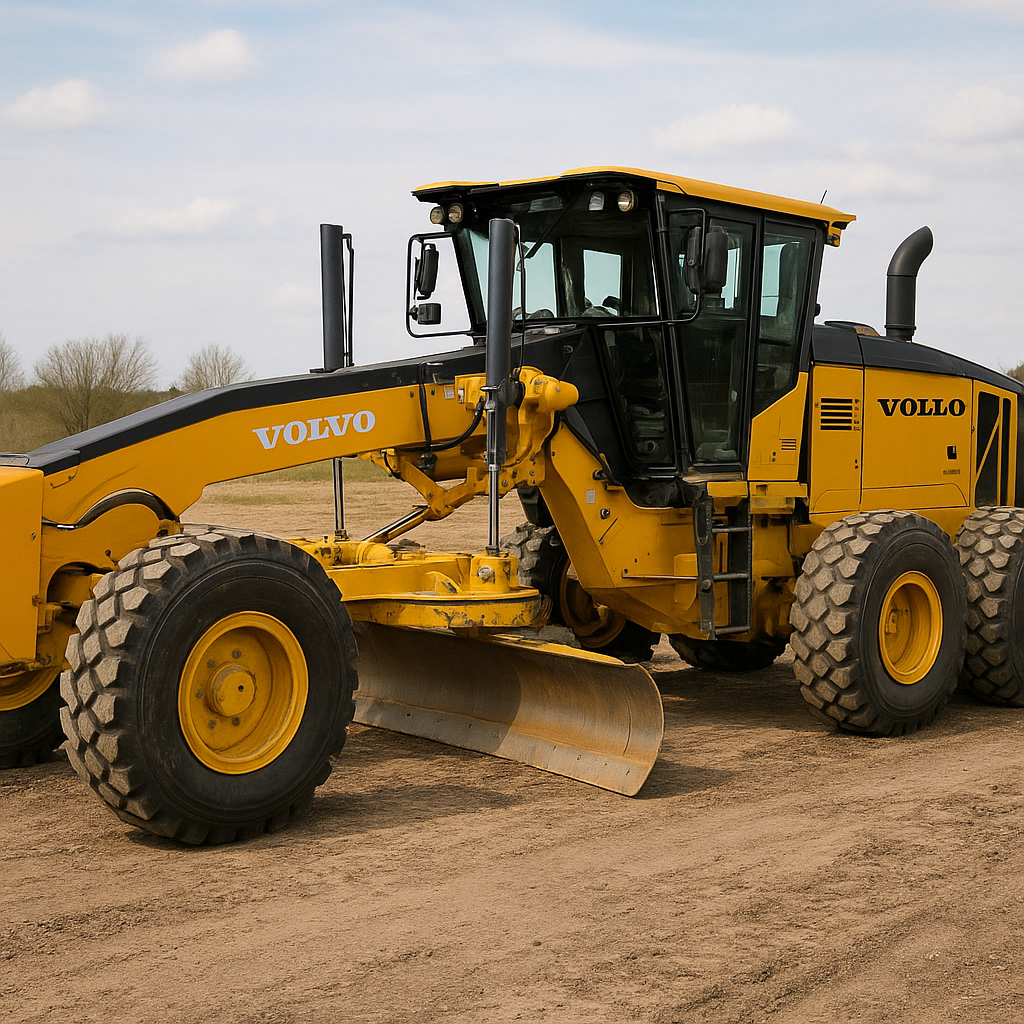
The Volvo G990 motor grader represents a class of heavy civil construction equipment designed to perform precision grading, material spreading and fine leveling on roads, construction sites, mining operations and large-scale earthmoving projects. Combining robust mechanical systems, advanced hydraulics and operator-focused ergonomics, the G990 aims to deliver consistent performance in demanding environments. In the following sections, we explore its typical specifications, practical applications, notable features, operational metrics and considerations for maintenance and total cost of ownership.
Overview and typical specifications
The Volvo G990 is positioned as a high-capacity motor grader intended for heavy-duty use. While exact factory specifications can vary by market and configuration, typical technical characteristics for graders in this class include a powerful diesel engine, high torque output, and a long multi-section moldboard for extended working width. Important specification categories include:
- Power and performance: typical net power ranges from 280 to 450 kW (380–600 hp) depending on engine tuning and emissions package. This power supports heavy cutting and pushing tasks while maintaining travel speed and hydraulic responsiveness.
- Operating weight: large graders often weigh between 25 and 40 tonnes in operating configuration; the higher mass improves traction and grading stability under load.
- Blade (moldboard) dimensions: moldboard lengths commonly fall between 3.7 m and 4.6 m (12–15 ft) with options for extendable wings or multi-piece designs to manage varied cut widths.
- Hydraulic system: closed-center, load-sensing hydraulics with variable displacement pumps improve responsiveness and reduce fuel draw when full flow is not required.
- Tires and traction: 6×6 or 6×4 drivetrains with differential locks and advanced traction control systems ensure consistent traction in soft or uneven surfaces.
Beyond these general figures, manufacturer datasheets provide exact numbers for engine displacement, torque curves, fuel tank capacity and hydraulic flow rates. When comparing models, attention to net drawbar pull, blade cutting force, and travel speeds under load helps determine suitability for a specific job.
Primary applications and industries
Motor graders like the Volvo G990 are used where a high degree of surface accuracy, slope control and material redistribution are required. Typical application areas include:
- Road construction and maintenance — creating finished roadbase layers, shaping shoulders, and maintaining gravel roads. The grader’s precision enables accurate cross slopes and crowns.
- Airport runway and taxiway finishing — achieving stringent flatness and grade tolerances required for pavement laying and surface rehabilitation.
- Mining and quarry operations — constructing ramps, maintaining haul roads and producing consistent road surfaces to reduce vehicle wear and improve safety.
- Large civil works — dam approaches, levee finishing, site grading for industrial facilities, and preparing subgrades for heavy structures.
- Agricultural and land reclamation projects — distributing and leveling soil for large-scale land preparations and irrigation works.
In each of these contexts, the G990’s combination of weight, power and blade control makes it suitable for both primary shaping and final trimming tasks. The machine excels where continuous, long-distance grading with high accuracy is required, and where productivity gains from larger equipment offset higher acquisition and operating costs.
Key features and technical advantages
Modern graders integrate a mix of mechanical robustness and digital control. Key feature areas that typically distinguish a machine like the Volvo G990 include:
Powertrain and efficiency
Advanced engines comply with contemporary emissions standards while balancing fuel consumption and torque delivery. High low-end torque is crucial for maintaining blade penetration in compacted materials. Vehicles in this class often include systems to support fuel efficiency through auto-idle, engine shutdown timers and optimized hydraulic management.
Blade and articulation systems
The moldboard is central to grading performance. Multitude of blade attachments and end-bit options are available to extend life and adapt to abrasive conditions. Powerful cylinder layouts and precise angle control allow operators to maintain exact cross slopes and fine contours. Many units feature circle drive designs to reduce maintenance while enhancing cutting force stability.
Hydraulics and controls
Load-sensing hydraulics supply flow where needed and return unused energy, improving responsiveness while limiting unnecessary fuel use. Electronic controls, programmable work modes and joystick inputs enable consistent, repeatable results even with different operators. Integrated machine monitoring can report cycle counts, hydraulic pressures and fuel consumption for performance analysis.
Traction and undercarriage
Large graders often incorporate advanced differential locks, limited-slip differentials and multi-axle configurations that increase traction. Proper weight distribution and optional ballast kits improve the grader’s ability to push material without excessive tire slip. Robust frame and articulation pivot designs increase durability under cyclical forcing conditions.
horsepower (HP), traction and a well-matched hydraulic system together determine how effectively a grader converts engine power into productive grading passes.
Operator environment and controls
Operator performance is a major determinant of machine productivity. The G990 typically emphasizes visibility, ergonomics and ease of control:
- Cab design: wide glass areas, low-profile hoods and elevated seating positions improve sightlines to the blade, tires and work area.
- Controls: ergonomic joystick and lever layouts reduce operator fatigue and enable intuitive control over blade angle, articulation and ripper if fitted.
- Climate control and noise reduction: efficient HVAC systems and sound-dampening reduce fatigue during long shifts in hot or cold climates.
- Electronics: onboard telematics, GPS-ready interfaces and compatibility with machine guidance systems enable automated grade control and remote diagnostics.
Integration with 3D machine control systems can increase grading accuracy while reducing staking and survey time, significantly boosting overall site productivity.
Attachments, options and customizations
An important advantage of versatile graders is the range of attachments available for specialized tasks. Typical options include:
- Rippers and scarifiers for breaking compacted material ahead of the blade.
- Scarifier-to-ripper combos for tough aggregate and frozen ground.
- Front blades and snowplough configurations for winter maintenance and airport operations.
- Extendable wings and larger moldboards for increased pass width and reduced cycle counts.
- Tire options and chains for icy or soft ground conditions.
- Automatic grade control packages and GPS integration for precision grading.
Choosing the correct attachments can transform a grader into a multi-functional machine that handles a broader set of site requirements, increasing utilization rates and return on investment.
Maintenance, lifecycle and total cost of ownership
Effective maintenance practices directly influence availability and the overall cost of owning a grader like the G990. Key maintenance and cost considerations include:
- Preventive maintenance schedules — oil and filter changes, hydraulic fluid analysis, and scheduled inspections of wear items like circle teeth and cutting edges.
- Underframe and articulation care — regular greasing, checks for play in pivots and monitoring for frame fatigue.
- Tire management — balancing, rotation and replacement planning; tire costs are a significant portion of operating expenses on large graders.
- Telematics and diagnostics — remote monitoring reduces unscheduled downtime by alerting maintenance teams to emerging issues before failures occur.
- Resale and lifecycle planning — larger models that maintain good service records and have compatible parts availability tend to retain higher resale values.
Studies across the construction equipment sector suggest fuel accounts for a sizeable share of operating costs, often rivaling or exceeding labor costs for intensive applications. Investment in fuel-efficient practices, careful operator training and machine controls that limit unnecessary idling will yield measurable cost reductions.
Safety, regulations and environmental considerations
Safety systems and compliance with regional regulations are crucial for heavy equipment operation. Volvo-grade machines typically incorporate:
- ROPS/FOPS-certified cabs to protect operators in rollovers and falling-object scenarios.
- Rear- and side-view cameras, proximity sensors and lighting packages to improve visibility around the machine.
- Emissions-compliant engines with aftertreatment systems meeting Tier/Stage regulations, reducing NOx and particulate output.
- Noise mitigation measures where required for urban or airport operations.
Environmentally, a modern grader balances performance with emission reductions and lower fuel consumption. Operators must also consider site-specific restrictions regarding dust suppression and runoff when grading near sensitive areas.
Productivity metrics and performance indicators
Measuring grader performance requires a set of practical metrics. Common indicators include:
- Material moved per hour (m3/h) — depends on blade width, depth of cut and travel speed; larger graders achieve higher volumes per pass.
- Grade accuracy — measured in millimeters over a given distance using survey or machine control systems; precise graders reduce rework.
- Fuel consumption (L/h) — varies by load; modern machines may average between 15–40 L/h depending on task intensity and engine size.
- Availability and utilization — proportion of scheduled time that the machine is productive vs. in maintenance or idle.
Managers should benchmark machines against these metrics when planning fleets and selecting models to ensure the chosen grader aligns with project throughput targets.
Market positioning and comparisons
The G990 competes in a segment where operators choose between machines based on capacity, lifecycle costs and dealer support network. When comparing graders, consider:
- Manufacturer service footprint and parts availability — critical for minimizing downtime in remote operations.
- Standard vs. optional features — some core capabilities may be optional add-ons that affect purchase price and deployment time.
- Resale trends — historically, well-maintained heavy graders from established brands retain value better due to demand in rental markets and secondary buyers.
- Operator preference — familiarity with controls and cab layout can influence productivity when switching between brands.
Decisions should factor acquisition cost, expected annual operating hours and the total cost of ownership over a typical replacement cycle of 7–10 years.
Case examples and typical jobsite scenarios
Example 1: Highway base preparation — On a long highway project, a G990-style grader can shape high volumes of subbase with fewer passes than smaller machines. With a wide moldboard and optimized travel speed, productivity increases and compaction equipment can follow more consistently, reducing total project time.
Example 2: Mine haul road maintenance — Frequent grading to maintain crown and drainage extends tire life and reduces haul-truck downtime. The grader’s mass and cutting force remove ruts quickly, and integrated controls allow operators to replicate optimal profiles for safety.
Example 3: Airport resurfacing — The need for tight flatness tolerances makes high-capability graders valuable for finishing layers prior to paving. When paired with 3D grade control, the machine reduces survey crew time and minimizes final pavement corrections.
Buying considerations and recommended practices
When procuring a heavy grader such as the Volvo G990, consider the following checklist:
- Define expected annual operating hours and typical tasks to size power and moldboard options appropriately.
- Evaluate dealer service levels, spare-part lead times and warranty terms.
- Assess compatibility with machine control systems to shorten learning curves and improve accuracy.
- Plan for operator training to maximize productivity and reduce wear from improper use.
- Include telematics and condition-monitoring packages to track fuel use, idle time and maintenance needs.
Financing and rental options can also influence decisions; short-term rental may be preferable for one-off projects while purchase is often economical across multi-year programs.
Conclusion
The Volvo G990 motor grader exemplifies a high-capacity solution for demanding grading tasks across road construction, mining, airport works and large civil projects. By combining robust mechanical design, advanced hydraulics and modern operator aids, such a machine delivers the precision, productivity and durability required on large sites. Selecting the right specification, maintaining disciplined service practices and leveraging machine control technology are critical to extracting the best value and achieving consistent grading outcomes.
reliability — versatility — productivity — engine — horsepower — moldboard — blade — hydraulic — traction — fuel efficiency
)
)