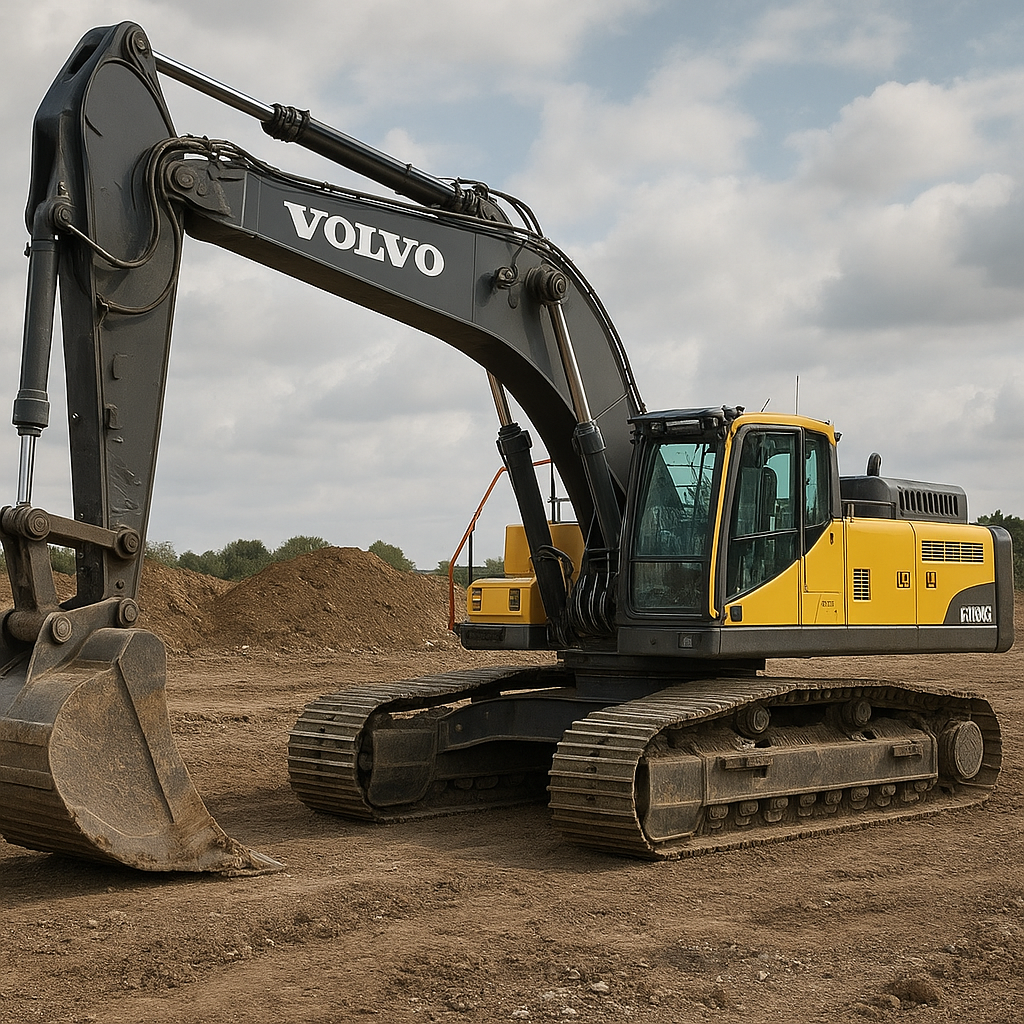
The Volvo EC700C is a heavy-duty hydraulic excavator designed for large-scale earthmoving, quarrying, mining and heavy construction projects. Combining robust engineering with an emphasis on operator comfort and fuel efficiency, the EC700C represents Volvo Construction Equipment’s approach to marrying productivity with long-term durability. This article explores the machine’s design, typical technical characteristics, common applications, operational performance, maintenance considerations and environmental aspects to give a broad picture of where and how the EC700C is used in the field.
Design and general characteristics
The EC700C is a tracked, hydraulic excavator belonging to Volvo’s larger machine classes. It is built to handle heavy-duty tasks that smaller machines cannot economically perform. The machine’s architecture emphasizes structural strength, hydraulic efficiency and serviceability. Typical features include a reinforced undercarriage, a heavy-duty boom and arm, strong track frames and powerful swing and travel systems engineered to withstand continuous high loads found in mining and quarry operations.
Volvo integrates its experience in components and systems into the EC700C platform. The hydraulic system is designed for high flow and pressure to drive large buckets, hydraulic breakers and other heavy attachments, while control systems ensure smooth and predictable operation under heavy loads. The cab is typically mounted to provide good visibility and reduced vibration for the operator, and service points are arranged to simplify routine maintenance.
Technical specifications (typical and approximate)
Specifications for the EC700C vary by market, configuration and attachments. Below are typical ranges and commonly cited figures for machines in this class. Note that exact numbers depend on whether the machine is a standard, long-reach or heavy-duty (rock) configuration.
- Operating weight: approximately 60,000–75,000 kg (132,000–165,000 lb), depending on configuration and counterweight.
- Engine power: commonly in the range of 350–450 kW (470–603 hp) — high-displacement diesel engines tuned for torque and endurance.
- Bucket capacity: typical buckets range from about 3.0 to 6.0 m3 (4.0–7.8 yd3) for standard digging buckets; specialized rock buckets and clamshells can differ significantly.
- Maximum reach (ground level): roughly 10–14 m (33–46 ft) for standard arm/boom configurations; long-reach versions extend further.
- Maximum digging depth: typically around 8–10 m (26–33 ft), depending on arm configuration.
- Swing speed: designed for heavy load handling with swing torque sufficient for continuous rotation under load; often in a modest rpm range to prioritize torque over speed.
- Hydraulic system: high-flow variable displacement pumps, advanced control valves and electronic regulation for precise attachment control and optimized power distribution.
Some EC700C units were offered with optional heavy-duty undercarriage packages, reinforced booms and arms for rock and demolition work, and factory or dealer-installed automation systems to assist grading, digging depth control and production monitoring.
Primary applications and industries
The EC700C is intended for heavy applications where mass, reach and hydraulic power are required. Typical uses include:
- Open-pit and surface mining: loading haul trucks, bench cutting and high-production digging.
- Quarrying and aggregate production: handling hard rock, excavating faces and loading crushers.
- Large civil engineering projects: foundation excavation, river dredging (with appropriate attachments) and heavy earthworks.
- Infrastructure projects: dam construction, road base excavation and large trenching tasks.
- Bulk material handling: when equipped with clamshells or specialized grabs, EC700C machines can move large volumes of material quickly.
In each of these environments, the EC700C’s combination of mass and hydraulic power enables high hourly production rates when matched with the appropriate bucket and operator practices.
Performance and productivity
Productivity of an EC700C depends heavily on attachment selection, digging profile, operator skill and site conditions. Typical productivity indicators include cycle time, bucket fill factor and fuel consumption per tonne moved.
Key performance features that affect productivity:
- Hydraulic efficiency — advanced pump and control systems allow more efficient power use, reducing wasted energy and improving cycle times under load.
- Stability and mass — heavier machines allow larger payloads and steadier operation when swinging and loading haul trucks.
- Attachment compatibility — ability to use large rock buckets, heavy ripper teeth, material handling hooks or hydraulic breakers increases versatility on multi-task sites.
- Control systems — proportional joystick controls and optional electronic aids (depth/grade assist, auto-tilt) reduce operator fatigue and improve repeatability.
Examples of productivity metrics for machines of this class (approximate, illustrative): a well-configured EC700C in a quarry loading application may achieve cycle times in the 25–40 second range and move several hundred tonnes per hour depending on bucket size and material density. Fuel consumption can vary broadly — site conditions, duty cycle and attachment loads can move consumption from moderate (20–40 L/h) to high (50+ L/h) figures in continuous heavy digging.
Operator environment and safety
Volvo typically emphasizes ergonomics and safety in its larger excavators. The EC700C’s cab is designed to provide visibility, comfort and protection for long shifts in demanding environments. Features commonly included or available:
- Spacious cab with suspension seat, ergonomic controls and noise suppression for reduced operator fatigue.
- Large glazed areas and rearview cameras or optional 360-degree camera systems to enhance visibility around the machine.
- Climate control (heating and A/C) to maintain performance in extreme temperatures.
- ROPS/FOPS-certified cab structures for rollover and falling-object protection.
- Safety interlocks and walkways with anti-slip surfaces for safe maintenance access.
On high-value job sites, the combination of operator aids and safety features helps improve uptime, productivity and reduces accident risk. Proper operator training remains a critical factor in safe, efficient machine operation.
Attachments and customization
One of the strengths of large excavators like the EC700C is the wide range of compatible attachments. These extend the machine’s usefulness beyond basic digging:
- Large rock and general-purpose buckets sized for specific material densities and truck payloads.
- Hydraulic breakers for secondary breaking and demolition tasks.
- Rippers for loosening compacted or frozen ground.
- Grapples and thumbs for demolition, sorting and material handling.
- Clamshells and grabs for bulk handling or dredging operations.
- Rotating couplers and quick couplers to reduce changeover times and improve versatility.
Dealers and aftermarket suppliers often provide heavy-duty reinforcement kits, wear packages and specialized hydraulic circuits to tailor the EC700C to specific applications such as rock handling or long-reach dredging.
Maintenance, serviceability and lifecycle costs
Lifecycle cost is a major consideration for owners of large excavators. The EC700C’s design aims to reduce downtime and service costs through accessible service points, robust components and modular assemblies.
- Accessible daily service points (filters, fluid checks, greasing points) reduce time spent on routine maintenance.
- Modular component design (cooling package, hydraulic pumps, final drives) helps speed repairs and lowers parts inventories.
- Wear parts (track shoes, idlers, bushings) are designed for replaceability without major structural work.
- Telematics and fleet management systems (often optional) track machine hours, fuel use and service alerts to optimize preventive maintenance.
Proper maintenance practices significantly extend the machine’s useful life; for heavy machines like EC700C, prime working life measured in hours can exceed 20,000–30,000 hours with rigorous maintenance and appropriate rebuilds of major components. Rebuild and reman programs for engines, hydraulic pumps and final drives can reduce total lifecycle cost compared to purchasing new machines.
Environmental considerations and regulations
Because the EC700C is a high-consumption heavy machine, environmental factors and emissions regulations play a major role in its specification and operation. Modern versions or retrofitted machines use engines meeting regional emissions standards (Tier/Stage/Final) with aftertreatment systems such as selective catalytic reduction (SCR) and diesel particulate filters (DPF).
Key environmental measures:
- Use of engines compliant with current emissions standards to reduce NOx and particulate output.
- Fuel-efficient hydraulic and engine management calibrations to minimize greenhouse gas emissions per tonne moved.
- Idle management and auto-shutdown features to cut fuel use during non-productive periods.
- Spill-containment and fluid-management practices during servicing to reduce soil and water contamination risk.
Operators and fleet managers increasingly use telematics to monitor fuel efficiency and reduce operational emissions through behavior changes and route/assignment optimization.
Case studies and real-world examples
While site performance varies widely, several broad examples illustrate typical EC700C use:
- Quarry loading: An EC700C fitted with a 4.5 m3 rock bucket loading 40–60 tonne haul trucks. High hourly tonnage is achieved by matching bucket size to truck payload and maintaining short cycle times with skilled operators.
- Mining benching: Used for primary bench cutting and truck loading, where the machine’s reach and power allow deep cuts and stable loading across benches.
- Large civil excavation: In dam or large foundation projects, the EC700C removes large volumes of overburden and transfers material to stockpiles or to trucks for haul-off.
Feedback from operations emphasizes the importance of matching bucket fill factor to material and training operators on swing and load positioning to reduce unnecessary machine strain and fuel consumption.
Resale value and market considerations
Large excavators like the EC700C retain value when maintained properly, but resale value is influenced by hours, condition, regional demand and technological features. Machines with documented maintenance histories, updated emissions compliance and useful attachments often command higher second-hand prices.
Market trends affecting value include the commodity cycle (demand from mining and construction), local regulation shifts (emissions rules) and the availability of newer machines with improved telematics and efficiency. Purchasing decisions often weigh the higher initial cost of a new, more efficient machine against lifecycle savings in fuel and maintenance.
Conclusion
The Volvo EC700C is a high-capacity hydraulic excavator suited to heavy mining, quarrying and large-scale civil engineering tasks. It blends substantial mass and hydraulic power with a focus on machine durability, operator comfort and serviceability. While specific specifications vary by region and configuration, the class characteristics — large operating weight, powerful engines and heavy-duty attachments — make it an effective choice where production volumes and machine robustness are primary concerns.
For prospective buyers or fleet managers, the key considerations are matching machine configuration and attachments to the intended duty, maintaining rigorous preventive maintenance schedules and using telematics and operator training to optimize productivity and reduce lifecycle costs. Properly applied, an EC700C can be a productive, long-lived asset in demanding material-moving environments.
)
)