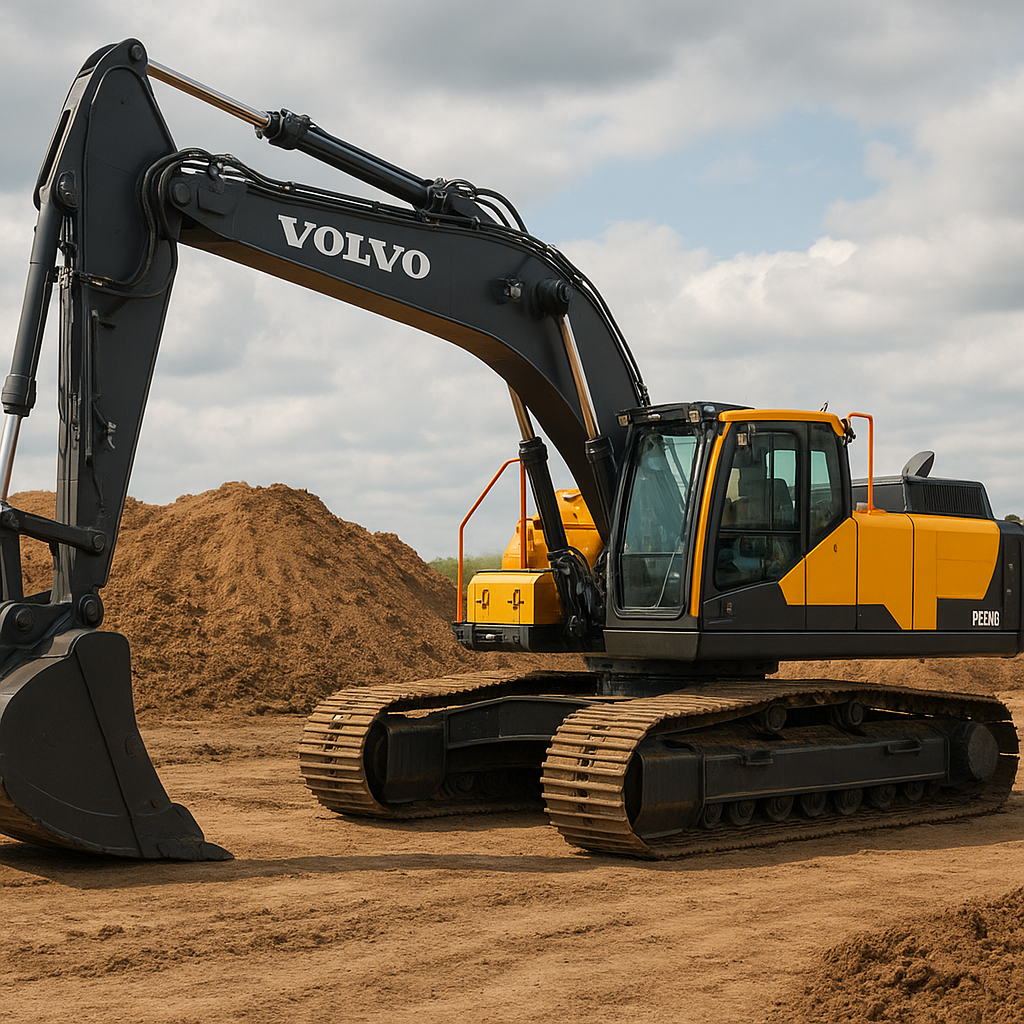
The Volvo EC530EL is a heavy-duty, long-reach excavator designed for demanding earthmoving, dredging and infrastructure work where reach, endurance and precise hydraulic control matter. Combining robust mechanical architecture with advanced hydraulics and operator-focused ergonomics, this machine is often chosen for projects that require high productivity over long operating shifts and in challenging environments. Below you will find a detailed overview of its design, typical applications, technical highlights, ownership considerations and practical tips for maximizing uptime and return on investment.
Design and technical overview
The EC530EL belongs to Volvo Construction Equipment’s lineup of large excavators built around a strong undercarriage, a reinforced boom and arm and a hydraulically efficient system. The “E” and “L” designations in Volvo nomenclature generally point to an updated emission-compliant generation and a long undercarriage or long-arm configuration, respectively. This combination gives the machine improved stability and an extended reach envelope compared with standard short-arm models.
Key structural and mechanical characteristics that define the EC530EL include a reinforced frame, heavy-duty slew bearing, and a counterweight optimized for long-reach stability. The hydraulic system is engineered to deliver smooth, responsive control across a range of flow and pressure conditions, allowing the operator to perform both heavy digging and precise grading tasks.
Engine, power and emissions
The EC530EL is typically fitted with a high-displacement diesel engine from Volvo or an equivalent supplier that complies with contemporary emission standards (such as Stage IV/Tier 4 Final depending on market and year). Typical power output for machines in this class ranges from approximately 250 to 330 kW (roughly 335–440 hp), providing the torque needed for heavy digging and hydraulic operations. Engine management systems prioritize a balance between performance and fuel efficiency, with electronic controls that adapt fuel delivery and regeneration strategies to operating conditions.
Hydraulics and performance
Hydraulic architecture is critical for the EC530EL’s versatility. The machine usually employs a variable-displacement pump system coupled with electronically controlled valves to optimize flow distribution. This yields strong breakout forces and consistent hydraulic response even when multiple functions are actuated simultaneously. Excavators of this size typically offer high hydraulic flow rates and pressure, which translate into powerful arm and bucket forces while maintaining smoothness for fine grading work. The term hydraulic in the context of this machine signifies not just power but precise controllability that enhances productivity and reduces operator fatigue.
Dimensions and capacities (typical figures)
Specifications can vary by region and optional equipment, but typical ranges for a machine like the EC530EL are:
- Approximate operating weight: 50–55 tonnes (50,000–55,000 kg)
- Engine power: ~250–330 kW (335–440 hp)
- Bucket capacity: ~1.5–3.5 m3 depending on material and configuration
- Maximum digging depth: ~9–12 m (depending on arm length)
- Maximum reach at ground level: ~12–16 m (long-reach configurations extend reach)
Because configurations (such as heavy-duty vs. long-reach) and attachments significantly alter certain metrics (weight, reach, hydraulic demand), always consult the machine’s specific datasheet for exact numbers when planning a job.
Primary applications and industries
The EC530EL’s combination of reach, lifting and precise hydraulic control makes it a strong choice across several industry segments. Its long undercarriage and heavy counterweight provide the stability required for lifting over the front or working at longer radii.
- Construction and civil engineering: Large excavation, foundation trenching, slope creation and site preparation. The machine’s hydraulic control enables both heavy digging and fine grading.
- Dredging and waterways maintenance: When equipped with long-reach booms or special dredging arms, the EC530EL can work from banks and barges to remove sediment and maintain navigable channels.
- Mining and quarrying: Secondary digging, loading and bench cleaning in pit and quarry operations—especially where reach and precise control reduce the need for repositioning.
- Demolition: With demolition booms and specialized attachments (shears, pulverizers), the machine can tackle structural work while providing operator safety through reach and visibility advantages.
- Pipeline and utilities: Trenching for pipelines, cable laying and other linear works benefit from the EC530EL’s steady performance in long shift operations.
Across these applications, the machine’s ability to sustain high productivity while controlling fuel use and wear makes it attractive for contractors who must balance output and operating cost.
Attachments, customization and special-purpose variants
One of the strengths of the EC530EL platform is its compatibility with a broad range of attachments that transform the base carrier into a specialized tool. Common options include:
- General-purpose and rock buckets of different capacities
- Hydraulic hammers for breaking rock and concrete
- Grapples and sorting arms for recycling and waste handling
- Rippers for tough, compact materials
- Long-reach booms and arms for dredging or high-reach demolition
- Thumbs and quick couplers to enhance material handling and reduce downtime on attachment changes
Beyond attachments, dealers usually offer factory and aftermarket packages that address needs such as cold-weather operation, extra counterweight for lifting, or marine adaptations for barge work. Telemetry and fleet management packages, such as Volvo’s telematics solutions, can be integrated to monitor machine health, utilization and fuel consumption remotely.
Operator comfort and safety systems
Volvo designs its cabins around long-hour comfort and intuitive control. Key features often include:
- Ergonomic seating with multiple adjustments and lumbar support
- Multi-function joysticks and pilot controls for responsive operation
- Advanced HVAC systems to maintain operator comfort in extreme climates
- High-visibility layouts with wide glass areas and optional camera systems to minimize blind spots
- Integrated safety systems such as load moment indicators, automatic idle, and anti-theft immobilizers
These elements combine to improve productivity by reducing operator fatigue and enhancing situational awareness. Modern EC530EL units may also include advanced operator-assist features—such as hydraulic flow sharing, work mode selection and live performance feedback through onboard displays—that help less-experienced operators work more efficiently and safely.
Maintenance, lifecycle and total cost of ownership
For large excavators like the EC530EL, maintenance strategy plays a crucial role in lowering the total cost of ownership. Key maintenance and lifecycle considerations include:
Preventive maintenance and service intervals
Regular checks of hydraulic oil, filters, engine fluids and undercarriage wear components are essential. Typical service intervals will include daily walkarounds and greasing, periodic hydraulic and engine oil changes, and scheduled inspections of slew bearings and pins/bores. Using manufacturer-recommended consumables and maintaining a documented service log increases resell value and reduces the risk of major failures.
Undercarriage and track wear
The undercarriage is one of the most expensive wear items. Operating on abrasive surfaces or frequent turning can accelerate wear; practices such as avoiding unnecessary travel, moving on flatter paths, and keeping proper track tension extend component life. Replacement cycles vary with job conditions but are a significant part of long-term ownership cost.
Telematics and predictive maintenance
Telematics and remote monitoring systems that provide engine hours, fuel burn, error codes and hydraulic performance metrics are invaluable. Predictive maintenance enabled by telematics can detect anomalies early—before they become failures—allowing for planned repairs that reduce downtime and repair costs. Volvo’s telematics offerings typically provide fleet managers with dashboards that assist in optimizing utilization and scheduling service.
Economic and environmental considerations
Large excavators consume significant amounts of fuel, so improving fuel economy has both economic and environmental benefits. Engines and hydraulic systems in recent Volvo machines are tuned to deliver lower specific fuel consumption, and features like automatic idle shutdown, eco modes, and optimized hydraulic flow improve efficiency.
Environmental compliance is another consideration. Depending on region and year, machines must meet emission standards (e.g., Stage V, Tier 4 Final). Retrofit options for certain systems are sometimes available, but buyers should confirm the certification status for their market to ensure compliance with local regulations.
Practical tips for operators and fleet managers
- Match bucket and arm configuration to the job: Oversized buckets increase cycle times and hydraulic demand; undersized buckets reduce productivity.
- Use telematics data to analyze idle time and adjust operator behavior or training to cut fuel consumption.
- Invest in a quick-coupler system to reduce downtime when switching attachments on multi-purpose jobsites.
- Document and follow a strict greasing and filter-change schedule to extend component life and resale value.
- Train operators on energy-efficient digging techniques—smooth, deliberate cycles often outperform aggressive, high-RPM operation.
Resale value, market availability and competitive positioning
The resale value of large excavators like the EC530EL is influenced by operating hours, maintenance history, and condition of the undercarriage. Well-maintained machines with full service records and telematics history tend to command a premium on the secondary market. In regions with active infrastructure and mining sectors, demand for used heavy excavators remains robust.
Competitors to the EC530EL include heavy long-reach models from other established manufacturers. Volvo often competes on the basis of operator comfort, integrated technology, global dealer support and a reputation for reliability. When evaluating options, fleet managers should compare fuel consumption, net hydraulic power, available attachments and dealer support networks.
Case studies and typical job scenarios
Several job types showcase the EC530EL’s strengths:
- River and canal dredging: Fitted with a long-reach arm and specialized bucket, the machine removes silt from the riverbed while remaining safely onshore or on a barge, reducing the need for repeated repositioning.
- Urban demolition: A long-reach configuration allows safe dismantling of structures from a distance; hydraulic grapples and shears sort and process demolition material for recycling.
- Large earthworks: In infrastructure projects like highways and rail lines, the EC530EL can handle heavy cutting and benching while minimizing cycle times through powerful hydraulics and a high-capacity bucket.
Summary and final observations
The Volvo EC530EL is a heavyweight contender in the long-reach excavator category, offering a blend of reach, power and operator-focused features that make it suitable for dredging, heavy construction, demolition and quarry work. With robust hydraulics, substantial lifting and digging capabilities, and compatibility with a wide array of attachments, the machine presents a flexible platform for contractors who need a reliable, productive carrier for large-scale projects.
When considering acquisition, focus on matching the machine’s configuration to your job requirements, verifying service history and telematics capability, and planning a preventive maintenance program to control lifecycle costs. Properly managed, an EC530EL can deliver high uptime, strong performance and competitive resale value across its service life.
)
)