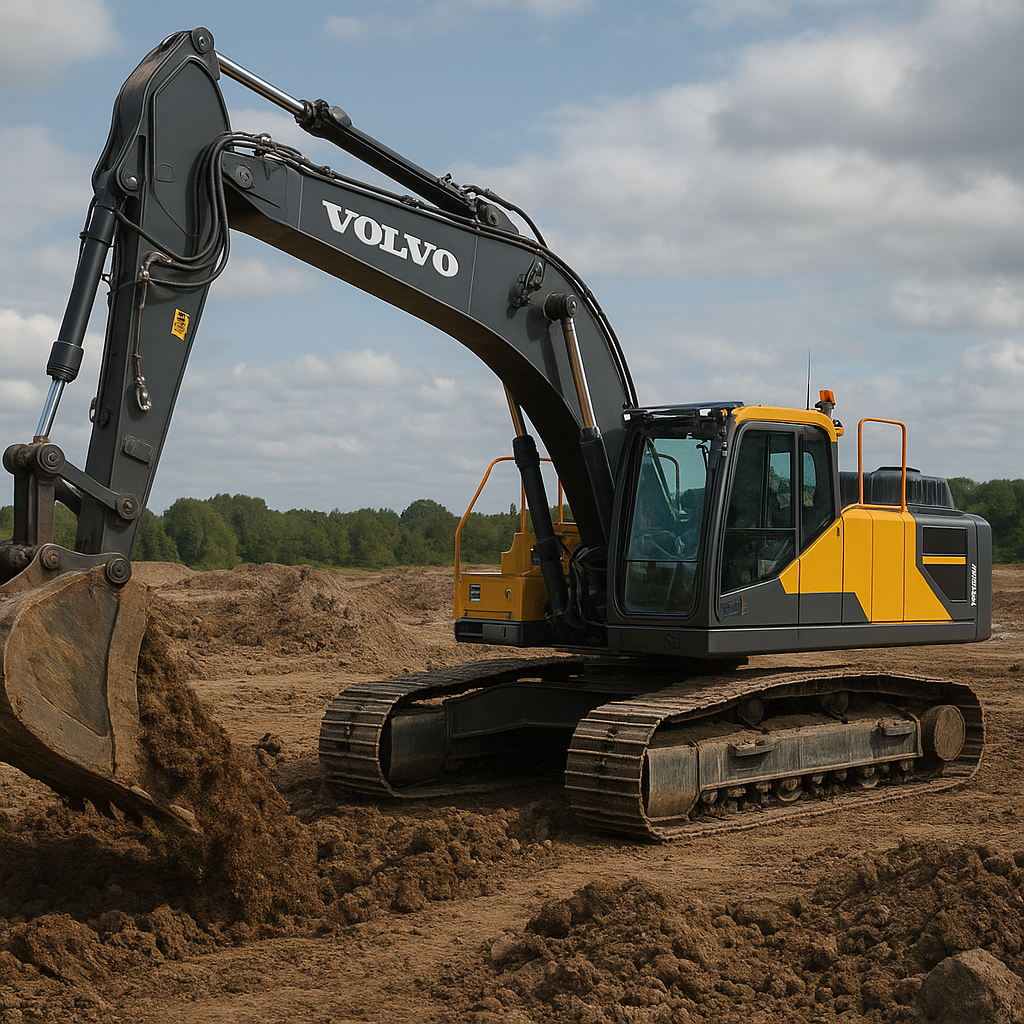
The Volvo EC530E represents Volvo Construction Equipment’s offering in the heavy excavator class, designed to deliver a balance of raw digging power, long-term durability and modern electronics-driven efficiency. Built for large earthmoving, quarrying and heavy civil construction tasks, the EC530E is a machine meant to handle prolonged cycles under demanding conditions while helping operators and fleet managers optimize productivity and operating costs. Below you will find a comprehensive look at the EC530E’s typical uses, important features, technical characteristics (noting that exact values vary by configuration and market), and practical guidance for owners and operators seeking to get the most from this heavy excavator.
Overview and key features
The EC530E sits in the segment of high-capacity hydraulic excavators intended for heavy-duty work: foundation digging, large-scale trenching, loading large haul trucks, socketing rock and handling bulk materials in quarries or mining support operations. Volvo designed this model to combine structural strength with advanced hydraulics and electronic controls to improve cycle times and reduce fuel consumption.
Core design priorities
- Robust undercarriage and reinforced boom and arm sections to withstand continuous heavy loading.
- High-flow hydraulic systems delivering consistent response and strong breakout forces.
- Integrated electronics for performance monitoring, fuel optimization and optional remote diagnostics.
- Operator-focused cab ergonomics with visibility and controls tuned for long shifts.
Key attributes that characterize the EC530E include power, efficiency, durability and productivity. These pillars guide both the mechanical design and the machine’s optional technology packages.
Applications and primary industries
The EC530E is built for projects where large volumes of material must be moved reliably and quickly. Typical application areas include:
- Heavy civil construction: deep excavations for basements, utilities and bridge abutments.
- Quarrying and aggregate operations: loading transfer trucks, ripping and bench cleaning.
- Open-pit mining support: overburden removal, stockpile handling and truck loading.
- Bulk material handling: ports, terminals and large recycling sites where reach and mass-moving capability are required.
- Large-scale site preparation: earthworks for roads, airports and industrial facilities.
Because of its size and hydraulic capacity, the EC530E is less suitable for confined urban sites but excels on expansive sites where reach, bucket capacity and continuous heavy cycles matter most.
Typical technical specifications (approximate)
Specifications vary by market, chosen counterweight, boom/arm configuration and attachments. The figures below represent common ranges and typical values seen across configurations. Use them as a guide rather than absolute values — always consult the machine’s specification sheet supplied by Volvo or the dealer for precise numbers for a given serial number and configuration.
- Operating weight: approximately 50,000–55,000 kg (110,000–121,000 lb) depending on counterweights and attachments.
- Engine power (gross): commonly in the range of 250–300 kW (335–402 hp); engines comply with current emissions standards (Stage V / Tier 4 Final in many markets) and include regeneration and aftertreatment systems.
- Hydraulic system: high-flow main pumps with multi-pump load-sensing or variable-displacement architecture; main relief pressure and flow tuned for heavy attachments.
- Bucket capacity: typical bucket sizes for this class range from about 2.0 m3 up to 4.0 m3 or more for light-density materials; heavy rock buckets are smaller but built for durability.
- Maximum digging depth: commonly around 8.5–9.5 m depending on boom and arm chosen.
- Maximum reach (ground level): approximately 13.5–15.5 m depending on configuration.
- Breakout force: arm and bucket forces vary with boom/arm choices but are engineered to provide high breakout capability for rock and compacted material.
- Travel speed: typical maximum travel speed in low-range gear is several km/h; exact travel speeds depend on undercarriage arrangement.
- Fuel capacity: large tanks to support long shifts without refueling; capacity varies by specification and auxiliary tanks.
Exact weights, dimensions and performance numbers should be verified against the machine’s specification plate or the official Volvo CE documentation for the model year and region.
Performance, fuel efficiency and productivity
Modern heavy excavators like the EC530E are designed with multiple systems to maximize the productivity per liter of fuel:
- Engine management systems that optimize injection timing and torque curves for heavy-load efficiency.
- Hydraulic systems with load-sensing and pump control that match flow to demand, reducing wasted hydraulic power.
- Automatic idle and shutdown functions to cut fuel consumption during waiting periods.
- Work modes selectable by the operator (economy, standard, heavy) to prioritize fuel saving or maximum digging performance as needed.
In practical terms, the EC530E’s design aims to deliver higher net production per hour in deep excavation and truck-loading cycles compared with older machines in the same class. Fuel consumption per cubic meter moved depends on material density, operator skill, bucket sizing and site layout, but careful matching of bucket size to the haul unit and use of optimized work modes are among the most effective measures to reduce liters-per-cubic-meter.
Operator comfort, safety and ergonomics
Volvo emphasizes operator welfare because a comfortable operator is a more productive operator over long shifts. The EC530E cab typically includes:
- Wide glass surfaces and a well-shaped bonnet to maximize visibility to the working area and exits.
- Climate control (air conditioning and heater), adjustable seat with lumbar support and armrests configured around ergonomic joysticks.
- Intuitive multimedia screens for engine, hydraulic and telematics information with easy-to-access shortcuts for common functions.
- Advanced camera systems (front/rear/side) available to improve safety in blind spots and while swinging.
Safety features frequently included or available as options are reinforced handrails, anti-slip walkways, ROPS/FOPS-certified cabins, auxiliary alarms for travel and swing, and lockouts for safe maintenance. These features reduce downtime due to incidents and help protect personnel on busy sites.
Maintenance, serviceability and lifecycle costs
Long-term ownership economics depend heavily on service intervals, ease of maintenance and uptime. The EC530E’s design typically focuses on:
- Accessible maintenance points: grouped filters, ground-level service checks and wide service hoods to shorten routine servicing times.
- Durable components in high-wear areas: reinforced buckets, heavy-duty pins and bushings, and robust undercarriage options for abrasive conditions.
- Predictive maintenance enabled by onboard telematics: engines and hydraulics can be monitored remotely to schedule service before failure happens.
- Extended-life options: factory or dealer-approved packages for heavy abrasion environments (wear plates, rock guards, special lubricants).
Regular preventive maintenance (lubrication, filter changes, inspection of hydraulic hoses and pins, track tension maintenance) is essential to preserve component life and maintain resale value. Fleets often reduce lifecycle cost by pairing Volvo’s dealer service contracts with performance-monitoring tools.
Attachments and versatility
One of the advantages of a machine in this class is the ability to equip a wide variety of attachments that transform the excavator into a multi-role tool. Typical attachments for the EC530E include:
- Various bucket types: general-purpose, rock, heavy-duty, and high-capacity buckets.
- Hydraulic hammers for secondary demolition and rock breaking.
- Grapples for scrap handling or large-log manipulation.
- Thumbs, quick couplers and tiltrotators to expand handling capabilities and shorten cycle times when frequent attachment changes are needed.
- Compaction plates and shears for demolition and recycling work.
Selecting the right attachment and matching it to the machine’s hydraulic flow and breakout capabilities is crucial. Oversized buckets reduce cycle speed and may reduce productivity despite moving more per pass; undersized buckets increase cycles and fuel-per-ton moved. The best setup depends on the hauling system and material density.
Telematics, fleet integration and uptime
Modern Volvo excavators are commonly integrated with telematics services that allow owners to monitor machine hours, fuel usage, idling time, location, and diagnostic codes remotely. These systems offer several advantages:
- Remote health monitoring and predictive maintenance alerts reduce unplanned downtime.
- Fuel and productivity reporting helps identify operator training opportunities and site layout inefficiencies.
- Theft prevention and recovery features through geofencing and GPS tracking.
- Over-the-air updates and dealer connectivity to speed parts ordering and technical support.
Telematics directly contribute to overall fleet uptime and lower operating costs by enabling proactive interventions and by improving logistical planning.
Sustainability and emissions
Volvo CE has been pursuing lower emissions and improved fuel that reduce the environmental footprint of heavy machinery. For the EC530E this typically means the inclusion of engines meeting the latest emission tiers (where required), combined with fuel-efficient hydraulics and idle-management systems.
Operators can further improve sustainability by:
- Using fuel-saving work modes and reducing unnecessary idling.
- Maintaining clean air filters and properly tuned engines to keep consumption optimal.
- Choosing lifecycle-friendly practices such as remanufactured components and responsible disposal of fluids and filters.
Market considerations, resale and total cost of ownership
When evaluating a heavy excavator purchase, buyers should weigh not just upfront cost but also expected uptime, fuel consumption, maintenance intervals, dealer support and expected resale value. Volvo machines typically carry a favorable resale profile in many markets due to recognized brand reputation and strong dealer networks.
- Strong dealer support is often a decisive factor in minimizing downtime and ensuring availability of wear parts.
- Extended warranty and service contracts can stabilize maintenance expenses and simplify budgeting for fleet managers.
- Resale values depend on maintenance history, total operating hours, and the condition of high-wear items like undercarriage and hydraulic components.
Practical tips for operators and fleet managers
To get the best performance from an EC530E in the field, consider the following practical measures:
- Match bucket size to truck payload and cycle time targets; oversized buckets reduce cycle speed and may not increase throughput.
- Train operators on efficient work modes and how to use predictive features of the machine to minimize idling and unnecessary fuel use.
- Schedule regular undercarriage inspections; track wear and adjust tension to avoid premature component failure.
- Use telematics data to identify underperforming machines or operators and to plan efficient refueling and service stops.
- Keep a small inventory of critical wear parts (pins, bushings, teeth) on-site for quick repairs in busy seasons.
Case examples and typical performance contexts
Large excavation sites and quarries provide environments where the EC530E’s strengths shine. In truck-loading operations the combination of a well-sized bucket, high swing torque and steady hydraulic response can yield high loads-per-hour. In bench operations the robust structure and choice of rock buckets and reinforced linkages allow consistent production even when encountering abrasive conditions.
Operators commonly report that optimally configured EC530E machines can sustain multi-shift operations when paired with rigorous preventive maintenance programs and rapid parts support from dealers. Fleet managers often cite improved fuel economy and lower unexpected downtime when telematics and service contracts are fully used.
Final considerations
Choosing a heavy excavator like the Volvo EC530E should be based on a careful analysis of the site’s production goals, material characteristics, haul-truck matching and long-term operating budget. The EC530E aims to deliver a mix of power and durability while integrating modern features for safety, telemetry and operator well-being. By focusing on proper configuration, ongoing maintenance and informed operation, owners can leverage this class of machine to move large volumes efficiently and reliably over its operational life.
)
)