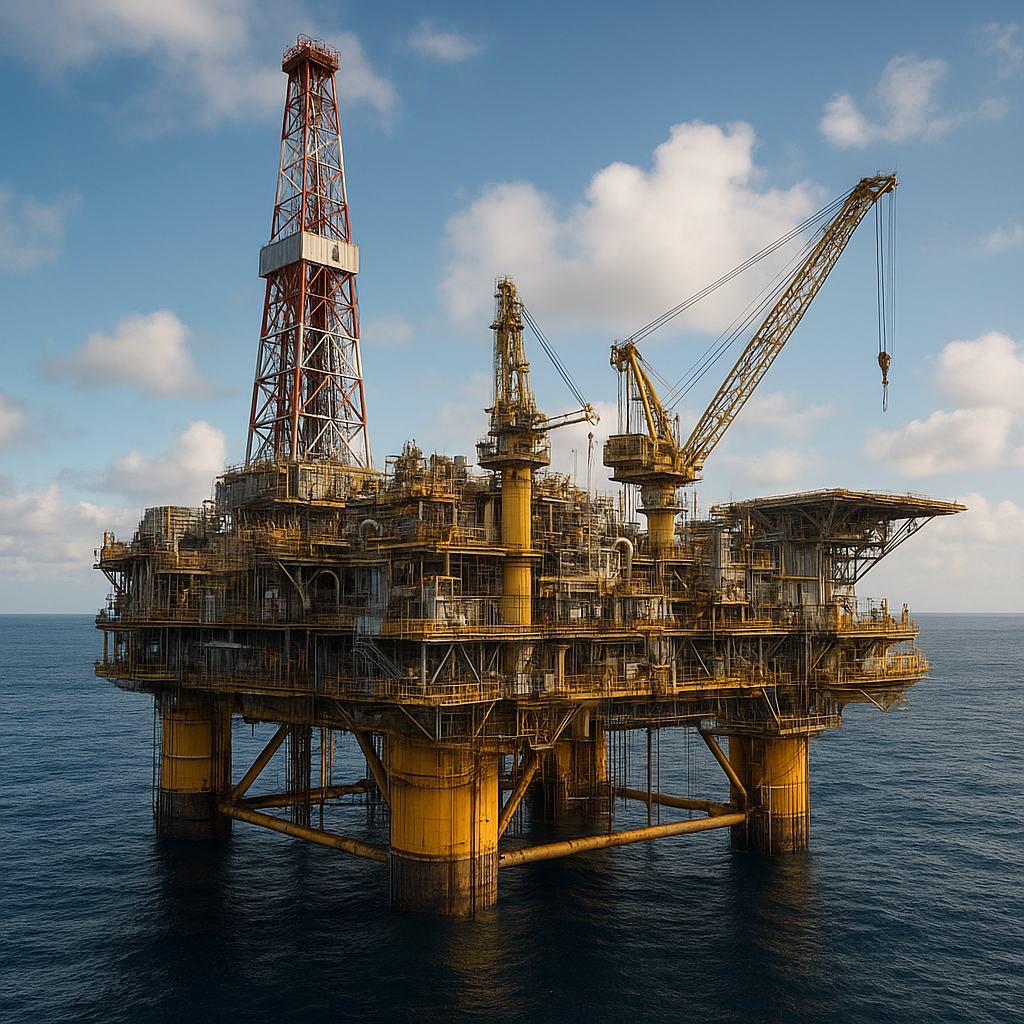
Offshore oil rigs represent staggering feats of human ingenuity, standing as floating cities amid the vast sea. These colossal structures rely on an intricate array of machines, each engineered to withstand harsh marine environments while delivering continuous hydrocarbon production. By exploring the core components and the cutting-edge innovations that drive these giants, one can appreciate the relentless pursuit of efficiency, reliability, and safety in deepwater operations.
The Scale and Engineering Marvel of Offshore Oil Rigs
Structural Designs: Jack-Up, Semi-Submersible and Drillships
Offshore platforms come in various forms, adapted to specific water depths and seabed conditions. The jack-up rig features extendable legs that secure it to the ocean floor in shallow waters. In contrast, semi-submersible rigs operate in deeper seas, using buoyant columns and pontoons to maintain stability while floating above the drilling site. Drillships, equipped with dynamic positioning systems, remain on station through computer-controlled thrusters, enabling access to ultra-deep waters.
Each design demands robust stability analysis, often involving computational fluid dynamics (CFD) to predict wave interactions. Advanced materials, such as high-strength steel and marine-grade composites, reinforce critical sections subject to cyclical loading and corrosive saltwater. The modularity of topside units allows for custom configurations, integrating processing facilities, living quarters, and drilling modules within a compact footprint.
Key Machinery Driving Extraction Operations
Drilling Systems and Power Generation
At the heart of every rig lies the drilling package, led by the derrick—a towering steel framework supporting the drill string. Powerful drawworks provide the mechanical force to raise and lower drill pipes, while mud pumps circulate drilling fluid to lubricate the bit and carry cuttings to the surface. The mud system itself comprises shale shakers, desanders, and centrifuges, crucial for maintaining hole integrity and preventing formation damage.
Powering these systems are high-efficiency gas turbines or diesel generators that supply electricity and mechanical drive. Waste heat recovery units enhance energy utilization, converting exhaust heat into additional power or process steam. Redundancy is built into power distribution via multiple switchgear panels, ensuring continuous operation even during generator maintenance.
Subsea Equipment: Riser, Blowout Preventer and Umbilicals
Subsea operations hinge on the drilling riser, a flexible conduit linking the rig floor to the wellhead. This assembly, often exceeding kilometers in length, must sustain tension to counteract buoyancy and vessel heave. At its base sits the critical blowout preventer (BOP), a massive stack of hydraulically operated valves capable of sealing the well in emergencies. The BOP’s shear rams and annular preventers are tested rigorously to guarantee rapid response in high-pressure scenarios.
Life support for subsea systems arrives through umbilicals, slender pipelines and cables that deliver hydraulic fluid, chemicals, and power to remote control modules and subsea trees. These integrated cables often incorporate fiber-optic cores for real-time telemetry, enabling operators to adjust flow rates, monitor pressures, and diagnose anomalies from the rig’s control room.
Innovations in Automation and Efficiency
Remote Monitoring and Data Analytics
Digital transformation has ushered in automation across rig operations. Sensors embedded throughout machinery capture vibration, temperature, and pressure metrics round-the-clock. Edge computing units process this telemetry to trigger alerts or execute control loops without human intervention. Centralized dashboards present key performance indicators, allowing engineers to optimize drilling parameters and predict equipment failures via machine learning algorithms.
Advanced analytics support predictive maintenance, scheduling servicing when wear patterns indicate an impending fault. This approach minimizes unplanned downtime and extends component life. Meanwhile, augmented reality (AR) tools assist maintenance crews by overlaying schematics onto live camera feeds, streamlining complex procedures and reducing error rates.
Green Technology and Energy Efficiency
Sustainability drives the adoption of low-emission power sources. Hybrid rigs integrate battery storage with traditional generators, smoothing load fluctuations and capturing regenerative energy from crane operations. Some platforms pilot shore-to-platform power cables, eliminating local emissions by drawing electricity from onshore grids. Water-based mud systems now employ biodegradable additives, reducing environmental impact in case of accidental discharges.
Safety Protocols and Maintenance Strategies
Rig Integrity and Preventive Maintenance
Ensuring the structural integrity of a massive offshore installation demands rigorous inspection regimes. Ultrasonic testing and magnetic flux leakage scans detect metal fatigue in critical welds. Cathodic protection systems deploy sacrificial anodes to prevent corrosion on submerged hull sections. Regular load tests certify the performance of cranes, winches, and lifting blocks, safeguarding crew during heavy lifts.
A risk-based maintenance framework ranks equipment by criticality, allowing resource allocation where it matters most. Lubrication schedules, filter replacements, and gasket inspections are tracked via computerized maintenance management systems (CMMS), generating work orders and spares requisitions automatically.
Emergency Response Systems
Comprehensive safety systems include well control protocols, gas detection networks, and firefighting installations. Water deluge and foam monitors are strategically positioned to combat fires on deck, while self-contained breathing apparatus (SCBA) lockers ensure personal protection in hazardous atmospheres. Muster stations, lifeboats, and evacuation chutes undergo routine drills to maintain crew readiness for worst-case scenarios.
Integrated safety instrumented systems (SIS) monitor critical parameters and can initiate automatic shutdowns or activate relief valves to prevent escalation. Each safety layer, from operator training to hardware interlocks, forms part of a robust defense-in-depth strategy that prioritizes human life and environmental stewardship above all else.