The history of construction is a testament to human ambition and technological progress. From the earliest hand tools to today’s intelligent systems, machines have continually reshaped the way we build. By examining these remarkable devices, one can appreciate their profound impact on safety, productivity, and design. This article explores three pivotal eras: the age of steam, the rise of diesel-powered giants, and the dawn of digital automation.
Steam-Powered Giants and the Birth of Mechanized Construction
The industrial revolution brought forth a wave of innovation that transformed construction sites forever. Before steam power, most tasks relied on manual labor or animal strength. The introduction of steam engines marked a turning point, delivering unprecedented force to the worksite and enabling projects on a scale previously unimaginable.
Iconic Steam Machines
- Steam Shovel: Often credited as the first true excavator, the steam shovel was indispensable for digging tunnels, canals, and railroads.
- Cable-Operated Steam Crane: Revolutionized lifting heavy loads with more precision and reduced human risk.
- Portable Steam Roller: Enabled rapid road building and smoother surfaces for early automotive traffic.
One of the most celebrated models was the “Old Eli,” a steam shovel manufactured in the late 19th century. Its massive bucket could move several cubic yards of earth in a single scoop, cutting excavation times dramatically. Alongside this, cranes powered by steam engines could lift girders and stone blocks weighing tons—a feat impossible just decades before.
This era wasn’t without challenges. Steam machinery required constant maintenance and reliable fuel supplies, usually coal. Operators faced hazards like boiler explosions or scalding steam leaks. As a result, the steam age underscored the importance of safety protocols and regular inspections, lessons that remain relevant in modern construction.
Diesel and Hydraulic Marvels: Modern Excavators Take Charge
The 20th century ushered in the age of efficiency and refined power sources. Diesel engines, combined with hydraulic systems, created machines that were more dependable, easier to control, and capable of higher performance than their steam-powered ancestors.
Leading Developments
- Bulldozer: A versatile machine equipped with a heavy blade for pushing large quantities of soil, rubble, or sand.
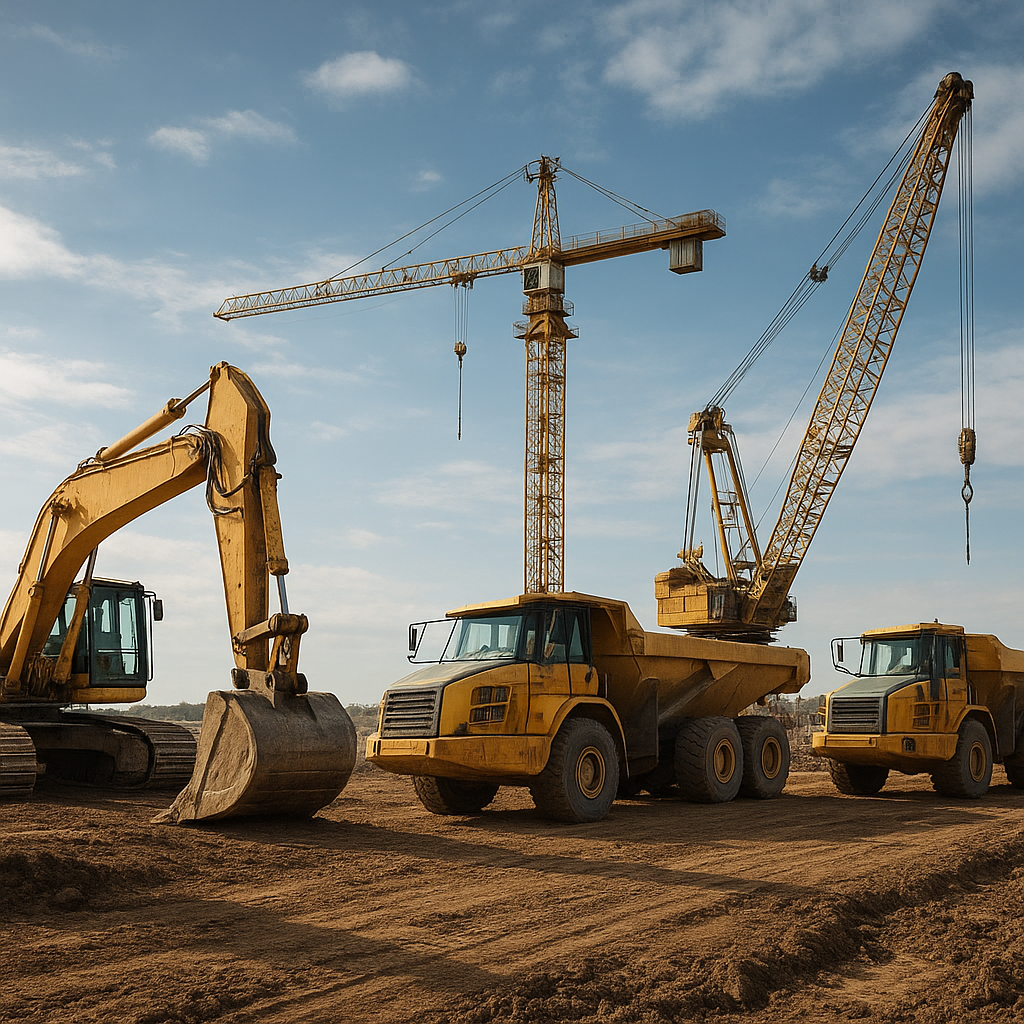
- Hydraulic Excavator: Featured articulated arms powered by hydraulics for precise digging and material handling.
- Asphalt Paver: Ensured smooth, even layers of asphalt for highways and city streets.
The introduction of hydraulic systems represented a breakthrough in engineering. Pressurized fluids could transmit enormous force to pistons, enabling machines to lift, push, and dig with pinpoint accuracy. This precision led to safer operations and less material waste. For example, tower cranes equipped with diesel engines enabled the vertical expansion of cities, giving rise to skyscrapers that define modern skylines.
Advances in productivity were also fueled by innovations such as power-assisted controls and ergonomically designed cabs. Operators could work longer hours with reduced fatigue, and remote-control systems began to appear, laying the groundwork for today’s unmanned technologies.
Automation, Robotics, and Sustainable Construction
As the 21st century unfolds, the focus has shifted toward automation and eco-friendly solutions. Construction sites are now experimenting with robots, drones, and 3D printers that can erect buildings with minimal human intervention. These technologies promise not only greater speed but also a significant reduction in environmental impact.
Cutting-Edge Innovations
- 3D Concrete Printers: Layer-by-layer printing of structural components, reducing material waste and labor costs.
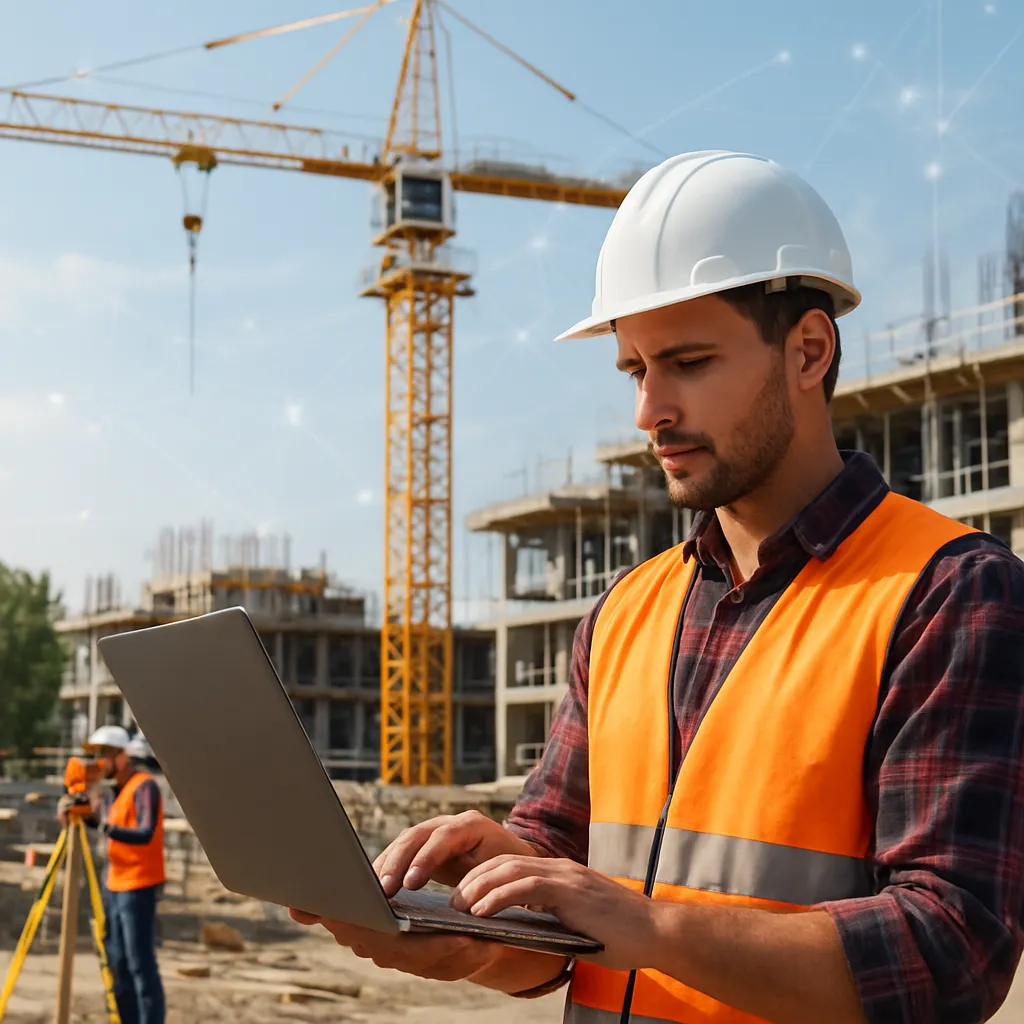
- Surveying Drones: Aerial mapping for site planning, offering real-time data on topography and progress.
- Robotic Bricklayers: Automated systems that place bricks and mortar with mechanical precision.
- Exoskeleton Suits: Wearable devices that support workers’ strength and reduce injury risks.
These machines leverage advanced software, sensors, and artificial intelligence to optimize every aspect of construction. Drones can scan a jobsite in minutes, generating 3D models for architects and engineers to refine their designs. Meanwhile, 3D printing reduces carbon emissions by using recycled concrete and precise material delivery systems.
Another significant trend is the integration of Building Information Modeling (BIM). This digital representation of a project’s physical and functional characteristics fosters collaboration among contractors, architects, and clients. It enhances decision-making by simulating construction phases and identifying potential conflicts before they arise, thereby improving overall sustainability.
Shaping the Future: Trends and Challenges
The construction industry stands at the threshold of a new era defined by connectivity and evolution. IoT-enabled equipment communicates maintenance needs before breakdowns occur, minimizing downtime. Virtual Reality (VR) and Augmented Reality (AR) tools provide immersive training environments, equipping workers with hands-on experience in a risk-free setting.
- Predictive Maintenance: Sensors track machine health and anticipate failures.
- Digital Twins: Virtual replicas of physical assets for real-time monitoring and optimization.
- Green Technologies: Solar-powered machinery and eco-friendly materials.
- Collaborative Robots: Cobots that work alongside humans, boosting capacity without replacing the workforce.
Despite these advancements, challenges remain. Regulatory frameworks must adapt to govern autonomous systems. Cybersecurity is critical as machines become networked. Moreover, training programs must evolve to prepare the next generation of workers for an industry where heavy equipment meets high tech.
Through centuries of progress—from steam engines driving canal digs to autonomous robots erecting structures—the story of construction machines is one of relentless human ingenuity. Each invention has built upon the last, forging a path toward safer, faster, and more innovative building practices. As we look ahead, the fusion of digital and physical realms promises to redefine what’s possible on the construction site, ensuring the tradition of groundbreaking machinery endures for generations to come.