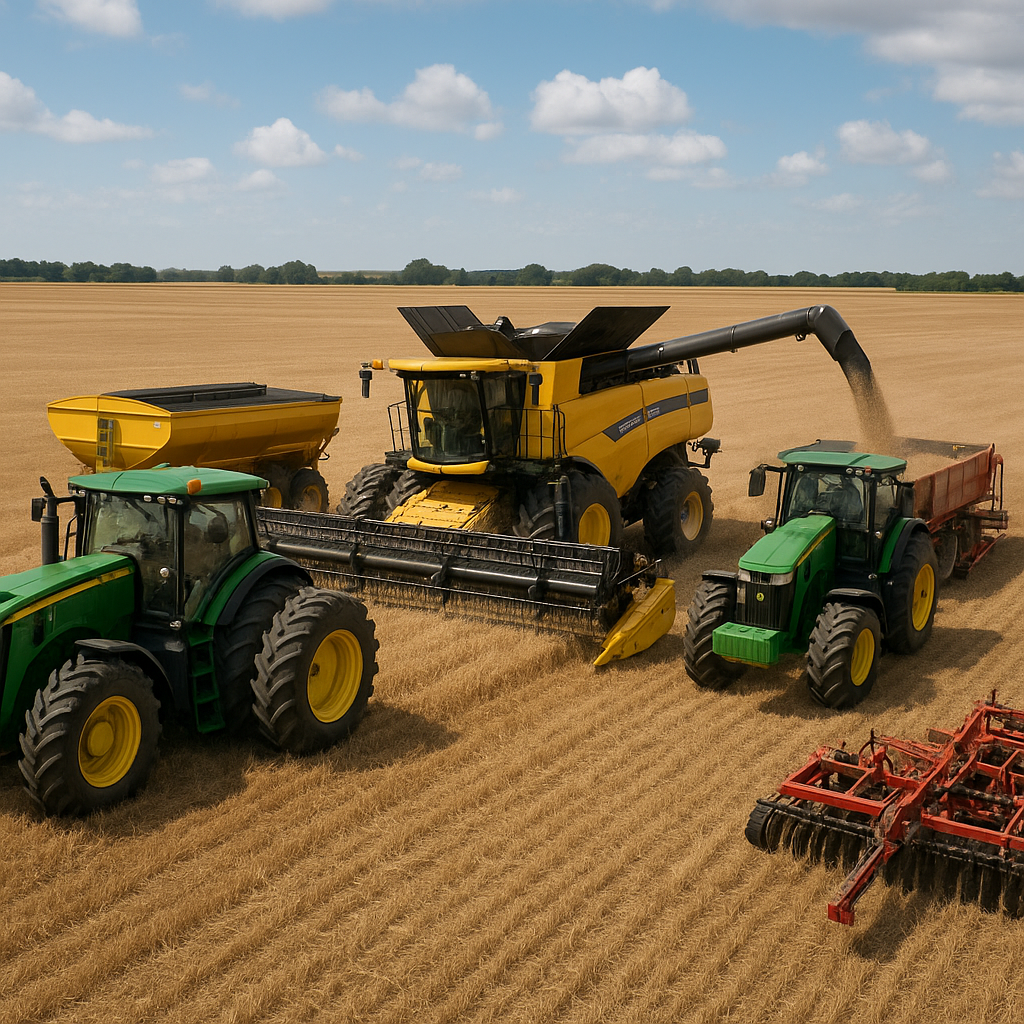
The realm of modern agriculture has been transformed by the rise of colossal machines that navigate vast fields with unmatched precision and power. These mechanical giants have redefined productivity, enabling farmers to cultivate, harvest, and manage crops on a scale once unimaginable. This article explores the most remarkable agricultural machines operating today, delving into their design, technological advancements, and the broader implications for global food production.
Giant Harvesters: Titans of the Fields
At the heart of any large-scale farm lies the harvester, a machine engineered to reap crops at staggering speeds. Leading manufacturers continually push the envelope, producing models that can process thousands of acres in a single season.
The Evolution of Combine Harvesters
- Cutting width: Modern combines boast header widths exceeding 40 feet, maximizing the swath of crop gathered in each pass.
- Cleaning capacity: Advanced sieving systems ensure grain purity, dramatically reducing post-harvest losses.
- Adaptive rotor technology for mixed crop harvesting.
One hallmark of today’s harvesters is the integration of rubber tracks in place of traditional tires. These tracks spread the machine’s weight over a larger area, minimizing soil compaction and preserving field health. Paired with self-leveling systems, they allow combines to operate on hilly terrain without sacrificing efficiency.
Self-Propelled Forage Harvesters
For livestock-oriented farms, self-propelled forage harvesters cut and chop silage crops with remarkable speed. Equipped with high-capacity chopping drums, they tailor particle length for optimal fermentation. Innovations include:
- Variable speed intake systems for delicate handling of leafy greens.
- Hydraulic smoothing plates that optimize crop flow into the chopper.
- Automatic kernel processors for improved digestibility.
Powering Progress: Engines, Technology, and Innovation
Improvements in engine design and on-board electronics have propelled agricultural machinery into a new era. High-horsepower units, combined with telematics and GPS-based guidance, enable unprecedented levels of precision and data collection.
Ultra-High Horsepower Tractors
Modern tractors capable of more than 700 horsepower are no longer rare. These behemoths anchor immense tillage implements or pull multi-row planters at high speed. Key features include:
- Continuously Variable Transmission (CVT) for seamless speed adjustments under heavy load.
- Automated hitching systems that link implements with minimal operator intervention.
- Engine braking and dynamic torque control to maintain constant fuel consumption rates.
Precision Farming and Autonomous Operation
The integration of GPS guidance and auto-steering systems has boosted field accuracy to within a few centimeters. Some of the most advanced machines now offer:
- Fully autonomous operation during repetitive tasks like seeding and spraying.
- Real-time soil mapping sensors to adjust seeding depth and fertilizer rates on the fly.
- Machine-to-machine communication that synchronizes multiple units working in tandem.
Such capabilities not only enhance efficiency but also reduce input costs by optimizing the use of seeds, chemicals, and water. Data collected by these systems feed into farm management software, enabling strategic decisions that increase overall yield.
Impacts and Sustainability: Balancing Scale with Responsibility
While large agricultural machines boost productivity, they also raise questions about environmental stewardship and long-term farm health. Efforts to address these concerns focus on reducing emissions, preserving soil structure, and promoting regenerative practices.
Emission Controls and Alternative Fuels
Stringent regulations have driven manufacturers to innovate cleaner engine technologies. Features now commonplace include:
- Selective Catalytic Reduction (SCR) to reduce nitrogen oxide emissions.
- Exhaust gas recirculation (EGR) systems for lower particulate matter output.
- Trials of biofuel blends and hydrogen-powered tractors to further cut carbon footprints.
Reduced Tillage and Cover Crop Integration
Large earth-moving implements once turned over entire soil profiles, increasing erosion risk. Modern approaches favor minimal-disturbance practices:
- No-till planters that open narrow furrows, leaving most of the field covered.
- Interseeders capable of planting cover crops between main-season rows to improve soil health.
- Residue management attachments that ensure even distribution of plant material.
Economic and Community Dimensions
The deployment of mega-machines often correlates with farm consolidation. While large operations gain economies of scale, smaller farms may struggle to compete. Cooperative ownership models have emerged as a solution, allowing multiple farmers to share access to expensive equipment without bearing the full financial burden.
Furthermore, training programs and on-farm demonstrations help rural communities understand and adopt best practices, ensuring that both technology and tradition contribute to sustainable agricultural growth.
Future Horizons: Steering Toward Smarter Fields
Looking ahead, the agricultural landscape will continue to evolve around ever-larger, smarter machines. Upcoming trends include:
- Fully electric and hybrid drivetrains for zero-emission fieldwork.
- Swarm robotics, where fleets of smaller machines collaborate autonomously.
- AI-driven analytics platforms that predict crop health issues before they spread.
These advancements promise to refine the balance between maximum output and responsible land management. As the frontier of mechanized farming advances, the synergy between cutting-edge machinery and sustainable practices will define the next chapter of global food security.