From assembly lines humming with motion to robotic arms executing precise tasks, industrial machines drive the heart of modern manufacturing. This exploration delves into the intricate world of machines at work, highlighting the engineering prowess, cutting-edge technologies, and operational strategies that fuel factory productivity.
Understanding Modern Industrial Machines
Evolution from Manual to Automated Systems
Industrial production has transformed dramatically over the past century. Early factories relied heavily on human labor, supplemented by basic mechanical tools. Today, highly automation-driven lines operate around the clock with minimal intervention. This shift has been powered by advancements in electric motors, programmable logic controllers (PLCs), and high-precision actuators. As a result, modern plants deliver remarkable efficiency and consistency compared to traditional manual methods.
Key Components and Mechanical Principles
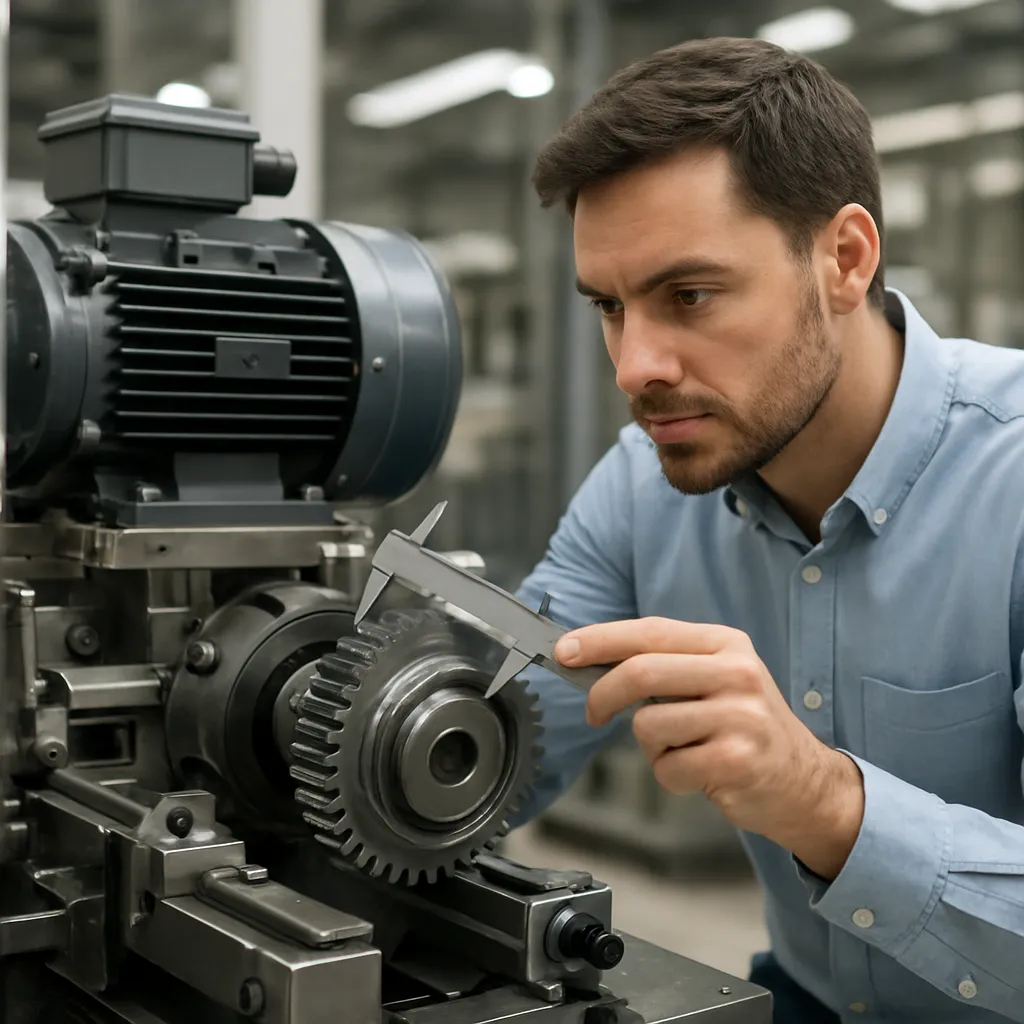
- Electric Motors: Convert electrical energy into motion. Brushless DC and servo motors enable fine speed and torque control.
- Gear Trains: Transmit and modify torque to achieve desired speed ratios, essential for matching motor output to machine requirements.
- Bearings: Reduce friction between moving parts, enhancing durability and minimizing maintenance intervals.
- Pneumatics and Hydraulics: Utilize compressed air or fluid pressure to generate powerful linear or rotary motion, ideal for heavy-load applications.
- Control Units: Programmable controllers manage synchronous motion, safety interlocks, and communication with supervisory systems.
Each component must adhere to stringent quality standards to ensure reliability under demanding industrial conditions. Engineers often employ finite element analysis (FEA) and computational fluid dynamics (CFD) to optimize designs before they reach the production floor.
The Role of Conveyor Belts in Factory Automation
Design Principles and Material Selection
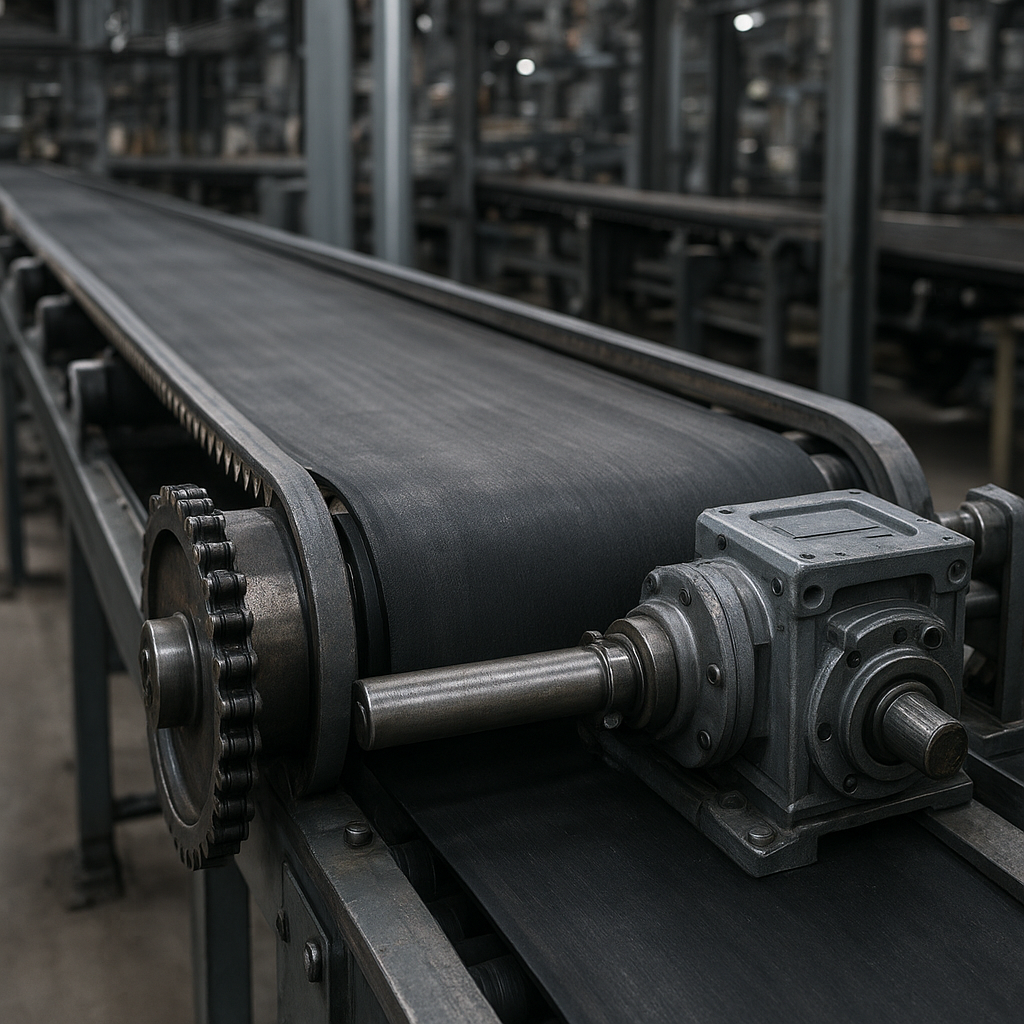
Conveyor belts serve as the circulatory system of a factory, transporting goods between workstations. Their design involves careful selection of belt material—such as rubber, PVC, or modular plastic—based on load capacity, environmental exposure, and wear characteristics. Key considerations include:
- Traction: Ensuring products remain stable during transport, especially on inclines.
- Abrasion Resistance: Maintaining belt integrity when handling abrasive or sharp items.
- Temperature Tolerance: Operating reliably in extreme heat or cold without losing mechanical properties.
- Chemical Resistance: Withstanding oils, solvents, and cleaning agents used in food or pharmaceutical plants.
Specialty belts can integrate antimicrobial coatings or food-grade certifications to meet industry regulations. Precision manufacturing techniques such as vulcanization and modular belt assembly guarantee consistent performance across thousands of operational hours.
Maintenance Strategies and Safety Protocols
Regular inspections and preventative maintenance are critical to avoiding unplanned downtime. Standard procedures include:
- Visual Inspection: Checking for belt misalignment, fraying edges, and material degradation.
- Tension Adjustment: Ensuring proper belt tension to prevent slippage and motor overload.
- Lubrication: Applying suitable greases to rollers and bearings, prolonging component life.
- Replacement Timelines: Adhering to manufacturer-recommended intervals or using data-driven predictions.
Strict safety measures—such as emergency stop switches, safety light curtains, and guarding—protect workers from moving parts. Lockout-tagout (LOTO) procedures ensure machines remain inactive during maintenance, further reducing accident risks.
Advanced Technologies Driving Production Efficiency
IoT Integration and Smart Sensor Networks
The Industrial Internet of Things (IIoT) connects machines, sensors, and control systems into a unified data ecosystem. Smart sensors monitor parameters such as vibration, temperature, and power consumption in real time. Key benefits include:
- Data-Driven Insights: Continuous monitoring reveals precision performance metrics and emerging issues.
- Remote Diagnostics: Technicians can troubleshoot equipment from anywhere, speeding repair times.
- Energy Optimization: Adaptive control adjusts power usage to match production loads, reducing waste.
By implementing edge computing, factories process critical data on-site, ensuring low-latency responses for safety and control applications. Cloud platforms aggregate historical and live data, enabling advanced analytics and machine learning models to detect subtle patterns that human operators might miss.
Predictive Maintenance and Artificial Intelligence
Predictive maintenance leverages AI algorithms to forecast component wear and schedule interventions before failures occur. Techniques include:
- Anomaly Detection: Machine learning models identify deviations from normal operational signatures.
- Remaining Useful Life (RUL) Estimation: Regression models predict when parts will reach end-of-life.
- Failure Mode Classification: Deep neural networks categorize defect types for targeted maintenance.
Such systems boost overall optimization by aligning maintenance activities with production schedules, minimizing costly stoppages. Over time, AI-driven platforms refine their predictions using ongoing feedback, further enhancing resilience and uptime.
Integrating Robotics and Human Collaboration
Collaborative Robots (Cobots) in Assembly Lines
Cobots work alongside human operators, combining mechanical strength with human judgment. They excel at repetitive or ergonomically challenging tasks, such as:
- Precision Picking and Placing: Small parts assembly with micrometer accuracy.
- Quality Inspection: High-resolution cameras and vision algorithms detect defects.
- Packaging and Palletizing: Handling heavy loads while adapting to variable product sizes.
Safety sensors and force-limiting features ensure cobots can safely share workspaces with people. Programming interfaces allow non-expert staff to teach cobots new tasks through demonstration, speeding deployment.
Human-Machine Interfaces and Ergonomics
User-friendly HMIs present real-time production data, machine status, and alerts. Touchscreens, augmented reality (AR) overlays, and voice commands streamline operator interactions. Ergonomic design principles reduce fatigue and enhance productivity by:
- Adjustable Control Panels: Positioned for easy reach and clear visibility.
- Intuitive Software Layouts: Color-coded alerts and straightforward navigation paths.
- Wearable Devices: Smart glasses display work instructions hands-free.
By focusing on the synergy between human insight and mechanical innovation, factories achieve a balance of speed, quality, and adaptability.
Sustainability and Future Trends
Green Manufacturing and Energy Recovery
As environmental concerns grow, manufacturers prioritize sustainable practices. Energy recovery systems capture excess heat from motors and hydraulic circuits, converting it back into usable power. Solar panels and microgrids supplement grid electricity, cutting carbon footprints. Water-based cooling and biodegradable lubricants reduce environmental impact further, aligning production with global sustainability goals.
Next-Generation Materials and Additive Manufacturing
Advances in materials science, such as high-strength polymers and composite alloys, are revolutionizing machine components. Additive manufacturing (3D printing) enables manufacturers to produce complex parts with optimized geometries that were previously impossible. Benefits include:
- Lightweight Structures: Reducing moving mass for quicker accelerations and lower energy use.
- Customized Tooling: Rapid prototyping of jigs, fixtures, and spare parts on demand.
- Reduced Waste: Material applied only where needed, minimizing scrap.
These trends drive the next wave of integration between design, engineering, and production, paving the way for ever more agile and responsive factories.