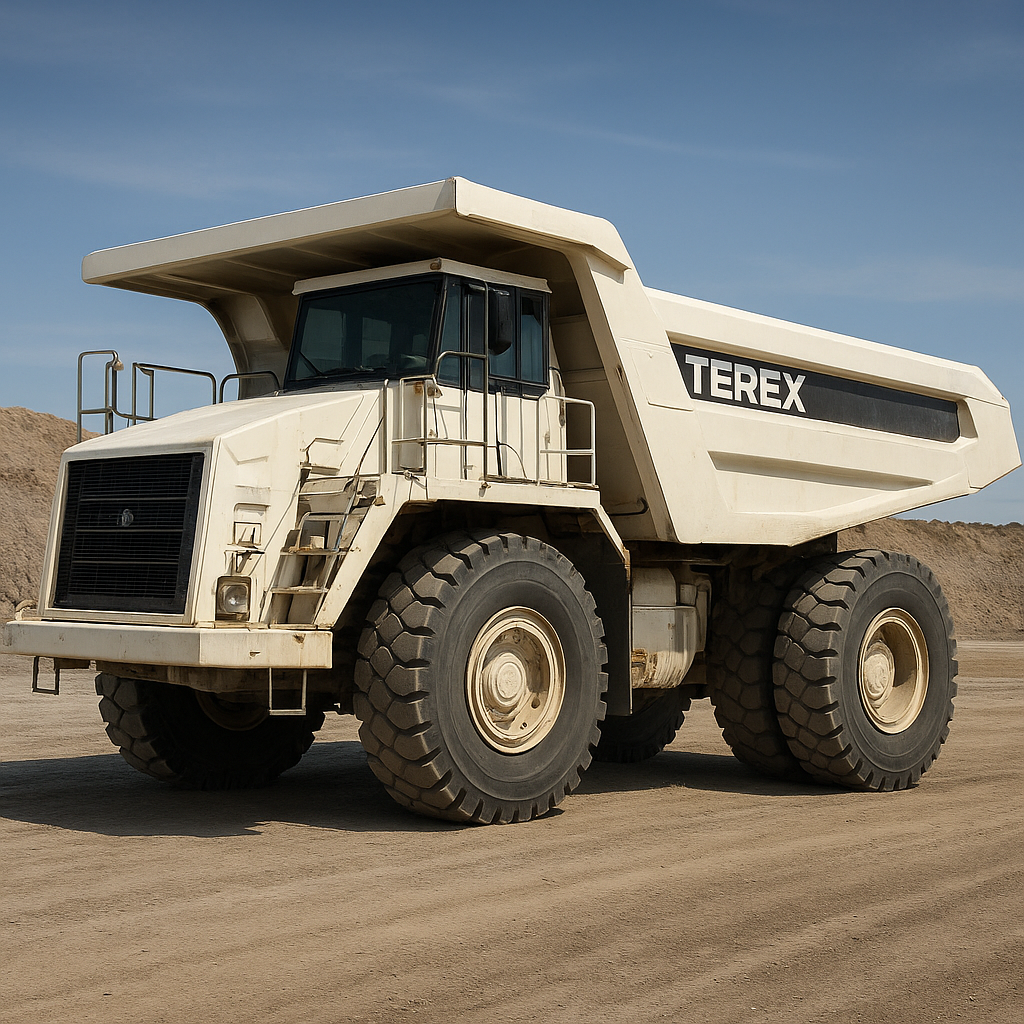
The Terex TR60 is a heavy-duty rigid-frame mining truck designed to move large volumes of material in surface mines, quarries and large civil works. Built for durability, ease of service and steady day-to-day performance, the TR60 has been a common sight wherever operators require a reliable machine in the 60-ton class. This article examines the TR60’s design philosophy, typical technical characteristics, operational roles, and practical considerations that influence its selection and use in modern mining and construction fleets.
Design and engineering overview
At the heart of the TR60 is a focus on robustness and simple, serviceable systems that maximize uptime. The basic configuration is a rigid-frame, rear-dump haul truck with a high-strength steel body and a chassis engineered to survive repeated heavy loads and harsh conditions. From the factory the TR60 is configured to move an industry-standard payload of approximately 60 metric tonnes per load, which positions it between smaller articulated dump trucks and much larger ultra-class haul trucks.
Chassis, body and structural features
- High-strength steel main frame rails and cross-members to resist bending and fatigue under repeated loading cycles.
- Bucket and body designs optimized for the typical materials being moved — options range from abrasion-resistant plates to wear packages for high-impact stone.
- Robust rear axle and suspension package designed to handle heavy dynamic loads and to minimize downtime from component failure.
- Service-friendly layouts where routine service points are accessible from ground level and modular components (engine, transmission, axles) can be replaced without extensive disassembly.
Powertrain and mobility
The TR60 is equipped in various configurations depending on customer preference and regional supply: diesel engines from established manufacturers, matched to heavy-duty torque-converter or torque-divider transmissions, and final drives built to withstand high torque and abrasive conditions. The truck’s design emphasizes a balance of traction, driveline protection and manageable fuel use.
- Heavy-duty diesel engine options typically provide the torque necessary for heavy loading and grade performance.
- Automatic or semi-automatic transmissions reduce operator workload and are tuned to protect driveline components under heavy use.
- Large, wide tires for load distribution and traction, often with options depending on material and ground conditions.
Where the TR60 is used — typical applications
The natural environment for the TR60 is high-production surface mining, contractors moving large volumes of overburden or rock, and quarries producing aggregate for large-scale infrastructure projects. Its size and capacity make it a preferred mid-range machine when fleet managers want a compromise between cost, fuel use and per-shift throughput.
Mining and quarrying
- Open-pit mines (metallic ores, coal, industrial minerals): used to haul overburden or ore from benches to crushers, primary stockpiles or waste dumps.
- Quarries: moving rock from face to primary crushers or to stockpiles, where consistent cycle times are valuable.
- Contract mining: flexible enough to be used on a variety of contract scopes due to reasonable capital cost and good parts/service availability.
Infrastructure and heavy civil works
- Large earthworks sites (dams, highways, reclamation): the TR60 can keep a healthy strike rate where material must be moved across consistent haul profiles.
- Landfill construction and bulk material handling on confined sites where an ultra-class truck would be impractical but smaller machines would underperform.
Performance, productivity and typical specifications
The TR60 delivers economical per-ton haul costs when matched to the right environment: medium-length hauls, regular loading cycles with high shovel or wheel loader productivity and good maintenance discipline. Below are typical specifications frequently associated with this class of haul truck; actual values vary by model year, engine and options, so they should be validated for any specific machine.
Typical (approximate) specifications
- Nominal payload capacity: approximately 60 metric tonnes.
- Body / heaped capacity: commonly in the range of 35–45 m³ depending on material density and body profile.
- Engine power: many TR60 configurations use engines producing roughly 500–750 kW (670–1,000 hp) depending on market and emission level; a common historical rating for comparable machines is near 560–760 kW.
- Operating weight (empty): in the rough range of 40,000–60,000 kg depending on configuration and installed options.
- Maximum travel speed: often in the region of 50–65 km/h, subject to gearing and safety restrictions.
- Turning radius and dimensions: designed to suit loading equipment sizes common to the 60-ton payload class.
- Fuel consumption: highly dependent on duty cycle and haul profile; specific fuel use is usually quoted in liters per hour or liters per tonne-kilometre in contractor reports.
These numbers are representative rather than definitive. When specifying a TR60 for an operation, fleet engineers normally model expected cycle times (load, haul, dump, return), fuel rate, tire life, and maintenance intervals to estimate operating cost per tonne and to compare with alternative machines.
Cab, ergonomics and operator considerations
Modern operator environments play a significant role in productivity and retention. The TR60’s cab is designed to provide a balance of visibility, climate control, and controls layout to minimize fatigue and increase consistent performance. Ergonomic improvements over successive model years include better seat designs, reduced noise and vibration, and improved HVAC systems.
- Visibility: elevated seating and large glazed areas help the operator monitor loading and dumping operations; mirrors and optional cameras expand sightlines for safety.
- Controls: simple instrument clusters and drivetrain controls matched to operators’ expectations reduce training time and mistakes.
- Operator comfort features such as suspension seats, climate control and low vibration levels help maintain consistent cycle times over long shifts.
Maintenance, life-cycle and fleet management
Routine and preventive maintenance are decisive factors in keeping a TR60 productive and cost-effective. Because the platform was designed with accessibility in mind, many owners report relatively straightforward service routines when staff are trained and parts are available.
Maintenance best practices
- Adopt a condition-based maintenance schedule for critical components (engine, transmission, axles) using oil analysis, thermal imaging and vibration monitoring where possible.
- Track tire wear patterns and maintain correct pressures to extend tire life and protect suspension components from shock.
- Keep a stock of common wear parts (filters, brake components, hoses) at site to reduce downtime from waiting on shipping.
- Operator checklists for pre-start inspections help identify issues like hydraulic leaks or abnormal noises before they become major problems.
A well-maintained TR60 can remain in productive service for many years. The ultimate life depends on operating conditions, maintenance discipline, and how intensively the truck is used. Major overhauls of engine and driveline components may be scheduled based on hours and condition monitoring to extend useful life while controlling capital expenditures.
Safety, braking and control systems
Safety is a primary concern in large-truck operations. The TR60 platform typically incorporates structural protections, braking systems with retardation features, and cab protections to reduce risk to people and equipment.
- Safety structures such as ROPS/FOPS-certified cabs protect the operator in rollover or falling-object scenarios.
- Service and parking brakes, often supported by engine braking or retarders, allow safe control on long descents.
- Alarms, lights and optional proximity detection systems (radar or ultrasonic) reduce the risk of collisions in congested loading zones.
- Anti-slip surfaces, lockout/tagout provisions for service points and clear access steps reduce the risk for maintenance personnel.
Operational economics and lifecycle cost
Choosing a TR60 is an economic decision as much as a technical one. Compared with smaller trucks, the per-ton cost of a 60-ton truck can be lower when utilization is high and loads are consistent; compared with ultra-class trucks, the capital and running costs are lower and the TR60 is easier to deploy in sites with size or weight restrictions.
Cost factors to model
- Initial purchase or lease cost — TR60-class trucks are mid-capital machines in the haul-truck hierarchy.
- Fuel consumption — depends strongly on duty cycle, grade and average payload; fuel is often one of the largest operating expenses.
- Tire life and replacement costs — dependent on ground conditions and operator behaviour.
- Maintenance intervals and spare-part consumption — influenced by environment (abrasive dust, corrosive atmosphere) and fleet maintenance practices.
- Resale value — mature markets often have a second-hand demand for proven machines that have documented service histories.
A fleet manager will typically calculate cost per tonne by modelling the truck in a given haul profile and factoring in expected uptime, replacement intervals, and resale value at the end of the planned life.
Environmental impact and emissions
Like all large diesel-powered earthmoving equipment, the TR60’s environmental footprint depends on engine emission controls, fuel quality and operational efficiency. Newer engine options and retrofits can reduce particulate and NOx emissions, and efficient operational planning can reduce total fuel burned per tonne moved.
- Emission standards compliance: many regions require engines that meet regional emissions rules (e.g., Stage/ Tier levels); engine selection should match local requirements.
- Fuel efficiency improvements through drivetrain tuning, effective load matching and reduced idle time help reduce greenhouse gas emissions per tonne moved.
- Opportunities exist for integrating biodiesel blends or lower-carbon fuel options where permitted by engine manufacturer guidelines.
Common configurations and options
The Terex TR60 can be ordered or equipped with a range of options depending on the operator’s priorities. Typical choices include body types (flat floor, tailgate, liner packages), engine and emission packages, tire and wheel configurations, and monitoring/telematics systems.
- Wear packages and bolt-on liner systems for abrasive operations.
- Telematics and fleet-management systems to monitor fuel, hours, positions and prevent unplanned downtime.
- Suspension and axle options tuned for local ground conditions and haul lengths.
- Climate control and comfort packages for extreme hot or cold operation zones.
Market presence, resale and support
The TR60 series established a presence in markets where operators sought a balance between capacity and operating cost. Availability of parts, dealer support and trained technicians influences total ownership cost as much as the initial price. In many regions, independent service providers and a healthy used-equipment market make acquiring and operating TR60 trucks feasible for mines and contractors with tight budgets.
- Broad aftermarket availability: common components from large suppliers (engines, transmissions, axles) make repairs practical.
- Used market dynamics: a documented maintenance history and moderate hours typically command better resale prices.
- Manufacturer and dealer networks: choice of local support affects downtime and repair lead times.
Field performance and real-world considerations
Operators report that the TR60 performs best where haul profiles and loading conditions suit its capacity and where the fleet supports rapid tire and preventive maintenance turnarounds. Key factors in field success include matched loading equipment (shovels or loaders with cycle times that suit the TR60), predictable haul road conditions, and consistent operator training.
Tips from operators
- Keep tyre pressures and wheel alignment correct to extend life and improve fuel efficiency.
- Monitor hydraulic systems and address leaks promptly to avoid contamination and secondary damage.
- Use telematics to spot trends in fuel burn, idle time and fault codes before they impact production significantly.
- Train operators on smooth shifting and grade management to protect driveline components and reduce fuel use.
Summary
The Terex TR60 represents a practical and proven solution for medium-to-large haul requirements in mining, quarrying and major civil projects. It balances capital cost and operating efficiency, while offering the structural strength and serviceability needed for demanding sites. When correctly matched to application, supported by disciplined maintenance and operator training, the TR60 can be a durable and productive part of a haulage fleet, delivering consistent throughput and competitive cost-per-tonne performance. For purchasers, the most important steps are validating typical cycle models for the specific site, ensuring local service and parts support, and choosing options that match material profile and climate conditions.
)
)