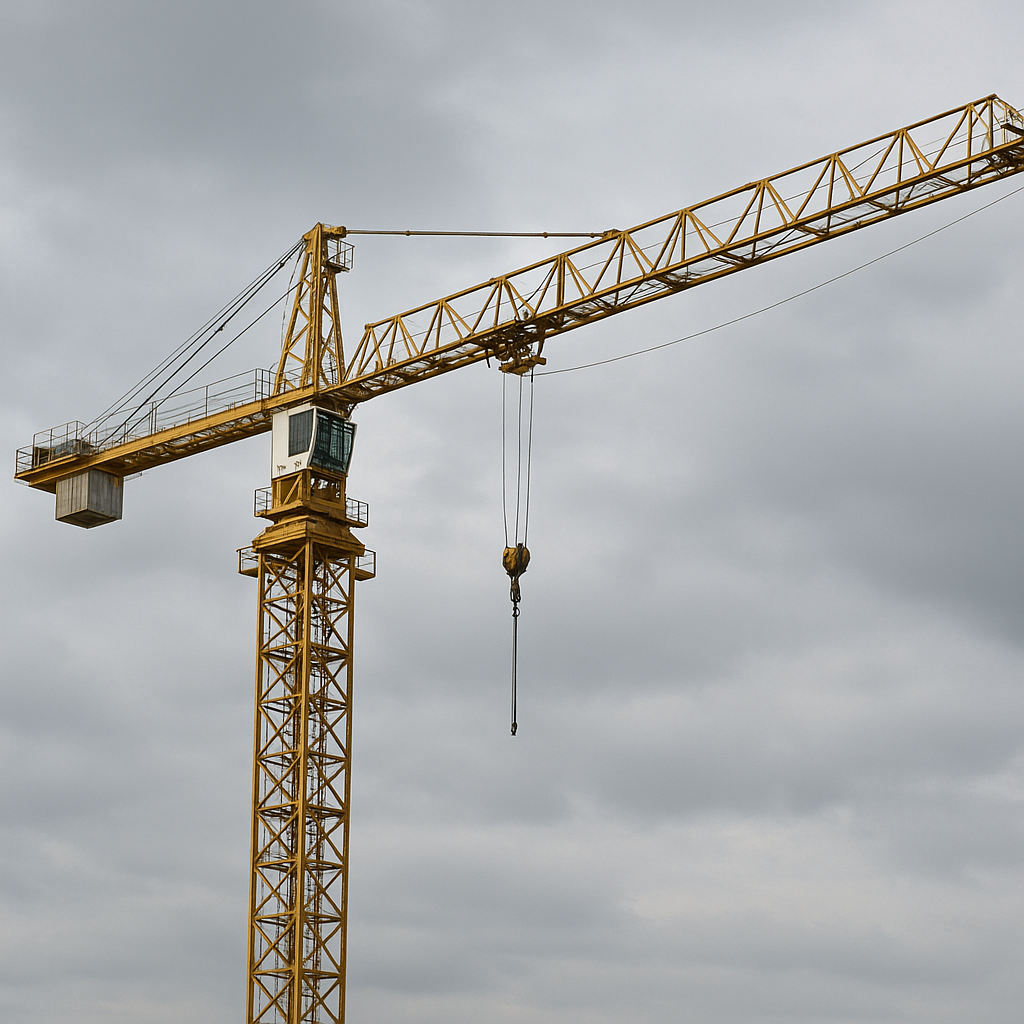
The Terex SK 415 is a widely recognized model in the category of modern tower cranes designed for construction sites that demand a balance of lifting performance, flexibility and reliability. This article explores the machine’s design features, typical applications, operational considerations, technical and safety aspects, and the market context in which it operates. Where exact figures vary by configuration, the discussion highlights typical ranges and practical implications for users, fleet managers and project planners.
Design and technical characteristics
The Terex SK 415 is engineered to serve as a robust and adaptable lifting solution. At its core, the model emphasizes a modular structure that allows customization to project-specific requirements, including mast height, jib length and lifting capacity. The crane’s concept targets both mid-rise urban projects and larger industrial or infrastructure developments where predictable performance and ease of assembly are important.
Structural concept and modularity
- Modular mast sections: The SK 415 typically uses a system of sectional mast components that can be stacked to achieve the required working height. This modular approach simplifies transport, erection and future changes to tower height.
- Interchangeable jibs: Multiple jib lengths and configurations (fixed, luffing or foldable sections in some variants) provide flexibility to adapt reach and lift characteristics to particular site geometries.
- Counter-jib and counterweights: A counter-jib with easily adjustable counterweight blocks allows the crane to maintain stability while handling varying loads and outreach demands.
Powertrain, hoisting and slewing systems
The hoisting equipment on the SK 415 is designed for continuous, reliable operation. Typically, the crane is equipped with variable-speed electric drives for hoist, trolley and slewing motions, enabling precise load placement. Redundant braking systems and mechanical load-holding devices add layers of safety. Many modern Terex tower cranes include electrical control systems that integrate soft-start features, anti-collision options and remote diagnostics.
Operator environment and controls
Operator ergonomics are a key element in modern crane design. The SK 415 offers a cab (or remote control) that provides good visibility along the jib and the load path. Joystick controls, multifunction displays and intuitive user interfaces reduce operator fatigue and support precise maneuvers. Optional climate control and sound insulation are common on job sites with long shift durations.
Applications and sectors
The versatility of the SK 415 makes it suitable across a broad spectrum of construction and industrial projects. Its adaptability is one of the model’s main selling points, with use cases spanning urban building to large-scale industrial works.
Residential and commercial construction
- Mid-rise apartments and office buildings: The crane’s modular height and adjustable jib make it ideal for sites where the crane must fit within tight urban footprints.
- High-density urban projects: The ability to configure counterweights and jib lengths enables operation in confined spaces while delivering the necessary lifting performance for precast panels, steelwork and mechanical systems.
Infrastructure, bridges and industrial plants
- Large infrastructure projects: For bridge segments, road gantries and heavy precast units, a tower crane that offers strong close-in capacity and good reach can be a cost-effective solution.
- Industrial installations: Power plants, refineries and manufacturing facilities often require frequent heavy lifts at height; the SK 415’s reliability and lifting controls are beneficial in these environments.
Specialized tasks and urban logistics
In urban settings where noise, space and logistics are tightly constrained, tower cranes such as the SK 415 are favored for their small footprint relative to the lifting capability. They are also used in combination with lorries and mobile cranes to optimize material flow on congested sites.
Performance, capacities and load handling
Exact lifting capacities and reach depend on configuration, including jib length, counterweight, mast sections and installed hoist. Manufacturers offer detailed load charts to ensure safe operation within rated limits. As a general orientation:
- Rated capacity near the mast (short radius) is typically the highest and may reach several tonnes, depending on configuration.
- Rated capacity at the maximum jib tip is substantially lower, reflecting the mechanical advantage and moment limits.
- Slew and hoist speed options allow operators to trade off speed for smoother control with heavy or delicate loads.
Operational planners must review the load chart for the specific setup on their site, including the chosen jib length and installed counterweights. Load charts are fundamental for calculating pick plans, crane location and required safety margins.
Typical metrics
- Working radius: The SK 415 family is available in various jib lengths to suit short- to long-reach requirements.
- Lifting height: With sectional masts and possible climbing frames, the crane can achieve substantial hook heights for tall structures.
- Hoist capacity and rope arrangements: Multi-fall hoist systems increase line speed and holding capacity. Electrical hoists with frequency controls are common.
Operation, safety and regulatory considerations
Operating a tower crane safely requires attention to design limits, clear procedures and regulatory compliance. The SK 415 includes features that support safe operation, but organization, planning and human factors are equally important.
Key safety systems
- Load moment indicator (LMI): Prevents overload by monitoring moment and preventing lifts outside safe envelope.
- Anti-collision systems: For sites with multiple cranes, anti-collision and zone restriction technologies reduce the risk of crane-to-crane contact.
- Automatic cut-outs and alarms: Systems that stop motion or alert the operator in the event of overspeed, power anomalies or limit-switch activation.
Site planning and ground works
Proper site preparation is crucial. The load path and crane foundation must be designed to carry the overturning moments and vertical loads transmitted to the ground. Design of the foundation (concrete pad, pile-supported base or special anchoring) depends on soil conditions and the crane’s final height and loads.
Installation and dismantling
Erecting a tower crane such as the SK 415 typically involves a sequence of operations using mobile cranes to assemble sections, mount the slewing unit and attach counterweights and jib components. For taller installations, a climbing frame or internal climbing system may be used to incrementally add mast sections and increase height as a building rises. Dismantling follows the reverse procedure and requires careful planning to maintain safety and minimize disruption on busy sites.
Maintenance, lifecycle and uptime
Long service life and predictable maintenance are important drivers of total cost of ownership. Terex and other reputable manufacturers design cranes like the SK 415 with serviceability in mind: accessible inspection points, modular replacement components and comprehensive maintenance manuals.
Routine and predictive maintenance
- Daily and weekly inspections: Wire rope condition, hook assembly, brakes, limit switches and structural components.
- Lubrication and wear monitoring: Regular greasing of slewing rings, gearboxes and wire ropes help prevent premature failure.
- Diagnostics and telemetry: Modern control systems often include diagnostic functions and optional remote telematics to monitor operating hours, fault codes and preventive maintenance alerts.
Service intervals and major overhauls
Periodic major inspections, sometimes mandated by national regulations, involve thorough structural checks, non-destructive testing of critical welds and replacement of safety-critical components. Proper documentation and adherence to manufacturer-recommended service intervals preserve warranty coverage and resale value.
Costs, procurement and resale considerations
Acquiring and operating a tower crane involves capital expenditure, installation costs, and ongoing operating and maintenance expenses. Beyond purchase price, project planners should consider transport, erection, foundation works, operator training and insurance.
Buying versus renting
- Short-duration projects often favor rental to avoid capital tie-up and to have specialized erection teams supplied by the rental company.
- Longer-term projects or companies with steady crane requirements may find ownership more cost-effective after accounting for utilization rates and resale value.
Depreciation and residual value
Resale and residual value are influenced by maintenance records, hours of use, configuration, and the presence of modern safety systems. Well-documented service histories and recent upgrades (telemetry, LMI, refurbished hoists) enhance marketability.
Environmental and efficiency aspects
Environmental performance and job-site efficiency are increasingly important. Electric drives, regenerative braking (where applicable) and efficient hoist systems reduce energy consumption and operational costs. Noise control measures in the operator cab and during hoisting operations can help meet local community requirements.
Energy use and emissions
When compared to diesel-powered mobile cranes for similar tasks, electrically driven tower cranes typically provide lower on-site emissions and improved energy efficiency, particularly on sites with reliable grid power. Backup generators remain a consideration on remote sites.
Market position and user feedback
The Terex SK series has been used worldwide and is generally regarded as a practical, mid-to-high-range solution for construction firms that need dependable lifting performance with flexible configuration options. User feedback commonly highlights:
- Ease of assembly and modularity for tight urban sites
- Reliable electrical and mechanical systems with good parts availability
- Effective operator ergonomics that enhance productivity
Market statistics specific to the SK 415 model, such as total units produced or global fleet size, are typically proprietary to manufacturers and rental companies. However, the broader market for tower cranes has shown steady demand in regions experiencing construction growth, with urbanization and infrastructure investment driving fleet renewals and upgrades.
Practical tips for buyers and project managers
- Always obtain and review the exact load charts for the proposed configuration before selecting the crane for a project; small changes in jib length or counterweight can significantly alter rated capacities.
- Factor in the time and cost for groundworks and foundation design—these can be substantial and are often underestimated in early project budgets.
- Include commissioning, operator training and compliance checks in the procurement schedule to avoid delays once site work begins.
- Consider telematics and remote diagnostics to improve uptime and to plan maintenance proactively.
- Engage with experienced erection crews and supervisors for installation and dismantling phases to mitigate risks in urban or congested environments.
Summary and closing observations
The Terex SK 415 is a capable and adaptable tower crane solution that fits a wide variety of construction and industrial tasks. Its modular design, practical control systems and focus on serviceability make it suitable for projects ranging from urban mid-rise construction to demanding industrial builds. While specific performance metrics depend on the chosen configuration, planners and operators benefit from the model’s configurability and the manufacturer’s emphasis on safety systems such as the load chart-driven control logic and anti-collision options.
For any organization considering the SK 415, the key steps are to define the project’s lift requirements precisely, verify the crane’s load charts in the intended configuration, and plan for foundation, transport and erection early in the schedule. With careful planning, the model can contribute to improved site efficiency, safer lifting operations and competitive lifecycle costs.
)
)