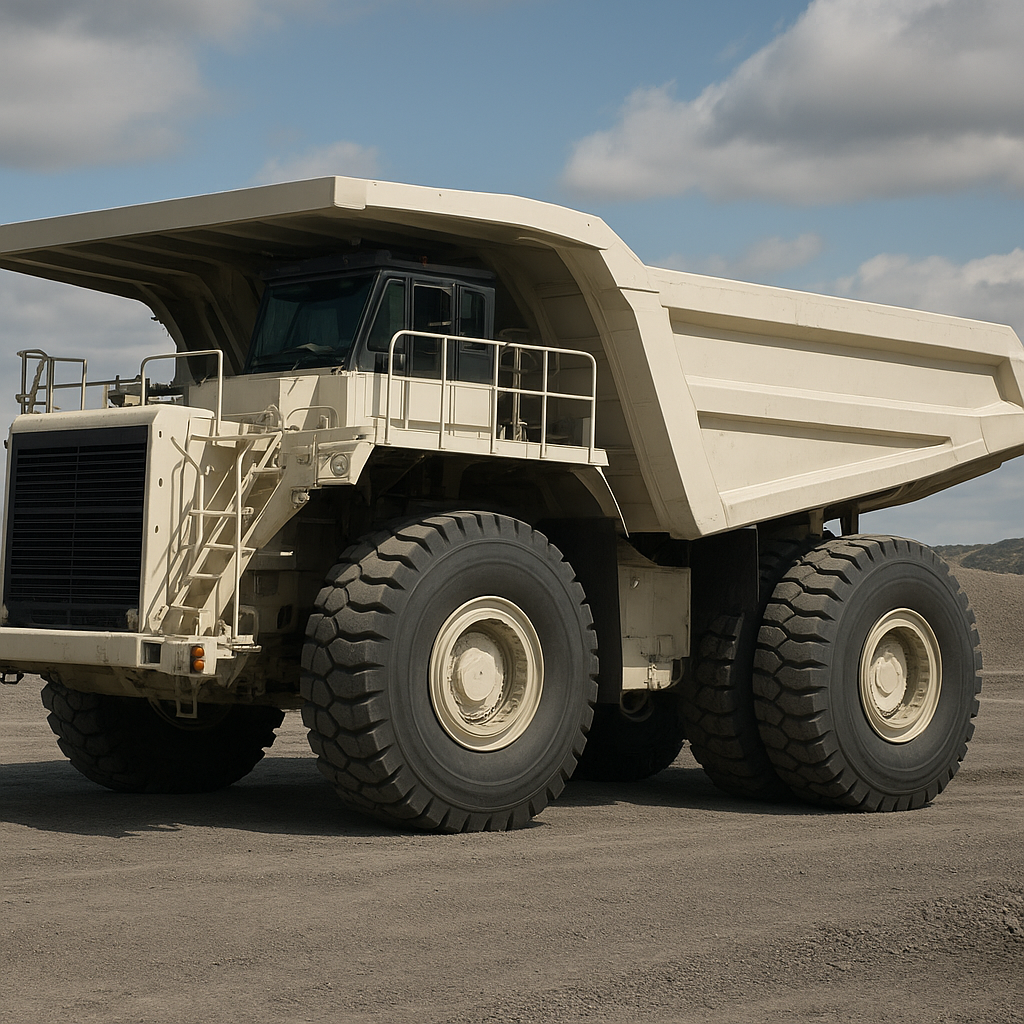
The Terex MT4400 is a heavyweight, rigid-frame haul truck designed for large-scale surface mining and heavy construction tasks. Combining robust engineering with straightforward serviceability, the MT4400 has earned a reputation in sites where durability, payload efficiency and operational uptime are essential. This article examines the machine’s design, typical uses, operational characteristics, maintenance considerations and role in modern mining fleets, offering insights useful for fleet managers, operators, engineers and equipment enthusiasts. Throughout the text, several key technical and operational concepts are highlighted to help readers focus on the most important aspects of the machine’s performance and lifecycle.
Design and core technical features
The MT4400 is a product engineered around the needs of high-production surface operations. Its architecture is that of a rigid, rear-dump hauler built to carry heavy loads over variable terrain while maximizing uptime. The general design philosophy emphasizes structural strength, ease of maintenance and compatibility with mainstream drivetrain and engine suppliers so that repairs and parts are widely available.
Frame and structure
- The chassis is typically constructed from high-strength, low-alloy steels and designed for high bending and torsion resistance. This provides a long fatigue life in tough operating environments.
- Key load-bearing members are usually modular or bolted in areas where field repairs or replacements are commonly required, reducing downtime compared with one-piece castings.
- Dump bodies are available in various profiles and materials (wear-resistant steel, abrasion liners) to suit the material being moved, from overburden to blasted ore.
Powertrain and mobility
The MT4400 typically ships with a high-displacement diesel engine from major OEMs, chosen for torque delivery at low engine speeds to support heavy-haul cycles and steep grades. In many fleets, power units from manufacturers such as Cummins, MTU or Caterpillar have been fitted depending on customer preference and regional dealer support.
- An automatic or power-shift transmission links the engine to a heavy-duty axle set designed for heavy torque loads.
- Hydrodynamic or electric retarding systems are often incorporated to improve downhill control and reduce wear on service brakes.
- Tires are large, purpose-built off‑the‑road tires; depending on site requirements, multi-piece wheels and advanced bead retention options can be specified to reduce downtime and improve safety.
Braking, steering and stability
Robust service brakes, often with multi-disc air-cooled assemblies, are standard to handle the kinetic energy associated with high-mass loads. Auxiliary braking systems and electronic controls can further protect brake life and enhance operator control on declines and in tight haul roads. Steering systems on the MT4400 are designed to provide predictable handling under load while meeting turning-radius requirements of mining haul roads.
Primary applications and industry roles
The primary role of the Terex MT4400 is in bulk material movement where repetitive haul cycles define productivity. It is widely used across several specific applications:
- Open-pit mining — moving overburden, ore and waste between benches and to processing plants.
- Large civil earthworks — mass excavation and infill for major infrastructure projects such as dams, airports and highways.
- Aggregates and quarry operations — where high-capacity, long-distance hauling is required between pit and processing areas.
- Port and stockpile operations — transferring blasted or crushed material to storage or loading areas.
In each of these roles, the MT4400 brings its best value when haul distances, site grade profiles and payload types match the machine’s design envelope. Where extreme payloads beyond the MT4400’s class are required, ultra-class dump trucks may be preferred, while smaller haul profiles might use smaller rigid haulers or articulated dump trucks for flexibility.
Match to operational scenarios
- Sites with long, relatively straight haul roads and limited need for tight manoeuvring will maximize the truck’s productivity.
- Operations that emphasize predictable, repeatable cycles with scheduled maintenance windows benefit because the MT4400’s serviceability supports high availability.
- Environments with good dealer and parts support for Terex help minimize downtime; local aftermarket options for engines and drivetrains are a plus.
Performance, typical specifications and statistics
Model specifications and performance figures can vary by year, customer specification and optional equipment. The manufacturer and major fleet users have offered the MT4400 in several configurations tailored to regional requirements. The figures below represent typical or indicative ranges rather than absolute values for every build.
- Payload capacity: Frequently configured in the mid-to-upper tens of tonnes class for single-pass bulk haulage. Typical working payloads often fall into a range suitable for high-capacity bench operations. Exact payload ratings depend on jurisdictional regulations and customer choices for safety margins.
- Engine power: Many MT4400s are fitted with engines producing high torque at low rpm, with power outputs commonly in the upper hundreds to low thousands of kilowatts in larger configurations. This supports sustained uphill performance and fast cycle times under load.
- Operating speed: Travel speeds vary by load condition and gearing. Unloaded transit speeds can be significantly higher than loaded haul speeds; precise values depend on transmission configuration and site rules.
- Fuel consumption: Fuel burn is highly dependent on cycle characteristics, load, haul road condition and operator technique. Fleet-level metrics typically look at liters per tonne-kilometer or gallons per productive hour to compare across trucks.
- Uptime and reliability: Well-maintained MT4400s in mature fleets can achieve high availability percentiles. Scheduled maintenance intervals and proactive component replacement (especially for heavily stressed drivetrain parts) are essential for sustaining uptime in mining environments.
Because many mining companies tailor trucks with site-specific bodies, gearing and control systems, any procurement decision should be accompanied by thorough cycle simulations and, where possible, in-field trials. Using truck-matching software and haul-road profiling to estimate cycles per hour, fuel consumption and tyre life will yield more accurate fleet productivity forecasts than generic spec comparisons.
Operator environment and safety systems
Terex engineering places emphasis on the operator environment because operator comfort, visibility and ergonomics are directly tied to safety and productivity. Cab designs typically include:
- High-visibility glazing and strategically placed mirrors and camera systems for blind spot reduction.
- Adjustable seats and intuitive control layouts to reduce operator fatigue over long shifts.
- Integrated HVAC systems designed for harsh climates, from extreme heat to cold, and dust management features to preserve cab air quality.
- Modern MT4400 variants can be equipped with telemetry and fleet-management systems for real-time oversight of fuel use, location, engine health and predictive maintenance alerts.
Safety systems on large haul trucks such as the MT4400 commonly include:
- Rollover protection structures (ROPS) and falling-object protective structures (FOPS).
- Automatic engine shutdown on critical fault detection to prevent catastrophic component failure.
- Speed-limiting governors and downhill retarding management to protect brakes on steep grades.
- Audible alarms and perimeter detection systems to alert operators and ground personnel to potential hazards.
Maintenance, lifecycle costs and fleet management
Maintenance planning is central to capturing value from any large haul truck. Key maintenance considerations for the MT4400 include:
- Regular inspection of critical structural points for fatigue, especially around pivot joints and dump-body supports.
- Scheduled drivetrain and transmission fluid changes, with oil analysis enabling condition-based interventions.
- Proactive tyre management because tyre costs are often among the largest operating expenses for rigid haulers. Proper alignment, tyre rotation, and site-specific tyre selection are crucial.
- Brake and retarder system monitoring to ensure downhill control systems remain effective and to minimize expensive brake-component wear.
- Comprehensive training programs for operators and technicians that reduce improper usage and accelerate troubleshooting.
From a lifecycle-cost perspective, total cost of ownership (TCO) analyses should include:
- Acquisition or lease costs.
- Fuel and consumables (tyres, lubricants, filters).
- Planned and unplanned maintenance.
- Depreciation and resale values, which can be influenced by equipment age, maintenance records and local demand.
Many operations adopt telematics and predictive-maintenance solutions to optimize component life and schedule interventions during planned downtime windows, thus maintaining productivity while lowering TCO.
Environmental considerations and regulations
Large haul trucks are an important source of operational emissions and fuel consumption. The MT4400, like other heavy diesel haul trucks, is subject to local and national emissions regulations that affect engine selection and aftertreatment choices. Typical environmental considerations include:
- Selecting engines with emissions packages that meet Tier or Stage regulations in the operating region.
- Evaluating the potential for alternative powertrains or hybrid-retrofit solutions as technology and costs evolve.
- Implementing fuel-saving measures such as improved haul-road design, operator training in eco-driving and automatic engine shutdown during extended idle periods.
- Managing hydraulic and oil leaks through regular inspection to avoid site contamination.
Progress in electric-drive and trolley-assist systems in mining means that some operations study mixed fleets where conventional haul trucks such as the MT4400 are supplemented by electrically-boosted vehicles on high-volume, fixed-route hauls to reduce fuel use and emissions.
Comparisons with competitor platforms
Fleet planners frequently compare the MT4400 with offerings from other manufacturers in similar payload classes. The decision typically hinges on:
- Dealer and parts support in the region, which affects downtime and parts lead times.
- Standard warranty and service packages as well as the availability of local technicians experienced with the platform.
- Resale market strength for the model in that geography, which influences depreciation assumptions.
- Customization options for bodies, gearing and safety systems that align the truck to the operation’s unique cycle profile.
Real-world performance comparisons are best derived from operational data: fuel per tonne moved, average cycle time, tyre life, and unscheduled downtime. These metrics are more actionable than headline horsepower or gross vehicle weight when configuring a haul fleet for target productivity.
Purchasing, retrofits and resale considerations
When considering an MT4400 for purchase or integration into an existing fleet, decision-makers typically evaluate new versus used acquisition, retrofit potential and end-of-life strategies:
- Used MT4400s can offer cost savings but require rigorous inspection and a clear maintenance history because structural fatigue and drivetrain wear are key risk factors.
- Retrofits, such as modern telemetry kits, camera systems, or improved braking controls, can extend the useful life and integrate older trucks into contemporary fleet-management frameworks.
- Resale value depends on global demand, remaining useful life of major components, and comprehensive service records. Well-documented preventive maintenance and refurbishments enhance resale outcomes.
Operator training and productivity best practices
Optimal performance from an MT4400 fleet is not solely about the hardware — it also depends on how well operators and maintenance crews understand and manage the machines. Recommended best practices include:
- Structured operator training that covers fuel-efficient driving, proper shifting and load-handling techniques to extend component life and improve cycle times.
- Routine pre-shift inspections by operators to catch leaks, tyre damage or fluid-level issues early.
- Data-driven feedback loops using telematics to identify patterns such as excessive idle time, harsh braking events or off-design operating modes.
- Cross-functional reviews between operations, maintenance and engineering teams to align haul road design, truck configuration and maintenance schedules.
Conclusion
The Terex MT4400 is a capable and adaptable haul truck suited to many large-scale surface mining and earthmoving operations. Its strengths lie in structural robustness, straightforward serviceability and compatibility with a range of drivetrain and body configurations. While exact specifications can vary by build and user requirements, the machine’s value is best judged in the context of site-specific cycle analysis, support networks and lifecycle management practices. With proper selection, operator training and maintenance planning, the MT4400 can be a central element of a productive, cost-effective hauling fleet.
)
)