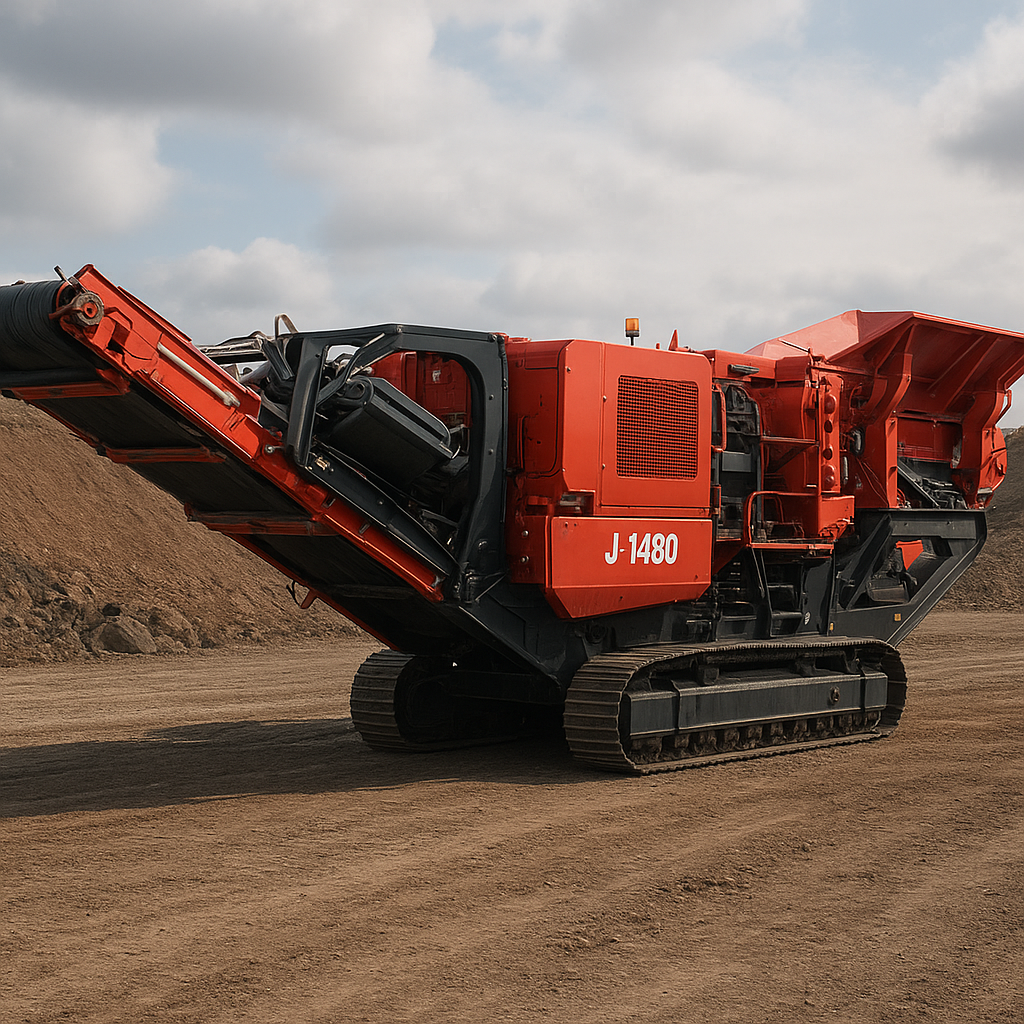
The Terex Finlay J-1480 is a widely used, high-performance mobile jaw crushing plant designed for primary crushing in a range of applications. Combining robust engineering with modern controls and ease of transport, the J-1480 has earned a reputation for reliable on-site crushing and high productivity. This article explores the machine’s design, applications, technical characteristics, operation, maintenance, and practical considerations for contractors, quarry operators, and recycling businesses.
Design and key features
The J-1480 is built around a heavy-duty single-toggle jaw crusher and mounted on a tracked chassis for site mobility. Its design emphasizes durability, ease of service, and versatility to operate in diverse working environments. Core components and notable features include:
- Jaw crusher: a robust single-toggle jaw chamber optimized for high throughput and reduction ratios. The chamber geometry provides consistent product gradation and reduced recirculating loads.
- Feeding system: a large, hydraulically adjustable vibrating feeder with a variable speed drive to provide controlled material flow into the jaw, improving crusher efficiency and reducing downtime.
- Optional pre-screening: a double-deck and/or single-deck pre-screen can be fitted to remove fines prior to crushing, increasing throughput and reducing wear in the crushing chamber.
- Hydraulics and power: hydraulic systems for jaw adjustment, conveyor folding, and feeder control; efficient drive systems designed to optimize fuel use and reduce operating costs.
- Conveyor system: heavy duty, folding conveyors for material discharge and recirculation; conveyors are designed for stable material flow and simple transport configuration.
- Operator-friendly controls: integrated control panels with monitoring for engine parameters, jaw settings, and material flow; many units have remote monitoring/control options.
- Transportability: track-mounted chassis and quick-fold conveyors reduce setup and tear-down times and facilitate movement between job sites.
Typical applications and industries
The versatility of the J-1480 makes it suitable for multiple sectors where primary crushing is required. Its mobile nature allows it to be deployed in locations where stationary crushers would be impractical or costly to install.
- Quarrying and mining: primary crushing of hard rock (granite, basalt, limestone) for aggregate production, road stone, and construction materials.
- Construction and demolition recycling: processing concrete, asphalt, brick, and other demolition wastes into reusable aggregates.
- Infrastructure and road building: on-site crushing of excavated material to produce base and sub-base layers, reducing transport costs.
- Contract crushing: contractors use the J-1480 on varied jobs where rapid setup and flexible throughput are required.
- Aggregate production for precast and concrete plants: producing feed material to specified grading for downstream processing.
Technical specifications (typical and approximate)
Specification values can vary by configuration, optional equipment, and market region. The numbers below reflect typical manufacturer configurations and commonly reported field data. Always consult the specific machine datasheet for exact figures before procurement.
- Feed opening: approximately 1,220 mm x 820 mm (48″ x 32″), enabling large feed sizes suitable for primary crushing.
- Throughput / capacity: dependent on material type, feed size, and settings; commonly reported ranges are 200–450 tonnes per hour (tph) under typical operating conditions. In favorable circumstances (abrasion-resistant feed, optimal setting) higher peak throughputs may be achieved.
- Crusher speed and reduction: variable depending on jaw profile and setting; designed to provide consistent product gradation with adjustable closed-side setting (CSS).
- Transport weight: varies with options and attachments; approximate gross machine weight typically in the 30–40 tonne class (30,000–40,000 kg) for many configurations.
- Power unit: usually diesel-driven with hydrostatic drives for feeder and conveyors; engine power generally in the 215–350 kW range depending on specification and regional engine options.
- Under-crusher conveyor and fines removal: optional pan feeder and belt conveyors available for effective fines removal and controlled discharge.
Operation and efficiency
Effective operation of the J-1480 relies on optimizing feed characteristics, crusher settings, and ancillary equipment. Key operational considerations include:
- Feed grading and distribution: consistent feed distribution across the jaw chamber increases crusher life and maintains steady output. The variable speed feeder helps to manage feed rate.
- Setting the closed-side setting (CSS): adjusting the CSS tailors product size and production rate. Narrower CSS produces finer product at reduced capacity; wider settings boost throughput with coarser output.
- Use of pre-screening: removing fines before the jaw reduces wear and increases effective capacity. Pre-screening can improve fuel efficiency by reducing unnecessary crushing of material that is already within specification.
- Regular monitoring: integrated controls and optional telematics allow operators to monitor engine load, hydraulic pressures, and crusher performance metrics in real time, enabling quick response to adverse conditions.
- Power management: efficient hydraulic and drive design helps minimize fuel consumption, an important factor for mobile on-site crushing where fuel logistics impact operating costs.
Maintenance, wear parts and lifecycle cost
Planned maintenance and rapid replacement of wear parts are critical to keeping the J-1480 productive and minimizing downtime. Typical maintenance practices include:
- Wear part management: jaw dies, cheek plates, and toggle components wear at different rates depending on material abrasiveness. Keeping an inventory of wear parts and using optimized manganese jaw profiles extend life.
- Routine inspections: daily inspections of belts, bearings, hydraulic hoses, and structural components prevent catastrophic failures. Greasing schedules and belt tension checks are standard procedures.
- Hydraulic system care: periodic checks of fluid level, condition, and filter elements prevent costly hydraulic failures.
- Lifecycle cost considerations: while initial capital expense for a mobile jaw unit is significant, savings can accrue from reduced material hauling, faster setup times, and reduced need for ancillary infrastructure. Total cost of ownership depends on intensity of use, maintenance discipline, and load profile.
Safety and environmental considerations
Operating heavy mobile crushers requires strict adherence to safety protocols and environmental best practices:
- Site setup and exclusion zones: clearly marked exclusion zones, safe access routes, and stable ground conditions minimize the risk of accidents during feeding and maintenance.
- Dust suppression: crushers generate dust—use of water sprays, misting systems, and correct conveyor covers reduces airborne particulate emissions and improves worker safety.
- Noise control: sound attenuation through engine enclosures and strategic placement on-site helps comply with local noise regulations and reduces disturbance to nearby communities.
- Emission controls: modern engine packages meet relevant emissions standards (Stage V / Tier 4F in many markets) and include aftertreatment systems as required by regulation.
Advantages and limitations
The J-1480 offers several clear advantages, balanced by operational limitations that buyers should consider.
- Advantages:
- Mobility: track-mounted design and rapid setup enable movement between sites, reducing the need for permanent crushing installations.
- Versatility: suitable for a wide range of materials and applications, from hard rock to recycled concrete.
- Robust construction: components designed for heavy duty, continuous operation in tough conditions.
- Operator convenience: integrated controls and optional telematics simplify monitoring and troubleshooting.
- Limitations:
- Size and capacity ceiling: while powerful for a mobile jaw, there are higher-capacity options for large-scale primary crushing in fixed plants.
- Fuel consumption and operating costs: intensive use in remote locations can drive up fuel and maintenance costs compared to stationary alternatives with optimized power sources.
- Dependence on operator skill: maximized performance requires experienced operators and well-managed feed regimes.
Operational examples and case uses
Several common operational scenarios illustrate how the J-1480 is deployed effectively:
- Quarry start-up: a contractor uses the J-1480 as a temporary primary crusher to rapidly produce base aggregates during the initial phases of a new quarry, then relocates it within the site as extraction advances.
- Demolition recycling: on an urban demolition project the unit processes concrete and masonry on-site, producing sorted aggregate for reuse in new construction, reducing transport and landfill costs.
- Road construction: a roadworks contractor uses the machine to crush excavated road material and produce recycled sub-base, achieving cost savings and reducing material import needs.
Purchasing considerations and aftermarket support
When evaluating the J-1480, buyers should review the following factors:
- Configuration options: pre-screening, dust suppression, conveyor arrangements, and engine power packages should be selected to match the intended application.
- Spare parts availability: ensure access to approved wear parts (jaw dies, bushings, conveyor belts) and local stocking through dealer networks to minimize downtime.
- Service and warranty: dealer support for preventative maintenance, warranty repairs, and field service is critical for high-utilization operations.
- Residual value and resale: reputation for reliability helps maintain resale value; documentation of service history enhances marketability.
Market context and performance benchmarks
In the mobile crushing market, the J-1480 competes with other tracked jaw crushers from manufacturers offering similar throughput and mobility. Benchmarks to consider when comparing machines include specific fuel consumption (liters per tonne), mean time between failures (MTBF) for critical components, and achievable production (tph) for given material types. Typical reported performance metrics from field operations include:
- Average operating throughput often observed in field reports: roughly 200–350 tph on mixed stone and recycled concrete jobs when correctly configured and fed.
- Jaw wear patterns and life: jaw die life varies widely—anywhere from a few hundred to several thousand operating hours—depending on the abrasiveness of feed; proactive management and choice of material grade for wear parts extend service life.
Conclusion
The Terex Finlay J-1480 is a capable and flexible jaw crusher platform for contractors, quarries, and recycling operations that require strong on-site primary crushing combined with rapid redeployment. Its balance of robustness, operator features, and transportability make it well-suited to diverse tasks—especially where on-site processing reduces logistics costs and speeds project schedules. Prospective users should assess feed material, required production rates, and available support networks to choose the right configuration and ensure long-term reliability and cost-effectiveness.
)
)