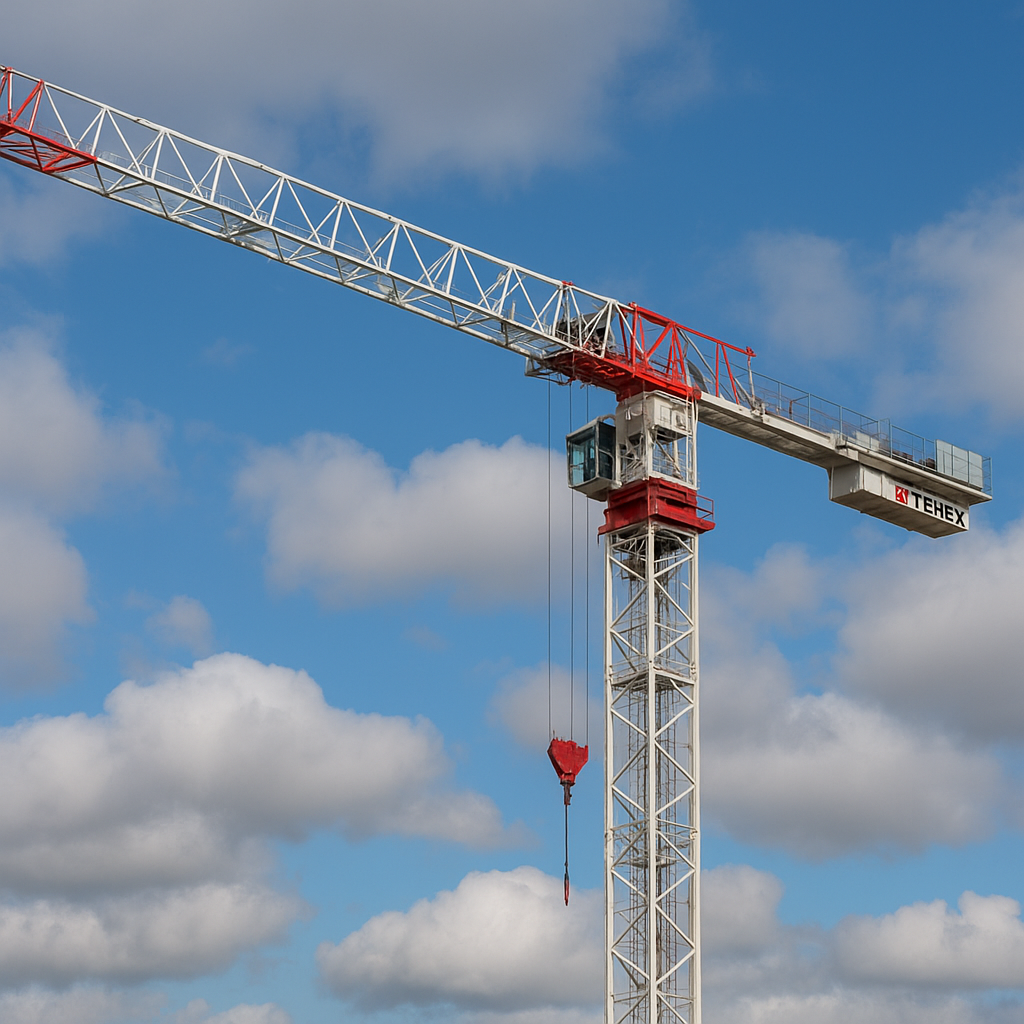
The Terex CTT 472-20 is a member of a well-known family of tower cranes produced by Terex, designed to meet the demanding requirements of contemporary construction projects. This article explores the machine’s design philosophy, typical technical characteristics, operational uses, transport and assembly considerations, safety features, maintenance practices, and its role in the construction market. Throughout the text, key concepts such as performance, safety, efficiency, and versatility are highlighted to help readers quickly identify the most important attributes of the CTT 472-20.
Overview and design features
The Terex CTT 472-20 is engineered for a broad range of construction tasks where a balance between lifting capacity and compact footprint is required. It belongs to Terex’s CTT line of tower cranes, which are tailored to both urban building sites and larger infrastructure projects. The model number reflects series classification within the CTT range and signals specific configuration options available to rental companies and contractors.
Key design priorities for the CTT 472-20 include structural robustness, modular transportability, and user-friendly controls. The crane typically features a lattice boom (jib) and a slewing unit that enables 360-degree rotation. The chassis and tower sections are designed for rapid assembly and flexible mounting—on a concrete foundation, on a base frame, or tied into a building as construction height grows. For urban environments, compactness of the slewing unit and the ability to operate near obstacles are important design elements.
Important components and features commonly associated with this class of crane include:
- Modular tower sections for scalable height
- Counterweight system adaptable to site limits
- Variable length jib options to suit span requirements
- Hydraulic or electric hoisting systems for precise load handling
- Operator cab or remote-control options to optimize visibility and comfort
- Safety interlocks and overload protection that comply with modern standards
Typical technical specifications and performance
Exact specifications can vary by configuration, but the CTT 472-20 is generally specified to provide a strong combination of nominal capacity and reach. For clarity, the following figures are representative values that illustrate the performance envelope commonly associated with this model and similar cranes in the Terex CTT series. Always consult the manufacturer’s official datasheet for precise numbers for a particular machine and configuration.
Representative capacity and reach
- Maximum rated load: Typically in the range of 12–20 tonnes at short radii depending on counterweight arrangement and jib length. Many configurations emphasize a high-capacity inner radius (close to the tower) while providing reduced capacities at extended reaches.
- Working radius: Jib lengths for this type of crane often vary between 30 m and 50 m or more. Maximum reach has trade-offs with tip load and lifting chart values.
- Tip capacity: At maximum jib extension the capacity may drop to a fraction of the rated capacity—commonly in the range of 1–3 tonnes at full reach for comparable cranes.
Height and tower options
- Free-standing height: The crane can be assembled to various free-standing heights depending on the number of tower sections. Typical free-standing heights may range from 20 m up to 60 m or greater with additional sections and climbing systems.
- Climbing and tying: For very tall structures, the CTT 472-20 can be configured with climbing frames or tie-in points to the building, enabling safe incremental height increases during construction.
Mechanical and electrical systems
- Hoist system: Electric hoist motors with multi-speed winches provide controlled lifting speed. Load-sensing and soft-start features are common on modern machines to reduce shock loads.
- Slewing unit: A robust slewing gear allows smooth 360° rotation and precise placement of loads.
- Power and controls: Remote diagnostics, PLC-based control systems, and ergonomically designed operator cabs or pendant-and-remote setups are typical. Energy-efficient drives and regenerative braking may be included on modern Terex cranes.
Stability and counterweights
Stability is managed through a combination of tower geometry, ballast/counterweight systems, and anchoring. The CTT 472-20’s counterweights are typically modular, allowing operators to adjust the machine’s center of gravity and rated load chart to suit site constraints. Foundation design and proper anchoring tie directly to permitted load charts at various radii and heights.
Applications and sectors where it is used
The Terex CTT 472-20 is versatile and finds application in a range of construction and industrial scenarios. Its mix of reach and capacity makes it useful for tasks that require precise placement of medium-to-heavy components within constrained sites.
Common construction uses
- Multi-storey building construction: Lifting precast panels, steel sections, HVAC units, and concrete forms into place across several floors.
- Urban infill projects: When space is limited, a compact tower crane that offers good reach and high inner-radius capacity is especially valuable.
- Industrial facilities: Erecting structural steel, machinery installation, and modular plant components where heavy loads must be lifted to elevated positions.
- Infrastructure projects: Bridge components, utility installations, and other civil engineering tasks that benefit from the crane’s combination of reach and load-handling ability.
Rental and contracting market
Many contractors prefer to rent tower cranes like the CTT 472-20 rather than purchase them outright, because rental fleets can provide machines configured to project-specific needs—jib length, counterweight packages, and climbing kits. The CTT 472-20 is often included in rental inventories due to its flexibility across multiple job types.
Transport, assembly and site logistics
Efficient transport and relatively fast assembly are important advantages for modern tower cranes, particularly on fast-paced projects. The CTT 472-20 is designed with modularity in mind to streamline logistics.
Transport considerations
- Modular components: Tower sections, jib pieces, the slewing unit, and counterweights are sized to fit standard heavy transporters and can be moved on typical low-load trailers.
- Site access: Planning for crane assembly requires checking road access, overhead obstructions, and local permit requirements for oversized loads.
Assembly and erection
- Crew size: Depending on the chosen method (self-erecting vs. assembled with mobile crane), a typical assembly crew may include operators, riggers, and supervisors. Assembly time varies but is optimized via modular connections and standardized hardware.
- Use of mobile cranes: On tighter sites, a mobile crane may be used to place major components. Many tower crane assemblies also make use of hydraulic jacks and temporary supports to reduce reliance on additional lifting equipment.
Safety systems and operator ergonomics
Safety is paramount with any tower crane. The Terex CTT 472-20 includes protective systems designed to reduce risk and comply with regulatory standards.
- Load moment indicators (LMI): These systems continuously monitor applied loads, jib angle, radius, and counterweight configuration to prevent overload situations.
- Limit switches: Prevent over-hoisting and over-lowering of loads, and block slewing past predefined limits.
- Anti-collision and zone control: For sites with multiple cranes, anti-collision systems can be integrated to maintain safe separation and coordination.
- Operator comfort: Modern cabs are equipped with climate control, vibration isolation, and ergonomic controls to reduce fatigue and increase accuracy during long shifts.
Maintenance, lifecycle and total cost of ownership
Routine maintenance is essential to preserve reliability and safety. The total cost of ownership for a tower crane extends beyond purchase price to include transport, assembly, periodic inspections, parts replacement, and labor.
Inspection and preventive maintenance
- Daily checks: Visual inspections for signs of wear, proper lubrication levels, and functional testing of limit devices.
- Periodic inspections: Thorough structural and mechanical inspections at scheduled intervals (monthly, quarterly, annually) often required by local regulations.
- Component life: Key wear items such as bearings, ropes, gearboxes, and safety switches should be tracked and replaced based on condition rather than strictly on calendar intervals.
Spare parts and service support
Availability of spare parts and local service expertise can dramatically affect downtime and operating costs. Terex’s global dealer networks typically provide parts, technical manuals, and training to support long-term operation of the CTT 472-20.
Operational tips and best practices
To maximize productivity and safety when using a CTT 472-20, operators and site managers should adopt several best practices:
- Plan lifts: Preplan heavy lifts, factoring in lift path, obstacle clearance, and suspended load times to minimize exposure to hazards.
- Match configuration to task: Optimize jib length and counterweight configuration for the most common lifts on a given project rather than defaulting to maximum reach.
- Monitor weather: Wind limits for lifts must be observed; gusty conditions can reduce permitted capacities and impose operational pauses.
- Document inspections: Maintain a digital or paper log of daily and periodic checks to aid compliance and asset tracking.
Economic and environmental considerations
Choosing the right crane affects both project economics and environmental footprint. A well-matched crane reduces unnecessary lifts, saves time, and lowers fuel and energy consumption across the project lifecycle.
- Efficiency gains: Using a crane with the appropriate balance of reach and capacity minimizes the need for repositioning and additional equipment.
- Energy use: Electric drive systems and modern control features help reduce energy consumption compared with older machines.
- Lifecycle emissions: Extended service life with preventive maintenance reduces the embodied emissions per year of operation.
Market context and statistical notes
While specific production numbers for the Terex CTT 472-20 model are not always publicly detailed, several general market trends are relevant:
- The global tower crane market has shown steady demand driven by urbanization and infrastructure investments in many regions. Growth rates vary by market cycle and region but historically hover in the low single digits annually in mature markets and higher in developing economies.
- Rental penetration for tower cranes is high in developed markets; many contractors prefer renting to optimize cash flow and gain flexibility. As a result, certain mid-capacity cranes like the CTT 472-20 are common in rental fleets.
- Safety regulation and technology advances continue to shape crane specifications—new machines increasingly include digital telematics, predictive maintenance features, and advanced operator-assist systems.
For procurement or project planning, typical statistical inputs that influence crane choice include expected lift weights, maximum required reach, site height restrictions, and anticipated project duration. These inputs help determine whether a CTT 472-20 configuration will deliver the best value.
Case examples and real-world deployments
In practical use, cranes of the Terex CTT family are frequently selected for mid-rise residential and commercial developments, where they lift precast elements, façade units and mechanical equipment. The CTT 472-20’s balance of inner-radius strength and useful reach make it a reliable choice in constrained urban lots where both agility and capacity are needed.
Examples of common project scenarios where the CTT 472-20 or similar models are effective:
- Installing rooftop HVAC modules on a multi-storey building with limited on-site storage for crane components.
- Delivering and placing structural steel frames for mid-rise office blocks while minimizing disruption to adjacent traffic.
- Removing and replacing heavy equipment on industrial platforms where reach and lift precision are essential for safe operation.
Conclusion and final observations
The Terex CTT 472-20 represents a flexible, robust option within the mid-capacity tower crane segment. Its modularity, adaptability to different jib lengths and counterweight arrangements, and emphasis on operator safety and comfort make it well-suited for a wide range of construction and industrial tasks. When selecting a crane for a specific project, attention to the project’s lift profile, site logistics, and local regulatory requirements will ensure that a CTT 472-20 configuration—if chosen—is optimized for both productivity and safety.
Highlighted terms:
- Terex
- CTT 472-20
- tower crane
- lifting capacity
- jib
- hoist
- counterweight
- installation
- safety
- efficiency
)
)