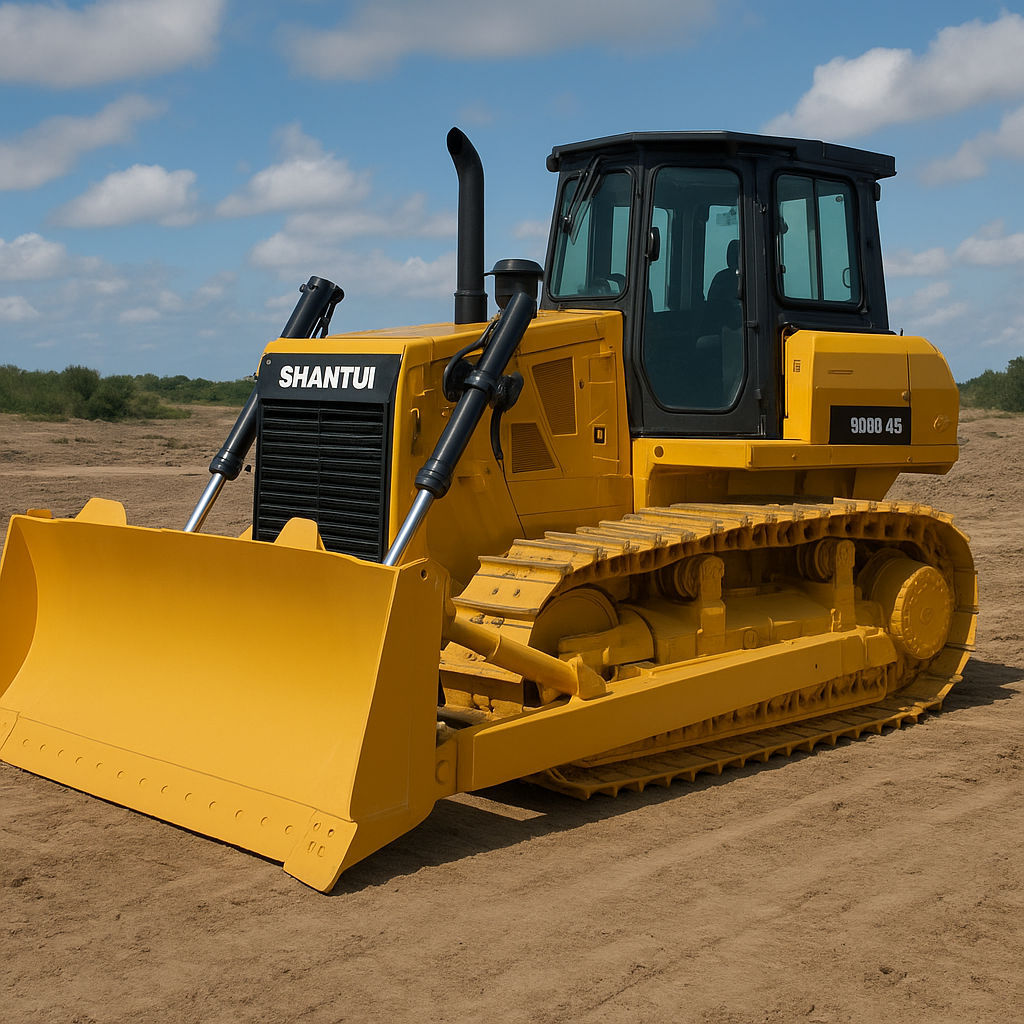
The Shantui SD60-C5 is a heavy-duty construction machine built for demanding earthmoving tasks. Combining robust mechanical design with modern operator comforts and optional electronic controls, this dozer is used across a wide range of industries where reliable, high-capacity grading and pushing power are required. In the sections below you will find a detailed overview of the machine, its common applications, characteristic specifications and operational considerations, plus practical advice for operators and fleet managers.
Overview and design philosophy
The Shantui SD60-C5 reflects Shantui’s approach to providing high-capacity, cost-effective track-type equipment for global markets. As a member of the SD-series, the SD60-C5 is positioned in the upper medium to heavy class of dozers, designed to perform sustained, high-output work such as large-scale site preparation, bulk earthworks and mining support tasks. Its design balances durable mechanical systems with serviceability and operator ergonomics.
Key design elements typically include a robust framestructure, reinforced final drives, heavy-duty track chains and rollers, and a choice of blade and ripper configurations to match specific job requirements. The machine is engineered to tolerate continuous high loads and abrasive conditions while remaining accessible for routine maintenance and repair.
Manufacturers’ offerings in this category often emphasize modularity—so components like the hydraulic system, transmission and cab options can be tailored. This modular approach helps the SD60-C5 platform serve a wide array of roles without major structural changes.
Technical characteristics and typical specifications
Exact specifications for the SD60-C5 may vary by production year, regional emissions compliance, and optional configurations. The values below are representative ranges and characteristics commonly associated with machines in this class.
General dimensions and mass
- Operating weight: typically within a range of about 50–70 metric tonnes, depending on blade and ripper fitments.
- Track gauge and undercarriage: heavy-duty two-track undercarriage with reinforced rollers and shoes sized for high tractive effort and long life in abrasive soils.
Powertrain and performance
- Engine: a turbocharged diesel engine tuned for high low-end torque rather than peak speed. Rated power in this class commonly falls into a broad band, reflecting different tunings and emission packages; expect engines optimized for reliability, cooling capacity and sustained heavy-load operation.
- Transmission: planetary power shift or torque-converter transmission with multiple forward/reverse gears to provide efficient push force at working speeds.
- Tractive effort and drawbar pull: designed for continuous heavy pushing—typical drawbar pull figures put machines like the SD60-C5 among the strong performers in mid-to-large size dozers.
Hydraulics, blade and attachments
- Blade types: options generally include straight blades (S-blade), universal (U-blade), semi-U and angle blades. Blade capacity can range widely based on blade type; large semi-U or U blades often deliver the greatest capacity for bulk dozing.
- Ripper options: single-shank or multi-shank rippers for breaking compacted ground or rock; hydraulic controls enable depth and angle adjustment for efficient penetration and loosening.
- Auxiliary hydraulics and controls: hydraulic circuits sized to operate attachments reliably; modern control systems provide smoother implement response and reduced operator fatigue.
Fuel, cooling and consumables
- Fuel tank capacity: ample capacity for long shifts, values vary by configuration but are large enough to support extended operation without frequent refueling.
- Cooling system: heavy-duty cooling package to support high-horsepower operation and to reduce risk of thermal derates in hot climates or heavy-duty mining applications.
- Fuel consumption: depends on load and operating profile; typical heavy-dozer consumption can vary from modest rates at light grading to significantly higher rates under continuous full-load pushing. Fleet managers should budget fuel and monitor telematics for consumption trends.
Primary applications and industries
The SD60-C5 is a versatile machine that finds productive use wherever large volumes of material must be moved, shaped or cleared. Typical application areas include:
- Construction and civil engineering: site preparation for roads, airports, industrial sites and residential development—grading, spreading fill and creating development platforms.
- Mining and quarrying: overburden stripping, road maintenance, push-loading and assisting excavators in producing haulable benches and stages.
- Land reclamation and coastal works: beach replenishment, levee construction and other projects where large quantities of sand and soil must be relocated or shaped.
- Forestry and land clearing: removing stumps, coppice and topsoil in preparation for replanting or plantation development with protective guarding and heavy-duty undercarriage options.
- Agricultural infrastructure: large irrigation earthworks, dam and canal shaping where robust, repetitive pushing is required.
- Emergency and disaster response: debris clearing after storms, landslides, or earthquakes where reliability and pushing power are critical.
Because of its size and capabilities, the SD60-C5 is especially effective for bulk earthmoving tasks that would be inefficient or too slow with smaller machines. Its ability to push large blade loads in a single pass reduces cycle times and total operating hours for large-volume jobs.
Productivity, operating economics and lifecycle considerations
When evaluating the SD60-C5, operators and fleet managers focus on three interlinked metrics: productivity, operating cost per hour, and component longevity. Productivity is determined by blade capacity, power-to-weight ratio, traction and operator skill. For large dozers like the SD60-C5, real-world productivity on soft to medium soils can range from several hundred to over a thousand cubic meters of material moved per hour, while tougher ground will reduce those figures significantly.
Operating cost factors
- Fuel consumption is a principal variable cost. Efficient engine tuning, appropriate gear selection and careful match of blade and ripper to the job can materially reduce liters burned per productive hour.
- Undercarriage wear is a dominant maintenance expense for track machines. Aggressive conditions (rocky, abrasive ground, frequent reversing on slopes) accelerate wear; regular inspections and track tension management extend life and reduce long-term cost.
- Scheduled maintenance (filters, oils, hydraulic checks) and timely replacement of wear parts prevent unplanned downtime and expensive failures.
Lifecycle and resale
Heavy dozers are capital-intensive assets that are expected to serve for many thousands of machine hours. A well-maintained SD60-C5 with a documented maintenance record can retain substantial resale value within markets that demand large dozers. Lifecycle cost modeling should include expected operating hours per year, fuel, maintenance, major overhauls (engine and final drives), and resale assumptions based on regional demand for used equipment.
Safety, operator comfort and modern technology
Operator environment and safety features are critical for productivity and reputation. Modern variants of the SD60-C5 emphasize improved cab ergonomics, better noise and vibration isolation, and enhanced visibility. Standard or optional features often include:
- ROPS/FOPS certified cab for rollover and falling-object protection.
- Air conditioning and heating systems sized for extreme climates.
- Ergonomic controls with reduced lever forces and adjustable seating to minimize fatigue during long shifts.
- Visibility aids such as wide glass areas, mirrors, optional rear cameras and proximity sensors.
- Electronic monitoring and diagnostic systems for engine, transmission and hydraulics to notify operators of alerts and help reduce downtime.
- Optional GPS and GPS-assisted grade control systems for higher grading accuracy and reduced rework on precision projects.
Attachment options and specialization
One of the strengths of dozers in this class is the ability to be highly configured for the task. Common attachments and optional equipment include:
- Various blade types and sizes for bulk dozing, finishing or pushing loose materials.
- Single-shank or multi-shank rippers for breaking dense or cemented layers.
- Winches for logging, rescue and specialty pulling tasks.
- Special undercarriage packages such as heavy-duty rollers and sealed & lubricated track links for high-wear environments.
- Environmental packages including biodegradeable hydraulic fluids and sealed drains for sensitive sites.
Maintenance best practices
Maintaining an SD60-C5 for long-term reliability centers on proactive inspection and preventive service. Key recommendations include:
- Routine lubrication and scheduled oil/filter changes to protect the powertrain and hydraulics.
- Frequent visual checks of undercarriage wear, shoe condition, sprockets and track tension to prevent accelerated component loss.
- Timely troubleshooting of diagnostic alerts and careful record-keeping of repairs to preserve resale value.
- Implementing telematics where available for remote monitoring of machine hours, fuel usage and fault codes—this helps fleet managers optimize utilization and maintenance windows.
Market position and comparison
In many markets the SD60-C5 is positioned as a value-driven alternative to established Western brands, offering competitive purchase price and straightforward service models. Buyers often weigh acquisition cost against total cost of ownership, including fuel, parts availability and dealer support.
When compared to similarly sized competitors, decisions often hinge on:
- Local dealer network and parts availability.
- Operator familiarity and training availability.
- Specific job requirements—some customers prefer a simpler mechanical package for easy field repairs, while others prioritize factory-integrated electronics and telematics.
Environmental and regulatory considerations
Emissions regulations influence engine selection and after-treatment systems. Depending on the target market and production year, SD60-C5 machines may be fitted to meet regional standards such as Stage V (EU), Tier 4 Final (US/EPA) or equivalent local requirements. These systems can add complexity (DEF/AdBlue dosing, particulate filters) and affect operating procedures.
Operators should also consider noise and dust mitigation strategies for urban or sensitive site work, and ensure that maintenance practices comply with environmental regulations on fluid disposal and spill control.
Buying, renting and spec’ing tips
For procurement teams and site supervisors specifying an SD60-C5, consider the following checklist to ensure the machine fits the intended role:
- Match blade type and ripper configuration to the dominant material and task mix.
- Confirm local support for major components (engine brand support, hydraulic pump spares, final drive parts).
- Evaluate telematics and remote health monitoring options—these pay dividends in uptime reduction for large fleets.
- Consider fuel tank size vs. shift patterns to minimize downtime for refueling.
- If renting, verify the rental house’s maintenance standards and availability of backup machines for critical work windows.
Practical performance metrics and statistics (typical ranges)
Published performance numbers for machines of this class vary by configuration, but the following ranges provide a practical reference for planning and estimation:
- Operating weight: approximately 50–70 tonnes.
- Engine rated power: broadly in the range of a few hundred kilowatts; suitable for sustained high-torque tasks.
- Blade capacity: from roughly 10 to over 20 cubic meters depending on blade type and extension options.
- Fuel consumption: highly variable—light grading can be a modest rate while heavy pushing and ripping can increase consumption significantly; plan for a broad operating range when budgeting fuel.
- Typical daily production on bulk earthworks: can range from several thousand to tens of thousands of cubic meters per day depending on site layout, support equipment and cycle optimization. Actual figures are site-specific.
Conclusion
The Shantui SD60-C5 is a capable heavy dozer platform aimed at high-capacity earthmoving tasks. Its combination of durable mechanical structure, configurable attachments and modern cab features makes it suitable for construction, mining, reclamation and other sectors that require reliable pushing power. When considering an SD60-C5, attention to the specific configuration, local support network and maintenance planning will determine whether the machine delivers the expected productivity and lifecycle value. With proper specification and care, an SD60-C5 can be a cornerstone asset for large-scale earthmoving operations.
)
)