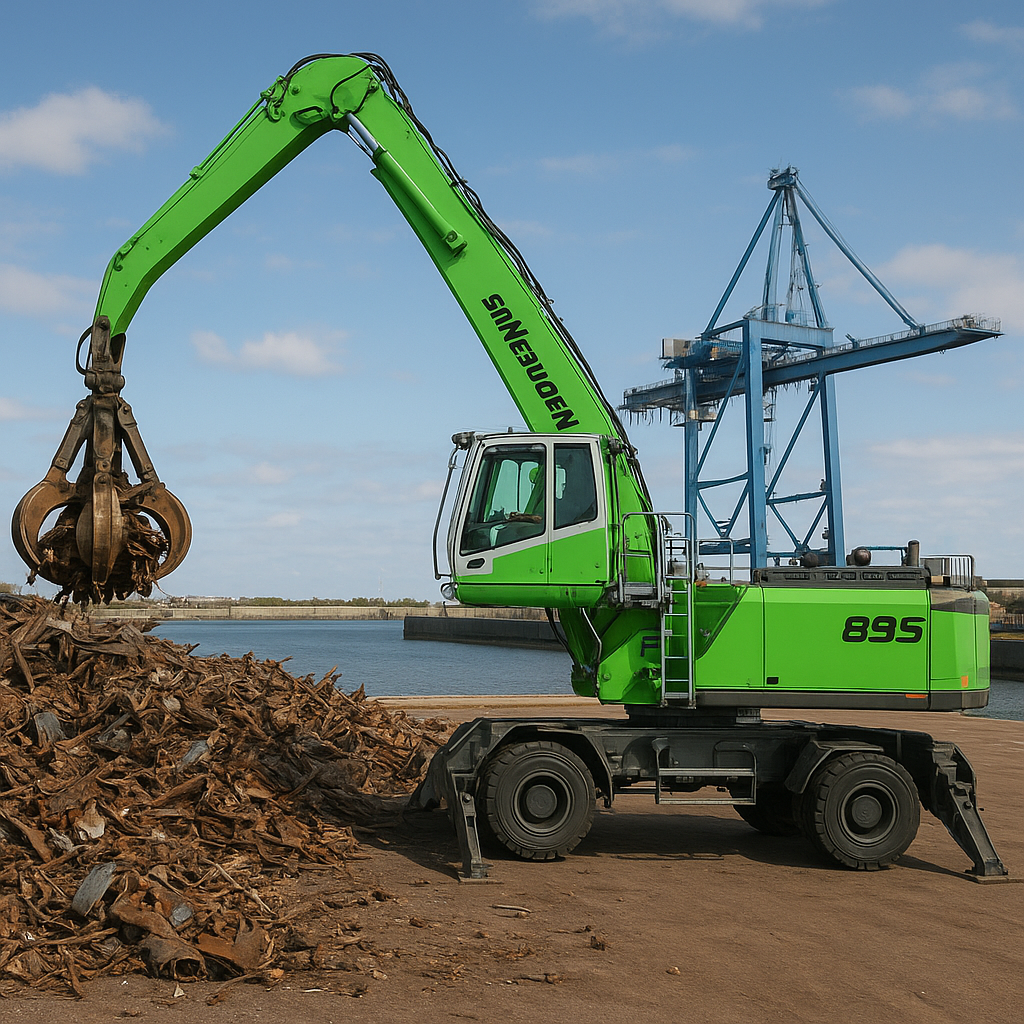
The SENNEBOGEN 895 E represents a new generation of heavy-duty material handler designed specifically for demanding port operations and industrial applications. Combining the proven boom geometry and robust undercarriage of SENNEBOGEN’s 800 series with advanced electric drive and control systems, the 895 E targets operators who require high performance while prioritizing efficiency, low local emissions and reduced noise. This article explores the machine’s design, common applications at ports, technical and environmental benefits, operator features, maintenance considerations, and real-world deployment notes.
Design and core technology
The SENNEBOGEN 895 E is built on the longstanding platform of SENNEBOGEN heavy material handlers but reworked to exploit the advantages of electrification and modern hydraulics. The design philosophy centers on delivering long reach and stable lifting characteristics while minimizing lifecycle costs and environmental impact.
Chassis and boom architecture
- The machine retains a robust undercarriage able to support extended booms for stacking and ship-loading tasks. The structural design emphasizes rigidity and stability to handle repetitive heavy lifts common in ports.
- Its boom and stick geometry are optimized for maximum reach and precise handling in tight quay and yard environments. Typical configurations support multi-section booms and a variety of attachments such as grabs, magnets, orange-peel buckets and clamps.
Electric drive and power management
At the heart of the 895 E is an advanced electric powertrain that can be configured as a fully electric machine (battery or grid-connected) or as a hybrid depending on site requirements. Key advantages of the electric concept include:
- Zero local combustion emissions when operating in pure-electric mode, an important feature for urban and port environments with air-quality restrictions.
- Lower acoustic signature—electric drives significantly reduce engine noise levels compared with conventional diesel-only machines, improving comfort for operators and reducing disturbance in port neighborhoods.
- Regenerative energy recovery during lowering and swing movements, which can be captured and reused for auxiliary systems or battery recharge, improving overall energy efficiency.
Hydraulics and controls
The 895 E integrates modern electro-hydraulic control systems that provide smooth, proportional control essential for delicate material handling. Electronic assistance features—proportional joysticks, load-sensing hydraulics and programmable motion profiles—allow operators to fine-tune performance for various tasks, from rapid bulk transfer to precise piece handling of breakbulk cargo.
Applications in port operations
Ports require versatile, reliable equipment that can cope with very different cargoes and handling patterns. The SENNEBOGEN 895 E excels across a wide spectrum of tasks thanks to its adaptability and power.
Bulk handling
- Coal, ore, aggregates and fertilizer: With high-capacity grabs and long reach, the 895 E can efficiently load and unload bulk carriers and move material across stockpiles.
- Ship unloading: Stable swing and boom performance facilitate steady discharge rates, helping terminals meet tight vessel turnaround targets.
Breakbulk and project cargo
When handling crates, steel girders, pipes or other irregular items, attachment versatility and precise control are paramount. The 895 E supports multiple attachments and offers the responsive hydraulics necessary for secure, controlled movements during slinging and placement.
Container and ro-ro support
- While dedicated container handling equipment dominates container terminals, material handlers like the 895 E are often used for non-standard containers, damaged units, and yard maintenance tasks.
- At ro-ro terminals, the 895 E aids in loading or unloading loose cargo and equipment, offering a flexible complement to forklifts and cranes.
Scrap and recycling operations
Ports that handle end-of-life shipping and recycling streams also benefit from the 895 E’s ability to mount powerful electromagnets, powered grabs and shear attachments. Its electric configuration is especially well-suited when separation facilities are close to urban areas and emission/noise limits are strict.
Environmental and economic advantages
Sustainability is increasingly central to port planning. The SENNEBOGEN 895 E addresses this trend by providing tangible environmental and cost-saving benefits.
- Emissions: In pure-electric operation the 895 E produces no local NOx, SOx or particulate emissions, helping ports meet air-quality targets and comply with local regulations.
- Noise reduction: Electric systems lower noise at source. Quieter operation improves working conditions for operators and reduces community noise complaints.
- Operating costs: Electric drivetrains typically have fewer moving parts than diesel engines, which can translate into lower routine maintenance expenses and reduced fuel costs when grid electricity is cheaper than diesel.
- Energy recovery: Regenerative functions can lower net energy consumption during duty cycles with frequent lowering and swing motions, as encountered in bulk handling tasks.
Although exact savings depend on local electricity prices, duty cycle, and whether the machine is grid-connected or battery-operated, industry pilots of electrified material handlers report significant reductions in fuel consumption and maintenance-related downtime. Lifecycle analyses often show improved total cost of ownership for electric or hybrid configurations in high-utilization terminals.
Operator comfort, safety and productivity
Modern material handlers must balance raw lifting capability with ergonomics and safety. The 895 E incorporates multiple features aimed at maximizing productivity while safeguarding personnel.
Cab and controls
- Comfortable, climate-controlled cab with panoramic visibility to reduce blind spots during quay and yard operations.
- Ergonomic seating and fully adjustable joystick controls reduce operator fatigue during long shifts.
- Integrated displays present machine status, diagnostics and optional telematics data for real-time monitoring.
Safety systems
- Load moment indicators and electronic overload protection prevent accidental overstressing of the machine.
- Camera systems and optional radar/ultrasonic obstacle detection improve situational awareness, especially when handling large grabs that obscure views.
- Fail-safe hydraulic circuits and redundant electrical systems ensure controlled shutdown in emergency conditions.
Productivity-enhancing features
Programmable motion limits, automatic attachment recognition and adjustable working modes allow operators to optimize cycles for speed or fine control, depending on task requirements. Telematics integration also enables fleet managers to analyze duty cycles and identify opportunities for efficiency gains.
Maintenance, serviceability and lifecycle considerations
Electrified machines present different maintenance demands than conventional diesel models. SENNEBOGEN’s 895 E is engineered with service access and modular systems in mind to keep downtime low.
- Electric motors and inverters generally have lower routine maintenance needs compared with combustion engines—no oil changes, fewer filters, and fewer wear parts.
- Battery systems (if fitted) require thermal management, state-of-charge monitoring and periodic checks for cell health; service plans typically include battery diagnostics and replacement strategies to match terminal duty cycles.
- Hydraulic components remain service-critical; easy access to pumps, valves and hoses expedites repairs. SENNEBOGEN emphasizes service-friendly layout and remote diagnostics to speed troubleshooting.
Planned maintenance and OEM support are key to maximizing uptime. Many terminals opt for full-service agreements or OEM-managed fleets to benefit from predictable operating budgets and access to specialized technicians.
Statistics, case studies and market context
While exact performance numbers for a specific SENNEBOGEN 895 E will vary by configuration, some general observations and reported outcomes are valuable for decision-makers:
- Electrified material handlers in port trials have shown reductions in operational noise by several decibels compared to diesel equivalents, yielding noticeable improvements in ambient sound levels near quays.
- Fuel-to-electricity conversion studies in comparable heavy mobile equipment indicate potential energy cost reductions ranging from 20% to more than 50% depending on local electricity prices and usage profiles; hybrid configurations tend to produce intermediate savings.
- Ports introducing electric handling equipment have documented improved air quality metrics locally, especially reductions in particulate matter and NOx concentrations adjacent to high-traffic quays.
Case studies from early adopters highlight how the 895 E and similar machines integrate into electrified terminals. Examples include installations where machines are grid-connected during shifts and charged during off-peak hours, or battery-operated units that swap batteries in high-utilization scenarios. Telemetry data from deployed units often shows high availability and consistent cycle times when supported by proactive maintenance and operator training.
ROI considerations
Return on investment depends on multiple variables: machine utilization, local electricity vs diesel prices, incentives or regulatory pressures, maintenance approach, and attachment mix. For many terminals with high daily operating hours and strict emissions requirements, the payback period for electrified handlers becomes attractive compared with diesel-only models.
Practical tips for terminals considering the 895 E
- Assess duty cycles carefully: bulk-handling terminals with many repetitive lifts will capture the greatest operational savings from electrification and regenerative systems.
- Plan infrastructure: grid-connected machines require adequate shore power, while battery models need charging stations and potentially battery exchange workflows.
- Train operators and maintenance personnel on electric-specific procedures, including safe battery handling and interpreting electronic diagnostics.
- Consider hybrid interim solutions for terminals transitioning from diesel to full electrification; hybrids can provide immediate emissions reductions with lower infrastructure investments.
Summary
The SENNEBOGEN 895 E represents a powerful, versatile solution for modern port operations that demand both high performance and improved environmental outcomes. Its combination of rugged boom architecture, advanced electro-hydraulic controls, and electrified power options delivers advantages in efficiency, reduced local emissions and quieter operation. For terminals facing air-quality mandates, noise restrictions or a desire to reduce lifecycle operating costs, the 895 E offers compelling capabilities, especially when integrated into a thoughtfully planned infrastructure and maintenance program. As ports increasingly prioritize sustainability, electrified material handlers such as the SENNEBOGEN 895 E are likely to become central elements of future terminal fleets.
)
)