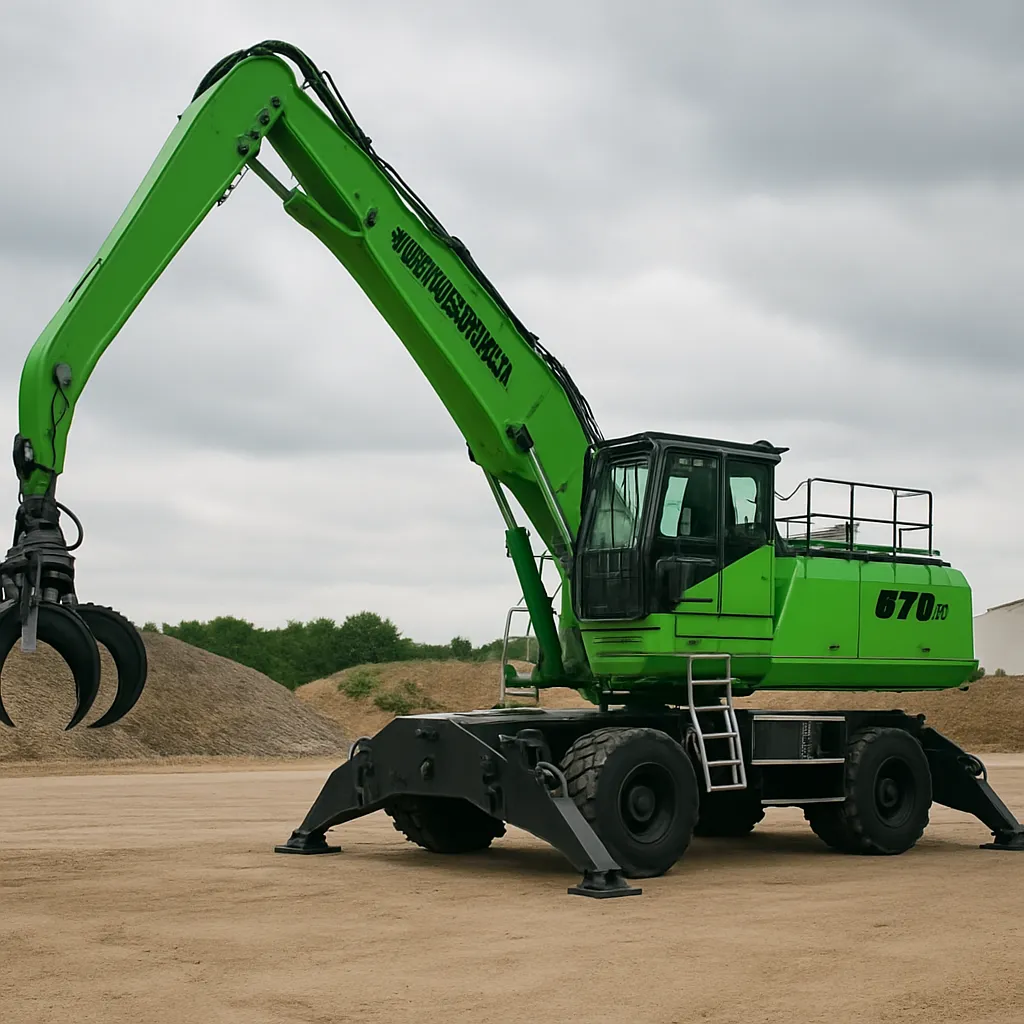
The SENNEBOGEN 870 E represents a class of heavy-duty SENNEBOGEN 870 E material handler machines designed for demanding port, scrap, recycling and bulk material handling tasks. Combining robust construction with advanced hydraulics and operator-focused features, this model targets operations that require long reach, precise handling and continuous uptime. The following article explores the machine’s design, typical applications, operational characteristics, safety and maintenance considerations, and the broader economic and environmental implications of deploying an 870 E in industrial settings.
Design and engineering philosophy
The 870 E is engineered around three core objectives: durability for harsh environments, precision for delicate handling tasks, and operator comfort to sustain long shifts. The machine’s architecture centers on a reinforced undercarriage and a slewing superstructure that supports a long boom and stick combination. This layout provides the reach and stability necessary for loading and sorting heavy materials while enabling 360-degree rotation for flexible workflows.
Key elements of the design include a high-capacity hydraulic system, modular boom configurations, and a cab mounted for optimal visibility. The structural frame and boom are built from high-strength steel, with critical stress points reinforced and welded to resist fatigue from continuous, heavy lifts. Many machines in this class incorporate replaceable wear plates and bolted adapters at frequent contact zones, which reduces expensive frame repairs and simplifies routine upkeep.
Manufacturers and operators typically prioritize these design characteristics:
- Hydraulic responsiveness and load-holding stability for controlled manipulation of grabs, magnets and other attachments.
- Modular components and multiple undercarriage options (crawler or wheeled) to match site conditions.
- Large glass areas, telescopic and tilting windows, and elevated seating to improve operator line-of-sight.
- Service-friendly access to the powertrain, hydraulic pumps and electronic control modules for fast maintenance.
Primary applications and industries
The SENNEBOGEN 870 E is tailored for sectors that demand extensive reach and consistent material throughput. Typical application areas include:
- Port terminals and ship loaders: Handling bulk cargoes such as coal, ore, aggregates and scrap metal, with a focus on rapid loading/unloading and stack management.
- Scrap yards and metal recyclers: Sorting, loading, and charging shredders using specialized grabs, magnets and shears for ferrous and non-ferrous processing.
- Demolition and urban recycling projects: Controlled dismantling and material separation, where precise placement of materials into trucks or containers is required.
- Bulk material stockpiling: Managing large piles of loose materials, blending, and reclaiming operations at quarries and aggregate facilities.
- Timber handling and pulp/log yards: Sorting and stacking logs, with protective structures and attachment compatibility for timber work.
Because of its versatility, the machine is frequently chosen where single-equipment productivity must replace multiple machines or where a long-reach, stable platform improves safety and reduces cycle times. The 870 E can be outfitted with a variety of attachments—grab buckets, orange-peel grapples, lifting magnets, clamshell buckets and shear units—making it a multi-role asset across many heavy industries.
Technical features and operation
Powertrain and mobility
The 870 E is offered with powerful diesel drives optimized for reliability and continuous duty cycles. Some configurations emphasize reduced noise and emissions through modern engine packages and exhaust after-treatment systems. Under the frame, operators have choices such as heavy-duty crawlers for uneven surfaces and port conditions or wheeled undercarriages for faster repositioning on paved yards.
Hydraulics and control systems
The hydraulic system is a cornerstone of the 870 E’s performance. Proportional valves, load-sensing pumps and well-balanced counterbalance systems give the operator fine control over the attachment while delivering the flow required for rapid material handling. Electronic control units manage hydraulic sequencing and can integrate with telematics systems to optimize performance and track operational parameters remotely.
Boom and reach options
Long-reach booms with multiple stick lengths are common on the 870 E to meet varying jobsite reach requirements. Configurations are chosen based on stacking height, ship hold depth or quayside layout. The boom geometry is designed to maintain stable lifting moments even at full reach, and optional box-section reinforcement increases resistance to bending and torsion for heavy-duty cycles.
Operator environment
Operator comfort and situational awareness are prioritized through features such as climate-controlled cabs, shock-absorbing seats, fully adjustable controls, and advanced ergonomics. The cab often includes large-angle glazing, heated mirrors, and high-resolution monitors that consolidate camera feeds, machine diagnostics and telematics readouts. Noise and vibration damping reduce operator fatigue, which is crucial during extended operations.
Attachments and quick-change systems
One of the 870 E’s strengths is attachment versatility. Quick coupler systems enable fast swaps between grabs, magnets and other tools. Standard hydraulic circuits provide the necessary flow for a wide range of attachments, and electrical or data interfaces can supply sensors or control systems on specialized attachments (e.g., magnet polarity control or shredder feeds).
Performance, capacities and statistics
Exact specifications for machines like the 870 E depend on the chosen configuration—boom length, undercarriage type, attachment and optional equipment. Typical performance characteristics for machines in the long-reach material handler class include the following approximate ranges (configurable by manufacturer and options):
- Lifting capacity (at ground level): roughly 6 to 20 tonnes, varying by counterweight and boom/stick combination.
- Maximum reach: often between 10 to 18 meters for standard booms, with some specialized long-reach variants extending beyond 20 meters.
- Operating weight: commonly ranges from 30 to 70 tonnes depending on configuration (crawlers and counterweights increase total machine mass).
- Engine power: diesel engines in this class typically range from 150 to 300 kW (200 to 400+ horsepower) depending on emissions package and hydraulic demand.
- Fuel consumption: highly variable by duty cycle; typical material handling rates can put average usage in the tens of liters per hour under heavy continuous operation, though eco modes and hybrid options can significantly reduce consumption.
These numbers are illustrative; the precise data for an individual 870 E should be confirmed with the manufacturer or dealer based on the intended configuration. In real-world operations, productivity is often measured not only by theoretical lifting capacity but by tonnage moved per hour, cycle time and operator efficiency—metrics that can be improved through optimized attachment selection, well-trained operators and integrated telematics.
Safety, ergonomics and regulatory compliance
Material handlers operate in congested, high-risk environments. The 870 E incorporates multiple safety systems to protect operators and ground personnel. Standard and optional safety features include:
- Full 360-degree camera systems and blind-spot monitoring to reduce collision risks.
- Load moment indicators and overload protection to prevent hazardous lifting beyond capacity.
- Anti-slip surfaces, protected cab entry points and emergency egress routes.
- Fire suppression options and thermal monitoring for hot-work or high-temperature waste environments.
- Compliance with regional emissions and noise regulations through approved engine packages and muffler systems.
Ergonomic controls reduce operator strain: joystick layouts with adjustable resistance, programmable function mapping, and support for low-fatigue seating. These design elements directly affect operational safety by reducing human error during repetitive, heavy-duty tasks.
Maintenance, serviceability and lifecycle management
Long-term uptime is crucial for operators who rely on a single machine to perform continuous bulk handling. To this end, the 870 E’s design emphasizes serviceability:
- Ground-level access to daily service points (filters, fluid checks) to speed routine maintenance.
- Modular components (hydraulic pumps, control valves, and electronic control units) that can be swapped quickly to minimize downtime.
- Robust sealing and protection for hydraulic hoses and electrical connectors to withstand harsh, dusty or wet conditions.
- Telematics-enabled diagnostics to schedule predictive maintenance and flag anomalies before failures occur.
Typical lifecycle management practices for material handlers include scheduled hydraulic oil analysis, routine wear-part replacement (pins, bushings, teeth), and periodic structural inspections using nondestructive testing for crack detection. With proper maintenance, well-built material handlers can serve in commercial roles for 10-20 years, with major components rebuilt or replaced during mid-life overhauls.
Environmental and economic considerations
Operators are increasingly focused on total cost of ownership (TCO) and environmental footprint. The 870 E is designed with features that can reduce operational costs and emissions through greater efficiency and optional technologies:
- Engine management systems and eco modes that reduce fuel burn during low-load cycles.
- Regenerative hydraulic circuits in some designs that recover energy during lowering motions.
- Sound-insulating cabins and mufflers to meet restrictive port and urban noise ordinances.
- Options for hybrid or fully electric drives in certain markets—these reduce local emissions and can cut operating costs where electricity is economically favorable.
From an economic perspective, material handlers like the 870 E can replace multiple machine classes on a jobsite, cutting labor and equipment costs. Productivity gains—measured in tons per hour—often justify higher capital costs through reduced cycle times and lower downstream handling expenses. Payback periods vary widely but are improved by maximizing machine utilization, performing preventative maintenance and selecting the right attachment for the job.
Attachments and customization
Attachment choice defines much of the 870 E’s utility. Common attachments and their uses include:
- Orange-peel grapples: versatile for scrap and bulk handling, allowing selective picking and high retention rates.
- Clamshell buckets: ideal for precise loading and bulk transfer tasks.
- Electromagnets: quick ferrous-metal separation and loading at scrap yards and ports.
- Shears and demolition tools: for preparatory dismantling in recycling and demolition projects.
- Specialized quick-couplers: reduce swap times and allow rapid changeover between tasks.
Customization extends beyond attachments to include counterweight kits, hydraulic flow packages, special undercarriage options and cab configurations with elevated or rotating platforms for exceptional visibility. Customers often collaborate with OEMs or third-party suppliers to develop bespoke solutions for unique handling challenges.
Market context and buyer considerations
Purchasing a heavy material handler like the 870 E requires balancing upfront capital expenditure, long-term operating costs and expected utilization. Key considerations for buyers include:
- Work profile: average lift weights, reach demands and duty cycle intensity.
- Attachment needs: ensuring hydraulic and electronic compatibility for the full set of intended tools.
- Site conditions: mobility needs between paved yards and soft ground dictate undercarriage choice.
- Local regulatory environment: emissions and noise limits that could affect engine and muffler selection.
- After-sales service and parts availability: strong dealer networks and parts logistics shorten downtime.
Return on investment calculations should include productivity gains, fuel and maintenance forecasts, operator training costs and potential resale value. Resale markets for well-maintained material handlers remain robust; machines with documented service histories and original components typically retain higher values.
Case studies and operational examples
Operators across ports, recycling yards and demolition sites report that switching to a well-specified material handler can significantly increase throughput while reducing labor requirements. Typical results observed in industry case studies include:
- Higher loading rates at quayside operations due to longer reach and faster cycle times when compared to mobile cranes with cumbersome rigging.
- Improved separation rates in scrap yards when using high-capacity orange-peel grapples and magnets, leading to higher-value sorted material streams.
- Reduced machine changeovers and simplified logistics when one multipurpose handler replaces a fleet of single-purpose machines.
In many operations, the net effect is quicker ship turnarounds, more efficient yard layouts and lower per-ton handling costs. Success depends on matching machine configuration to the specific task profile and investing in operator training to exploit the machine’s capabilities.
Conclusion
The SENNEBOGEN 870 E occupies a vital niche in heavy material handling—bridging the performance gaps between mobile cranes and smaller excavators with a platform optimized for continuous bulk and scrap operations. Its combination of long reach, modular attachments, and operator-focused design makes it particularly well suited to ports, recycling yards and demanding bulk handling tasks. While exact specifications vary by configuration, the class’s hallmark is the ability to deliver sustained throughput, precision handling and extended uptime when properly maintained and matched to the job. For buyers and operators focused on maximizing productivity and reducing lifecycle costs, the 870 E and similar material handlers represent a compelling option—especially where flexibility and robustness are essential.
)
)