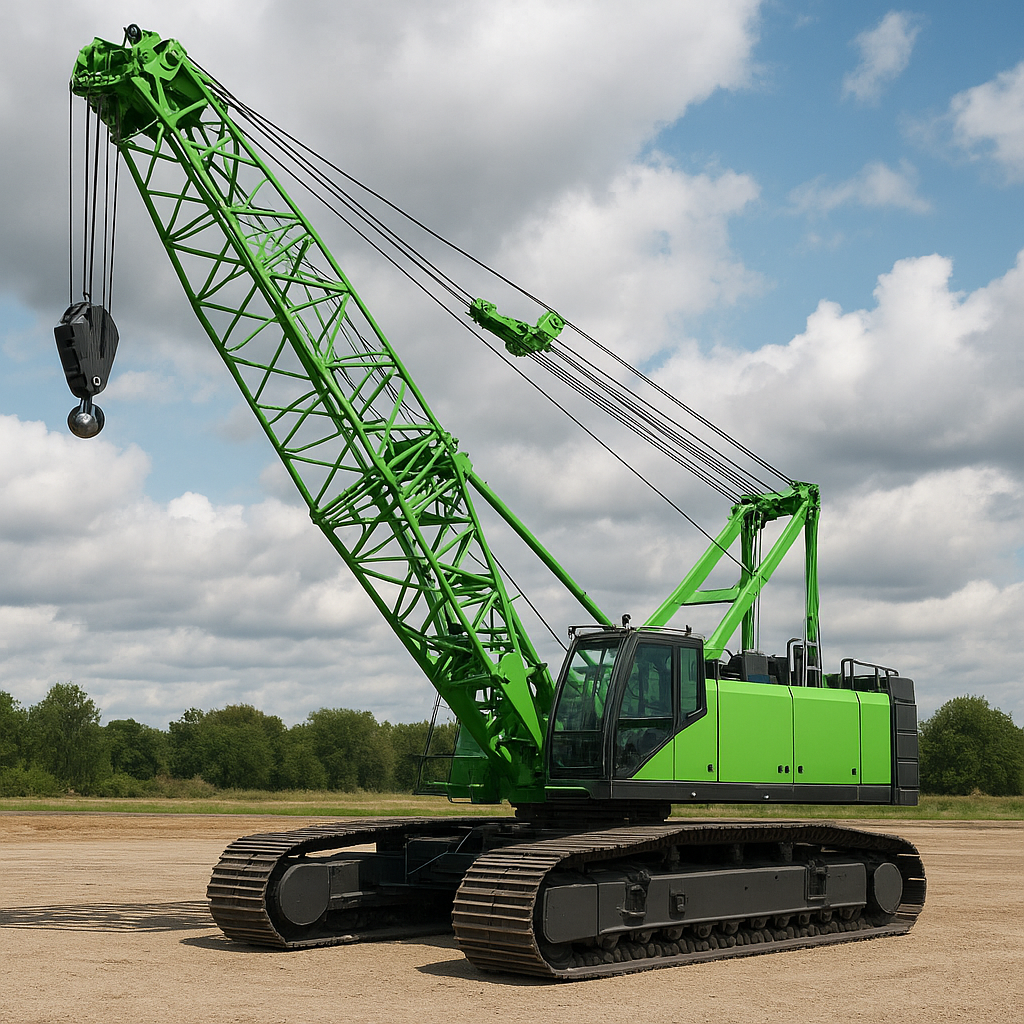
The SENNEBOGEN 6300HD represents a class of powerful, purpose-built heavy-duty crawler cranes designed for demanding lifting, handling and assembly tasks. Combining robust engineering with modular versatility, this machine is aimed at contractors, port operators, wind-farm constructors and heavy industry operators who require a reliable platform for lifting heavy loads in confined or challenging sites. The following article explores the machine’s design philosophy, typical applications, operational features, transport and maintenance considerations, and broader market relevance.
Overview and design philosophy
The SENNEBOGEN 6300HD is engineered as a high-performance crawler crane platform that balances raw lifting power with on-site flexibility. Built around a durable undercarriage and a lattice or telescopic boom systems depending on configuration, the 6300HD is intended to perform long-cycle heavy lifts as well as precise placement tasks. Key design priorities include stability, modularity, ease of transport and operator comfort.
Although specific technical specifications vary by country and final configuration, the 6300HD shares several common design attributes:
- Heavy-duty undercarriage with robust track rollers and wide grousers to ensure traction and flotation on a variety of soils.
- Modular counterweight systems that can be adjusted to match lift charts and improve transportability.
- Multiple boom options including lattice sections for maximum reach and telescopic or hybrid options for speed of erection and versatility.
- Advanced hydraulics and control systems that aid in smooth load handling and efficient cycle times.
- Ergonomic cab and modern electronics for operator control, diagnostics and safety interlocks.
Applications and industries
The 6300HD’s core strengths—lifting capacity, reach and mobility across rough terrain—make it applicable across a range of heavy industries. Common application areas include:
- Wind energy: Erecting towers, installing nacelles and lifting heavy generator components at onshore wind farms where terrain can be uneven and access narrow.
- Ports and terminals: Handling heavy cargoes, sections of roll-on/roll-off ramps, quay-side lifts and mobile harbor construction work where precision and load capacity are necessary.
- Construction of large civil structures: Bridge and marine infrastructure assembly where long reaches and substantial hook heights are required.
- Industrial plants and refineries: Heavy equipment installation and replacement inside constrained industrial sites where tracked mobility and low ground pressure are beneficial.
- Demolition and recycling: With appropriate attachments, the machine can work as a heavy-duty material handler for large components and scrap handling.
Because of its track-mounted design, the 6300HD is particularly useful on sites that lack paved access roads and where repositioning a heavy crane is required without the immediate availability of specialised transporters and assembly crews.
Technical features and modular configurations
One of the defining strengths of the 6300HD family is the variety of configurations available to tailor the machine to the job. This modularity influences lifting charts, transport dimensions and on-site assembly needs.
Boom and rigging options
The crane can be equipped with different boom types: conventional lattice booms for maximum length and stiffness, and combination lattice/telescopic arrangements that reduce erection time. Users can select winches and drum options to match required line pulls and reeving arrangements for complex multi-line lifts.
Counterweight and ballast
The modular counterweight system allows for incremental increases in ballast up to manufacturer-recommended limits. This adaptability permits the crane to be optimized for higher capacity lifts or for reduced transport mass when moving between sites.
Powertrain and hydraulics
Typical large crawler cranes in this class feature powerful diesel engines paired with efficient hydraulic pumps and cooling systems. Redundant hydraulic routing and modern filtration systems promote reliability in continuous heavy-duty operations.
Control systems and electronics
Modern SENNEBOGEN machines incorporate electronic load moment indicators (LMIs), real-time diagnostics, and assistive control features that help operators maintain safe operating envelopes. Optional remote monitoring systems enable fleet managers to track machine hours, fuel consumption and maintenance intervals.
Transport, assembly and site logistics
Transport and assembly logistics are critical considerations for any heavy crawler crane. The 6300HD is designed to be broken down into transportable modules that fit on standard low-loader trailers, though the number of trucks required depends on the selected configuration and counterweight mass.
- Tracks, sprockets and lower frames often transport as single or dual loads depending on local road regulations.
- Lattice boom sections are typically segmented to reduce the length of individual loads for highway compliance.
- Counterweights can be staged locally, pre-fabricated or partially assembled to reduce lift and handling time on site.
- Assembly time can vary from a few days to a week depending on lift crews, crane assists and weather conditions.
In many projects, the ability of a crawler crane to drive steadily across a worksite without disassembly saves time and avoids costly rigging and re-assembly, making the 6300HD attractive for multi-lift contracts and linear projects like pipelines or bridge spans.
Operation, safety and maintenance
Operational excellence and safety are central to the performance of a machine intended for heavy lifts. The 6300HD is typically equipped with multiple safety systems and features designed to protect personnel and equipment:
- Load moment indicators and anti-two-block systems reduce the risk of overload and cable over-payout incidents.
- Fail-safe brakes on winches and driven drives ensure secure holding under load.
- Operator assistance via cameras, proximity sensors and optional remote controls improve situational awareness in congested sites.
- Planned maintenance schedules and modular replacement parts minimize downtime and improve lifecycle availability.
Routine maintenance typically covers hydraulic oil and filter changes, track tension and liner checks, regular inspections of wire rope and sheaves, and verification of electronic safety systems. For major components such as winches, motors and boom pins, predictive maintenance supported by on-board diagnostics can reduce unexpected failures and optimize service intervals.
Attachments and versatility
A major reason contractors select the 6300HD is the wide variety of attachments that expand its role beyond straightforward lifting. Typical attachments include:
- Heavy-duty hooks and multi-fall block systems for high-capacity hoisting.
- Clamshell buckets and orange-peel grapples for bulk material handling in ports and recycling yards.
- Pile driving adapters and timber clamps for marine construction.
- Spreader beams and lifting frames for transporting long or delicate loads.
These options allow the crane to switch roles between a strict lifting machine and a material handler with minimal downtime, enhancing fleet utilization and return on investment.
Market context, lifecycle cost and sustainability
In the marketplace, the 6300HD competes with other high-capacity crawler cranes from global manufacturers. Buyers evaluate machines not only on maximum capacity but also on lifecycle cost, availability of parts, dealer support and the machine’s adaptability to multiple applications.
Key cost considerations include:
- Initial capital cost and financing terms.
- Fuel consumption and engine emissions during long lift cycles.
- Downtime costs associated with maintenance and transportation delays.
- Residual value determined by reputation, parts support and overall machine condition.
From a sustainability perspective, manufacturers have been improving fuel efficiency, selective catalytic reduction (SCR) and particulate filtration to reduce emissions. Electrification and hybrid assist systems are also emerging in the heavy lifting sector, allowing reduced fuel consumption during heavy-duty swing, hoist or travel cycles. The 6300HD’s serviceability and access to modern monitoring tools help owners extend operational life and reduce waste by repairing and reconditioning major components rather than full replacement.
Case examples and typical project roles
Representative uses in real-world projects include erecting wind turbines where the crane lifts towers and nacelles in confined, remote locations; lifting bridge girders during staged bridge launches; and handling large industrial modules during plant expansions. In port terminals, the 6300HD can unload heavy machinery consignments when shipboard cranes are unavailable or when direct quayside transfer is required.
Operators and project managers often cite the following advantages in field reports:
- Faster repositioning between lifts compared with crawler cranes that require extensive disassembly.
- Ability to perform high-capacity lifts without the logistical complexity of crawler-transports and reassembly of lattice booms on site.
- Strong resale demand for well-maintained units, particularly in regions with robust onshore wind or heavy industrial activity.
Training, operator considerations and workforce implications
Working with a large crawler crane requires trained operators, riggers and signalers. Manufacturers and dealer networks typically provide training programs focused on:
- Safe rigging practices and identification of critical lift parameters.
- Interpreting load charts for different boom and counterweight configurations.
- On-board diagnostic interpretation and preventive maintenance routines.
Investment in operator training increases safety, reduces the likelihood of costly downtime and improves lift efficiency—particularly on complex projects such as multi-crane lifts or lifts near critical infrastructure.
Conclusion
The SENNEBOGEN 6300HD occupies a strategic niche among heavy crawler cranes by offering a blend of power, mobility and modularity that matches the needs of modern heavy-lift projects. Its adaptability for specialized attachments and site-driven configurations means that it can serve diverse industries from wind energy to port logistics and heavy construction. While specific technical data and performance metrics depend on final specs and options, the model’s engineering emphasis on stability, operator safety and serviceability make it a compelling choice for contractors seeking a reliable, long-lived lifting platform.
Note: For precise lifting charts, counterweight options, transport dimensions and certified performance figures, consult official SENNEBOGEN documentation or an authorized dealer to ensure configuration-specific values and compliance with local regulations.
)
)