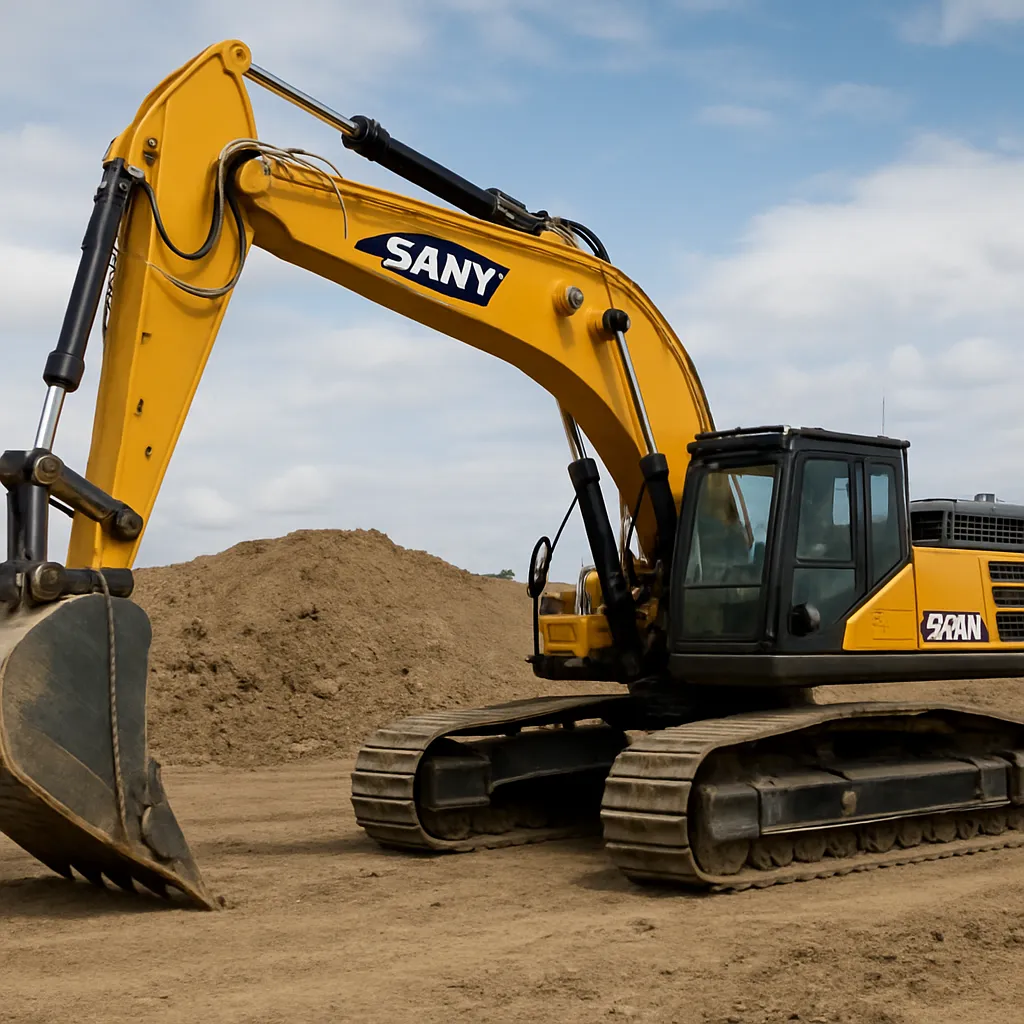
The SANY SY500H is a heavy-duty hydraulic excavator designed to meet the demands of large-scale construction, quarrying, mining, and infrastructure projects. Combining robust structural design, advanced hydraulic systems and operator comfort features, this machine aims to deliver high productivity with reduced operating costs. In the following sections you will find a detailed examination of the SY500H’s technical characteristics, typical applications, operational performance, maintenance considerations and safety and comfort features. The article highlights both practical and economic aspects and includes approximate statistical data where available.
Technical overview and key features
The SANY SY500H is positioned in the approximately 50-ton class of excavators and shares many design elements common to modern heavy hydraulic machines. Its configuration typically includes a reinforced upper structure, a heavy-duty undercarriage, a large-capacity counterweight and a powerful diesel engine mated to an efficient hydraulic system. The overall package is engineered to deliver strong digging power, smooth hydraulic performance and long-term durability in tough working conditions.
Engine and hydraulic system
- Engine: The SY500H is usually equipped with a high-displacement diesel engine that provides substantial rated power aimed at large earthmoving tasks. Typical rated power values for machines in this class are in the range of 300–400 kW (roughly 400–540 hp), though exact engine models and emissions configurations may vary by market and year of manufacture.
- Hydraulic system: The machine features a high-flow, load-sensing hydraulic system with variable displacement pumps and responsive control valves. This provides steady, efficient power delivery to the boom, arm and attachments and helps optimize fuel consumption and cycle times.
- Attachment hydraulics: Heavy-duty work ports and reinforced plumbing permit the use of large breakers, grapples, shears and pulverizers. Auxiliary flow is typically configurable for different tools and can be adjusted to balance speed and power.
Structural components and capacities
- Operating weight: The SY500H falls into the vicinity of 45,000–55,000 kg operating weight depending on configuration, counterweight and attachments. Exact figures depend on standard or heavy configurations and optional equipment.
- Bucket capacity: Typical factory bucket sizes for general excavation range from 2.0 to 3.5 m³, while heavy rock or specialized buckets are selected to match duty cycles and material types.
- Digging forces: Arm crowd and bucket breakout forces for machines of this class often exceed 200–300 kN, enabling effective penetration in compacted soils and rock depending on tool and geological conditions.
- Undercarriage: A reinforced undercarriage with wide track shoes, robust final drives and heavy rollers provides stability and long life in abrasive environments. Track gauge and shoe width are chosen to balance transportability with ground-bearing pressure.
Electronics and monitoring
Modern SANY excavators frequently include an on-board monitoring system that provides real-time diagnostics, fuel consumption statistics, machine location and operation logs. Telematics packages (fleet monitoring) are available to help fleet managers analyze utilization, plan maintenance and reduce downtime. These systems can provide alerts for oil change intervals, hydraulic filter replacement and other critical service points.
Applications and typical use cases
The SY500H is a multi-role machine suited for demanding environments. Its size and power make it versatile across a spectrum of heavy-duty tasks where reach, digging power and attachment versatility are required.
Mining and quarrying
- Large excavators like the SY500H are commonly employed in surface mining sites and quarries for loading haul trucks, bench scaling, secondary rock breaking and handling large volumes of material.
- The machine’s high breakout forces and robust structure make it well-suited for heavy rock applications and repetitive loading cycles.
- When combined with heavy-duty buckets or hydraulic breakers, the SY500H can be adapted to primary and secondary fragmentation tasks.
Major civil and infrastructure projects
- Highway construction, dam projects, large earthworks, port and harbor construction, and pipeline trenching are typical civil applications. The SY500H’s productivity reduces cycle times on large cut-and-fill operations.
- With long-reach boom and arm options, it can access deep trenches, overburden stripping and slope profiling duties that smaller machines cannot handle efficiently.
Demolition and recycling
- Equipped with demolition-specific attachments (e.g., shears, pulverizers, multi-processor) and protective packages, the machine can be adapted to heavy demolition work.
- Recycling facilities benefit from the machine’s lifting capacity and hydraulic flow control for sorting and feeding crushers.
Specialized roles
- Dredging with purpose-built attachments, forestry work with protected undercarriages and severing tools, and material handling in port or steel mill yards are additional specialized uses.
- Installation of vibratory pile drivers or piling rigs is possible with the appropriate front and counterweight configurations for foundation works.
Performance, fuel efficiency and approximate statistics
Performance and operating economics are key considerations for owners of heavy excavators. The SY500H is designed to offer a balance between power and efficiency through hydraulic optimization, engine controls and modular componentry.
Fuel consumption and productivity
- Fuel consumption varies significantly with duty cycle. For heavy continuous loading cycles in rock, machines in the 50-ton class commonly average between 25 and 45 liters per hour depending on operator technique, attachment choice and hydraulic setup. Lighter earthmoving duties can reduce consumption proportionally.
- Cycle time improvements come from faster hydraulic response, optimized boom/arm geometry and intelligent control systems. Expected productivity gains over older-generation machines can reach 10–20% in similar applications.
- Telematics and operator coaching can further reduce idle time, unnecessary fuel burn and improve overall fleet utilization.
Availability and lifecycle costs
- Acquisition cost for a new machine of this size varies by region, specifications and options. Capital cost should be weighed against lifecycle operating expenses, including fuel, maintenance, wear parts and resale value.
- Typical lifecycle considerations: hydraulic hoses and seals, swing drive and final drive maintenance, undercarriage wear (track-links, rollers, idlers), and periodic engine/service intervals. Planned preventive maintenance is the main lever to reduce total cost of ownership.
Reliability and serviceability
Design emphasis on accessible service points, modular hydraulic components and commonality of replacement parts improves uptime. Factory or dealer support networks, plus the availability of genuine parts, strongly influence effective operating rates in demanding fleets.
Operator comfort, safety and controls
Operator ergonomics and safety are major selling points for modern heavy excavators. The SY500H typically incorporates features to reduce operator fatigue and enhance situational awareness on busy sites.
- Cab design: A reinforced cab with ROPS/FOPS protection, adjustable suspension seat, good visibility and climate control reduces operator strain and improves productivity during long shifts.
- Controls: Pilot-operated joystick controls or electro-hydraulic inputs provide precise, smooth machine operation. Proportional auxiliary control allows better handling of attachments and reduces hydraulic shock loads.
- Safety features: Standard or optional packages often include rear and side cameras, proximity sensors, audible alarms for travel and swing, emergency stop systems and secure maintenance locks for hydraulic circuits.
- Visibility aids: Large glazed surfaces, camera integration and mirror packages help operators maintain awareness of personnel and obstacles around the machine.
Maintenance tips and best practices
Proper maintenance is essential to keeping heavy excavators reliable, safe and productive. Below are recommended practices tailored for machines like the SY500H.
- Daily checks: Visual inspection for hydraulic leaks, condition of hoses, fluid levels (engine oil, hydraulic oil, coolant), track tension and bucket teeth wear. Addressing small issues early prevents catastrophic failures.
- Scheduled servicing: Adhere to manufacturer intervals for engine oil and filter changes, hydraulic oil and filter replacements, fuel filter changes and air cleaner servicing. Replace hydraulic seals and wear items based on condition and operating hours rather than fixed time alone in harsh environments.
- Undercarriage management: Rotate track shoes, monitor track tension and measure wear on rollers, idlers and sprockets. On abrasive sites, expect faster wear — plan inventory of undercarriage parts accordingly.
- Attachment care: Maintain pivot pins, greasing regimes, and check hydraulic quick couplers for wear. Worn pins and bushings dramatically reduce attachment performance and can cause secondary damage.
- Telematics use: Use fleet monitoring data to schedule maintenance based on real usage and operating patterns. Monitor idle hours, load profiles and fuel consumption to implement operator training where needed.
Purchasing considerations and total cost of ownership
When evaluating a machine like the SY500H, buyers should consider not only initial purchase price but also the broader economic picture.
- Application match: Specify the machine configuration to the primary duty — heavy rock, bulk earthmoving, demolition or handling — and choose buckets, arms and hydraulic settings accordingly.
- Warranty and dealer support: A comprehensive warranty and strong dealer presence reduce downtime and repair lead times. Local parts stocking improves service turnaround.
- Resale considerations: Brand reputation, maintenance records and machine condition heavily influence resale value. Machines with telematics histories and complete service logs fetch better returns.
- Financing and fleet strategies: Consider leasing options, trade-in programs and fleet standardization to lower logistics and spare parts complexity.
Comparisons and market position
In the global market, the SY500H competes in the same segment as models from other major manufacturers offering 45–55 ton excavators. Buyers often compare machines based on fuel efficiency, durability, technology packages, service network and price. SANY has positioned itself as a value-driven manufacturer offering competitive pricing, warranty packages and increasingly mature service networks in many regions.
Strengths
- Cost-effectiveness: Competitive purchase price relative to some established premium brands.
- Robust design: Heavy reinforcement and components designed for intensive use.
- Telematics and diagnostics: Modern models include monitoring systems that benefit fleet management.
Considerations
- Dealer footprint and spare parts availability vary regionally — evaluate local support before purchase.
- Operator training and preventive maintenance are critical to achieving advertised lifespans and reliability.
Environmental and regulatory aspects
Emissions regulations for heavy equipment have tightened in many markets. Manufacturers may offer different engine variants of the SY500H to meet regional standards such as Stage V (EU), Tier 4 Final (US) or equivalent local requirements. These versions typically include aftertreatment systems like DOC, DPF and SCR which influence fuel use and maintenance practices.
- Emissions control: Understand the service needs of aftertreatment systems and factor in the supply of DEF (diesel exhaust fluid) where SCR is used.
- Noise and site constraints: Large excavators produce significant noise — acoustic packages and operational planning can mitigate site disturbances.
- Recycling and disposal: End-of-life considerations for hydraulic fluids, filters and batteries should comply with environmental regulations.
Summary and outlook
The SANY SY500H is a heavyweight performer suited to demanding excavation, mining, demolition and infrastructure roles. With an emphasis on power, hydraulic efficiency and modern electronics, it aims to deliver strong productivity for fleets requiring a machine in the 50-ton category. Buyers should assess machine configuration against the intended duty cycle, verify dealer support and plan for rigorous preventive maintenance to maximize uptime and minimize lifecycle costs. While exact specifications (engine model, power rating, bucket size and operating weight) can vary by market and options package, the machine’s core strengths are durability, hydraulic performance and a favorable balance between acquisition cost and operational capability.
Note: The numerical figures presented (power range, operating weight, fuel consumption and breakout forces) are indicative ranges typical for excavators in the 50-ton class and may vary depending on the SY500H configuration, optional packages and the year of manufacture. Always consult the official SANY specification sheet or an authorized dealer for precise data relevant to a specific machine.


)
)