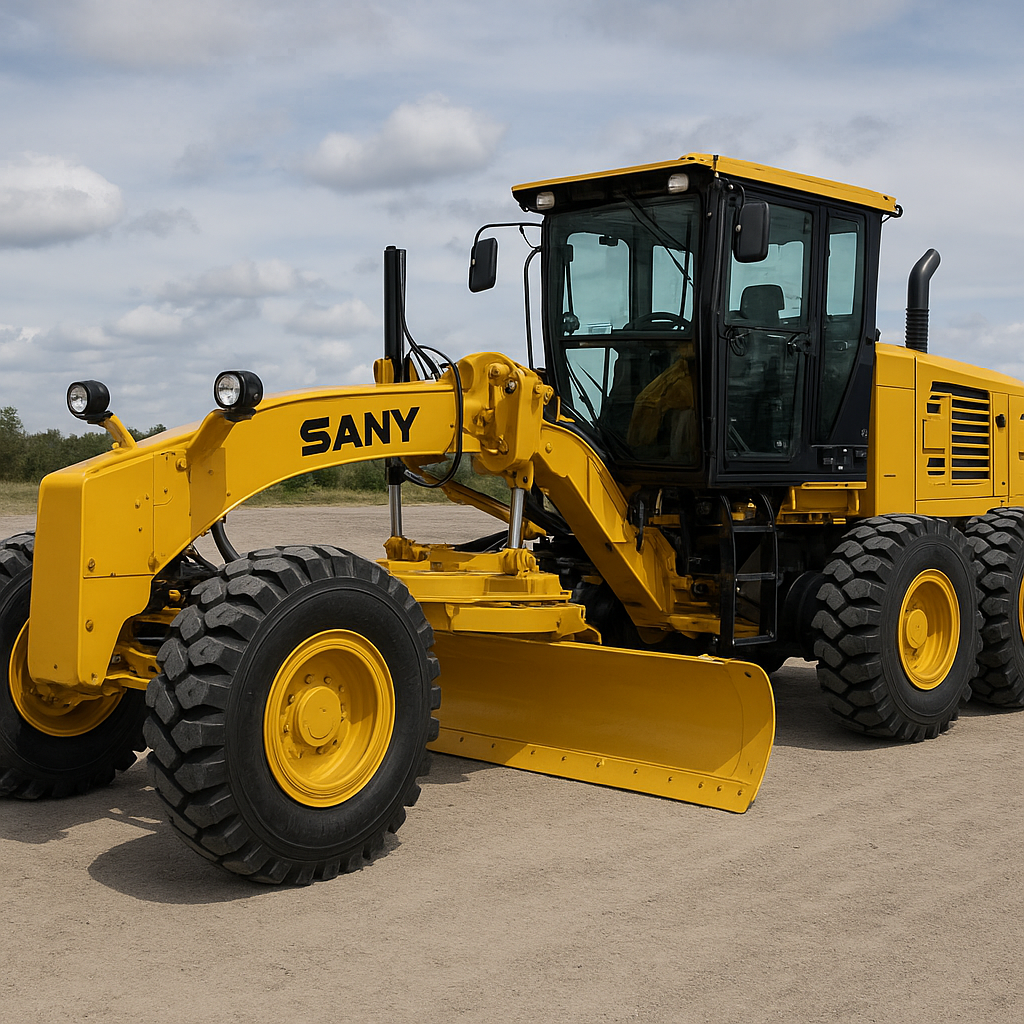
The SANY STG190C-8 is a heavy-duty motor grader designed for road construction, grading, and earthmoving tasks where a balance of power, precision and durability is required. Combining robust chassis design with modern hydraulics and a comfortable operator environment, the STG190C-8 is targeted at contractors, municipalities and rental fleets that need a versatile machine able to work on everything from highway subgrade preparation to ditching, snow removal and fine grading. This article explores the machine’s design, typical applications, technical characteristics (where known or commonly reported), operational features, maintenance considerations and how it compares in the market.
Design and key features
At the heart of the SANY STG190C-8 is an emphasis on a simple but effective combination of mechanical strength and modern control systems. The grader’s layout follows the conventional pattern for motor graders: front axle and blade, centrally mounted engine compartment and rear tandem drive. SANY has optimized the machine for stability, visibility and serviceability.
- Engine and powertrain: The STG190C-8 is typically fitted with a turbocharged diesel engine that delivers power appropriate to the model designation (the model number commonly reflects a power class). The engine is tuned to offer a balance between high torque at low rpm for grading resistance and fuel-efficient cruise characteristics for transport and long shifts.
- Hydraulics and blade control: A load-sensing hydraulic system gives the operator precise control of the moldboard, articulation, circle rotation and ripper (if equipped). This provides smooth, responsive blade movements and helps preserve fuel efficiency while enabling fine grading tasks.
- Cab and operator ergonomics: The cab is designed for long shifts with good visibility to the cutting edge and blade operations. Typical features include adjustable seat, climate control, intuitive levers or joystick control, and clear instrumentation.
- Structure and durability: Heavy-duty frame members and hardened wear surfaces on blade circle, drawbar and axle areas extend service life in abrasive conditions. The grader uses reinforced hitch and drawbar sections to handle high blade loads and frequent use.
- Serviceability: Access panels, grouped service points, centralized filters and easily reachable battery boxes reduce downtime for routine maintenance. SANY machines often emphasize ease of service as a key selling point.
Applications and typical use cases
The SANY STG190C-8 is engineered for a broad set of civil works tasks. Its design makes it suitable both as a primary machine on smaller projects and as part of a larger fleet on major construction sites.
- Road construction and maintenance: Primary use includes creating and maintaining road grades, shaping base and sub-base layers, trimming shoulders, and finishing surfaces before paving. The machine’s ability to cut, spread and profile aggregates is central to these tasks.
- Airport and large-site grading: Precise grading is necessary for runways, aprons and large commercial sites. The STG190C-8 provides the control needed for these high-tolerance applications.
- Land development and site preparation: For housing developments, commercial lots and industrial parks, the grader shapes lots, controls drainage gradients and prepares surfaces for compaction.
- Snow removal and clearing: In colder regions, motor graders equipped with front blades or wings are widely used for highway snow clearing due to their reach and blade angle control.
- Mining and quarry road maintenance: Graders keep access roads and haul roads in shape; the STG190C-8’s durability suits abrasive, heavy-use environments.
- Ditching and slope work: With appropriate blade and ripper configurations, the grader can create ditches, shape slopes and perform shoulder work for drainage.
Technical specifications and performance (typical and approximate)
Exact factory specifications for the STG190C-8 may vary by region, year and optional packages. The values below are presented as typical or commonly reported ranges for a motor grader in the 180–200 hp class and reflect the STG190C-8’s expected capabilities. For precise numbers consult SANY’s local dealer literature or the machine’s data plate.
- Rated engine power: approximately 140–145 kW (around 190 hp). This power class provides strong torque for blade work while keeping fuel consumption competitive.
- Operating weight: commonly in the range of 15,000–19,000 kg depending on configuration (standard blade, ripper, fuel and cab options). Weight affects traction and grading stability.
- Moldboard (blade) length: typically around 3.7–4.3 meters (12–14 feet); width and curvature optimized for efficient cutting and sidecasting.
- Blade cutting depth: often up to 500–600 mm depending on ground conditions and blade configuration.
- Max travel speed: forward speeds up to 30–40 km/h in transport mode, depending on gearing and tyre selection.
- Hydraulic system pressure: designed for medium-high pressure for responsive control — typical systems operate in the range of 200–280 bar for auxiliary and blade circuits.
- Fuel tank capacity: commonly between 200–350 liters, providing extended runtime for long grading shifts.
- Steering and articulation: front-wheel steering combined with frame articulation (and optional leaning axle) gives a tight turning radius and accurate line work.
Even where exact numbers differ by market, the STG190C-8 is built to deliver consistent productivity in tasks that require repeated, accurate blade passes. The combination of torque, blade size and hydraulic response is tuned to reduce the number of passes required to reach grade—saving time and fuel.
Operational characteristics and controls
Modern graders like the STG190C-8 are designed with operator efficiency and accuracy in mind. A few operational highlights:
- Joystick or ergonomic lever controls — Many machines now use multi-function joysticks for blade lift, tilt and articulation, reducing operator fatigue and enabling faster, more precise movements.
- Visibility and camera options — Large glass areas, tapered engine compartments and optional rear cameras improve sightlines to the blade and rear implements. Better visibility equals safer and more accurate grading.
- Automatic idle and engine management — Intelligent engine maps and automatic idle reduce fuel burn during idle periods while preserving responsiveness when blade work resumes.
- Circle and blade features — Features such as circle position indicators, blade float, and adjustable cutting edge types allow quick adaptation to different materials and tasks.
- Repeatability features — Some configurations offer grade control compatibility (GNSS or laser systems) to achieve consistent slopes and grades with minimal rework.
Maintenance, reliability and lifecycle costs
A grader’s total cost of ownership is shaped not just by purchase price but by maintenance intervals, parts availability and ease of service. SANY’s strategy for machines like the STG190C-8 emphasizes accessible service points and durable components to reduce downtime.
- Routine maintenance — Grouped grease points, accessible filters and clear service access lower routine service time. Regularly scheduled checks on hydraulic hoses, circle bearings and blade edges extend useful life.
- Parts and service network — Availability of genuine parts through SANY’s dealer network supports uptime; buyers should evaluate local dealer lead times for critical components.
- Wear components — Blade cutting edges, end bits, circle wear plates and hitch bushings are consumables. Choosing quality wear parts and monitoring wear patterns helps plan maintenance proactively.
- Diagnostics — Built-in diagnostics and fault code reporting (where equipped) speed troubleshooting and prevent extensive damage by catching issues early.
- Resale and lifecycle — Well-maintained graders from established manufacturers typically retain value well in used-equipment markets. Maintenance records, component condition and hours logged all influence resale price.
Safety and operator considerations
Working with graders requires attention to operator safety and adherence to site procedures. The STG190C-8 includes standard safety elements and optional enhancements that protect both operator and bystanders.
- ROPS/FOPS certified cab and secure operator restraints protect personnel during rollovers or falling objects.
- Good lighting packages and optional perimeter cameras are important for night and limited-visibility work.
- Hydraulic lockouts, neutral safety switches and clear alarm systems prevent unintended machine movement and alert operators to system faults.
- Operator training and familiarization with blade control, circle management and slope work are essential—proper technique reduces wear on the machine and improves grading quality.
Attachments and optional equipment
A grader’s versatility is extended by attachments and optional equipment. Common choices for the STG190C-8 include:
- Rippers or scarifiers for breaking compacted surfaces before grading.
- Front blades and wings for snow removal or increased clearing capacity.
- GPS/GNSS or laser-based grade control systems for high-precision grading tasks.
- Different tyre options and tandem configurations to suit traction and ground compaction needs.
- Heated and upgraded climate-control cabs for comfort in extreme environments.
Market presence and comparisons
SANY has grown its market position by offering competitively priced equipment with feature sets comparable to major global manufacturers. The STG190C-8 competes in the 180–200 hp grader segment with machines from global brands. Buyers typically compare:
- Initial purchase price and financing options.
- Fuel efficiency and operating costs under expected workloads.
- Service network size, parts availability and local dealer reputation for support.
- Feature parity — cabin comfort, hydraulic response, compatibility with grade-control systems.
In many regions, SANY machines are chosen for their value proposition: a feature-rich machine at a competitive price point, backed by a progressively expanding dealer and service network. For fleet buyers, lifecycle cost analysis (including fuel, maintenance and resale) often determines the final choice.
Buying tips and evaluation checklist
When evaluating a motor grader such as the STG190C-8, consider the following practical checklist to make sure the machine will meet operational and financial goals:
- Confirm the engine model, rated power and torque curve to ensure it matches your workload (material type and expected slope/grade work).
- Verify the actual operating weight and blade size for the tasks you perform; heavier machines provide better traction but may increase fuel use and transport costs.
- Request a demonstration under real working conditions to assess hydraulic responsiveness, visibility and operator comfort.
- Ask about warranty coverage, parts lead times and service response times for your operating region.
- Evaluate optional grade-control systems if you need high-precision finishes; assess compatibility and ease of integration.
- Calculate total cost of ownership including fuel, scheduled maintenance, replacement wear parts and expected resale value.
Environmental and efficiency considerations
Environmental performance is increasingly important. Manufacturers, including SANY, have moved to engines and systems designed to meet emissions standards while optimizing fuel use.
- Modern engines deliver reduced emissions through improved combustion, turbocharging and aftertreatment where necessary.
- Fuel-efficient hydraulic systems and automatic return-to-idle features reduce overall consumption over a shift.
- Proper tyre selection and maintaining correct pressures minimize rolling resistance and fuel burn.
Conclusion
The SANY STG190C-8 is a practical choice for many grading tasks where a balance of power, precision and cost-efficiency is required. Its typical strengths lie in solid structural design, responsive hydraulics, and operator-friendly cabin features. While exact specifications may vary by market and configuration, the machine sits comfortably in the 180–200 hp class and suits a broad range of applications from road construction and maintenance to site preparation, snow removal and mining road upkeep. Prospective buyers should validate region-specific technical data with a local dealer and evaluate service network strength and lifecycle cost to ensure the best match for their operation.
Typical/approximate quick specifications (verify with local dealer)
- Engine power: ~140–145 kW (around 190 hp)
- Operating weight: ~15,000–19,000 kg
- Blade length: ~3.7–4.3 m
- Fuel tank: ~200–350 L
- Max travel speed: ~30–40 km/h
)
)