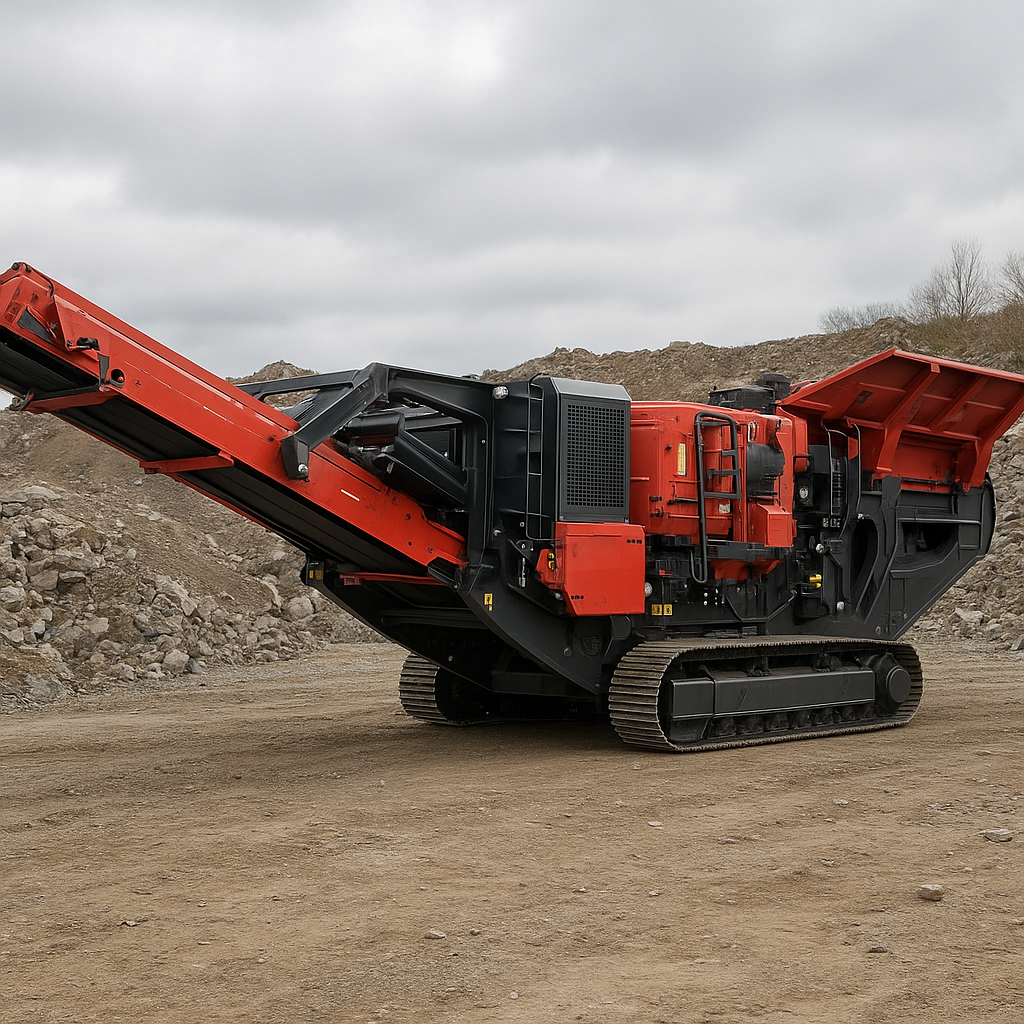
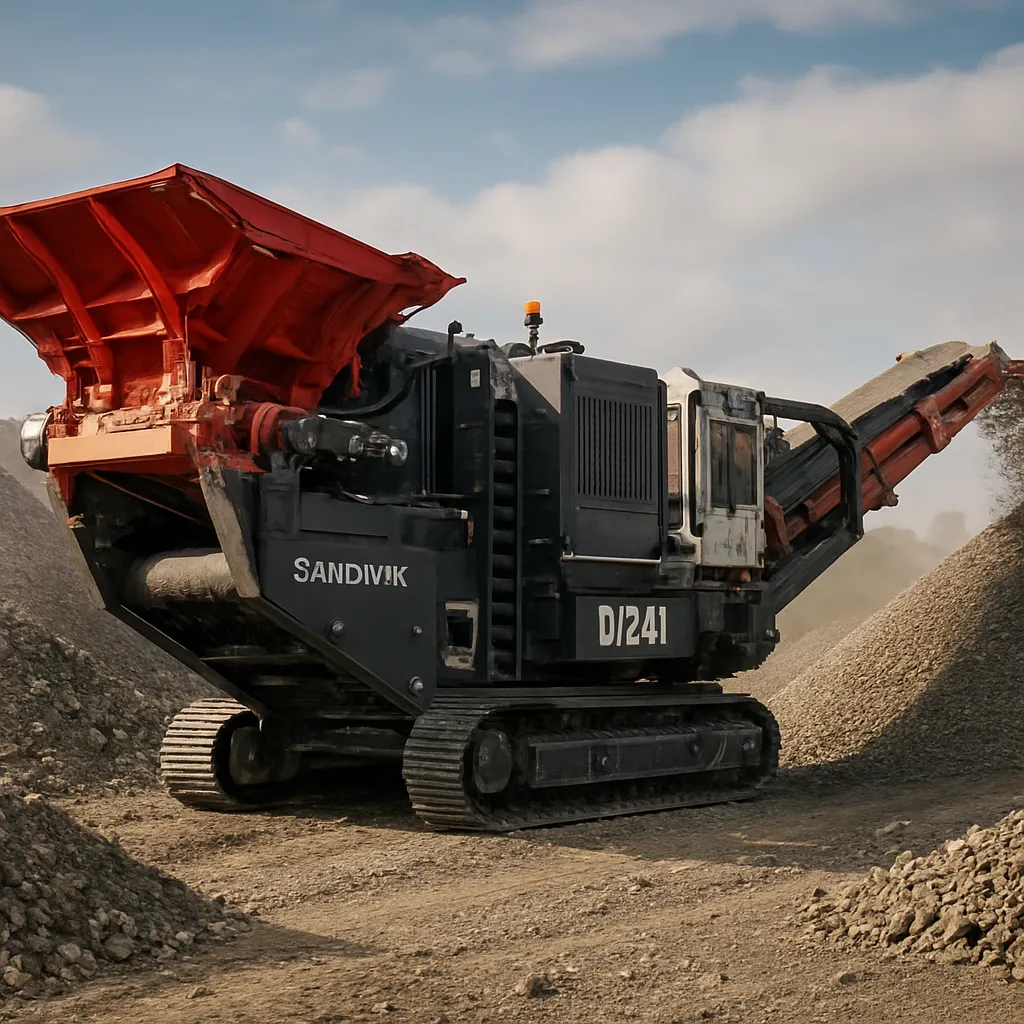
The Sandvik QJ341 is a compact, track-mounted jaw crusher designed to deliver robust primary crushing in a variety of industries and jobsite conditions. Combining proven jaw-crushing technology with modern controls and a transport-friendly chassis, the QJ341 is aimed at operations that require a balance of mobility, throughput, and user-friendly features. This article examines where the QJ341 is used, its core strengths, typical performance characteristics, operational tips, maintenance considerations, and how the model fits into contemporary crushing fleets.
Applications and typical use cases
The QJ341 is commonly deployed wherever heavy primary crushing is needed in a temporary or semi-permanent installation. Its compact footprint and track mobility make it particularly suited to sites with frequent moves, limited space, or constrained access.
Construction and demolition recycling
- The QJ341 is widely used on demolition sites to process reinforced concrete, masonry, and asphalt. Its robust jaw design allows operators to reduce large chunks of demolition waste into reusable aggregate, which can then be used onsite for backfill or base layers.
- Rapid redeployment and simple setup make it a practical option for contractors who need to minimize truck movements and disposal costs.
Quarries and aggregates
- In small to medium quarries, the QJ341 serves as a primary crusher converting blasted rock into feed for secondary crushers or producing final aggregate sizes when paired with screening and secondary crushing equipment.
- Ability to handle a wide range of rock types — from limestone to harder igneous rocks — makes it a flexible choice for aggregate producers.
Mining and pre-crushing
- In smaller-scale mining operations or as a pre-crusher ahead of larger fixed crushing lines, the QJ341 can reduce run-of-mine material to manageable sizes for subsequent treatment or crushing.
Infrastructure and remote projects
- Infrastructure projects in remote areas — highways, pipeline construction, and hydropower works — benefit from the self-contained nature of the QJ341, which can operate with limited external services.
Key technical characteristics and performance
The QJ341 is a tracked jaw crusher built around a reliable single-toggle jaw unit. Its configuration focuses on compactness and quick setup while providing features typically expected from larger units.
Crushing unit and jaw geometry
- The machine uses a heavy-duty jaw with hydraulic adjustment, enabling operators to change the closed side setting (CSS) for different product sizes and material types. This hydraulic adjustment simplifies reconfiguration without manual intervention at the crushing chamber.
- Jaw profile choices and wear material options allow the crusher to be adapted to abrasive or sticky materials, helping extend wear part life and maintain throughput.
Mobility and chassis
- A tracked undercarriage enables straightforward movement around a site and fast repositioning between jobs. Tracks are designed for robust ground contact while keeping the machine transportable by road using standard trailers in many jurisdictions.
- Quick-folding conveyors and compact overall dimensions reduce the time and cost of moving the crusher on public roads.
Power, fuel and environmental considerations
- QJ341 units are typically equipped with diesel engines that balance power and fuel efficiency, and many models have been offered with engines meeting current emissions standards for regions where such regulations apply.
- Fuel consumption varies by jobsite and loading but the compact design often translates to lower diesel use per tonne of crushed material than older, less-efficient units.
Typical performance statistics
Actual performance depends on material characteristics, feed size, and settings, but common performance ranges for a compact jaw crusher like the QJ341 are:
- Throughput: approximately 80–300 tonnes per hour depending on rock type, feed size and CSS.
- Operating weight: commonly in the range of 36,000–40,000 kg (36–40 tonnes) for a fully equipped unit; exact weight varies with options and attachments.
- Engine power: typically between 160–230 kW (around 215–310 hp) depending on engine choice and emission specifications.
- Feed opening: compact primary jaw openings commonly range near 900–1,100 mm in width depending on model configuration; the QJ341 is positioned as a medium compact jaw in this class.
Given the variability in specs across production years and optional packages, operators should consult the current product documentation for exact numbers relevant to the machine they are evaluating.
Operational benefits and features
Several design aspects make the QJ341 favorable for many operators seeking a balance of capability and practical jobsite use.
Rapid setup and redeployment
- The QJ341’s hydraulic folding conveyors and quick-start controls allow crews to have the machine ready for production in a short time window after arrival, reducing downtime between moves.
User-friendly control systems
- Modern versions come with intuitive operator interfaces and remote control options for safety and convenience. Diagnostics can often be accessed via the operator panel or remote devices, helping reduce troubleshooting time.
Material flow and product quality
- Well-shaped jaws and adjustable discharge settings contribute to consistent product gradation when used with appropriate prescreening and post-screening equipment. This benefits customers producing base materials or primary aggregates for sale.
Safety and operator comfort
- Enclosed engine compartments, secure access platforms, and machine guards improve safety during operation and maintenance. Low-noise design elements are often incorporated to reduce operator fatigue.
Maintenance, wear parts and lifecycle costs
Planned maintenance and attention to wear parts are essential to keep a QJ341 productive and cost-effective. The machine is designed for serviceability, but some points are critical for lifecycle cost control.
Wear parts management
- Jaw plates, cheek plates, and toggle components are the primary wear items. Choosing the right materials (e.g., manganese alloys) and jaw profiles suited to the rock type will optimize wear life.
- Keeping a stock of critical wear parts can dramatically reduce unplanned downtime, particularly during peak crushing seasons.
Routine services
- Regular lubrication, filter replacement, and hydraulic checks preserve pump and motor life. Track and undercarriage inspection is crucial to prevent mobility issues.
- Monitoring belt condition on feed and discharge conveyors avoids material spillage and supports consistent throughput.
Predictive maintenance and telematics
- Models with telematics or integrated monitoring systems provide data on hours, load cycles, and fault codes, enabling predictive maintenance strategies and better parts planning.
Environmental and regulatory considerations
Modern jobsite constraints and regulations increasingly influence equipment selection. The QJ341 addresses several environmental considerations relevant to contractors and producers.
Emissions and noise
- Engine options that comply with regional emissions standards help projects meet local requirements. Employers should verify the engine tier for the specific machine they procure.
- Noise-suppression measures — such as optimized engine enclosures, sound-reducing panels, and strategic placement — reduce environmental impact and worker exposure to high decibel levels.
Dust control
- Dust extraction and water-suppression systems are commonly paired with mobile crushers to reduce airborne particulate matter. Integration with site dust management plans is essential, especially in urban or environmentally sensitive locations.
Economics, resale and fleet integration
Beyond pure technical performance, the QJ341’s value proposition often rests on total cost of ownership, resale value, and how well it integrates into existing fleets.
Operating cost drivers
- Fuel consumption, wear part replacement rates, and maintenance labor are the main ongoing cost components. Efficient engine selection and operational training can reduce these costs.
- High productivity per shift and minimal downtime are primary levers for lowering per-tonne operating costs.
Resale and lifecycle value
- Reputable brands and well-maintained units hold value in the used-equipment market. A documented maintenance history and low hours can significantly improve resale prices.
Fleet fitment
- Integration with existing screens, conveyors, and secondary crushers is straightforward given standard feed and discharge arrangements. The QJ341 can be a flexible primary unit in modular crushing trains.
Practical tips for operators and project managers
To get the most from a QJ341 in daily work, operators and site managers can apply several practical measures.
- Pre-screen feed material where possible to remove fines and reduce wear and blockage in the crushing chamber.
- Match the feed rate and CSS to target product gradation and to avoid overloading the jaw — consistent feed leads to better fuel economy and less wear.
- Use a preventive maintenance checklist covering hydraulic systems, engine filters, belt tensions, and track condition at regular intervals.
- Train operators in efficient start-up/shutdown procedures and in recognizing early signs of wear or mechanical issues.
Comparisons and market position
The QJ341 competes in the compact to medium mobile jaw crusher segment. Compared with smaller portable units, it offers higher throughput and larger feed openings. Against larger stationary or semi-mobile primary crushers, it trades maximum capacity for unmatched mobility and rapid redeployment.
Advantages compared with alternatives
- Superior on-site mobility relative to fixed crushers.
- Lower logistical complexity versus transporting material off-site for crushing.
- Faster return on investment for short-term contracts, demolition projects, or remote worksites.
Limitations to consider
- For very large aggregate plants requiring high continuous throughput (several hundred to thousands of tonnes per hour), larger fixed or semi-mobile crushing stations may be more cost-effective long-term.
- Compactness can mean smaller inventory of spare parts on-board; proactive parts planning is helpful.
Case examples and typical job scenarios
Several real-world scenarios illustrate where a QJ341-style mobile jaw crusher delivers clear value:
- Urban demolition contractor reduces concrete waste on-site, using crushed material for temporary road base and saving on landfill fees and material purchases.
- Small quarry operator uses the unit as a primary crusher feeding a portable screening plant to produce road-grade aggregates during a contract season.
- Pipeline construction crew stations the crusher at intermediate camps, processing blasted rock to create access roads and embankment material without long-haul transport.
Final considerations when evaluating a QJ341
Choosing the right mobile crusher requires aligning machine capabilities with project objectives. Consider the following when evaluating a QJ341 or similar unit:
- Confirm the expected production rates on the actual material you will crush — lab or field testing can help estimate throughput rather than relying solely on published figures.
- Assess transport dimensions and local road regulations to ensure legal and safe movement between jobs.
- Evaluate available options — prescreens, magnetics, side conveyors, or remote control — that could improve productivity for your workflows.
- Factor in after-sales support, parts availability, and service networks in your region to avoid prolonged downtime.
Key terms highlighted
The following ten terms have been emphasized in this article as central concepts: Sandvik, QJ341, mobile crusher, jaw crusher, mobility, throughput, diesel engine, capacity, maintenance, recycling.
Overall, the QJ341 represents a practical balance between crushing performance and operational flexibility. For contractors, producers, and project managers who need reliable primary crushing with fast site-to-site movement and reasonable operating costs, the QJ341 and comparable compact tracked jaw crushers remain popular choices. For exact specifications, expected capacities on your material, and configuration advice, consult current manufacturer datasheets and local dealers who can provide machine options tailored to regional regulations and application needs.
)
)