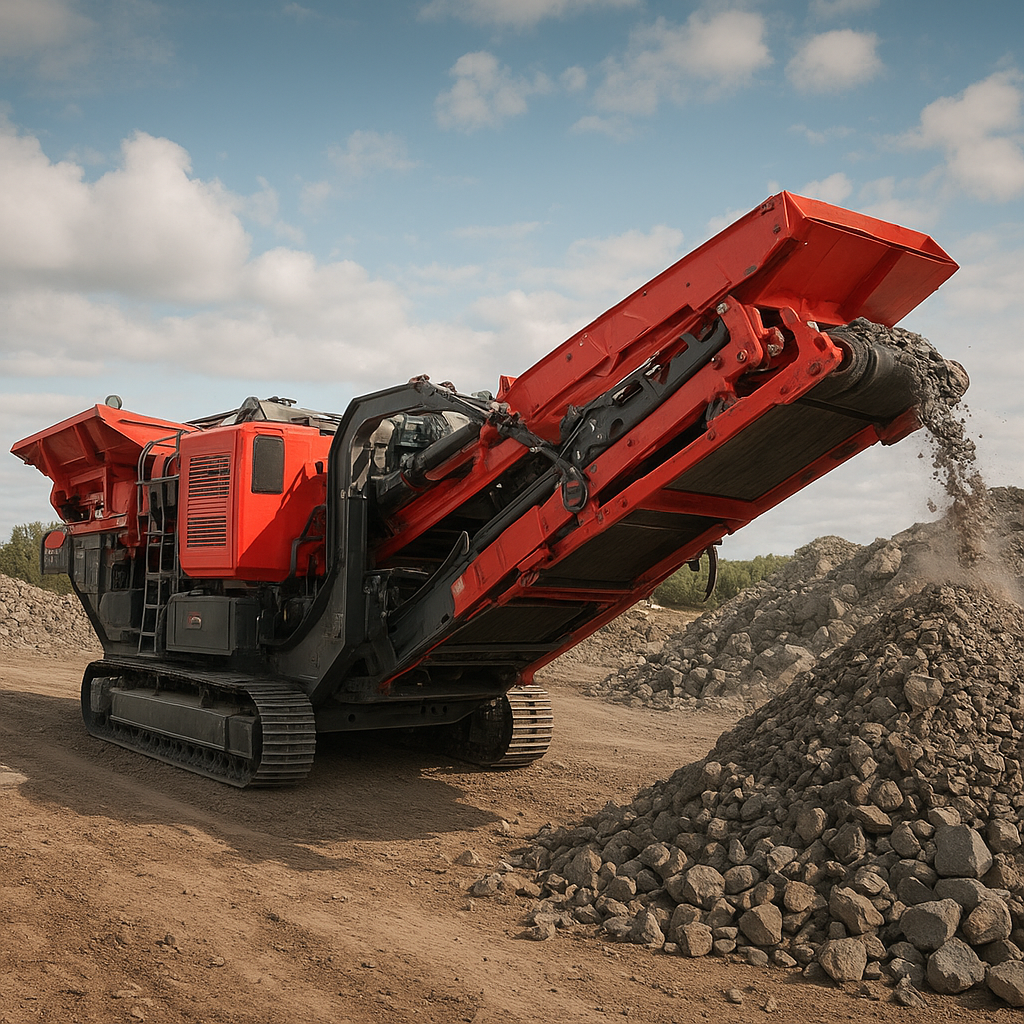
The Sandvik QI442 is a compact, high-performance tracked impact crusher designed for demanding recycling and aggregate applications. This article explores its core features, typical applications, technical aspects, operational considerations, and practical tips drawn from industry experience. The goal is to provide a comprehensive look at why the QI442 is a popular choice for contractors and operators who need a combination of mobility, product quality, and operational flexibility in a single machine.
Overview and Key Features
The Sandvik QI442 is part of Sandvik’s QI series of mobile impact crushers. It integrates a primary impact crushing unit with an on-board screening system and conveyors to produce a range of aggregate products on a single chassis. The machine is built to operate in quarrying, demolition, construction waste recycling, asphalt recycling, and other heavy-duty environments.
- Tracked chassis for straightforward movement on site without the need for separate carriers.
- Integrated screening capability to deliver multiple end products and reduce the need for additional plant.
- Heavy-duty impact crusher with adjustable settings and wear part options to tailor the output gradation.
- Operator-friendly controls designed for quick set-up, adjustment, and diagnostics.
- Designed with service access in mind — maintenance points are reachable safely and quickly.
Applications and Industries
The QI442 is versatile. Operators commonly deploy it where space is limited or where travel time between job sites is frequent. Its core uses include:
- Construction and demolition recycling — crushing concrete, brick, block and mixed C&D waste to recover aggregate for re-use on site or for resale.
- Quarrying — secondary or tertiary crushing of softer rock types where an impact crusher’s shaping capability is beneficial.
- Asphalt recycling — cold-recycled reclaimed asphalt pavement (RAP) processing, often with a closed-circuit configuration to achieve required gradation.
- Road building and maintenance — producing base, sub-base and shoulders material from locally available sources to lower material and transport costs.
- Contract crushing — mobile contractors who need a flexible machine for short-term projects across multiple sites.
Design and Technology
Sandvik has engineered the QI442 to combine simplicity of operation with robust components tailored for heavy use. The machine typically includes a high-speed impact crusher with a hydraulically adjustable crusher, a double-deck vibrating screen, and a selection of conveyors for product and return flows.
Crusher and Rotor Technology
The impact crusher at the heart of the QI442 is optimized for material reduction and particle shape. Typical design features are:
- A robust rotor assembly with replaceable blow bars and anvils to match material type and wear conditions.
- Variable rotor speeds and blow bar configurations to adjust throughput, particle shape and wear life.
- Hydraulically-adjustable aprons and settings to permit quick changes between feed sizes and to protect against tramp iron.
Screening and Material Flow
Integrated screening allows the QI442 to operate in closed or open circuit. The screen decks can be configured to produce multiple grades and to recirculate oversize material back to the crusher for further reduction. This results in:
- Improved product consistency and reduction in on-site handling.
- Fewer auxiliary machines required (less screening feed conveyors or separate screens).
- Quick changeover between product specifications through modular screen media and settings.
Drive, Controls, and Automation
The QI442 typically employs Tier/Stage-compliant diesel power units coupled to hydraulic drives for conveyors and crusher auxiliaries. Modern machines include:
- Electronic control systems with user interfaces that show operating parameters, warnings and basic diagnostics.
- Remote monitoring capability in some configurations for machine tracking and performance logging.
- Fuel-efficient modes and optimized hydraulic circuits to lower operating costs.
Performance and Operational Data
Performance of the QI442 depends heavily on material characteristics, feed size, and chosen configuration. Rather than a single fixed number, expect a range of outputs depending on conditions. Typical performance considerations include:
- Capacity ranges — Depending on material hardness and feed size, mobile impact crushers of this class commonly operate in the range of roughly 150 to 350 tonnes per hour. Expect the lower end for harder, abrasive rock and the upper end for softer, easier-to-crush materials.
- Feed size — Most impact crushers can accept feed in the range of a few hundred millimetres; the QI442 is engineered to handle construction waste and quarried materials commonly encountered on job sites. Exact maximum feed size will depend on the chosen configuration and feed arrangement.
- Product gradation — The integrated screening allows operators to deliver multiple sized fractions. Final product can usually be adjusted from fine sand to coarse aggregate fractions suitable for roadbase and concrete (subject to local specifications).
- Fuel efficiency — Actual fuel consumption depends on workload and engine specification; modern Sandvik machines are designed to minimize idling and optimize hydraulic power usage to reduce fuel burn per tonne produced.
Manufacturers and rental companies often publish performance curves, and real-world output is best validated through site trials. When specifying a QI442 for a project, discuss the expected material throughput and desired product sizes with the supplier so they can recommend the correct configuration and wear parts.
Maintenance, Wear Parts, and Serviceability
Maintaining a mobile impact crusher like the QI442 is critical to keeping uptime high and operating costs low. Sandvik’s design focuses on serviceability, but practical maintenance routines should include:
- Routine inspection and replacement of blow bars and impact aprons. These are the most common wear items — selecting the correct material and profile for the application extends life.
- Vigilant monitoring of the rotor assembly, bearings and drive systems. Any unusual vibration or noise should be investigated promptly.
- Regular checks of the screening media and tensioning systems to prevent product contamination and maintain consistent product sizes.
- Track and undercarriage inspections when the crusher is relocated frequently — tracked machines require scheduled greasing and wear part replacement similar to excavators.
- Hydraulic system maintenance and cleanliness to avoid component failures and to maintain optimum performance.
Operators should maintain a stock of critical wear parts such as blow bars, impact plates, screen panels and hydraulic filters on site or via a local dealer to minimize downtime. Many operators find that a planned wear-parts contract or predictive maintenance service from the OEM or distributor reduces overall lifecycle costs.
Safety, Environmental and Regulatory Considerations
Mobile crushers must be operated with strict adherence to safety practices and local regulations. The QI442 typically features guards, emergency stops, and safety interlocks, but safe operation is also about procedures and site setup:
- Establish exclusion zones during operation to protect personnel from flying debris and moving conveyors.
- Dust management — use water suppression, dust extraction or localized extraction systems where required to meet air quality regulations and to improve operator comfort.
- Noise mitigation — impact crushers can be noisy; place the machine appropriately on site, use sound-damping enclosures where available, and limit operation hours to comply with local noise ordinances.
- Emissions — modern engines meet applicable emission standards, but operators should verify engine stage requirements for their jurisdiction (e.g., EU Stage, EPA Tier) and consider retrofit options or electric power if available.
Economics: Purchase, Rental and Lifecycle Costs
The cost-effectiveness of a QI442 depends on how it is used. Key economic factors to consider:
- Capital vs rental — For short-term projects or infrequent use, renting a QI442 or hiring a contractor with the machine is often more economical than purchasing.
- Operating costs — Fuel, wear parts, operator time, and transport between sites are the main ongoing costs. Integrated screening saves costs by reducing the need for extra machines.
- Resale value — Sandvik equipment generally retains strong resale value when maintained properly, which helps total cost of ownership.
- Product value — Processing material on-site into marketable aggregates can offset operating costs through reduced purchase of virgin aggregate and potential sales of recycled product.
Real-World Examples and Case Uses
Numerous contractors and recycling operations worldwide use Sandvik Q-series machines for rapid on-site processing. Typical case scenarios include:
- A demolition contractor processing concrete and brick on-site, producing base material for re-use in the new build and eliminating the cost of off-site disposal.
- A quarry operator using a mobile impact crusher to produce shaped aggregates in areas where larger fixed plant is not viable due to space or permit constraints.
- Road maintenance crews recycling pavement in cold-in-place operations, using the unit to control product gradation for immediate re-lay.
While exact case study metrics vary, operators commonly report:
- Significant savings on material procurement and transportation when recycling on site.
- Improved turnaround times for short-term projects due to the machine’s mobility and quick set-up.
- High levels of product control by adjusting rotor and screen configurations to suit specific jobs.
Operator Tips and Best Practices
To maximize output and extend component life, experienced operators recommend:
- Feed the crusher with a well-graded feed to reduce blockages and improve throughput. Avoid large boulders beyond the crusher’s recommended feed size.
- Ensure consistent feed rate — uneven feeding leads to inefficient crushing and accelerated wear.
- Optimize rotor speed and blow bar selection for the target product — increased rotor speed can improve fines and shape but may increase wear.
- Use the integrated screen to recirculate oversize material until the required gradation is achieved; this reduces manual re-handling.
- Monitor wear patterns closely during initial operation on a new material type and adjust settings early to find the best balance of production and wear life.
Future Trends and Upgrades
As the industry evolves, mobile crushers including the QI442 are seeing developments in the following areas:
- Telematics and predictive maintenance — increased use of remote monitoring platforms to analyze machine health and predict wear-part replacement.
- Electrification and hybrid drives — interest in electric drives and hybrid configurations to reduce emissions and improve on-site air quality, particularly in urban demolition and recycling operations.
- Advanced wear materials — new alloy and composite wear parts designed to last longer in abrasive applications, lowering total ownership costs.
- Automation — smarter control systems for automated feed regulation, clog detection and energy optimization to maximize productivity with minimal operator intervention.
Summary
The Sandvik QI442 is a robust, flexible mobile impact crusher that suits a wide range of applications where on-site crushing and screening are required. Its main strengths are mobility, integrated screening, adjustable crushing settings, and emphasis on serviceability. While exact throughput, fuel consumption, and wear-part life will depend on material and configuration, operators value the QI442 for its ability to reduce on-site handling, produce consistent products, and offer rapid redeployment between jobs.
When evaluating the QI442 for a project, consult with a Sandvik dealer or experienced rental provider to get configuration recommendations, expected performance estimates for your specific material, and options for maintenance and telematics support. Proper selection of blow bars, screen media, and feed strategy will significantly influence the machine’s productivity and operating costs.
)
)