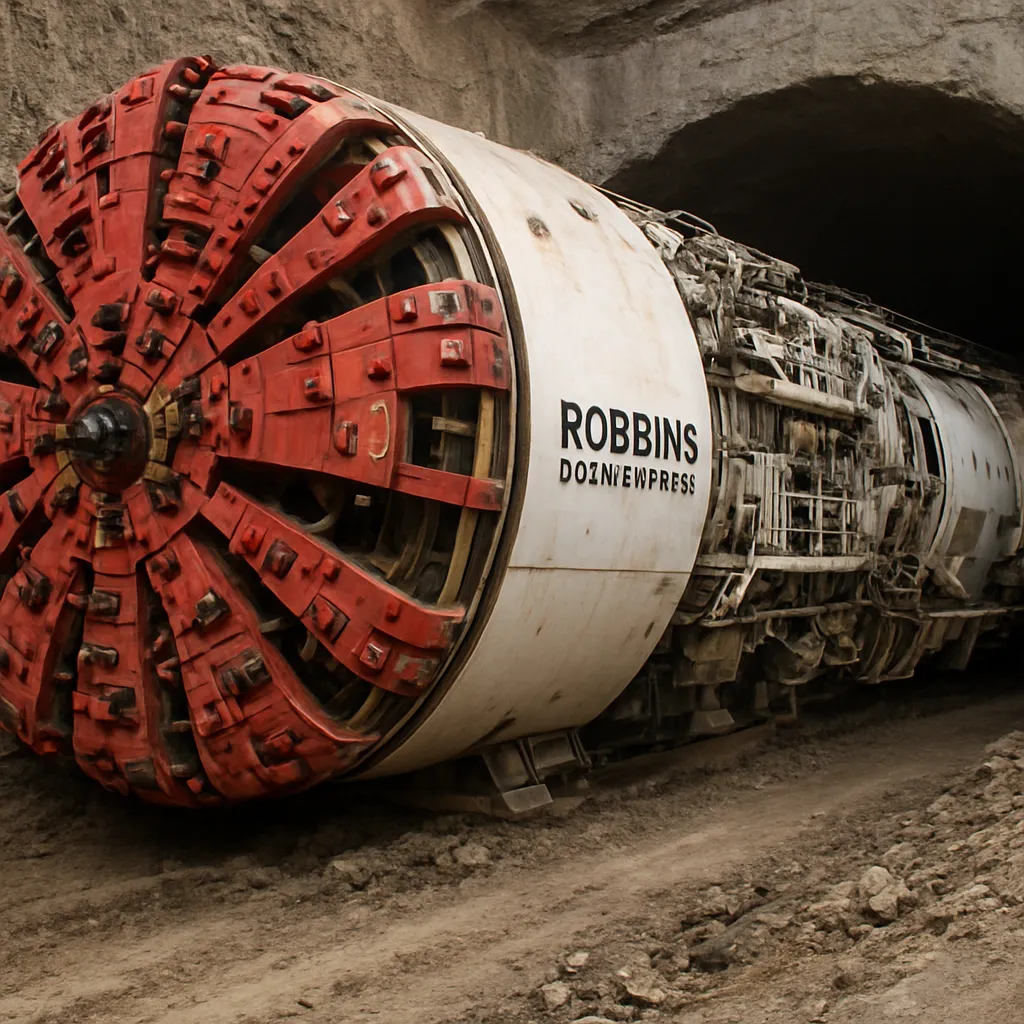
The following article presents a technical and practical overview of the Robbins Double Shield TBM, its design principles, typical applications, and operational considerations. The text explains how this class of machine operates, where it is most effective, and which performance and maintenance factors shape project outcomes. Throughout the article, you will find an emphasis on real-world use, advantages and limitations, and the ways in which these machines fit into modern underground construction practice.
Design and Operating Principles
The Robbins Double Shield TBM is a specialized type of full-face tunneling machine intended primarily for competent ground and rock conditions. Its design allows for a continuous cycle of cutting and lining installation with minimal interruption, combining excavation and support tasks in a way that increases operational productivity compared with some other tunneling methods in suitable geology.
Cutterhead and Cutting Tools
The rotating front of the machine—the cutterhead—is fitted with an array of robust cutting tools. In hard rock, these are mainly disc cutters, arranged to sever and fracture the rock face through a combination of compressive and shear forces. The cutterhead design is optimized for face pressure distribution, torque transfer, and removal of muck (broken rock) into the machine’s conveyor system. Cutterhead designs vary with geology and project requirements:
- Hard, abrasive rock: single-cutting-ring cutterheads with high-capacity disc cutters and high torque motors.
- Mixed-face or transitional ground: hybrid cutterheads with openings for spoil conditioning and additional wear protection.
- Soft or faulted zones encountered within a largely rock drive: auxiliary tools and adaptable cutter layouts to reduce clogging or differential wear.
Shield Arrangement and Gripping System
The defining feature of a double shield TBM is its twin-shield architecture. Two coaxial shields—a front shield surrounding the cutterhead and a trailing shield—enable a controlled telescoping action. The TBM uses a set of temporary grippers (often shoes that hydraulically press outward against the installed lining) to brace the machine while the trailing shield and trailing support elements advance. The two-shield configuration allows the machine to:
- Grip against the installed lining while the cutterhead advances, enabling continuous excavation without losing thrust anchor points.
- Retract or extend the shields in sequence so precast lining segments can be assembled in an almost continuous operation.
Thrust, Torque, and Propulsion
The TBM advances by exerting axial thrust through hydraulic cylinders. For a double shield TBM, the thrust system is designed to act both on the cutterhead during excavation and on the machine’s gripper shoes against the tunnel lining during lining erection. Typical arrangements include multiple high-capacity hydraulic cylinders distributed symmetrically. The machine’s drive system is sized to deliver the torque required to rotate the cutterhead against the rock and to overcome cutting resistance and friction losses in the drive train.
Muck Handling and Segment Erection
Muck is transferred from the cutterhead excavation chamber into a conveyor or muck cart system that removes excavated material from the tail of the TBM. Behind the excavation zone, precast concrete segments are erected using a segment erector fitted to the trailing shield. After ring closure, grout injection ports deliver grout behind the lining to achieve annular fill and to provide a working thrust reaction surface for the grippers.
Where the Machine Is Used: Typical Applications and Ground Conditions
Double shield TBMs are best suited for long drives in competent rock and for projects where installing a permanent or temporary lining as excavation proceeds is desirable. They are widely applied in transport, water, and hydroelectric tunnels where the geology allows. The method excels when conditions allow the grippers to obtain reliable reaction against the installed lining.
Common Project Types
- Metro and railway tunnels—long, near-linear drives through sedimentary or metamorphic rock formations.
- Water conveyance and aqueduct tunnels—long tunnels for water supply, where minimal settlement and high progress rates are important.
- Hydropower and diversion tunnels—where large diameters and long lengths call for efficient, continuous tunneling methods.
- Road tunnels—particularly where geological continuity and rock competence make the double-shield approach efficient.
Ground and Geotechnical Considerations
- Best suited for competent to hard rock with limited fracturing and manageable fault zones.
- Mixed-face conditions (e.g., rock interspersed with softer seams) are manageable but require careful cutterhead design, tool selection, and operational flexibility.
- Highly abrasive rock will accelerate cutter wear and require more frequent cutter replacement and higher maintenance planning.
- Saturated, loose, or very heterogeneous soils are generally not ideal for double shield TBMs; EPB or slurry machines are typically preferred in those conditions.
Advantages in Suitable Conditions
Key advantages of the double shield arrangement include continuous production, minimized downtime for lining erection, reduced settlement impacts at surface, and high mechanized output for long, straight or gently curving drives. The ability to erect lining rapidly behind the cutterhead also reduces the need for additional temporary supports in competent ground.
Performance Metrics, Typical Statistics, and Operational Experience
Exact machine specifications vary significantly by project, but some general statistical ranges and performance indicators help set expectations when planning with a Double Shield TBM. The following figures are indicative ranges commonly seen in industry practice; precise values depend on machine size, geology, and project constraints.
Common Size and Power Ranges
- Nominal tunnel diameter: commonly from about 3 m up to 15 m or more for metro, water, and road works. Many double shield units operate in the 4–10 m range for urban projects.
- Cutterhead torque: ranges widely with diameter and geology; modern units deliver torque from several hundred to multiple thousands of kNm depending on cutterhead size and drive motor capacity.
- Hydraulic thrust capacity: typically engineered to provide tens of thousands of kilonewtons of thrust distributed through multiple cylinders (exact values are project-specific).
- Installed power: electrical motors and hydraulic systems typically aggregate to several hundred to a few thousand kW, sized for cutterhead rotation, conveyor operation, and auxiliary systems.
Advance Rates and Productivity
Advance rates are influenced by rock strength, fracturing, abrasivity, groundwater, and operational efficiency. Typical benchmarks:
- Favorable hard-rock conditions: average advances of several meters per hour during good runs, translating to tens to a few hundred meters per week depending on shift patterns and maintenance intervals.
- Average project rates often range from a few meters per day up to 20–40 meters per day in highly favorable conditions with minimal interruptions.
- Breakthrough daily or weekly production can be significantly higher in short sections or exceptionally favorable rock; however, long-term averages are best used for planning.
Wear, Maintenance, and Cutter Change
Tool wear is a major operational and cost driver. Disc cutters in abrasive rock may need rotating, dressing, or replacement on a schedule that depends on rock abrasivity (measured by indices such as the CERCHAR Abrasivity Index) and contact stresses. Typical maintenance items and schedules include:
- Cutter inspection and replacement intervals—planned based on meterage advanced or on observed wear patterns.
- Routine lubrication, seal replacement, and hydraulic system checks—daily to weekly routines for reliability.
- Major maintenance or overhaul windows—planned at kilometer-scale milestones on long drives or if unanticipated wear/failure occurs.
Project Examples and Industry Footprint
The Robbins Company has a long history in TBM manufacturing and has supplied machines for projects around the globe. While project specifications vary, the company and its machines have been used in numerous major tunneling programs for metros, water conveyance, and hydropower projects. Robbins and other major TBM manufacturers report that hundreds of shield machines of various types (single, double, open, and specialty hybrids) have been deployed worldwide over decades. The double shield variant is a staple for long rock drives and remains a preferred option when geology permits.
Operational Workflow, Risks, and Mitigation
Successful deployment of a double shield TBM depends on careful planning, skilled operational teams, and robust contingency measures. The basic operational workflow includes:
- Pre-construction geological and geotechnical investigations and face risk assessment.
- Machine design customization for cutterhead geometry, thrust, and support systems.
- Site assembly and commissioning, including conveyor and logistic systems.
- Continuous tunneling with scheduled maintenance windows, cutter inspection/changes, and segment erection cycles.
- Monitoring of face behavior, ground movement, and machine telemetry to detect and respond to anomalies.
Common Risks
- Unexpected geological conditions such as fault zones, large cavities, or significant water inflows.
- Accelerated cutter wear or unexpected tool failures that reduce advance rates and increase costs.
- Mechanical failures in hydraulic systems, seal packs, or the drive train requiring intervention and potentially machine recovery.
- Grouting and lining issues that compromise the reaction surface for grippers or lead to poor annular fill.
Risk Mitigation Strategies
- Detailed and targeted site investigations to better characterize face conditions along the drive alignments.
- Provision of spare cutters, tool inventory, and experienced cutter maintenance teams on-site to reduce downtime.
- Adaptive operational parameters—adjusting cutterhead rotation speed, thrust, or feed rate according to real-time conditions observed through instrumentation.
- Designing grout and segment procedures that protect the gripper bearing surfaces and ensure reliable reaction conditions.
- Use of instrumentation and telemetry (pressure sensors, torque and thrust logging, face deformation monitors) to provide early warning and guide interventions.
Innovations, Variants, and Future Trends
Over the decades, the double shield concept has evolved with improvements in materials, hydraulics, cutter technology, and digital monitoring. Innovations that influence modern double shield TBM deployments include:
- Advanced materials and coatings to extend cutter and wear part life in abrasive conditions.
- Improved hydraulic drives and electronic control systems that provide fine control of thrust and sequencing between shields.
- Integration of real-time condition monitoring (vibration, torque, thrust, cutter condition) and predictive maintenance algorithms.
- Ability to design hybrid cutterheads for variable geology, balancing aggressive cutting with the need to handle softer seams.
Automation and Digitalization
Modern projects increasingly incorporate machine telemetry into project control systems, enabling teams to monitor machine health, ground response, and productivity remotely. Predictive maintenance and data-driven optimization of cutting parameters are trends that reduce unplanned downtime and optimize tool usage.
Practical Considerations for Project Managers
When considering a Double Shield TBM for a tunneling contract, project managers should evaluate a combination of geological, logistical, commercial, and technical factors:
- Geology and length of drive: double shield machines are attractive on long, consistent rock profiles.
- Access and assembly constraints: large TBMs require significant surface or shaft access for assembly and logistics.
- Inventory planning for cutters, seals, and critical spares—these must be stocked proactively to avoid long lead-time delays.
- Workforce training and experience—skilled TBM crews, including mechanics and geotechnical staff, improve outcomes substantially.
Summary and Closing Remarks
The Double Shield TBM is a powerful, proven solution for mechanized tunneling in competent rock and mixed-but-manageable ground conditions. Its combination of a robust cutterhead, hydraulic thrust systems, and grippers that allow continuous excavation and lining erection make it an efficient choice for long underground drives in transportation, water, and hydropower sectors. The design emphasizes operational productivity, safety, and minimization of surface settlement, provided geological and logistical conditions align with the machine’s capabilities.
Key decisions for project success include accurate geological characterization, careful machine specification and tooling choices (notably selection and management of disc cutters), and a robust maintenance and monitoring program. With thoughtful planning and skilled execution, Robbins double shield TBMs can deliver reliable performance on demanding underground construction projects around the world.
)
)