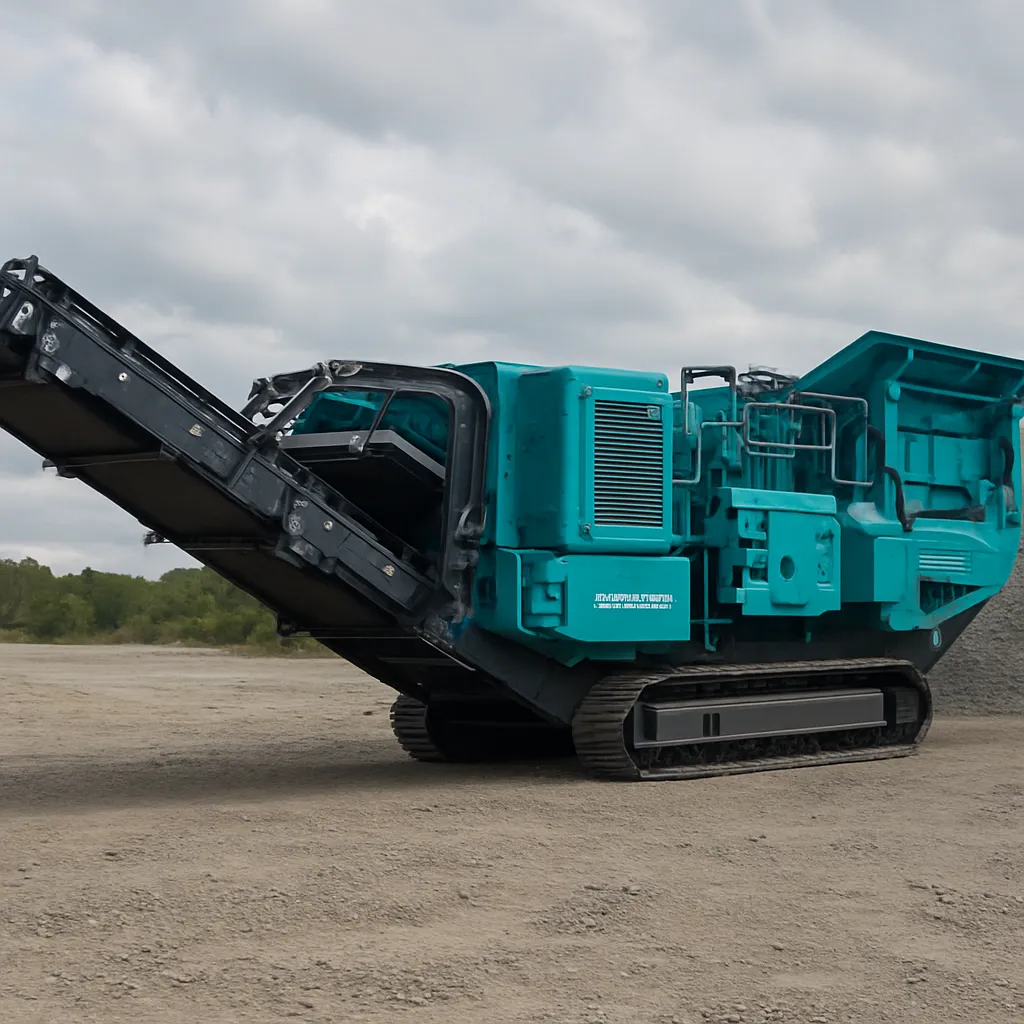
The Powerscreen Trakpactor 550 is a robust, track-mounted impact crusher designed for demanding crushing applications across quarrying, recycling and construction sites. Combining mobility with high reduction ratios and flexibility in product specification, this machine has become a common choice where on-site processing, quick redeployment and consistent product quality are priorities. In the following sections we explore the machine’s design, typical uses, operational performance, maintenance considerations and commercial aspects to give a comprehensive view of why the Trakpactor 550 remains a significant option in modern mobile crushing fleets.
Overview and design
The Powerscreen Trakpactor 550 is engineered as a versatile, heavy-duty mobile impactor capable of producing a wide range of end products from primary and secondary crushing stages. Built on a tracked undercarriage, the unit is designed for rapid repositioning around sites and between locations without the need for additional transport equipment in many cases. Central to its operation is an impact crushing chamber with a high-energy rotor, enabling adjustable reduction ratios and the production of cubical aggregates when combined with appropriate blow bars and chamber configurations.
Key design elements include a hydraulically folding feed hopper and conveyors for simplified transport and reduced setup time, a large feed opening to accept coarse material, and user-friendly controls for quick adjustment of rotor speed and curtain / apron settings. The chassis layout prioritizes service access, with removable panels and safe walkways to allow routine inspections and rapid replacement of wear components. Optional features frequently offered for this model include reversible fan systems, independent pre-screening, variable rotor configurations, and integrated dust suppression systems to manage airborne particulates on-site.
The Trakpactor platform emphasizes operator ergonomics and remote diagnostics through modern control systems. In many examples, telematics and remote monitoring are available to track machine health, utilization rates and basic fuel statistics. This integration of mechanical robustness and digital monitoring supports both uptime and predictable maintenance planning.
Applications and industries
The versatility of the Trakpactor 550 is reflected in its adoption across multiple sectors. Its ability to change product gradation and to handle varying material types makes it useful in situations where a single mobile unit must address several processing requirements.
- Quarrying and aggregates: Producing manufactured sand, road base, and various aggregate fractions. The machine is often used for secondary and tertiary crushing where high-quality cubical products are required.
- Construction and civil engineering: On large infrastructural projects where materials need to be processed close to the point of use, the Trakpactor 550 enables reduced haulage costs and quicker material turnaround.
- Demolition and C&D recycling: Crushing concrete, asphalt and mixed demolition material into reusable aggregates, helping project teams meet circular-economy targets and reduce disposal costs.
- Natural stone processing: When configured appropriately, the machine can handle softer stones and produce consistent product sizes for landscaping or specific construction uses.
- Mining and secondary crushing: In some operations, mobile impactors are deployed to produce final product sizes or to break down oversize material for downstream processing.
Its adaptability also means it is commonly used in seasonal or campaign-based work where a contractor or rental house needs a single solution for a variety of client needs. Mobility, ease of set-up and the ability to quickly change rotor and wear part configurations make it a pragmatic choice for mixed workloads.
Performance, specifications and operational statistics
Exact performance figures for any specific Trakpactor 550 depend on configuration, material characteristics and operational settings. However, general industry expectations for a machine of this class can be outlined to give a realistic sense of capability and on-site productivity.
- Throughput: Typical production rates are commonly reported in the range of 150–350 tonnes per hour (tph), with peak achievable rates depending on factors such as feed size, rock strength and desired product specification. Lower abrasive materials and coarser product requirements will move toward the higher end of this range.
- Feed size: The Trakpactor-series impactors are commonly able to accept feed sizes in the region of 400–600 mm, again dependent on feed arrangement and whether pre-screening is being used to remove fines or segregate material prior to crushing.
- Transport and footprint: As a track-mounted mobile unit, transport weight typically places the machine in the multi-tonne category; many machines in this class have transport weights in the 30–45 tonne range and foldable conveyors to meet road transport envelope restrictions. Exact figures vary by optional equipment and specification.
- Power and fuel: The unit is normally powered by an on-board diesel engine sized to handle continuous crushing duties with auxiliary capacity for hydraulic systems and conveyors. Typical installed power ratings on similar machines range from ~250 kW to 400 kW, and fuel consumption under load can vary widely—operators often report figures from 15–50 liters per hour depending on workload and engine configuration.
- Output gradation: Product grading is adjusted through selection of the blow bars, rotor speed, and the impact chamber configuration. With the correct setup, operators can produce well-graded, cubical aggregates suitable for high-specification applications such as concrete or asphalt production.
Operational statistics reported by users and rental companies tend to stress the machine’s strong availability (serviceability and uptime), rapid redeployment times and consistent product quality as principal performance benefits. In large-scale deployments, a single Trakpactor 550 can reduce truck movements and lower overall material processing costs compared with static plants, especially where short-term or remote processing is required.
Maintenance, wear parts and life-cycle considerations
Maintenance strategy is critical to achieving consistent operating economics with any mobile impact crusher. The Trakpactor 550’s design generally facilitates routine servicing and wear part replacement, but planners must still account for the predictable consumption of high-wear components, chiefly blow bars, curtains/aprons and feed liners.
- Wear components: Blow bars are the most frequently replaced items and their life depends heavily on feed material hardness, grading and the presence of tramp metal. Operators often extend life by selecting appropriate wear-material grades and by ensuring feed is profiled to reduce localized impact. Curtain liners and chamber wear plates also require periodic replacement.
- Planned maintenance: Regular inspections of bearings, hydraulic hoses, conveyor components and the engine cooling system are essential. A preventive maintenance schedule tied to operating hours significantly reduces the risk of unscheduled downtime.
- Spare parts strategy: Keeping a modest on-site stock of critical spares—such as a set of blow bars, hydraulic filters and conveyor belts—can materially improve uptime, particularly on remote sites where delivery lead times are significant.
- Lifecycle costs: Total cost of ownership should consider fuel use, wear parts, operator training, and the opportunity cost of downtime. Many operators find that the increased flexibility and lower haulage costs of a mobile crusher offset higher hourly operating costs compared to a static plant, particularly when the unit serves multiple sites or short-term projects.
Good telematics and condition-monitoring systems also help optimize maintenance intervals by providing real-world data on load cycles, engine hours and potential fault conditions. This data-driven approach allows maintenance teams to move from calendar-based servicing to condition-based interventions.
Safety, environmental and regulatory considerations
As with any large mobile crushing plant, safe operation and environmental compliance are high priorities. The Trakpactor 550 is typically deployed with a range of safety and emissions-related considerations in mind.
- Noise and dust suppression: Impact crushers generate significant noise and airborne dust. Many operators specify fitted dust suppression systems, water sprays and full enclosures where local regulations or proximity to urban areas demand tight control. Acoustic enclosures or sound-reducing measures may be required for continuous operation near sensitive receptors.
- Emissions: Diesel engine emissions regulations in many jurisdictions require engines to meet tiered exhaust standards. Machines may be supplied with engines compliant to local emissions standards, and retrofit exhaust after-treatment options may be available in some cases.
- Operational safety: Proper guarding of drive components, emergency stop systems, lock-out/tag-out procedures and safe access points for inspection are standard safety features. Comprehensive operator training on feed control, material segregation and emergency response reduces the risk of incidents.
- Environmental management: Recycling applications can reduce landfill demand and embodied carbon in new aggregates, but also require careful management of contaminants (e.g., wood, plastics, metals) to avoid damage to the machine and downstream quality issues.
Buying, renting and aftermarket support
Decisions about acquiring a Trakpactor 550 often balance capital cost against expected utilization and the flexibility required by projects. Three common procurement routes exist: outright purchase, leasing and rental, each suiting different operational models.
- Purchase: Best for long-term owners with steady workloads. Ownership allows full control of configuration and long-term planning for consumable inventory and modifications.
- Lease/finance: Spreads capital expenditure and can include service packages from dealerships to provide predictable operating costs.
- Rental: Attractive for short-term projects, seasonally fluctuating demand, or where market conditions demand caution; rental houses typically offer a range of spec options and immediate availability.
Aftermarket support—spare parts availability, dealer networks and rebuild programs—plays a major role in the total value proposition. Powerscreen’s global dealer network and local service partners provide warranty, service, parts and refurbishment options which are important for minimizing downtime and keeping lifecycle costs controlled. For high-utilization operations, planned refurbishment and rotor rebalancing programs help extend the life of the machine and maintain performance levels.
Operational tips and best practices
Maximizing the effectiveness of a Trakpactor 550 involves attention to feed management, correct selection of wear parts and thoughtful operational sequencing. Some practical best practices used by experienced operators include:
- Ensure consistent feed gradation and limit fines entering the impact chamber unless a fines bypass or pre-screen is in use—this reduces excessive wear and improves product shape control.
- Match blow bar material and profile to the on-site rock type; higher chrome or specialized alloys increase life against abrasive rocks but have different impact fracture properties.
- Utilize on-board or site telematics to monitor load trends and detect unusual vibration or temperature patterns early.
- Plan stockpile and conveyor layouts to minimize rehandling and reduce the chance of tramp metal or excessive fines reaching the rotor.
- Regularly inspect hydraulic and mechanical interfaces for signs of fatigue; small leaks or early wear signatures are easier and cheaper to address than major failures.
Programs that integrate operator training, a robust spare parts inventory and condition monitoring deliver the best balance of productivity and predictable operating costs.
Concluding observations
The Powerscreen Trakpactor 550 represents a practical blend of mobility, crushing power and product versatility, making it a common choice in environments that require on-site processing and frequent redeployment. While exact metrics for throughput, feed size and fuel consumption vary by configuration and material, typical performance ranges indicate that a well-specified Trakpactor 550 can reliably produce in the order of hundreds of tonnes per hour with appropriate maintenance and operation.
Deciding whether a Trakpactor 550 is the right investment involves assessing project duration, expected utilization, product specification requirements and total cost of ownership. When deployed with an understanding of wear patterns, correct blow bar selection and a proactive maintenance regime, the unit can be a highly effective, flexible workhorse in both aggregate production and recycling operations.
Highlighted words: Powerscreen, Trakpactor 550, mobile, impactor, aggregates, recycling, rotor, throughput, efficiency, maintenance.
)
)