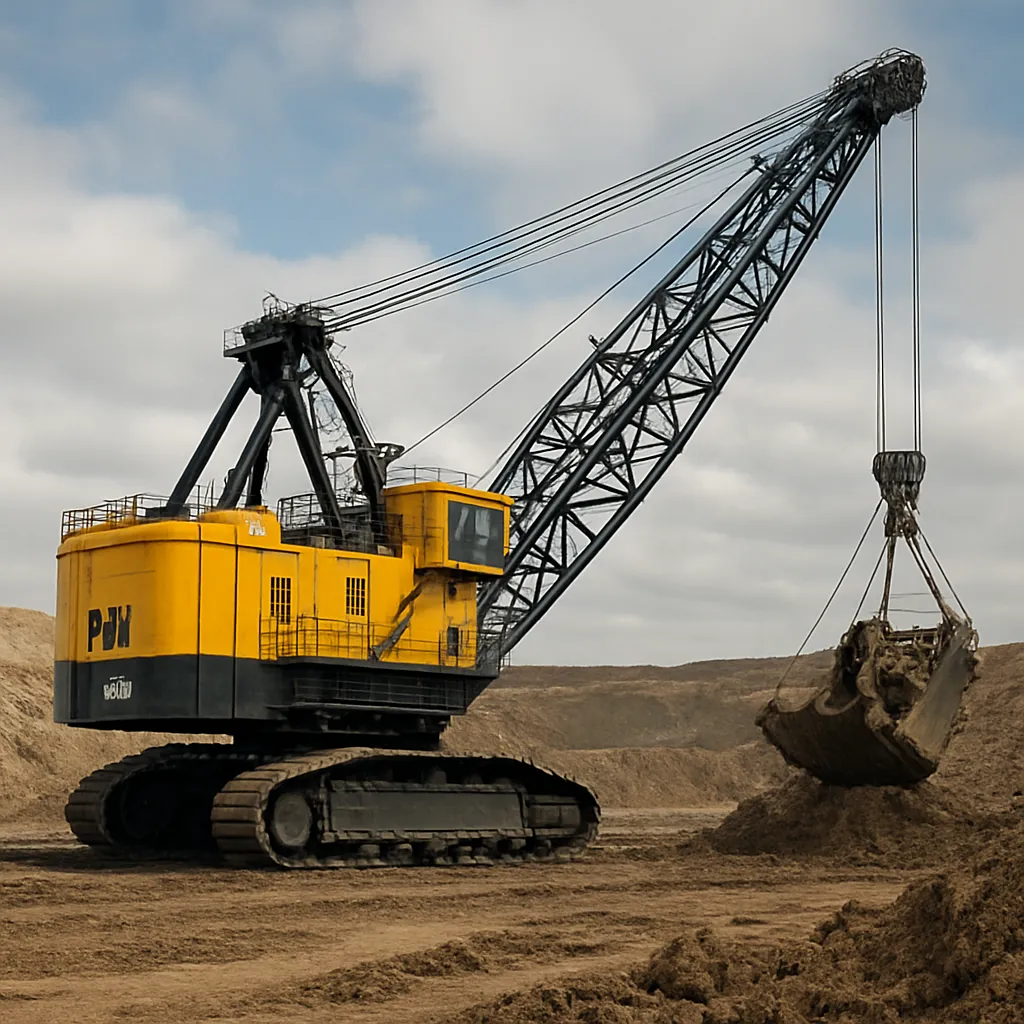
The P&H 9010C is a purpose-built surface-mining dragline that represents a class of large, electrically powered excavation equipment designed to move enormous volumes of overburden and loose material. Designed for high-capacity strip-mining operations, the machine combines a titanic bucket, long boom, and robust cable-and-winch systems to operate at ranges and depths that hydraulic shovels and excavators cannot match economically. This article examines the 9010C’s design and capabilities, typical applications on mine sites, operational characteristics, and broader industry and environmental considerations associated with operating machines of this scale.
Design and technical characteristics
The P&H 9010C is a member of the heavy-duty dragline family produced by P&H Mining Equipment, a longstanding manufacturer of large mining machines. Though specific configurations and options vary by customer and vintage, the 9010C class is characterized by several consistent technical traits.
Key components and architecture
- Bucket: The dragline bucket for this class typically ranges around 90 cubic yards (roughly 69 m3) nominal capacity in standard configurations. The bucket is suspended from the boom by a set of hoist and drag ropes and is filled by dragging it across the ground with the dragline cable.
- Boom: Boom lengths for machines of this size commonly extend between 250 and 320 feet (76–98 m), enabling deep cuts and long reach from a single machine position. Boom stiffness, rigging geometry, and section design are critical to safe, precise operation.
- Walk and stance system: The 9010C employs a walking mechanism rather than traditional track undercarriages. Walk pads or feet lift and shift the machine incrementally, allowing relocation across the mine bench without full disassembly.
- Electric drive and power: These draglines are electrically driven, typically with multiple large electric motors driving the hoist, drag, swing, and walking functions via gearboxes and drives. Installed electrical power for this class is commonly in the multi-megawatt range—typically several megawatts per major function—resulting in total installed power often in the high single-digit megawatt range (configuration-dependent).
- Cable and winch systems: The hoist, drag, and crowd cables and their winches are engineered for very high loads and long service lives. Rope management (spooling and replacement) is a major maintenance activity on the machine.
- Controls and operator cabin: Modern 9010C units or retrofitted examples feature electrical and electronic control packages, operator ergonomics, and increasingly, elements of remote operation or semi-automation. Monitoring systems track rope tension, motor loads, and other conditions for both safety and optimization.
Performance and metrics (typical/approximate)
- Bucket nominal capacity: ~90 cubic yards (~69 m3)
- Boom length: ~250–320 ft (76–98 m)
- Machine mass (installed): varies widely by configuration; draglines of this class typically weigh several thousand metric tonnes when fully rigged
- Installed electrical power: often in the range of ~4–10 MW total, depending on motor sizes, auxiliary systems, and control gear
- Typical digging cycle time: depends on depth and bench conditions; a full swing/hoist/drag cycle can vary from ~1.5 to 4 minutes depending on operating profile
- Material handling throughput: highly dependent on cycle time and fill efficiency. As an illustration, a 69 m3 bucket at 30 cycles per hour would theoretically move ≈2,070 m3/h, though actual filled volume per cycle and repositioning reduce practical throughput.
Note: many of the numerical values above are representative ranges for the 90-cubic-yard class machines and can change with site-specific configuration, modernization, or retrofit packages. Exact machine specifications should be confirmed with manufacturer documentation for a particular unit.
Applications and operational roles
The P&H 9010C is optimized for large-scale surface mining and civil works where economy of scale favors very high-volume, long-reach excavations. Its primary uses include:
- Strip coal mining: Removing overburden layers to expose coal seams is a classic dragline application, particularly in operations with wide benches and relatively soft, continuous overburden material.
- Open-pit mineral operations: Draglines can perform initial high-volume stripping or work in conjunction with shovels to expose ore bodies in large open pits for commodities such as iron ore, bauxite, and other bulk minerals.
- Oil sands & reclamation: In some large oil-sands operations, draglines are used for overburden handling or reclamation earthmoving where environmental planning requires large-scale, low-cost excavation.
- Large civil engineering projects: Historically, very large draglines have been used in major earthworks, river diversion, or harbor deepening projects where their reach and economy make them competitive against other excavation systems.
Suitability is dictated by geology (cohesion and material size), bench geometry, and the need for long reach. Draglines excel where a single machine can expose large continuous areas from a stable bank location without frequent relocation. They compete with walking shovels and hydraulic excavators, but the economics favor draglines where large volumes must be moved continuously over long production horizons.
Operation, efficiency, and cycle considerations
Operating a machine like the P&H 9010C is a complex task that balances mechanical capability, electrical infrastructure, and site logistics.
Cycle mechanics
- Digging (drag): The operator drags the bucket along the face to fill it. The drag cable pulls the bucket toward the machine across the material face.
- Lifting (hoist): Once filled, the hoist system lifts the bucket and prepares for the swing.
- Swing and dump: The bucket is swung to the dumping location—typically a spoil pile, haul road, or stockpile—and the hoist/dump sequence empties the material.
- Return and reposition: The empty bucket is swung back and lowered for the next pass. Efficient cycle timing and consistent fill factor determine hourly throughput.
Factors affecting productivity
- Material properties (cohesion, moisture, presence of large boulders)
- Ground conditions at the cut and spoil areas
- Operator skill and the quality of planning and bench design
- Electrical power availability and reliability
- Maintenance state and condition of ropes, winches, brakes, and gearbox components
Highly efficient operations can be achieved through careful sequencing, consistent bench geometry, and integration with haulage fleets so that spoil build-up and cycle disruptions are minimized. Automation systems that optimize rope tensions, motor loads, and cycle timing can further improve production and reduce wear.
Maintenance, modernization, and lifecycle management
Maintenance of a P&H 9010C is intensive but predictable, reflecting the scale and stresses on its mechanical and electrical systems. Typical lifecycle activities include rope replacements, gearbox servicing, structural inspections, and periodic component overhauls.
Routine and heavy maintenance
- Daily and weekly checks: Visual inspections, lubrication, monitoring of motor temperatures, and control-system diagnostics.
- Rope management: Drag and hoist ropes are subject to fatigue and abrasion; scheduled inspections and segmental replacements are part of normal maintenance cycles.
- Gearbox and motor overhauls: The mechanical drives and electric motors are major capital components with recommended overhaul intervals based on running hours and condition monitoring.
- Structural maintenance: The boom and rigging plates require regular non-destructive testing to detect fatigue cracks or corrosion—especially after heavy service or extreme loading events.
Modernization opportunities
- Retrofit with variable-frequency drives (VFDs) and modern power electronics to improve energy efficiency and control precision.
- Installation of condition-monitoring systems (vibration, acoustic, oil analysis) to move from preventive to predictive maintenance regimes.
- Cabin upgrades, ergonomic controls, and partial remote-operation capabilities to improve safety and reduce operator fatigue.
- Structural or component upgrades (e.g., stronger ropes, improved bearings) to extend service life and increase availability.
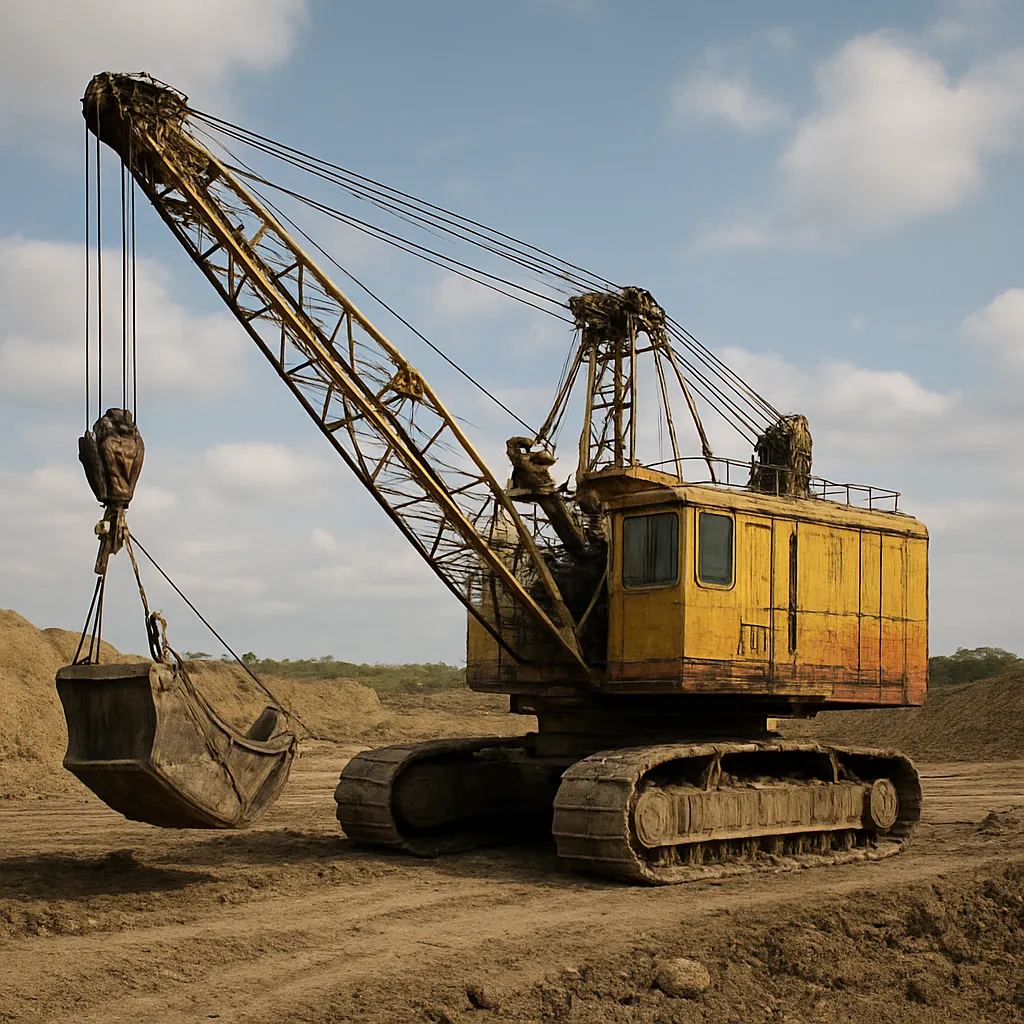
With good maintenance and occasional modernization, a dragline like the 9010C can serve for decades. Many draglines worldwide remain operational after multi-decade service lives due to robust original design and the feasibility of extensive component renewal.
Economic, environmental, and safety considerations
Deploying a P&H 9010C involves substantial capital, operational, and social considerations. The economics often favor draglines where long-term, large-scale stripping is required, but there are trade-offs in flexibility and upfront cost.
Economic advantages and constraints
- Low unit cost of overburden removal: Over long campaigns, draglines typically offer a lower cost per cubic meter of material moved than fleets of hydraulic excavators and trucks when operating in favorable bench geometries.
- High capital cost and infrastructure: The purchase, commissioning, and power infrastructure are significant investments. Grid connection, transformers, and substations must support large, often intermittent, electrical loads.
- Site planning horizon: Draglines are best used where reserves and strip ratios justify the extended deployment of a fixed-position, long-life machine.
Environmental impact and mitigation
- Draglines move very large volumes, creating substantial landscape change; however, the machines can support staged reclamation because of their ability to place spoil precisely over large distances.
- Electric drives reduce on-site combustion emissions compared with large diesel fleets, although the upstream emissions depend on the electrical grid mix.
- Noise and dust controls are important—both during operation and while repositioning the unit—and modern jobs include measures such as wetting, windbreaks, and schedule planning to reduce community impacts.
Safety
- Because of the scale and energy contained in cables, drums, and moving parts, rigorous lockout/tagout, rope inspection, and personnel exclusion zones are mandatory.
- Structural failures, dropped buckets, and unexpected swings are significant hazards; therefore, modern monitoring and redundant braking systems are standard on current operating machines.
- Training and procedures for walk moves, emergency stops, and electrical fault management are part of the safety culture around dragline operations.
Industry context, examples, and notable facts
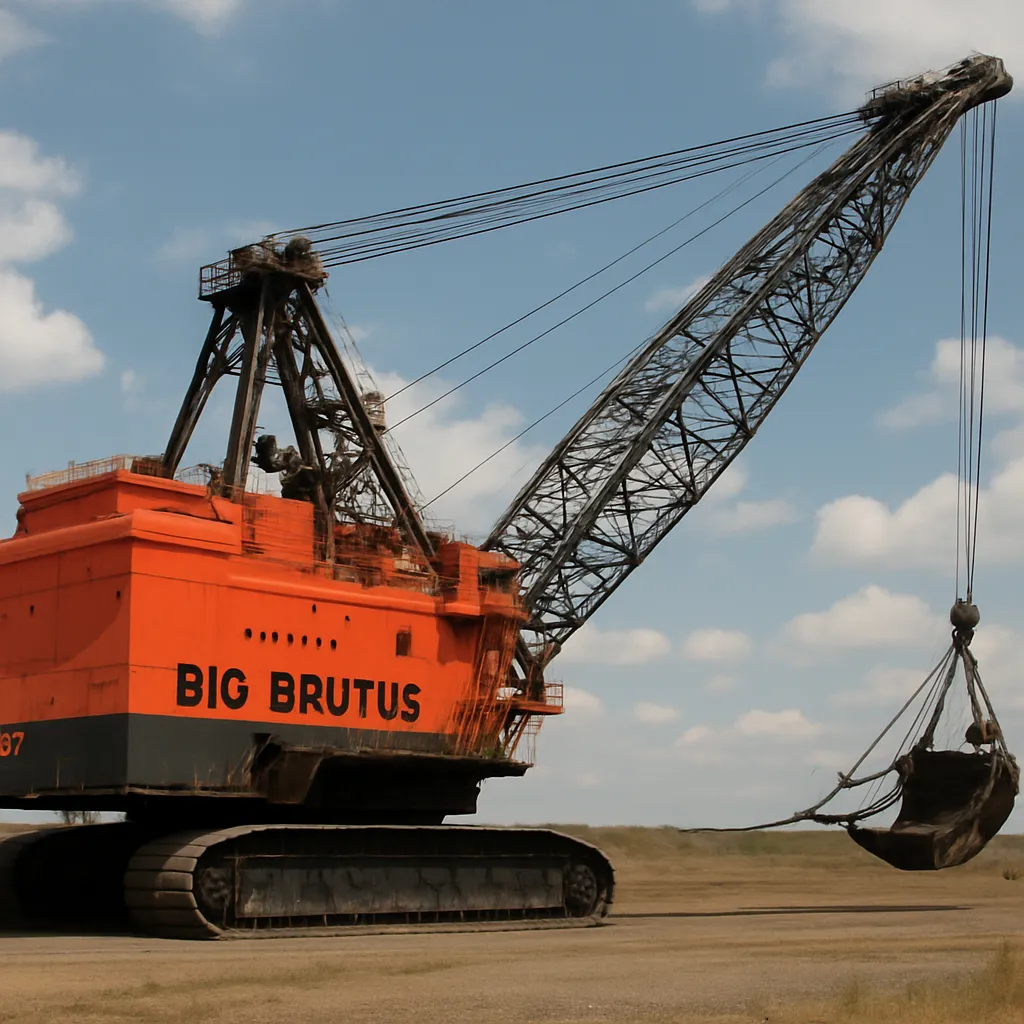
Draglines like the P&H 9010C belong to a lineage of large excavators that reshaped how bulk surface extraction is performed. While the 9010C is not the largest dragline ever built, it occupies an important niche for operators who need a balance of capacity and reach without stepping up to the extreme sizes of some historic machines.
- Manufacturing lineage: P&H Mining Equipment has decades of experience in designing large electrically driven mining machines. Over time, industry consolidation and acquisitions have led to P&H designs being incorporated into broader product portfolios and modernization programs.
- Comparative scale: The largest historical draglines (e.g., some Bucyrus-built giants) reached bucket sizes well in excess of 100 cubic yards and machine weights in the tens of thousands of tonnes. The 9010C’s ~90-cubic-yard class makes it highly capable while retaining relative nimbleness in the large-dragline world.
- Lifecycle and resale: Second-hand 9010C units can be refurbished, re-rigged, or sold for parts. Mines often evaluate refurbishment versus replacement depending on expected remaining life, modernization cost, and production planning.
- Automation and digitization trends: The industry trend is toward layered automation—operator assistance systems, cycle optimization, and remote monitoring. These technologies are increasingly applied to legacy machines, raising availability and lowering total cost of ownership.
Practical considerations for a mining engineer or manager
When evaluating the P&H 9010C for a project, decision-makers should consider:
- Long-term mine plan and strip ratio: Does the deposit geometry justify a large, fixed-position dragline?
- Electrical infrastructure and reliability: Can the site support multi-megawatt, highly variable loads with the necessary redundancy?
- Material characteristics and bench stability: Are geological conditions suitable for effective bucket fills and long-life rope usage?
- Availability of skilled maintenance staff and spare parts: Large electrical machines require specialized skills for motors, gearboxes, and rope handling.
- Reclamation strategy: How will spoil placement and staged rehabilitation be coordinated with dragline operations?
Collaboration between mine planners, electrical engineers, and operations teams is essential to realize the full economic potential of a dragline and to integrate it safely into the broader mining fleet.
Conclusion
The P&H 9010C dragline is a powerful example of large-scale excavation equipment optimized for continuous, high-volume material movement in surface mining. Combining a substantial bucket capacity, long boom reach, and robust electric drive systems, the 9010C offers a compelling option for operations that require cost-effective overburden removal over extended periods. Its successful deployment depends on appropriate site geology, adequate electrical infrastructure, disciplined maintenance, and strong operational planning. With modern retrofits—such as variable-frequency drives, condition monitoring, and partial automation—the 9010C remains a competitive and resilient choice for many large mining operations, delivering high throughput, efficient unit costs, and a platform that can be updated to meet modern safety and environmental expectations.
)
)