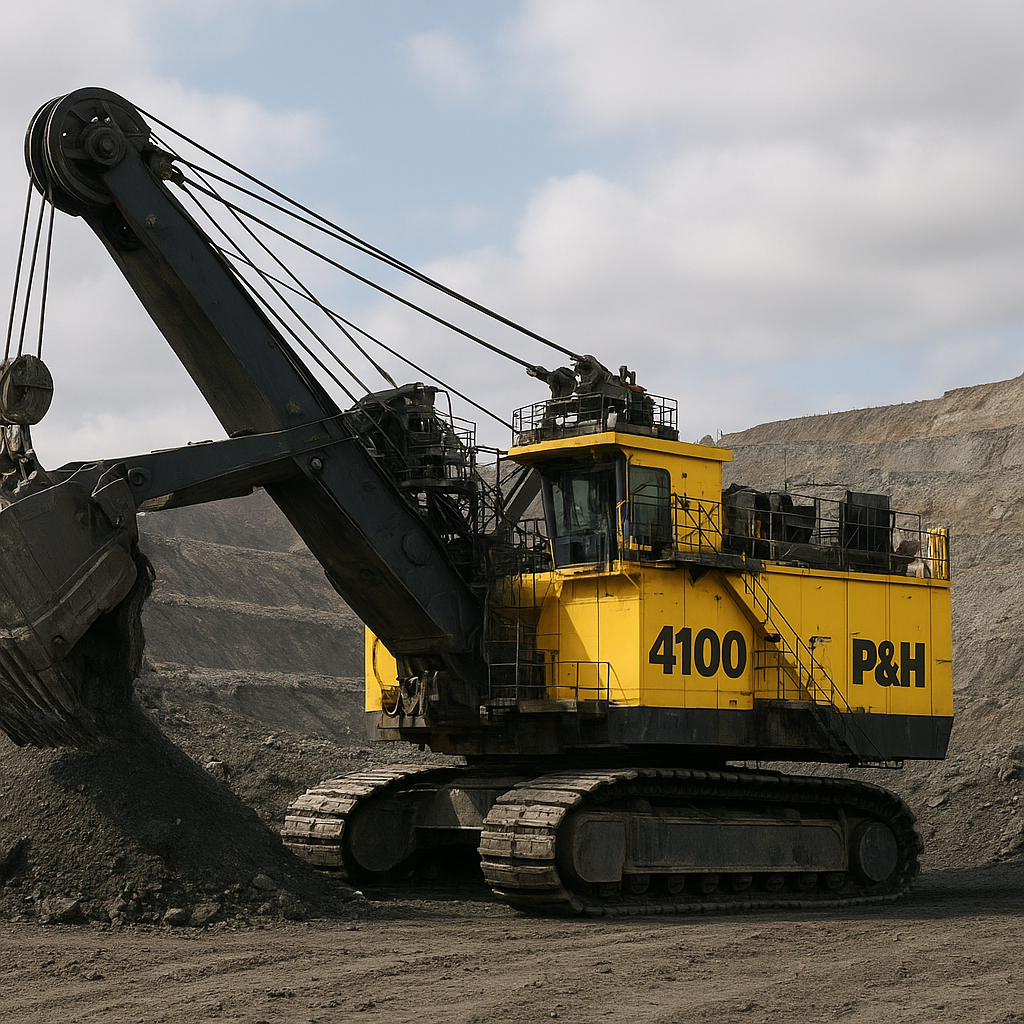
The P&H 4100XPC is a landmark machine in the world of large-scale surface mining. As part of the P&H family of electric rope shovels—now produced under Komatsu Mining after the acquisition—the 4100XPC combines robust mechanical design with modern electrical systems to tackle some of the heaviest digging assignments on earth. This article explores the machine’s technical profile, typical applications, operational performance, and the practical considerations for mining operations that choose the 4100XPC as a primary excavating tool.
Overview and historical context
The P&H 4100XPC is an evolution of the long line of P&H electric rope shovels that have been central to high-volume open-pit mining for decades. These shovels were developed to handle the increasing scale of modern mines—both in terms of the size of the orebody and the tonnages that need to be moved daily. The 4100XPC is designed to bridge the gap between extremely large shovels and more compact models, delivering high capacity while offering flexibility in fleet planning.
Electric rope shovels like the 4100XPC are characterized by an electrically driven hoist and crowd system that manipulates a dipper (or bucket) using steel rope and sheaves. Compared to hydraulic shovels, rope shovels typically provide greater durability in very abrasive environments and are often preferred where consistent, high-cyclic loading and long-term reliability are priorities.
Design and technical characteristics
The 4100XPC’s architecture reflects decades of refinement focused on durability, maintainability, and production efficiency. Key design themes include robust structural components, efficient electric drive systems, and accessible service points for routine and major maintenance.
Major components
- Electrics and drives: The machine uses large AC electric motors for hoist, swing and propel systems paired with modern control electronics and variable frequency drives (VFDs) to optimize torque and energy use during cycles.
- Rope and hoist system: Multiple grooved drums and high-strength hoist ropes manage the dipper and crowd operations. Rope arrangement and drum sizing are engineered for long service life under heavy cyclic loads.
- Structural frame: A welded steel frame supports the house, boom, and undercarriage. Large bearings and slewing gear are sized for the repetitive high loads associated with multi-ton dips.
- Dipper and teeth: The dipper (bucket) is available in different liners and tooth systems to match the application—from softer overburden to highly abrasive ore.
- Operator cab and controls: Ergonomically designed cabs, climate control, and modern operator interfaces with diagnostic readouts are standard. Remote monitoring and telematics are commonly integrated on modern builds.
Typical specification ranges
Model numbers in the P&H lineup commonly indicate the machine class by nominal dipper size. The 4100XPC is often associated with a nominal bucket capacity on the order of tens of cubic yards. Exact configurations are customizable, and the final specification varies by site demands and optional equipment.
Rather than asserting a single fixed spec, it is useful to consider the typical magnitude of key parameters for machines in this class:
- Nominal dipper (bucket) volume: generally in the multi-tens of cubic yards (multi-tens of cubic meters).
- Electrical power demand: machines of this class draw power in the multi-megawatt range during peak cycle phases (hoist/swing), with average draw varying by duty cycle and load.
- Operating mass and structural scale: undercarriage, house, and boom weights are substantial—designed to handle repeated heavy-load cycles for many years.
Applications and operational use
The 4100XPC is primarily used in large open-pit mining operations where continuous high-volume material movement is required. Typical applications include:
- Overburden removal in coal and metallurgical coal operations, where large volumes of relatively loose material must be moved efficiently.
- Ore extraction in copper, iron ore, and other metal mines where the material is accessed via benches and requires controlled digging and loading to haul trucks.
- Oil sands and soft-rock mining, where the shovel may be paired with large-capacity haul trucks in high-throughput circuits.
- Blending and handling in any operation where precise dipper sizing and repeatable payloads aid downstream processing and truck dispatch.
In practice, the 4100XPC is integrated into a mining fleet with haul trucks, dozers, loaders, and processing infrastructure. Its effectiveness depends on the coordination with truck sizes and haul-road design. Operators commonly pair this class of shovel with trucks in the 100–240 tonne payload range, depending on dipper size and loading rates.
Performance, productivity, and typical metrics
Performance of a rope shovel is measured in cycles, tonnes moved per hour, availability, and cost per tonne. The 4100XPC is engineered to maximize these metrics through reliable digging, quick swing and dump cycles, and reduced downtime.
The productivity of the machine is a function of three core factors:
- Payload per pass (bucket fill and material density).
- Cycle time (dig–lift–swing–dump–return).
- Availability (mechanical uptime, rope life, and scheduled maintenance).
Broad, situationally dependent figures that operators commonly use to plan include:
- Single-pass payloads that correspond to the bucket volume and material density—operators work to match load per pass to the target truck payload for efficient fill.
- Cycle times that vary from tens of seconds to a minute or more, depending on digging conditions and swing distances.
- Hourly production that can range from a few thousand to more than ten thousand tonnes per hour on favorable benches with dense material and short swings.
The machine’s design focuses on sustaining high production levels with predictable maintenance intervals. Real-world performance is influenced by factors such as bench height, material cohesion, presence of oversized rocks, and crew skill.
Maintenance, lifecycle and total cost of ownership
Long-term cost-effectiveness is a central advantage of electric rope shovels. While capital cost can be substantial, expected service life measured in decades (with major rebuilds) allows operators to amortize investment over large cumulative tonnages.
Maintenance practices
- Planned inspections and rope management: Hoist and crowd rope condition monitoring and periodic retensioning or replacement are routine and critical to avoid unplanned downtime.
- Bucket and tooth wear: Regular replacement of wear components like teeth, adapters, and liners is scheduled according to abrasive wear rates.
- Structural inspections: Boom, house, and undercarriage components are inspected for fatigue cracks and bearing wear; non-destructive testing is common in scheduled overhauls.
- Major rebuilds: Over a machine’s life, multiple major overhauls (replacing ropes, motors, swing bearing work, or even house lift) are performed to restore near-new performance.
The maintenance strategy usually balances in-house capability and OEM-supported service. Many operators sign long-term service contracts for spare parts supply, overhaul support, and technical diagnostics, including telematics-based monitoring to predict component failures before they occur.
Safety, automation and modern controls
Safety and automation are prominent in modern mining equipment design. The 4100XPC’s electrical systems and control architecture allow for advanced safety interlocks, operator aids, and partial automation.
- Safety features: include lockouts for maintenance, guarded moving parts, anti-collision logic if integrated with site vehicle systems, and comprehensive emergency stop systems.
- Operator assistance: modern control cabins include cameras, swing and position readouts, overload protection, and ride-through power controls to protect equipment and personnel.
- Automation and telematics: many installations integrate telematics for remote monitoring of key parameters—power draw, cycle counts, rope diagnostics, and component temperatures. Some operations employ semi-automated sequences (assisted dig profiles and automatic crowd control) to improve repeatability and reduce operator fatigue.
Implementing automation can increase throughput consistency and decrease operator-dependent variability. However, full automation adoption depends on site infrastructure, safety approvals, and integration with other automated systems such as autonomous haul trucks.
Environmental and economic impact
From an environmental standpoint, electric rope shovels offer several advantages and challenges:
- Lower on-equipment emissions: since primary power is electrical, on-board diesel engines are minimized—this reduces particulate and NOx emissions at the shovel itself (though the power generation source determines overall emissions).
- Energy efficiency: electrical drives with regenerative capabilities and VFDs improve energy efficiency during cyclical operations.
- Noisy operations: while still substantial in noise output, electric motors are often quieter than equivalent diesel engines, improving the operator environment and site noise footprint.
- Resource efficiency: long service lives and the ability to recondition major components reduce material demand over the machine’s lifecycle when compared to shorter-lived equipment.
The economic case for a rope shovel like the 4100XPC revolves around maximizing tonnes moved per hour while minimizing downtime and operating cost per tonne. When matched correctly with a truck fleet and a high-throughput mine plan, the machine can significantly lower unit mining costs.
Integration into mine planning and fleet considerations
Choosing a 4100XPC is not just a purchase decision—it’s a planning decision. Successful deployment requires alignment across several dimensions:
- Truck compatibility: matching bucket fill per pass to truck payloads for optimal truck fill times and minimized cycle inefficiency.
- Bench design: bench height, face angle, and dig line must be planned to reduce swing distances and promote consistent dig cycles.
- Power infrastructure: adequate electrical distribution and backup systems must be provided. Peak-power demand moments require robust site power planning.
- Parts and logistics: maintaining an on-site inventory of critical wear parts and access to service technicians are essential for keeping availability high.
Well-integrated shovels function as the focal point of a pit’s loading circuit. Optimization of shovel placement, truck queuing, and dispatch systems can increase overall mine throughput substantially.
Case studies, real-world performance and typical outcomes
While specific operational figures vary, operators report that machines in the 4100 class deliver reliable high-volume performance when matched to the right application. Typical outcomes from well-run installations include high availability numbers (often targeted in the 80–90% range or higher with good maintenance and logistics), predictable load quality for downstream processing, and systematic reductions in unit mining cost as the machine reaches stable operations.
Case examples from large copper, iron ore, and coal operations commonly illustrate the following benefits:
- Significant tonnage moved per shovel-day, leading to the ability to scale back the number of shovels required relative to smaller machines.
- Lower per-tonne operating costs when shovel uptime is maximized and spare-part logistics are well-managed.
- Opportunities to pair the shovel with larger haul trucks or to reduce truck fleet size for the same production target.
Strengths, limitations, and decision factors
The 4100XPC offers clear strengths: reliability, long service life, suitability for high-throughput benches, and excellent integration with electric power infrastructure. However, there are limitations to consider:
- Capital intensity: large rope shovels represent major capital expenditures and require commitment to long-term operation to realize value.
- Mobility: compared to wheel-based hydraulic shovels, rope shovels are less mobile and require significant effort to relocate between pits or benches.
- Power dependence: continuous electrical power is essential; outages or unstable power can limit productivity and require backup strategies.
Decision-makers should evaluate the 4100XPC against mine scale, deposit geometry, haul fleet strategy, and available power infrastructure. In many large open-pit contexts, the shovel’s strengths outweigh its constraints.
Future trends and technological trajectory
Looking forward, rope shovel platforms such as the 4100XPC are likely to see continued enhancements around electrification, automation, and predictive maintenance:
- Greater automation: increased use of autonomous or semi-autonomous dig cycles and integration with autonomous haul fleets.
- Advanced diagnostics: expanded use of sensors and machine-learning models to predict component wear and optimize service intervals.
- Energy management: more sophisticated energy recuperation, site-level power smoothing, and harmonized operation with renewable energy sources where available.
These trends will help extend the competitive life of rope shovels while improving their economic and environmental profiles.
Conclusion
The P&H 4100XPC occupies an important niche in large-scale surface mining: it is a heavy-duty, electrically driven tool optimized for sustained high-volume excavation. Its value proposition lies in delivering predictable productivity, robust reliability, and long operational lives when deployed with appropriate supporting infrastructure and maintenance regimes. For mine operations that require continuous, high-throughput digging and have access to reliable electrical power and spare-parts logistics, the 4100XPC remains a compelling choice.
)
)