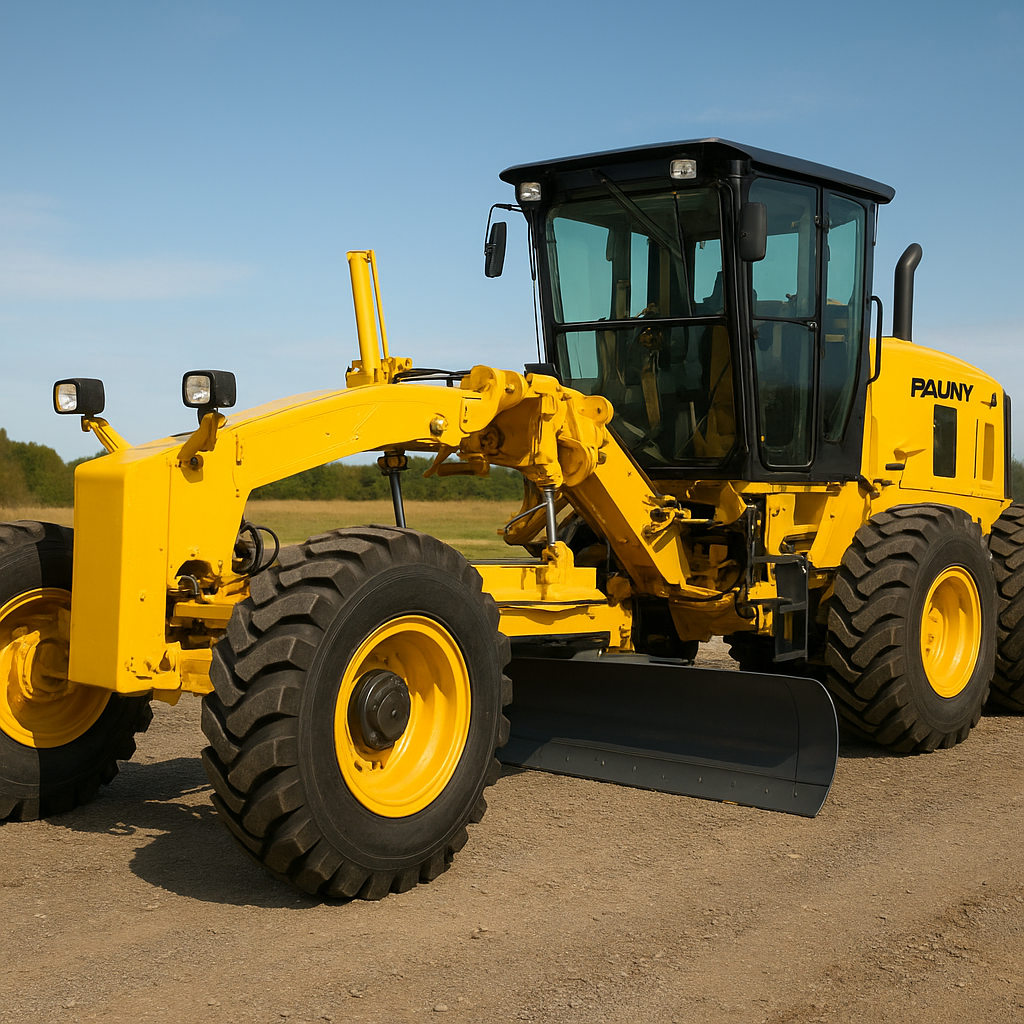
The Pauny 500 motor grader is a robust heavy-duty machine produced by the Argentine manufacturer Pauny. Designed for precision earthmoving and surface finishing, this grader is widely used across construction, agriculture, mining and municipal maintenance tasks. In this article we explore the machine’s design, typical applications, operational performance, maintenance needs and market positioning. We also highlight practical considerations for operators and fleet managers evaluating the Pauny 500 for their projects. Throughout the text, several technical aspects are emphasized to help readers understand what makes this piece of equipment a versatile and cost-effective choice in many working environments.
Design and technical characteristics
The Pauny 500 belongs to a family of machines known for their combination of durability and adaptability. Motor graders are specialized for creating smooth, level surfaces, and the Pauny 500 is engineered to perform these tasks under a range of ground and weather conditions. Its basic architecture centers on a long frame, centrally mounted moldboard (blade), articulated or oscillating front frame, and a powerful drivetrain capable of sustained operation on rough terrain.
Engine and powertrain
Powering a motor grader is a critical component for traction and blade control. The Pauny 500 is typically fitted with a diesel engine optimized for torque and fuel economy rather than just peak horsepower. Typical values for machines in this class fall into the following ranges:
- Engine power: 140–220 kW (roughly 190–300 hp) depending on configuration
- Torque-rich power curves for low-end pulling power and consistent blade control
- Transmission options often include synchronized gearboxes or hydro-mechanical transmissions for smooth speed changes under load
Exact engine and transmission specifications vary by market, emissions standard and optional packages. Pauny has adapted several models across the years to comply with regional emissions regulations while balancing fuel consumption and serviceability.
Blade, circle and frame
At the heart of the grader’s functionality is the moldboard (blade) and circle assembly. The Pauny 500 is designed to support a variety of blade widths and configurations. Typical characteristics include:
- Moldboard length: commonly in the range of 3.2–4.2 meters depending on the blade option
- Hydraulic articulation of the circle for angle, pitch and side shift adjustments
- Robust wear components—cutting edges and end bits—designed for easy replacement
- Sturdy frame with reinforced articulation or oscillation points for longevity on rough jobsites
The circle drive and blade positioning system are engineered to deliver precise control when creating slopes, ditches, and smooth road surfaces. Smooth hydraulic response and fine control over blade pitch and angle are key attributes customers often evaluate.
Steering, hydraulics and control systems
Hydraulics are central to grader performance. The Pauny 500 uses an integrated hydraulic system to operate blade functions, steering circuits and auxiliary attachments. Modern graders from Pauny typically incorporate:
- Multi-section hydraulic valves for simultaneous control of multiple functions
- Load-sensing pumps or priority flow systems to optimize efficiency
- Ergonomic joystick and lever layouts in the operator cab for precision work
- Optional electronic assist or advanced control modules for improved operator feedback
Well-designed hydraulics reduce cycle times for blade movements, increase productivity and decrease operator fatigue.
Dimensions, weight and mobility
Motor graders in the Pauny 500 class are balanced between size and maneuverability. Typical dimensional and weight characteristics include:
- Operating weight: often in the range of 12–18 metric tons
- Wheelbase and length optimized for stable cutting and travel speeds
- Ground clearance and axle articulation options to handle uneven terrain
- Tire and axle configurations chosen for traction and load distribution
These values are indicative; exact numbers depend on whether the machine is configured for roadwork, mining support, snow clearing or agricultural applications.
Applications and sectors of use
The versatility of the Pauny 500 makes it suitable for numerous sectors. Key application areas include:
- Road construction and maintenance: grading base layers, shaping subgrades, creating cross slopes and preparing surfaces for paving
- Agriculture: leveling fields, building terraces and maintaining farm roads and drainage channels
- Mining and quarrying: maintaining haul roads, creating smooth access ramps and reclaiming surfaces
- Municipal services: snow removal, shoulder maintenance, and upkeep of unpaved local roads
- Landscaping and civil works: site preparation, trench backfilling and precision grading around foundations
Examples of specific tasks where a Pauny 500 excels:
- Fine grading of the base course before asphalt laying, where profile accuracy and surface finish are critical
- Building and maintaining drainage ditches with controlled slope using moldboard articulation
- Shaping snow banks and clearing compacted snow on secondary roads when fitted with specialized front blades
Operational environments
The Pauny 500 is used in climates ranging from temperate to harsh environments across South America and other export markets. The machine’s robust cooling systems, protective guards and heavy-duty components allow it to operate in dusty, muddy and cold conditions. For operators in urban areas, low-noise packages and emission-compliant engines are available to meet regulatory requirements.
Performance, productivity and economic considerations
Selecting the right grader is a balance between initial purchase cost, operational productivity and lifecycle expenses. The Pauny 500 is positioned to offer strong value through a blend of reliable mechanical systems and serviceability. Important performance and economic aspects include:
Productivity metrics
Performance can be measured by surface area graded per hour, fuel consumed per operating hour and achievable finish tolerance. While exact numbers depend on material type and job conditions, general expectations for a machine in this category are:
- Production rates: variable—examples include leveling several hundred to a few thousand square meters per hour on unpaved surfaces, depending on soil conditions and operator skill
- Fuel consumption: typical diesel usage can range from 15–35 liters per hour under normal working loads
- Cycle efficiency: good hydraulic responsiveness and a well-matched drivetrain result in shorter cycle times and less idle time
Operators often achieve better productivity by combining the grader with proper surveying tools and adopting conveyor or haul practices that reduce waiting and repositioning time.
Total cost of ownership
When assessing the Pauny 500 for a fleet, consider:
- Purchase price relative to comparable international brands
- Fuel and consumables cost over expected daily operating hours
- Availability and cost of spare parts in the region
- Resale value and depreciation tendencies in local markets
- Maintenance intervals and ease-of-access for routine service
Pauny machines are often praised for their straightforward mechanical layout, which can reduce downtime and maintenance labor costs compared with more complex machines. Regions with strong local dealer networks will enjoy shorter lead times for parts and service support, improving overall uptime.
Statistical context and market notes
Precise market statistics for a single model like the Pauny 500 are not always publicly disclosed. However, some relevant contextual facts can be stated with confidence:
- Pauny is a recognized heavy-equipment manufacturer in Argentina and has expanded its presence to several Latin American countries and export markets.
- Motor graders as a category have steady demand tied closely to public infrastructure investment, rural road maintenance budgets and mining activity—sectors which see cyclical spending patterns
- Grader fleet sizes in municipal and regional road maintenance departments commonly range from 1–10 units, with larger contractors maintaining significantly larger fleets depending on project scope
For buyers, comparing lifecycle costs and local support availability is often more informative than raw purchase price alone.
Operator comfort, safety and ergonomics
Modern graders place strong emphasis on the operator environment because comfort and visibility directly affect productivity and safety. The Pauny 500 typically offers:
- Spacious cab with heating and optional air conditioning
- High-visibility glazing for clear sightlines to the blade and front wheels
- Ergonomically arranged controls—joysticks, levers and pedals—to reduce operator fatigue
- Safety features such as ROPS/FOPS-certified cabs, seat belts and external lighting packages
Operator training is essential to take full advantage of the machine’s capabilities. Skilled operators can significantly reduce cycle times, minimize rework and extend wear-part life by using proper blade techniques and machine settings.
Maintenance best practices and common service points
To maximize uptime and extend the service life of a Pauny 500, fleet managers should adopt a disciplined maintenance regimen. Key areas of focus include:
- Daily inspections: hydraulic leaks, tire condition, blade edge wear and fluid levels
- Scheduled service: engine oil and filter changes, hydraulic oil monitoring, transmission service at manufacturer-recommended intervals
- Wear components: cutting edges, circle gear teeth, bearings and bushings should be checked and replaced proactively
- Cooling system care: dust and debris can compromise cooling efficiency; regular cleaning and coolant checks are critical in hot/dusty environments
Keeping a stock of high-wear parts and establishing local supplier relationships will reduce downtime. Pauny’s design philosophy often favors accessibility so technicians can perform tasks with standard tools and minimal disassembly.
Attachments, options and customization
Versatility is often extended through attachments and options. For the Pauny 500, common add-ons and customization choices include:
- V-plows or front-mounted blades for snow clearing
- Scarifiers and ripper attachments for breaking hard ground
- Laser or GPS-guided grade control systems for high-precision grading
- Different tire choices (bias vs radial) and tire sizes to match worksite demands
- Auxiliary lighting, air conditioning upgrades and sound insulation for improved operator comfort
Integration of grade-control technology can dramatically increase finish quality and reduce rework, especially on road construction projects demanding tight tolerances.
Environmental considerations and future trends
The heavy equipment industry is experiencing change driven by stricter emissions standards, fuel-efficiency expectations and an increasing interest in electrification and hybridization. For a diesel-powered grader like the Pauny 500, relevant trends include:
- Compliance with Tier/Stage emission standards in different markets—engines are tuned or replaced to meet local regulations
- Improvements in fuel economy through engine-management systems and load-sensing hydraulics
- Rising exploration of hybrid powertrains or electrified auxiliary systems to reduce idling emissions and fuel use
- Adoption of telematics for remote monitoring of fuel use, maintenance alerts and operational productivity metrics
These trends can influence long-term ownership costs and regulatory compliance requirements for fleet operators.
Buying considerations and conclusion
When assessing the Pauny 500 for purchase or lease, decision makers should evaluate:
- The availability of service and spare parts in their region
- Matched specifications for the intended tasks—blade size, engine tuning and hydraulic control packages
- Expected utilization rates and the machine’s fuel consumption profile over those hours
- Operator training programs and warranty/support packages offered by the dealer
- Potential for attachments and technological upgrades such as grade control systems
In summary, the Pauny 500 motor grader is a capable and adaptable machine that fits a wide variety of applications from rural road maintenance to more demanding construction tasks. Its strengths include a balanced mix of durability, serviceability and operator-oriented features. While precise specifications and performance metrics depend on the chosen configuration and regional options, the Pauny 500 remains an attractive option for businesses seeking a dependable grader with a solid local support network.
)
)