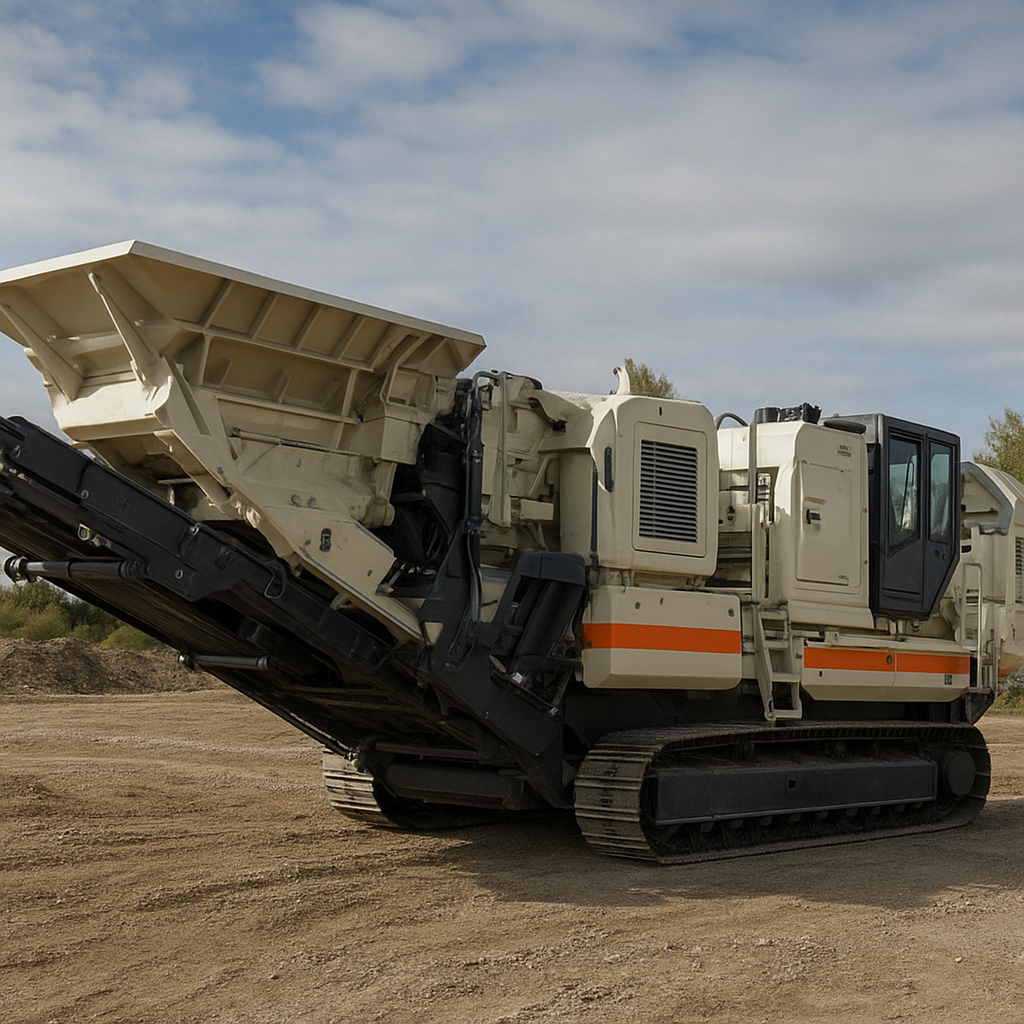
The Metso Lokotrack LT300HP is a versatile, track-mounted cone crushing plant designed for secondary and tertiary crushing in quarrying, mining and recycling operations. Combining mobile convenience with the robustness of a stationary crusher, the LT300HP delivers high-quality aggregates and consistent product shape while minimizing downtime and transport costs. This article examines the machine’s design, typical applications, operational statistics, maintenance practices, safety and environmental considerations, and practical guidance for buyers and operators.
Overview and design philosophy
The Lokotrack LT300HP is built around a high-performance cone crusher, offering a compact footprint and fast setup. The machine is intended to fill the gap between small portable impact or jaw crushers and larger stationary cone plants. Its primary design goals are mobility, reliability, and the ability to produce a consistent, cubical end product suitable for road base, concrete aggregate and asphalt applications.
Key features of the LT300HP include a heavy-duty tracked chassis for on-site mobility, an inclined vibrating feeder with integrated grizzly for efficient feed distribution, a high-performance cone unit tuned for optimal crushing, and an adjustable product conveyor system for simple stockpiling. The layout reduces the need for auxiliary equipment and is optimized for quick installation and commissioning.
Technical components and what makes it special
The LT300HP combines several components that together create a flexible and efficient crushing solution:
- Cone crusher unit: At the heart of the plant is a robust cone crusher designed to deliver high reduction ratios and good product shape. The cone provides variable closed side settings, enabling operators to fine-tune product gradation and throughput.
- Feed and pre-screening: The vibrating feeder and optional pre-screening units separate fines and prevent overloading the cone, improving overall performance and reducing wear costs.
- Tracked mobility: The crawler undercarriage allows the machine to be relocated around a site without the need for cranes or trucks, saving time and money during project phasing.
- Control system: Modern Lokotrack units are fitted with user-friendly PLC-based controls for crusher settings, automation routines and diagnostics. These controls enable quick adjustments and easy troubleshooting.
- Hydraulic features: Hydraulic setting adjusters, overload protection and hydraulic tramp release systems reduce downtime and protect the crusher from damage in the event of uncrushable material entering the chamber.
These elements translate into practical benefits such as improved uptime, easier maintenance, and consistent final product quality. The combination of mobility and robust crushing technology makes the LT300HP a popular choice for operations that require moving the crusher frequently or need rapid setup times.
Performance statistics and operational data
Performance varies with feed material, feed size distribution, moisture content and desired product specification. Typical operational figures for machines in this class, based on manufacturer ranges and industry experience, are:
- Typical throughput: approximately 100–450 t/h depending on feed characteristics and closed side setting.
- Feed size capacity: up to roughly 200–250 mm maximum feed size recommended for optimal cone crushing.
- Reduction ratio: commonly between 4:1 and 6:1 depending on the crushing chamber and material hardness.
- Installed power: power package ranges vary, with prime movers and hydraulic systems commonly drawing in the order of 200–350 kW under full load.
- Fuel consumption: under typical operation, diesel consumption is often in the range of 15–30 L/h, again dependent on load and duty cycle.
- Operational weight: complete units typically weigh in the range of 30–50 tonnes, which affects transport logistics and lifting requirements.
Actual numbers for a specific LT300HP unit should be confirmed with the equipment supplier because options, crusher settings and installed power units can substantially alter these figures. Nevertheless, these statistical ranges are helpful when comparing capacity needs and selecting a crushing solution.
Typical applications and industries
The LT300HP is suited for a wide variety of applications where a high-quality, cubically shaped aggregate is required. Typical use cases include:
- Quarrying: Secondary and tertiary crushing stages for granite, basalt, limestone and other hard rock to produce aggregate for construction.
- Civil engineering: On-site production of base course material for road building, rail ballast or embankment construction.
- Recycling: Crushing concrete and asphalt to produce recycled aggregate for reuse in new construction, reducing landfill and raw material costs.
- Mining: Small-scale mining operations or mine-site crushing for downstream processing, including production of feed for grinding circuits.
Because of its compact design, the LT300HP is particularly valuable in urban or constrained sites where space is limited and mobility between working areas is required. The machine can be used as a stand-alone plant or as part of a modular, mobile crushing and screening train.
Operation, setup and on-site logistics
One of the major advantages of the Lokotrack design is its short setup time. Typical on-site procedures include positioning the unit, lowering stabilizers, connecting power and hydraulics if necessary, and initiating commissioning tests via the control panel. Operators should follow the manufacturer’s recommended start-up routines and safety checks to ensure reliable operation.
Because the LT300HP is tracked, it can be driven or towed into position and then leveled using hydraulic jacks. For transport between sites, the unit is usually moved on low-loader trailers due to its weight. Understanding transport dimensions and permitting requirements is an important logistic consideration for purchasing and operation.
Maintenance, wear parts and lifecycle management
Regular maintenance is key to achieving the lowest lifecycle cost and highest availability. Routine tasks include checking lubricant levels, monitoring wear parts such as mantle and concave liners, inspecting hydraulic hoses and electrical connections, and ensuring the vibrating feeder and conveyors are in good condition. Predictive maintenance is often implemented using built-in diagnostics and condition monitoring tools.
Common wear items and service aspects:
- Crusher liners: Mantle and concave change intervals vary with rock abrasiveness but planning for scheduled liner changes reduces unplanned downtime.
- Belts and pulleys: Conveyor belts and transfer points require inspections and occasional alignment, especially in dusty or abrasive environments.
- Hydraulic system: Filters and hydraulic oil changes at recommended intervals preserve performance and protect components.
- Electronic controls: Keeping software updated and monitoring sensor health improves diagnostics and facilitates remote support when available.
Good operators maintain records of liner life, fuel use, and production tonnages to build reliable predictive models of operating costs. This data helps in lifecycle planning and in comparing actual performance to expected values.
Environmental and safety considerations
Modern Lokotrack units incorporate features to reduce environmental impact and improve worker safety. Dust suppression systems, water spray nozzles at transfer points and proper screening to remove fines minimize airborne particulates. Noise attenuation measures, such as acoustic covers and optimized engine enclosures, help meet local regulations.
Safety features typically include emergency stop systems, guarded moving parts, interlocks on access panels, and clear signage of pinch points. Operator training is essential: well-trained staff reduce the risk of accidents and improve plant productivity. Additionally, many operators adopt digital solutions for compliance reporting, emissions tracking and maintenance scheduling.
Case studies and real-world performance
In practice, the LT300HP has been deployed in projects ranging from small urban recycling centers to medium-sized aggregate producers. Typical outcomes reported by operators include faster commissioning times compared to fixed plants, lower haul costs due to on-site production, and improved product consistency enabling higher-value sales for finished aggregates.
A quarry replacing an older fixed cone plant with a mobile LT300HP reported reduced downtime for liner changes because the mobile machine’s design allowed easier access to wear parts and faster change-outs. A recycling operation highlighted how the ability to move the crusher close to different stockpiles cut double-handling of material and lowered operating hours on ancillary conveyors.
Economic considerations and total cost of ownership
When evaluating the LT300HP, buyers should look beyond the purchase price and consider operating costs, availability of parts, fuel consumption, expected production, resale value and end-of-life demolition or recycling. Factors that typically influence total cost of ownership include:
- Availability of spare parts and local service support.
- Fuel efficiency in relation to planned operating hours and duty cycle.
- Liner wear rates determined by material abrasiveness and fines content.
- Resale market for well-maintained mobile plants tends to be strong due to demand for flexible assets.
Financial models often show that mobile units like the LT300HP can outperform fixed crushing stations in projects with multiple work fronts, short project durations, or where transport distances for feedstock would otherwise be high.
Comparison to other mobile crushers and selecting the right machine
Compared with portable jaw crushers or impactors, the cone-based LT300HP typically produces a better-shaped, more cubical product and handles higher reductions with less recirculation. Against larger stationary cone plants, the LT300HP trades ultimate capacity for flexibility and lower capital cost. Selecting the right machine depends on:
- Required throughput and peak production rates.
- Feed material type and hardness.
- Need for product shape and gradation control.
- Site mobility and transport constraints.
For operations requiring frequent site moves and a consistent high-quality product, the LT300HP is often the preferred choice. Where continuous, very high tonnages are required, a stationary plant may be more economical.
Practical tips for operators and purchasers
- Request detailed, model-specific performance curves and check them against your feed material and product spec before purchase.
- Plan for liner and wear management early; negotiate parts packages and service agreements where possible.
- Consider fuel options and available power packages — matching the installed engine to your typical operating profile can save significant fuel costs.
- Train operators on safe start-up/shutdown procedures and on how to use the control system for automated protection and efficient operation.
- Evaluate resale value and flexibility: a well-maintained mobile crusher can be redeployed to new projects and often retains good market value.
Final remarks
The Metso Lokotrack LT300HP represents a strong balance of mobility, performance and product quality for contractors, recyclers and quarry operators who need a flexible, high-quality crushing solution. While specific throughput and operating costs depend heavily on local conditions and machine configuration, the LT300HP’s design emphasizes fast setup, ease of maintenance and consistent aggregate production. For many operations, these characteristics translate into lower overall costs, greater project agility and improved returns on investment.
)
)