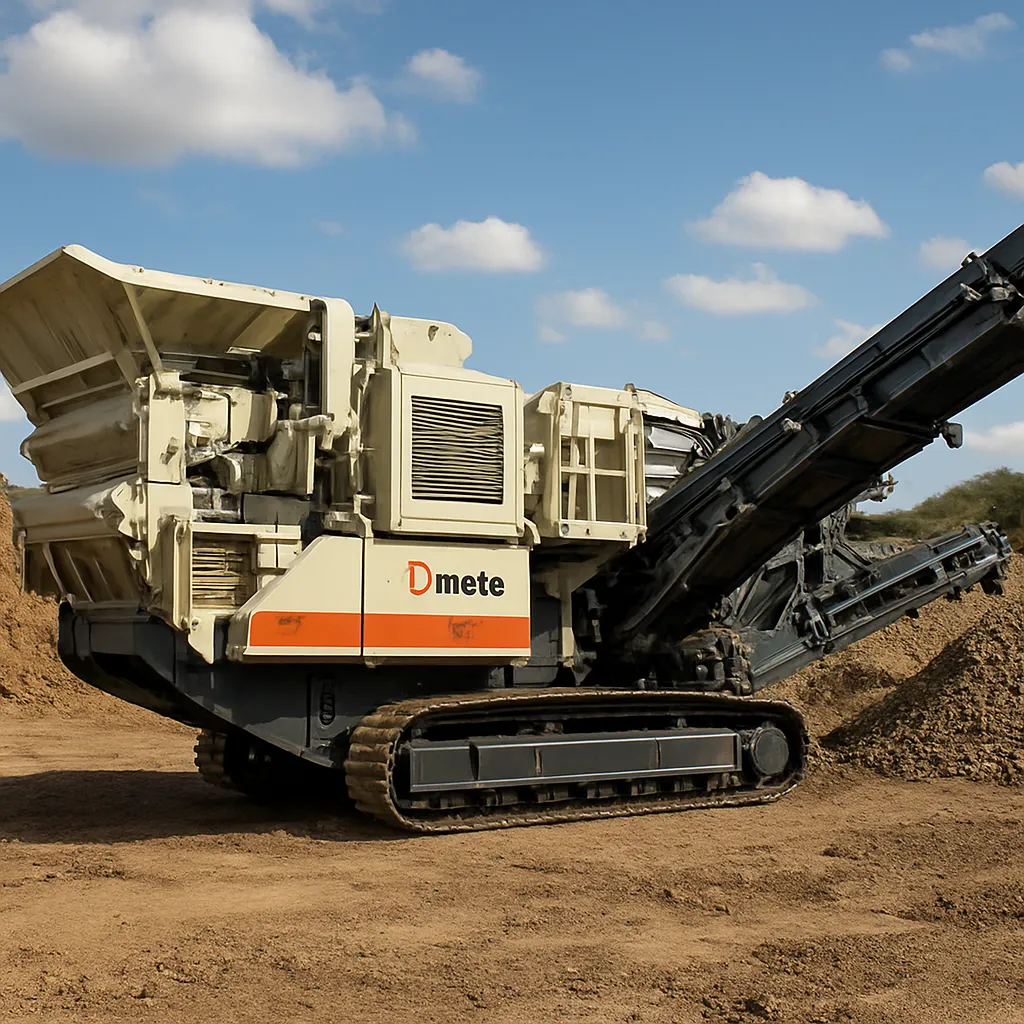
The Metso Lokotrack LT120 is a well-known track-mounted crushing unit designed for demanding aggregate and mining operations. This article describes its design, typical applications, operational characteristics and practical considerations for users. It also provides typical performance figures and background information that can help plant managers, site engineers and equipment purchasers evaluate whether the LT120 fits their project needs. Throughout the text you will find practical tips and observations drawn from field use and product documentation trends.
Overview and role in modern crushing
The Lokotrack LT120 is a mobile plant built around a heavy-duty Nordberg C120-type jaw crusher. As a tracked unit, it is intended for fast on-site deployment as a primary crushing solution, capable of handling large feed sizes and high production demands. The primary objective of the LT120 is to bring crushing capacity directly to the source of material — quarries, construction demolition sites, recycling yards and mining faces — removing the need to transport raw material long distances before primary reduction.
The benefits of using a track-mounted unit include reduced setup time, flexibility to change location within a worksite, and the ability to integrate with other mobile screening and secondary crushing equipment to create a complete mobile production train. Its role is most often upstream in a processing chain, feeding secondary and tertiary crushers or mobile screens. The LT120 is typically deployed where a combination of large feed opening and high reliability is required.
Design and technical features
The LT120 emphasizes robustness and serviceability. Key design elements contribute to its field performance:
- Jaw crusher core: The crusher is designed for heavy-duty primary crushing with a well-proven jaw geometry optimized for reduction ratio and throughput.
- Integrated vibrating feeder and prescreen: These components ensure consistent material distribution into the crusher and allow coarse fines to be bypassed, improving efficiency and reducing wear.
- Hydraulic adjustment and overload protection: Hydraulic systems allow quick setting changes for the crusher’s closed-side setting (CSS) and provide safe overload relief to reduce the risk of damage from tramp material.
- Conveyors and chassis: The unit includes conveyors for crushed product and a robust tracked undercarriage to enable mobility on uneven terrain.
- Service access and modularity: Key wear parts and service points are arranged for accessible maintenance, often featuring swing-open guards and walkways for safe access.
Typical technical features you can expect from this class of machine include an adjustable CSS range for product sizing, a feed opening suited to large rocks, and diesel powerpack options with the possibility of electric drives or hybrid configurations depending on the market and customer specification. The LT120 is often offered with various feed chute and crusher jaw profiles tailored to the target rock type.
Applications and use-cases
The Lokotrack LT120 finds applications across a wide spectrum of industries due to its combination of power, feed capability and mobility:
- Quarrying and aggregates production: As a primary crusher, the LT120 is used to reduce blasted rock (granite, limestone, basalt, sandstone) to sizes suitable for secondary crushing or direct sale as coarse aggregate.
- Construction and demolition recycling: The machine can process concrete, reinforced concrete and asphalt, enabling on-site recycling and reduction in waste transport costs.
- Mining operations: On smaller-scale or remote mining sites the LT120 can serve as a primary crusher directly at the pit edge.
- Infrastructure and road works: Temporary projects needing a rapid, movable crushing capacity benefit from the LT120’s ease of repositioning, reducing the need for fixed plant investments.
- River gravel and blinding materials: The LT120 handles aggregates with different shapes and abrasiveness, especially when equipped with suitable jaw plate materials.
Because of the unit’s flexibility, many operators use the LT120 as part of a mobile production train: primary crushing by the LT120, followed by a mobile cone or impact crusher for secondary crushing and a mobile screen for final sizing. This modular approach is particularly valuable when the production site moves frequently or when phased production is required.
Performance and statistical figures
Performance of the LT120 will vary depending on rock type, feed gradation, conveyor configuration and settings. However, several typical data points and ranges can be provided as general guidance:
- Feed opening and capacity: The nominal feed opening in the LT120 class is designed to accept large lumps of rock; most configurations in this family accommodate feed material measured in the order of one meter or more in maximum dimension. Typical production throughput ranges for machines in this class commonly fall between 120 and 450 tonnes per hour, depending on material density and crusher setting.
- Operating weight: Tracked primary crushers of this size typically have an operating weight in the region of 30–45 tonnes, which balances transportability and crushing stability.
- Power consumption: Engine power ratings for similar units typically lie in the range of 250–400 kW when driven by diesel engines. Electric drive options reduce site emissions and can improve fuel efficiency where power is available.
- Closed-side setting (CSS): The CSS is often adjustable across a practical range to enable control of finished product size, commonly within a range of a few tens to a few hundreds of millimetres (for example, roughly 40–150 mm in many jaw crusher installations).
- Wear part life: Jaw plate longevity depends strongly on abrasive properties of the feed (Mohs hardness, silica content) and can vary from hundreds to several thousand operating hours under different conditions.
These figures are indicative and will vary with configuration. When precise outputs are required for purchase decisions or plant design, site-specific test crushing and vendor-supplied performance curves should be used to estimate actual capacity.
Operational considerations and maintenance
To derive consistent performance and long service life from an LT120, operators should focus on a few operational best practices:
- Feed distribution: Ensure uniform feed to the jaw crusher to avoid uneven wear and to maintain stable throughput. An integrated grizzly or prescreen can remove fines and reduce choked feed conditions.
- Crusher settings: Regularly verify the closed-side setting and adjust according to the required product size. Small changes in CSS can significantly affect product gradation and throughput.
- Wear parts selection: Choose jaw plate materials and profiles that match the rock type — higher manganese content and optimized profiles extend service life on abrasive materials.
- Planned maintenance: Establish scheduled checks for bearings, hydraulic systems, and conveyor components. Replace wear liners before extreme wear leads to secondary damage.
- Lubrication and inspections: Regular lubrication of crusher bearings and periodic inspection of the toggle and hydraulic relief systems will reduce unplanned downtime.
Maintenance access on the LT120 is typically designed to be straightforward, with quick-change wear components and ease of access for routine intervention. Many operators complement these features with remote monitoring or telematics to track operating hours, fuel use and diagnostic alerts, enabling predictive maintenance strategies that reduce total life-cycle cost.
Environmental and safety aspects
Modern mobile crushers are engineered with environmental and safety considerations in mind. Typical measures associated with the LT120 class include:
- Dust suppression systems: Water spray bars and misting systems at feed and transfer points reduce airborne dust, which is important for worker health and regulatory compliance.
- Noise reduction: Acoustic enclosures, optimized feed chutes and belt covers reduce noise emissions, especially when working in urban or regulated areas.
- Fuel and emissions: Diesel engines conform to relevant emission stages depending on the market; electric drive options can further reduce greenhouse gas emissions where on-site power is available.
- Safety systems: Emergency stops, guarded moving parts, and safe access platforms are standard. Hydraulic overload protection mitigates the risk of catastrophic mechanical damage.
From a sustainability perspective, mobile primary crushers like the LT120 also contribute indirectly by enabling recycling of construction materials on-site, helping to lower transport emissions and conserve natural aggregate resources.
Economic and logistical considerations
Deciding to use a Lokotrack LT120 involves weighing capital cost, operational expense and project logistics. Some practical points to consider:
- Mobility vs. fixed plant: The capital cost of a mobile unit is balanced by savings on hauling raw material to a central crusher. For projects with short durations or shifting work areas, mobility often yields a quicker return on investment.
- Transport and setup: Tracked units reduce the need for heavy site preparation and foundations, but transportation between sites may require permits for over-dimension loads depending on regional regulations.
- Fuel and operating costs: Fuel consumption is an important component of operational budget; choosing the most efficient engine configuration or an electric drive option where feasible can reduce running costs.
- Resale and utilization: Mobile units retain market value when well maintained; high utilization across multiple projects increases the economic benefit of ownership.
When planning plant layouts or tendering for projects, consider the match between the crusher’s throughput capability and your downstream processing. Over-sizing or under-sizing a primary crusher can create bottlenecks or unnecessary cost.
Integration with processing trains and automation
The LT120 is frequently integrated into modular, mobile processing trains. Typical configurations include linking the LT120 to a mobile cone crusher, impact crusher, or a series of screens and conveyors to produce multiple grades of aggregate.
Automation and control systems are often used to optimize production. Modern units support remote start/stop, conveyor synchronization, and real-time monitoring of key parameters such as power draw, feed rate and wear part status. Such automation helps operators maintain target production and react quickly to blockage or overload conditions, improving both safety and throughput.
Common configurations and optional equipment
Vendors and dealers often offer a range of optional equipment and configurations to match the LT120 to specific needs:
- Prescreen or grizzly: To remove fines and reduce recirculation loads.
- Different jaw profiles: To optimize for tough rock, soft rock or recycled materials.
- Electric drive packages: For sites with power supply to reduce fuel consumption and emissions.
- Remote control and telematics: For fleet monitoring and preventive maintenance scheduling.
- Dust suppression packages: For dusty environments or stringent regulatory conditions.
Field performance examples and operational observations
On-site feedback from operators using machines in the LT120 class highlights several recurring themes:
- Reliability under harsh conditions: The heavy-duty design and balanced feed system promote long production runs with minimal stoppages.
- Versatility across materials: With the correct jaw liners and settings, the same machine handles natural rock and recycled concrete effectively.
- Quick redeployment: Jobs that demand multiple crushing locations benefit from the speed at which the tracked LT120 can be moved and reestablished.
- Maintenance planning pays off: Operators who use telematics and scheduled wear-part replacement see less downtime and lower long-term costs.
Purchasing and lifecycle considerations
When evaluating the purchase of an LT120 or equivalent unit, treat the decision as a lifecycle investment rather than a simple equipment buy. Considerations should include:
- Total cost of ownership: Acquisition price, spare parts, fuel, operator training and expected resale value.
- Spare parts availability: Ensure wear parts and critical components are available locally to avoid extended outages.
- Service support and warranty: Local dealer support for commissioning, training and warranty repairs is critical for maximizing uptime.
- Operator skill: Investing in operator training can significantly improve throughput and reduce wear.
Concluding remarks
The Metso Lokotrack LT120-class mobile jaw crusher represents a mature solution for primary crushing where mobility, robustness and capacity are priorities. It is particularly useful in applications that require swift deployment, flexible site logistics and dependable primary reduction of coarse material. Typical users include quarry operators, recyclers and contractors involved in infrastructure and mining. Combining a solid mechanical design with modern control systems and optional electrification makes units in this class a practical choice for many contemporary aggregate operations.
Choosing the right configuration, implementing proper maintenance and aligning the crusher’s capacity with downstream processes are the most important actions to ensure that an LT120-class machine delivers long-term value and operational efficiency.


)
)