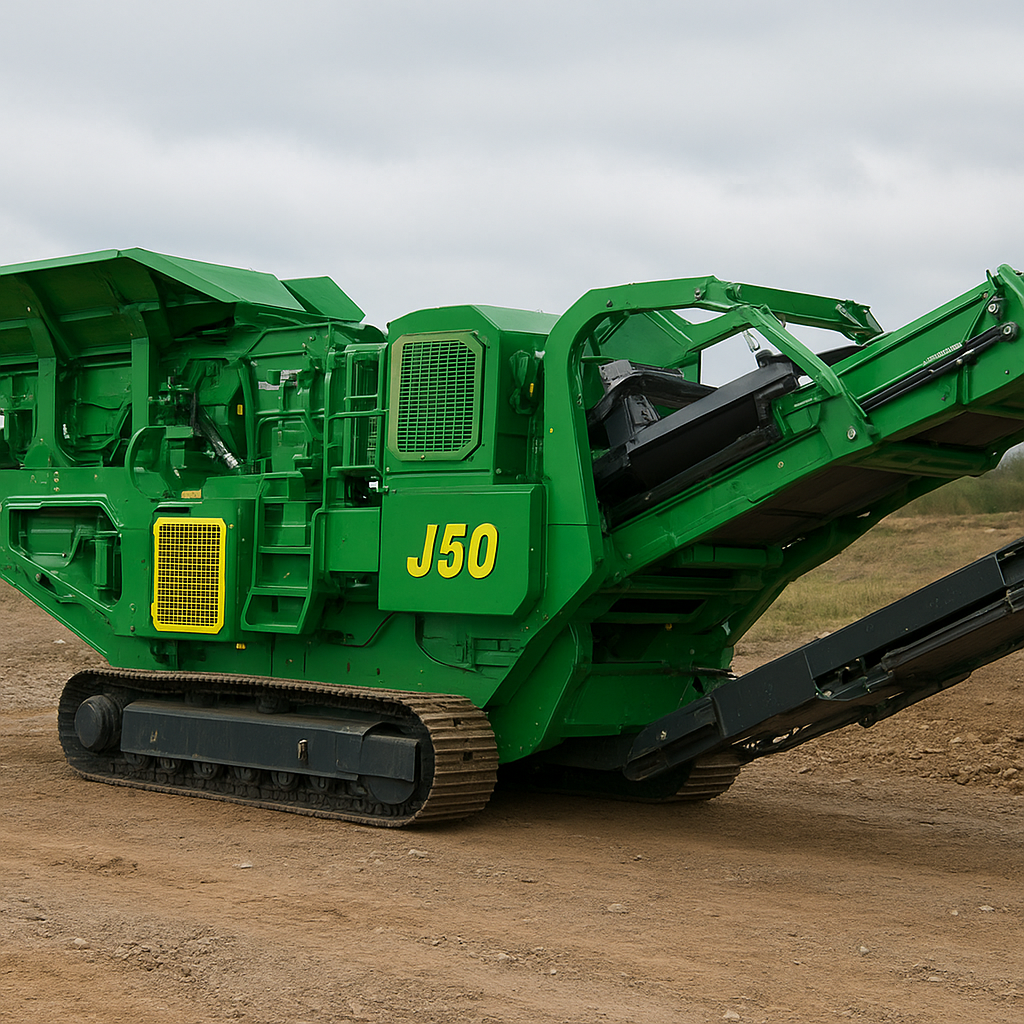
The McCloskey J50 is a compact, high-performance mobile jaw crusher designed to combine robust crushing power with on-site mobility and operational efficiency. Widely used by contractors, quarry operators, and recycling firms, the J50 aims to deliver reliable primary crushing for a range of materials while minimizing setup time and transport costs. This article explores the machine’s design and key features, typical applications, operational and maintenance practices, environmental and safety considerations, economic factors, and practical examples of how the J50 is used in the field.
Design and key features
The McCloskey J50 is engineered around a heavy-duty jaw crusher mounted on a tracked chassis for rapid relocation around a site. Its layout prioritizes ease of transport, fast setup, and ruggedness for demanding environments. Typical design highlights include a robust feed hopper, an aggressive jaw box profile, hydraulic adjustments for the gap and discharge, and integrated plant controls that help operators optimize the crushing process.
- Jaw crusher design: The J50’s jaw assembly is built to handle difficult materials with reliable crushing chambers and wear-resistant components engineered to extend liner life and reduce downtime.
- Compact footprint and mobility: Tracks allow the machine to be moved across rough ground or repositioned quickly on site without additional transport equipment in some cases.
- Quick setup: Hydraulically foldable conveyors and simple hydraulic linking mean the plant can be set up or broken down in a short timeframe.
- Operator-friendly controls: Intuitive control panels and remote-control options help operators manage feed rate, discharge settings, and other critical parameters.
- Auxiliary options: Many J50s are configured with optional pre-screening, vibrating grizzly feeders, or dust suppression systems depending on job requirements.
Construction and materials
Key structural components of the J50 — such as the chassis, crusher frame, and hopper — are fabricated from heavy-gauge steel and reinforced in high-wear zones. Wear parts (jaw plates, cheek plates, and toggle components) are made from high-chrome or manganese alloy steel, selected for their resistance to impact and abrasion. The machine’s hydraulic circuits and electrical components are engineered for durability in dusty, wet, and abrasive working conditions.
Control and automation features
Modern J50 units often include onboard monitoring systems that track engine hours, oil pressures, hydraulic temperatures, and crusher load. These systems can alert operators to potential issues before they escalate and help optimize maintenance schedules. Some units offer remote diagnostics capability, which reduces downtime by enabling off-site technician support.
Applications and use cases
The J50 is versatile and finds application across a broad spectrum of crushing tasks. Its size and performance characteristics make it particularly suited to projects requiring a balance of high crushing capability and site versatility.
- Quarrying and aggregate production: The J50 serves as a primary crusher on small to medium-sized quarries where feed sizes and production targets match the machine’s capacity.
- Construction and demolition (C&D) recycling: The J50 crushes concrete, brick, and masonry into reusable aggregate for backfill, roadbase, or new concrete production.
- Road and infrastructure projects: Portable primary crushing near excavation sites reduces haul distances and lowers transport costs for base material production.
- Small mining operations: For surface mining or exploration projects, the J50 offers a mobile solution for primary crushing of ore and waste rock.
- Remote and temporary sites: Its rapid setup and relatively compact transport dimensions make the J50 suitable for seasonal or short-term projects where installation of permanent plant is uneconomic.
Material types processed successfully by the J50 include limestone, granite, basalt, river rock, recycled concrete, brick, and some softer ores. Throughput performance depends heavily on material hardness, moisture content, feed gradation, and operator settings.
Performance and technical data (typical ranges and considerations)
Performance of the J50 varies by material and configuration. Rather than presenting a single definitive value, typical figures are best understood as ranges, because crushing capacity and particle output are functions of feed size, pre-screening, jaw setting, and material characteristics.
- Throughput: Typical productivity ranges from approximately 150 to 350 tonnes per hour in many practical applications. Harder materials and finer product settings reduce throughput; softer materials and coarser settings increase it.
- Feed opening: The crusher feed opening is designed to accept large stones typical for a primary jaw crusher, with common nominal dimensions often cited as roughly 1.2–1.3 m by 0.7–0.8 m (exact figures depend on model year and region).
- Product size: Output gradation is controlled by the crusher’s closed-side setting (CSS). Typical CSS adjustment ranges allow production of coarse to medium-sized aggregates suitable for road base and primary aggregates.
- Engine and power: The J50 is commonly powered by a diesel engine sized to match crushing demand and on-board hydraulic systems. Engine power ratings and emissions standards vary by year and market (Tier/Stage compliance).
- Weight and transport: The machine is designed to be transportable by road; gross weights and dimensions will vary with optional equipment such as pre-screeners, additional conveyors, and side-plates.
Because exact technical data may vary across production years and optional packages, operators should consult the manufacturer’s specification sheets or an authorized dealer for precise figures for a particular unit. Still, the ranges above reflect typical field experience for machines in the J50 class.
Factors affecting real-world productivity
Several operational factors influence the effective throughput and availability of a J50 installation:
- Material hardness and abrasiveness — harder, more abrasive materials slow throughput and increase wear rates.
- Feed distribution and consistency — well-graded and consistently fed material yields higher crushing efficiency.
- Presence of fines and moisture — sticky or very wet material can cause blockages and reduce capacity.
- Operator skill and plant layout — experienced operators achieve better settings and balance between feed rate and jaw settings, while optimized plant layouts reduce recirculation and chokepoints.
Operation, maintenance, and lifecycle considerations
To maximize uptime and lifetime value from a J50, operators must invest in thoughtful preventative maintenance and simple daily checks. Because the J50 is often used in remote or harsh environments, ease of maintenance is a major design priority.
Daily and routine checks
- Inspect wear components (jaw plates, cheek plates) and replace or rotate as necessary to maintain crushing profile.
- Check hydraulic fluid levels, hoses, and cylinders for leaks or damage.
- Monitor engine oil, coolant, and air filters; replace consumables on recommended intervals.
- Clear debris from the hopper, under the crusher, and around conveyor pulleys to prevent buildup and reduce fire risk.
- Lubricate bearings and lubrication points according to the manufacturer’s schedule.
Wear management and parts replacement
Wear on jaw plates and other consumables is the single most significant ongoing cost in crusher ownership. Strategies to reduce total cost of ownership include:
- Selecting the correct jaw profile and material grade for the application to maximize life without sacrificing product quality.
- Maintaining proper feed and avoiding uncrushable items that can cause immediate damage.
- Stocking critical spare parts to reduce downtime, or contracting a parts and service agreement with a local dealer.
Lifecycle and refurbishment
With regular maintenance and part replacement, a J50 can remain productive for many years. Major component refurbishment (e.g., replacing jaw boxes, renewing undercarriage components, or overhauling the diesel engine) may be required after extensive hours of operation. Refurbished units are common in the market and represent a cost-effective option for buyers who require reliable crushers at lower capital cost.
On-site setup, logistics and mobility
One of the J50’s core selling points is its rapid redeployment capability. Key logistical considerations include transport, set-up, and integration with other plant components.
- Transport: The J50 can be loaded onto low-bed trailers for road transport. Careful planning around weight, axle loads, and permits is necessary for regional moves.
- Setup: Hydraulic conveyors and quick-connect electrical systems dramatically shorten site commissioning times — many operators report being ready to process material within a few hours of arrival.
- Integration: The J50 often operates as part of a modular plant with scalping screens, secondary crushers, and washplants. Effective integration reduces recirculation, improves product control, and increases overall plant productivity.
Safety, environmental and regulatory considerations
Operating a mobile crusher involves significant safety and environmental responsibility. The J50 is equipped with features to assist compliance, but safe practices are essential.
Safety practices
- Strict lock-out/tag-out procedures for maintenance and when clearing blockages.
- Clear exclusion zones and safe pedestrian routes around the machine during operation.
- Regular inspection of guarding, emergency stops, and interlocks to ensure proper functioning.
- Training operators in correct feeding techniques to avoid overloading and material ejection risks.
Environmental controls
- Dust suppression: On-board spray systems or portable misting rigs reduce airborne particulates and improve working conditions.
- Noise mitigation: Acoustic enclosures or site planning (placing plant away from sensitive receptors) can reduce noise impacts.
- Emissions: Engine tier and stage compliance vary by market and model year — newer units adhere to stricter emissions standards, reducing local air pollutant output.
Economic factors and total cost of ownership
Purchasing or renting a J50 is a capital decision that requires balancing upfront costs, operating expenses, and expected revenue from produced material. Important economic factors include initial purchase price, fuel consumption, wear part costs, operator labor, and resale or refurbishment value.
- Fuel and power costs: Efficient matching of engine power to crushing demand can minimize fuel use. Some operations benefit from operating at steadier, optimized loads rather than intermittent crushing.
- Wear part lifecycle: Selecting appropriate wear materials and maintaining consistent feeding practices reduces long-term expenditure on jaw plates and liners.
- Rental vs purchase: For short-term projects, renting a J50 may provide cost advantages. For ongoing aggregate operations, ownership plus a proactive maintenance plan often yields better lifetime economics.
Case studies and practical examples
Across varied sites, the J50 has proven valuable in applications such as urban demolition recycling, small-scale quarry primary crushing, and road construction projects where reducing haul distances leads to significant savings. Typical reported benefits by operators include reduced truck movements, faster project timelines due to on-site crushing, and lower aggregate purchase costs by producing material on demand.
Example scenario: Urban demolition recycling
In a mid-sized city demolition project, a contractor positioned a J50 adjacent to the demolition site. By processing concrete and brick on-site into 0–50 mm aggregate for sub-base and backfill, the contractor reduced outbound truck traffic by over 70% compared to carting all material to an off-site crusher. Secondary benefits included reduced materials procurement costs and faster reinstatement of the site for redevelopment.
Example scenario: Small quarry startup
A small family-owned quarry used a J50 as the primary crusher to launch operations. The compact machine lowered capital expenditure compared with stationary plants while providing a stepping-stone to scale production. Over the first two years, the owners increased product offering by pairing the J50 with a mobile screen, enabling them to produce several grades of aggregate and grow local market share.
Purchasing considerations and aftermarket support
When evaluating a J50, buyers should consider configuration options (screening, conveyors, plant controls), warranty terms, and the availability of dealer support for parts and service. A strong dealer network can shorten downtime through quick parts delivery and field service visits, and can also assist with operator training and local regulatory compliance.
- Inspect used units carefully for structural cracks, undercarriage wear, and evidence of poor maintenance.
- Verify the history of wear parts and any major component replacements.
- Seek a clear understanding of what is included in the sale: conveyors, hoppers, spare parts, and attachments.
Conclusion
The McCloskey J50 is a versatile and widely used mobile jaw crusher that offers a compelling balance of durability, efficiency, and mobility for primary crushing applications. Its design supports rapid deployment, straightforward maintenance, and flexible integration into mobile or semi-permanent crushing plants. While actual performance and lifecycle costs depend on material characteristics, operator practices, and the chosen configuration, the J50 remains a strong choice for contractors and quarry operators who need reliable primary crushing with minimized logistical overhead.
Note: Specific technical figures (such as exact feed opening dimensions, power ratings, and precise throughput numbers) can vary by production year, region, and optional equipment packages. For precise specification sheets, performance curves, and certification data relevant to a particular unit, consult McCloskey’s official literature or an authorized local dealer.
)
)