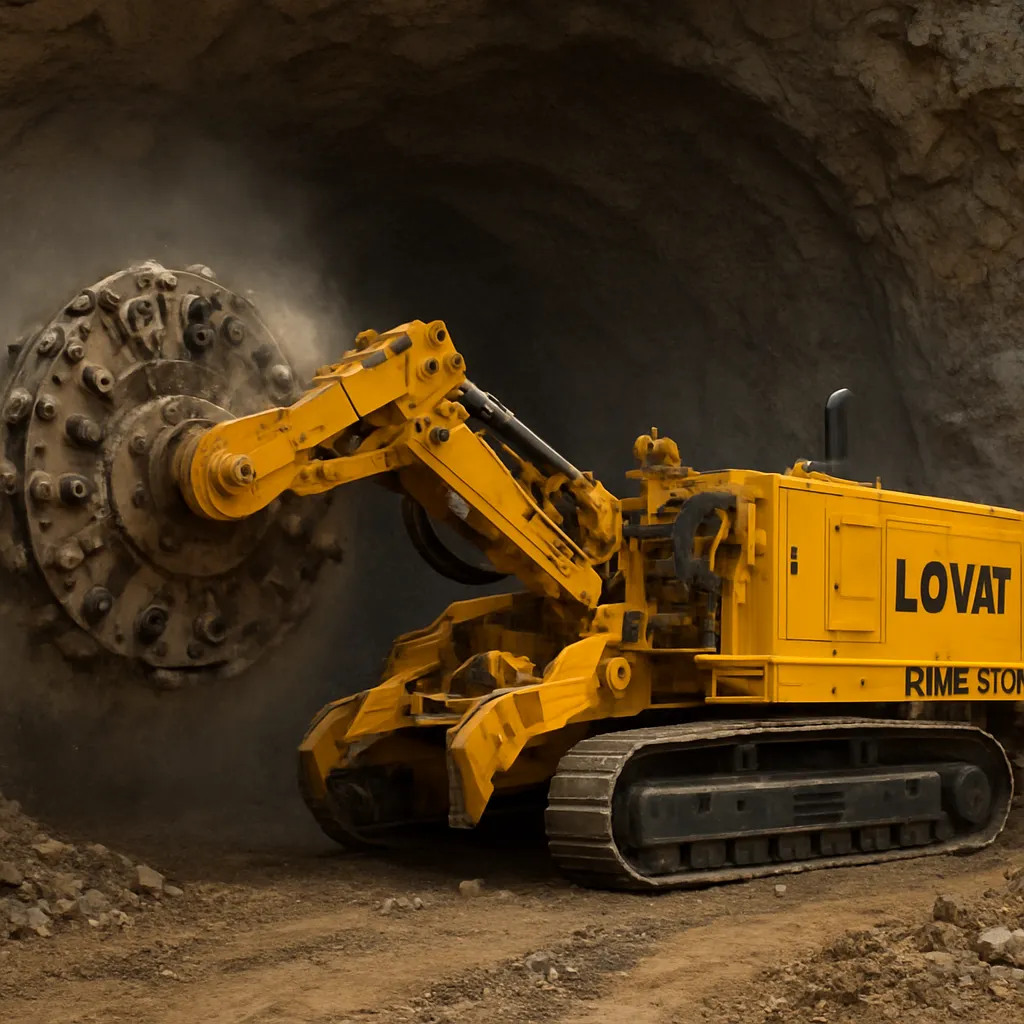
The Lovat RME Series represents a family of specialized tunneling and underground excavation machines designed to address a wide spectrum of subterranean construction challenges. Engineered with a focus on adaptability and rugged performance, these machines are used in projects ranging from small urban utility tunnels to large mining drives and civil infrastructure works. This article explores the design principles, typical applications, operational performance, maintenance considerations, and safety and environmental aspects of the Lovat RME Series, offering both technical insight and practical context for engineers, project managers, and procurement specialists.
Design and Technical Characteristics
The Lovat RME Series is characterized by a modular architecture that emphasizes versatility and ease of integration into a variety of work sites. While exact specifications vary by model and configuration, several common technical features define the series:
- Cutterhead and cutting systems optimized for different rock classes — from soft to medium-hard rock. Cutter options often include disc cutters, picks, and hybrid arrangements for mixed-face conditions.
- Hydraulic drive systems for primary functions such as boom articulation, cutter rotation, and propulsion. Hydraulic systems are selectable for improved torque control and smooth operation under variable load.
- Modular power packs that can be configured for electric or diesel-electric operation, allowing adaptation to underground ventilation constraints and site power availability.
- Robust frame designs with adjustable bolting and support provisions for use with rock bolts, mesh, and shotcrete. The structural layout often permits quick attachment or replacement of bolting rigs and support arms.
- Control cabins or remote operation capabilities that enhance operator ergonomics and safety. Remote control reduces personnel exposure in unstable or hazardous headings.
Key engineering priorities for the RME Series include ease of maintenance, rapid replacement of wear components, and high uptime through redundancy in critical systems. The use of standardized components across the series reduces spare parts inventory and simplifies training for maintenance crews.
Primary Applications
Lovat RME Series machines serve multiple sectors where underground excavation is required. The most common applications include:
- Tunneling for utilities (water, sewage, fiber, power) — smaller RME models are suited for tight urban corridors where precision and low vibration are critical.
- Mining development — creating access drives, crosscuts, and ventilation galleries in both hard-rock and soft-rock mines using variants with heavy-duty cutterheads and bolting systems.
- Civil infrastructure projects — road underpasses, railway tunnels, and metro excavations where the machine’s modularity enables customized configurations.
- Specialty operations — underwater tunnel approaches, remediation works in deteriorated tunnels, and re-profiling or enlargement of existing headings.
Because the RME Series can be tailored with specific cutting tools and support systems, it is particularly valuable in mixed-face geology where TBMs may be less economical or adaptable. The series often excels in short-run, variable-geometry tunnels and where stage-based excavation (cut-and-support cycles) is required.
Operation and Performance
Operational performance for the RME Series depends heavily on geology, cutter selection, and support strategy. Nevertheless, some general performance characteristics can be described:
- Advance rates — In soft ground and favorable conditions, smaller RME machines can achieve rapid face advance measured in several meters per shift. In competent hard rock, advance rates are governed by cutter wear and rock fracture properties and can range from low single-digit meters per shift to double-digit meters per day in exceptional situations.
- Volume removal — Production is commonly reported in cubic meters per day; for small- to medium-sized RME units this may span from a few dozen to several hundred cubic meters daily, depending on operational tempo and shift patterns.
- Machine availability — High availability is a design goal. Typical targets for modern tunneling machines are 75–90% availability during active drives, with downtime minimized by modular component swaps and predictive maintenance.
- Energy consumption — Electric drive variants tend to be more energy-efficient and better suited for underground operations with strict emissions control, while diesel-electric models offer greater autonomy on remote sites.
- Cycle times — The Lovat RME Series is optimized for quick cycle times in bolting, shotcrete application, and muck handling, integrating conveyors or muck cars as needed to maintain steady advance.
Across projects, measurable productivity improvements relative to conventional drill-and-blast or manual excavation have been reported when RME machines are correctly matched to the geological setting and supported by efficient logistics (ventilation, spoil removal, and support crews).
Maintenance, Lifecycle Costs, and Spare Parts Strategy
Maintenance planning is central to maximizing the lifecycle value of an RME Series machine. Typical practices and considerations include:
- Preventive and condition-based maintenance for hydraulics, cutter bearings, and drive systems — routine inspections and oil analysis help predict component life.
- Wear parts management — cutterheads, picks, and cutting tools are consumables; tracking wear rates and using a rotation strategy reduces unplanned stoppages.
- Modularity reduces repair times — quick-change modules for the powerpack, hydraulic manifolds, and cutterhead assemblies speed up repairs and limit prolonged downtime.
- Training and documentation — manufacturer-provided training programs and clear maintenance manuals reduce the risk of operator-induced failures and ensure correct servicing procedures.
- Lifecycle costing — while capital expenditure for an RME machine may be significant, total cost of ownership is influenced by machine utilization, availability, spare parts logistics, and adaptability for future projects.
Effective spare parts strategies typically include stocking critical components with long lead times (hydraulic pumps, control electronics, specialized cutters) and establishing local service partnerships for rapid support. Over the life of the machine, planned refurbishments of major assemblies extend service life and preserve resale value.
Safety, Environmental, and Regulatory Considerations
Safety is a dominant concern in tunneling operations. The Lovat RME Series integrates features to address common underground hazards and to comply with regulatory frameworks:
- Remote operating capability and enclosed cab designs reduce operator exposure to dust, vibration, and potential face falls.
- Integrated dust suppression and water spray systems help control respirable dust levels during cutting. Where diesel-power is used, exhaust after-treatment and ventilation plans mitigate emissions.
- Noise attenuation measures and vibration damping protect both personnel and nearby sensitive structures in urban settings.
- Provision for rapid installation of primary and secondary support (bolts, mesh, shotcrete) is a core design element to maintain heading stability.
- Compliance with local underground construction codes and standards — machines can be configured to meet site-specific electrical safety, pressure equipment, and emissions regulations.
Environmental stewardship also extends to spoil handling and water management. The RME Series’ compatibility with conveyor systems and efficient muck transport reduces surface impact and the footprint of spoil stockpiles. Many operators implement recycling and reuse strategies for excavated material where feasible.
Case Studies and Statistical Insights
Operators of RME-style tunneling machines have reported a range of project outcomes demonstrating where these machines provide clear advantages:
- Urban utility installation: On a mid-sized metropolitan project, an RME-class machine enabled precise tunneling beneath streets with minimal surface disruption, achieving consistent daily advances and reducing traffic interruption compared to traditional open-cut methods.
- Mine development: In a hard-rock mine, an RME-style excavator equipped with heavy-duty disc cutters and bolting rig proved effective for creating ventilation drifts and crosscuts, shortening development schedules by consolidating cutting and support tasks.
- Infrastructure enlargement: Where an existing tunnel required re-profiling to larger clearance, the modular RME configuration allowed sequential cutting and immediate support application, minimizing exposure times and improving safety.
Statistical indicators from various tunneling projects suggest that machine selection aligned to geological and logistical conditions is the largest determinant of productivity. Some broad industry benchmarks that help set expectations (not exclusive to any single model) include:
- Typical heading advance for mechanized face-cutting machines ranges from a few meters per day in difficult geology to 20–50 meters per day in favorable soft ground for continuous machines, with roadheader-type machines commonly achieving advances in the lower portion of this range depending on cutter configuration.
- Availability targets for well-supported mechanized drives commonly exceed 75%. Achieving availability above 85% typically requires rigorous maintenance regimes and onsite spare parts support.
- Cutter life and wear rates vary by rock abrasiveness; in abrasive conditions, cutterwear can limit productive hours and necessitate more frequent replacements, impacting cost-per-meter metrics.
Operational Best Practices and Optimizing Deployment
To maximize the performance of an RME Series machine in the field, project teams commonly adopt the following best practices:
- Pre-construction reconnaissance — detailed geological mapping and rock mass characterization guide cutter selection and support design, reducing reactive changes during excavation.
- Integrated logistics — coordination of muck removal, power delivery, ventilation, and bolting crews reduces idle time and maintains a steady workface tempo.
- Data-driven maintenance — using telematics and condition monitoring to schedule interventions before failures occur improves availability and reduces lifecycle costs.
- Training and competency — dedicated operator and mechanic training lowers the incidence of human-error stoppages and extends component life through correct machine handling.
- Flexible configuration planning — designing for modular swaps (e.g., changing cutterheads or bolting rigs) ensures the machine can be re-tasked across different project phases.
Comparisons and Where RME Machines Fit Relative to Other Technologies
The RME Series occupies a niche between heavy tunnel boring machines (TBMs) and manual or drill-and-blast approaches. Key comparative advantages and limitations include:
- Advantages: greater flexibility and lower setup cost than TBMs, better face access and adaptability than drill-and-blast, and a reduced requirement for large staging areas.
- Limitations: RME units generally provide lower continuous advance rates than TBMs in homogeneous soft ground and may not be appropriate for extremely long, repetitive drives where a TBM’s economics prevail.
- Optimal use-cases: short to medium-length tunnels, variable geology, urban contexts with constrained surface impact, and projects requiring frequent changes in tunnel geometry.
Future Trends and Technological Developments
The tunneling sector is evolving rapidly, and several trends are relevant to the future of the RME Series and similar machines:
- Electrification and hybrid powertrains — increasing adoption of electric drives reduces underground emissions and improves energy efficiency.
- Automation and remote operation — advanced control systems, machine learning for cutter wear prediction, and partial automation of support sequences can further increase availability and reduce risk.
- Smart maintenance — predictive analytics and IoT sensors allow for tighter control over maintenance schedules and parts inventory.
- Improved cutting tools and materials — new alloys and cutter geometries increase lifespan in abrasive conditions, lowering operating costs per meter.
Adopting these developments can increase the competitiveness of RME-type machines on future projects and provide operators with better predictability and lower environmental footprints.
Conclusion
The Lovat RME Series represents a family of tunneling machines well-suited to projects requiring a blend of flexibility, reliable performance, and moderate capital commitment. By offering modularity, adaptable cutting systems, and configurations for various power and support requirements, these machines bridge an important gap between large TBMs and traditional excavation methods. When matched to appropriate geological conditions and supported by strong maintenance and logistics practices, RME machines can deliver efficient, safe, and cost-effective underground excavation. As the industry moves toward electrification, automation, and smarter maintenance regimes, the RME Series and comparable platforms are likely to evolve in ways that further enhance their value on a wide range of tunneling and mining projects.
)
)