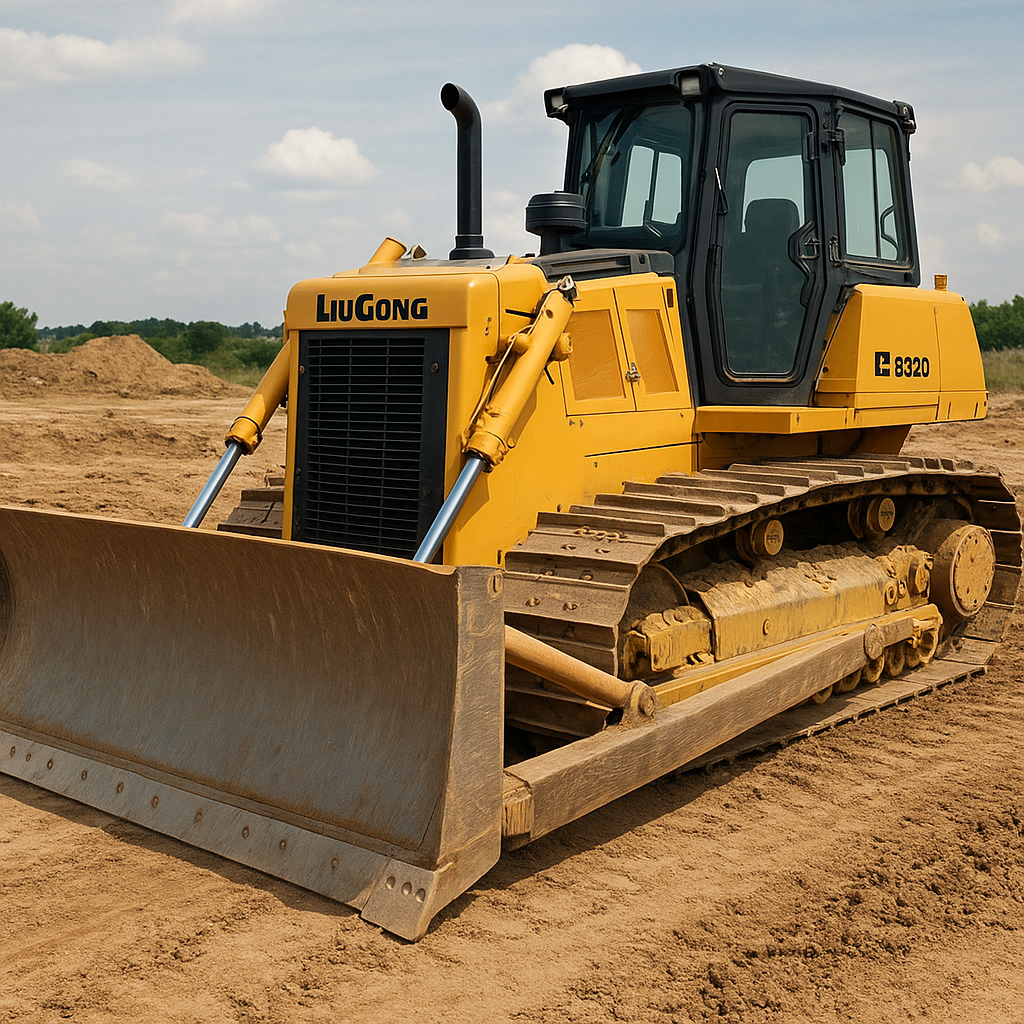
The LiuGong B320 is a heavy-duty bulldozer designed for medium-to-large scale earthmoving, site preparation and mining support tasks. Combining robust mechanical systems with modern operator comforts and maintenance-friendly design, the B320 aims to deliver reliable performance in demanding environments. In this article you will find an in-depth look at the machine’s characteristics, typical applications, technical considerations, maintenance tips and practical guidance for purchase and operation. The discussion mixes practical usage scenarios with approximate performance figures and operational pointers to help fleet managers, contractors and machine operators understand where the B320 fits into modern construction and extraction fleets.
Overview and key features
The LiuGong B320 is engineered as a purpose-built crawler dozer offering a balance of tractive effort, blade capacity and operator ergonomics. Its main mission is to move large volumes of material efficiently while providing durability in abrasive and high-impact working conditions. The machine sits in the class of medium-to-large dozers and competes with other global offerings in similar power ranges.
Design principles
- Heavy-duty undercarriage with reinforced rollers and links to withstand continuous abrasive duty.
- Hydraulically efficient blade controls for precise grading and easier cycle times.
- Comfort-focused cab with improved visibility and controls geared to reduce operator fatigue.
- Serviceability features such as grouped maintenance points and wide access panels.
Commonly highlighted strengths include reliable cooling systems for extended operation, an engine tuned for torque at low rpm and a blade design that optimizes both carry and push capacity. The machine is also often fitted with modular attachments so it can be adapted for various tasks such as rippers, winches or multi-plant blades.
Typical technical specifications (typical/approximate)
Exact specifications vary by market and optional packages. The numbers below are typical for a machine named B320 in this segment; always check the manufacturer’s specification sheet for a machine you intend to acquire.
- Engine: Diesel, turbocharged, electronic fuel management; approximate rated power ~320 hp (around 240 kW).
- Operating weight: Typically in the range of 25–35 tonnes depending on configuration and counterweights.
- Blade capacity: 4.0–6.0 m³ depending on blade type (semi-u, straight or universal).
- Transmission: Planetary powershift or torque converter with multiple forward/reverse gears for optimal speed/torque balance.
- Undercarriage: Heavy-link track chain, double flange rollers, sealed and lubricated track links available as options.
- Fuel tank: Typical capacity 400–700 liters to support extended shifts in remote locations.
- Fuel consumption: Dependent on duty cycle; rough average under load 15–30 L/h, with higher values in continuous heavy push or mining duty.
- Travel speed: Up to approx. 10–12 km/h in standard configurations.
- Ground pressure: Varies with track and weight; typical values in the medium dozer class often fall in the 40–80 kPa range depending on undercarriage width.
These numbers are intended to provide a realistic frame for planning fleet capacity and jobsite throughput. For exact weights and dimensions consult the manufacturer’s brochure for the specific serial number and optional equipment.
Where the B320 is used — industries and applications
The LiuGong B320 is versatile and finds use across a range of heavy industries. Below are the primary sectors and typical tasks where this machine is commonly deployed.
Construction and civil engineering
- Site clearing and bulk earthmoving for foundation preparation.
- Road construction: formation, profile shaping and base compaction support.
- Landscaping for large-scale projects like airports or industrial parks.
Mining and quarrying
- Push-loading dumps, scalping overburden and road maintenance inside pits.
- Support for primary and secondary crushing operations by maintaining haul roads.
Agricultural and land-reclamation works
- Field terracing in steep terrain, pond construction and levee maintenance.
- Large-scale drainage and reclamation where heavy pushing is required.
Forestry, pipeline and utilities
- Right-of-way clearing, pipeline trench backfill support and access road creation.
- Landing site formation and base preparation for utility structures.
In all these sectors the value of a dozer like the B320 comes from predictable performance, ease of maintenance, and the ability to pair with attachments to extend functionality.
Performance characteristics and operational considerations
Understanding a dozer’s on-site performance requires attention to several interacting systems: engine torque curve, transmission gearing, undercarriage traction, cooling capacity, and blade geometry. Below are operational considerations to estimate productivity and lifecycle performance.
Tractive effort and blade efficiency
High low-end torque from the diesel powerplant is essential for sustained pushing operations. The B320 is typically tuned to deliver strong torque at low rpm to move heavy loads without overheating or excessive fuel consumption. Blade shape and tilt/angle control determine how effectively the machine carries versus simply pushing material; a semi-u blade is popular for maximizing carry on long hauls, while a straight or dozer-type blade excels in grading or finish work.
Undercarriage wear and ground conditions
Track life is influenced by ground abrasiveness, operator technique and undercarriage design. Wider shoes reduce ground pressure and improve flotation in soft soils, but they increase cost and may accelerate wear if used on highly abrasive rock. Scheduled inspections for track tension, roller wear and sprocket condition are critical to controlling operating cost.
Fuel economy and thermal management
Cooling system robustness is a frequent differentiator in hot climates or continuous heavy duty. Machines offered with advanced cooling packages or reversible fans can achieve longer duty cycles and reduced downtime for cleaning radiators. Fuel economy will vary: grading and light pushing consume less, while continuous heavy pushing or working with a ripper increase consumption markedly.
Maintenance, uptime and lifecycle cost
Machine uptime is a major component of lifecycle cost. Well-designed access, modular components and local dealer support reduce downtime.
Planned maintenance tasks
- Daily visual checks: coolant, engine oil, hydraulic oil, track tension and blade pins.
- Greasing schedule for pivot points, tracks and tilt/linkages — often daily in heavy use.
- Periodic filter and oil changes according to hours of operation; documented intervals often found in operator manual.
- Undercarriage inspection cycles: measure wear plates, rollers and track link stretch and replace in planned stages to avoid catastrophic failures.
Good maintenance reduces total cost of ownership. Track groups, final drives and hydraulic pumps represent the bulk of replacement-value components in heavy use; budgeting for staged rebuilds is recommended.
Operator ergonomics and controls
Modern iterations of dozers aim to reduce operator fatigue while increasing precision. The B320 typically features a cab designed for long shifts with improved seat support, climate control, reduced noise and vibration isolators.
- Visibility: large glazed areas and elevated seating offer improved sightlines to the blade and working zone.
- Controls: proportional hydraulic controls with adjustable responsiveness help match operator preference and task requirements.
- Instrumentation: digital displays for engine parameters, fuel economy, and fault codes support proactive maintenance.
Comfort and intuitive controls directly affect productivity: less fatigue yields more effective hours per shift and fewer operator errors that risk component damage.
Safety, regulations and attachments
Safety features often found on machines of this class help comply with local regulations and protect workers on site.
- ROPS/FOPS certified cab structures for rollover and falling-object protection.
- Rear view cameras and mirrors to reduce blind spots during reversing and maneuvering.
- Lockout/tagout points and easily accessible battery isolators to support safe servicing.
Attachment compatibility makes the B320 more versatile: common options include multi-shank rippers, winches for recovery or retrieval operations, and specialized blades for landfill or slope work. Each attachment changes machine dynamics; operators should understand load charts and stability considerations when fitting heavy accessories.
Environmental impact and fuel-efficient operation
Environmental concerns influence both regulation and operating cost. Modern diesel engines with electronic fuel systems and exhaust aftertreatment can reduce particulate and NOx emissions compared with older designs.
Ways to reduce environmental footprint
- Engine tuning and preventive maintenance to keep combustion efficient and emissions controls functioning.
- Use of biodiesel blends or low-sulfur fuels where compatible with the engine warranty and local regulations.
- Operator training to reduce idle time, use proper gear selection, and avoid excessive high-rpm operation.
- Periodic monitoring of hydraulic leaks and containment to prevent soil contamination on site.
Fuel efficiency is also a direct cost factor. Well-tuned engines and efficient work planning (reducing deadheading and matching blade size to task) produce measurable savings over a machine’s working life.
Purchasing considerations and fleet integration
When deciding to purchase or lease a B320, consider the following practical elements:
- Total cost of ownership: purchase price plus typical maintenance, expected parts replacement and resale value.
- Dealer support: parts availability, technician training and mobile service capacity.
- Application fit: choose blade types, undercarriage options and engine packages that match the dominant duties the machine will perform.
- Financing and warranty packages: extended warranties and service agreements can stabilize operating budgets, especially in high-hour applications.
Integration with fleet telematics is increasingly important. Many modern machines offer factory-fitted or dealer-fitted telematics that report hours, fuel consumption, idle time and basic fault codes. These systems empower managers to optimize utilization and schedule preventive maintenance more effectively.
Real-world performance and statistical insights
Concrete statistics specific to a model may vary by market and production year. Below are general insights and useful planning metrics to estimate productivity and cost:
- Typical production rate for bulk earthmoving depends on cycle time, blade capacity and terrain; a mid-class dozer like a B320 might move several hundred to a few thousand cubic meters per hour in ideal conditions with haul distances and material characteristics optimized.
- Fuel consumption often ranges from 10–30 L/h depending on duty; heavy continuous pushing with a ripper can push the upper extremes of that range.
- Undercarriage rebuild intervals are commonly measured in operating hours; many operators plan partial rebuilds in the 3,000–6,000 hour window depending on ground conditions and track options.
- Resale values and depreciation vary by region but aggressive maintenance records and documented service history significantly improve secondary market pricing.
These figures should be used for preliminary budgeting and planning; site trials and discussions with local dealers provide the best way to refine estimates for a particular operation.
Advantages, limitations and alternatives
The B320’s advantages are centered on its combination of pushing power, serviceability and operator ergonomics. It often offers a cost-competitive package relative to Western brands, particularly where dealer support is strong. Limitations may include lower brand recognition in some markets and variations in parts logistics depending on region.
- Advantages: strong value proposition, flexible attachments, user-friendly maintenance points and modern cab amenities.
- Limitations: variation in global parts availability and potential need for local support investments in training or inventory for large fleets.
- Alternatives: comparable machines from other global OEMs in the 300–350 hp class; choice depends on lifecycle cost, local service network and operator preference.
Practical tips for operators and fleet managers
Maximizing return on investment and reducing downtime requires attention to human and mechanical elements:
- Invest in operator training focused on fuel-efficient techniques and proper machine handling to extend component life.
- Implement a digital maintenance log and telematics review process to catch trends early (fuel spikes, coolant temps, idle hours).
- Standardize parts inventory for common wear items across the fleet to reduce lead times for repairs.
- Plan for seasonal variances: cooling and filtration upgrades for dusty/hot environments, and track-shoe choices for winter or swampy conditions.
Conclusion
The LiuGong B320 is a capable medium-to-large class dozer that offers an attractive package for contractors, mine operators and heavy civil works projects. With balanced power, durable undercarriage options and operator-focused design, it can serve as a core productive asset in a wide range of tasks. Successful deployment depends on selecting the right configuration for the job, committing to disciplined maintenance, and ensuring adequate local dealer support and parts availability. When matched correctly to application needs and maintained proactively, the B320 delivers consistent work output and predictable operating costs that support long-term project success.
)
)