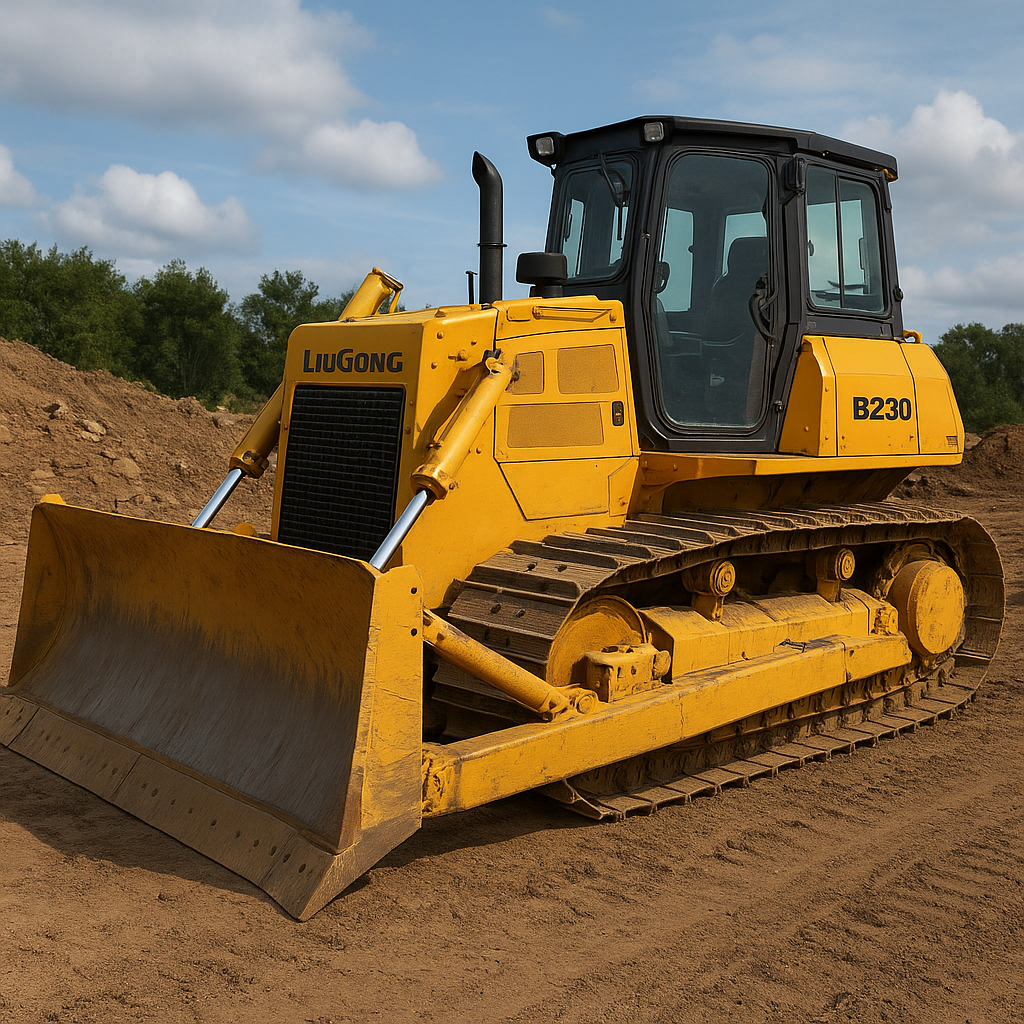
The LiuGong B230 is a mid-size tracked construction machine designed for heavy pushing, grading and earthmoving tasks. In this article we explore its technical characteristics, practical applications, operational performance and the factors that influence its efficiency in the field. The discussion includes typical specifications (where publicly available or commonly reported), best-use scenarios, maintenance and safety considerations, possible attachments and market context. This content is intended to give a comprehensive picture of the B230’s role in modern construction and related industries.
Overview and Key Specifications
The LiuGong B230 is positioned in the market as a reliable workhorse for contractors who need a balance between power and manoeuvrability. The machine is fundamentally a LiuGong B230 tracked unit tailored to medium-to-large earthmoving projects. It combines a robust undercarriage with a powerful drivetrain, an operator-friendly cab and options for common blade and ripper configurations.
Typical technical specifications for a machine in this class are often reported as follows (figures should be understood as representative ranges since exact values may differ by market, year of production and optional equipment):
- Approximate net power: engine power in the range of 160–230 kW (215–310 hp).
- Operating weight: typical operating weight of 20,000–26,000 kg (20–26 tonnes).
- Blade capacity: depending on blade type, blade capacity commonly ranges 4.5–7.0 m³.
- Ground pressure: variable with track width and load; many mid-size dozers have ground pressures between 50–85 kPa.
- Fuel consumption: typical fuel consumption under normal loading often ranges 15–30 L/h, with peak conditions leading to higher values.
- Track gauge and width: specific to undercarriage spec, track gauges 2.0–2.6 m and individual shoe widths 500–700 mm are common options.
These numbers place the B230 in the class of dozers used for general earthmoving, road construction, quarry tasks, and medium mining duties. The actual specification sheet for a unit should be consulted before purchase or hire to confirm engine model, transmission type, hydraulic capacities, and installed options.
Primary Applications and Typical Use Cases
Machines like the B230 are versatile and appear across multiple sectors due to their combination of traction, blade force and durability. Common sectors where the B230 is used include:
- Construction: site preparation, bulk earthmoving, grading and foundation preparation for residential, commercial and industrial works.
- Road building: clearing, subgrade preparation, leveling, and shoulder work for highways, local roads and unpaved tracks.
- Mining and quarrying: overburden removal, pit access roads and ramp maintenance in small to medium-size quarry sites.
- Forestry and land clearing: pushing windrows, building access trails and maintaining firebreaks (with appropriate clearing attachments).
- Agriculture and land reclamation: large-scale drainage and leveling, reclamation of salt-affected soils and preparing irrigation terraces.
- Municipal and utility work: landfill cover operations, dam and levee maintenance, and pipeline right-of-way preparation.
The B230’s ability to operate in tough ground conditions and its option set (rippers, various blade types) make it a flexible choice when a single machine must perform multiple roles on a project. For example, a contractor might use a Universal blade (U-blade) for large-scale bulk pushing and switch to a Straight or Semi-U blade for finer grading.
Design Features and Technologies
The design elements that make the B230 effective focus on durability, operator ergonomics and serviceability. Key elements include:
- Powertrain: heavy-duty diesel engine matched to a reliable transmission system to deliver consistent tractive effort. Many manufacturers in LiuGong’s class fit engines that meet regional emissions standards and offer torque reserve for pushing loads.
- Undercarriage: a rugged track system and rollers designed to withstand abrasive conditions and heavy loads. Properly specified track shoes and idler configurations reduce wear and improve stability on slopes.
- Hydraulics and controls: hydraulic systems sized to operate larger blades or attachments smoothly. Control layouts increasingly favor pilot-operated joysticks for precise blade positioning and reduced operator fatigue.
- Cab and ergonomics: modern cabs include adjustable seating, good visibility, HVAC, and low-noise insulation, all important for productivity and operator retention.
- Service access: easy access to routine service points (filters, oil fill, batteries) reduces downtime. Modular components simplify repairs.
- Electronics and monitoring: options for remote diagnostics, basic telematics and engine-management systems help operators and fleet managers optimise uptime.
Specific to fleet management, many B230 owners upgrade machines with factory or aftermarket solutions to add GPS grade control and remote monitoring. These technologies can significantly raise the accuracy of grading tasks and improve fuel economy by reducing rework.
Performance, Efficiency and Productivity
When assessing a dozer like the B230 for a project, contractors consider several performance metrics: blade productivity (m³/hour), fuel efficiency, cycle times (push-back distances) and the machine’s ability to maintain production in adverse ground conditions.
- Productivity: productivity is a function of blade capacity, engine torque, traction and operator skill. For a mid-size dozer pushing in loose to medium soil, hourly production may range from several hundred to more than a thousand cubic meters, depending on push length and cycle management.
- Fuel economy: fuel consumption varies widely with application. Low-load tasks like fine grading consume less fuel per hour than heavy ripping and pushing. Implementing ECO modes (if available) and training operators in efficient techniques can reduce fuel burn by 10–20% in many cases.
- Traction and ground pressure: selecting the correct track shoe width and grousers optimises the trade-off between traction and soil disturbance. Lower ground pressure spreads the load, useful in soft soils, while narrower shoes increase traction for heavier pushes.
- Reliability and uptime: build quality of key components—engine, transmission and undercarriage—determines the machine’s operational availability. A proactive maintenance program that focuses on wear parts and fluid health preserves performance over the machine’s service life.
Operators can improve the B230’s effective productivity through planning of push lengths, staging material properly and avoiding unnecessary directional changes. In addition, choosing the correct blade and ripper configurations for the material type yields major gains in efficiency.
Maintenance, Service and Lifecycle Costs
Lifecycle cost is a principal consideration for buyers and fleet managers. Upfront cost is only one element; maintenance intervals, parts availability, fuel economy and resale value also matter. For the B230 class, regular maintenance typically includes:
- Daily checks: fluid levels, track tension, visual inspection for leaks and wear.
- Routine services: scheduled oil and filter changes, hydraulic fluid sampling, and cooling system maintenance at intervals specified by the manufacturer.
- Undercarriage upkeep: monitoring shoe wear, idler conditions and roller health. Undercarriage components are often the most expensive and wear-prone items on a dozer.
- Major overhauls: depending on hours and operating severity, engine and transmission overhauls are major lifecycle events that affect total ownership cost.
To reduce ownership costs, contractors frequently adopt condition-based maintenance supported by oil analysis and telematics. This approach reduces unnecessary part replacement and prevents catastrophic failures by detecting trends early. Additionally, standardized parts, easy-access filters and local dealer support reduce downtime and labour expense.
Common Attachments and Customization
One reason the B230 is useful across industries is the range of attachments available. Common options include:
- Rippers: single-shank or multi-shank rippers for breaking hardpan and rock layers prior to pushing or loading.
- Winches: for logging, salvage or specialized operations where pulling capability is required.
- Specialized blades: U-blade for maximum material carry, S-blade and Straight blade for grading, and Angle blades for windrows.
- Rear counterweights and ballast systems: to increase traction and balance when using heavy front attachments.
- Ground-engaging tools and protective packages: heavy-duty underframe guards, rock guards for radiators and belly pans to protect the machine in severe conditions.
Customization often extends to cab options (air-ride seats, heated mirrors), lighting packages for night work, and enhanced filtration for dusty environments.
Safety and Operator Comfort
Safety features on modern dozers like the B230 typically include rollover protection structures in the cab or ROPS-certified frames, seat belts, good exterior visibility, and optional cameras or sensors. Ergonomics are also a safety factor—intuitive controls, clear instrumentation and comfortable seating reduce operator fatigue and the likelihood of human error.
Training plays a critical role in safe operation. Familiarity with machine limits, working near slopes, and proper use of attachments prevents accidents. Emergency procedures and routine safety checks are part of standard operating practices for reputable contractors using these machines.
Market Context and Availability
LiuGong machines are widely distributed globally through dealer networks and rental companies. The B230 fits a market niche that values lower acquisition cost paired with acceptable performance and parts availability. In many regions, such machines compete directly with equivalents from other manufacturers on price, warranty, and dealer support.
Resale values for mid-size dozers depend on hours, condition of the undercarriage, service history and local demand. In markets with active construction cycles resale prices remain favourable, while oversupplied markets with many used machines can depress values.
Environmental Considerations and Regulatory Compliance
Regulations governing emissions vary by region. New units typically comply with the local Tier or Stage emission standards by employing modern engine technologies and exhaust aftertreatment where required. Owners can reduce environmental impact by:
- Maintaining engines to ensure efficient combustion and lower emissions.
- Using low-sulfur fuels and manufacturer-approved lubricants.
- Adopting idle-reduction practices and ECO operating modes to cut fuel usage and emissions.
- Installing particulate or NOx control systems if retrofit is possible and necessary for local compliance.
Noise, dust suppression and responsible disposal of fluids and filters are additional environmental responsibilities on many projects, particularly those near populated areas or ecologically sensitive sites.
Selection Guide: Is the B230 Right for Your Fleet?
Choosing the B230—or any dozer—requires matching machine capability to the task and total cost of operation. Key decision criteria include:
- Application intensity: frequent heavy ripping and continuous large pushes may point to a heavier class; intermittent earthmoving suits mid-size machines.
- Transport and access: site access constraints and transport regulations may influence machine size and weight limits.
- Support network: local dealer presence for parts and service affects uptime and lifecycle cost.
- Resale market: consider how quickly you can rotate the asset if your project pipeline changes.
- Attachments required: ensure required attachments are available and that the machine’s hydraulic and structural capacity supports them.
When properly matched to the task, the B230 delivers a solid balance of productivity, durability and cost-effectiveness.
Conclusion
The LiuGong B230 represents a capable mid-range dozer suited to a wide variety of earthmoving roles. Its strengths include robust construction, flexible attachment options and the balance between power and manoeuvrability that many contracting firms require. While exact performance and specifications vary by configuration and market, the machine’s practical benefits—such as reasonable operating weight, adaptable blade capacities and manageable fuel use—make it a strong candidate for construction, roadwork, quarry, municipal and reclamation projects. Careful selection of attachments, disciplined maintenance and modern monitoring tools like telematics enhance its operational value and keep lifecycle costs competitive. For owners and operators prioritising uptime and predictable operating costs, focusing on proper servicing and operator training is as important as the initial equipment choice. The LiuGong B230 can be a reliable member of a productive fleet when specified and maintained with attention to the project’s demands and local conditions.
)
)