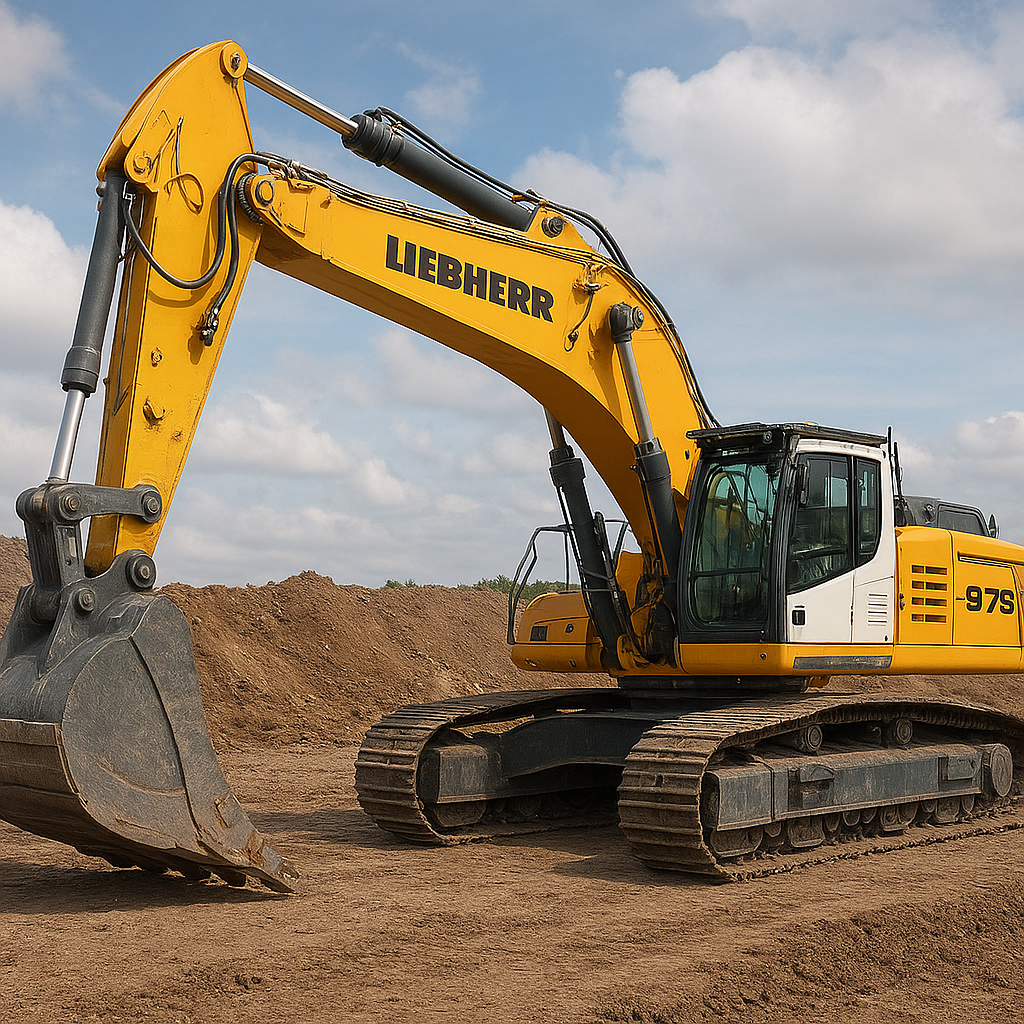
The Liebherr R 976 is a heavy-duty crawler excavator designed for demanding applications where power, durability and flexibility are essential. This article explores the machine’s core characteristics, typical uses across industries, technical figures and operational considerations. Readers will find a detailed look at performance, attachments, maintenance and real-world productivity examples to understand why this model is valued in quarrying, mining, bulk handling and large-scale construction projects.
Overview and design philosophy
The Liebherr R 976 belongs to Liebherr’s family of large hydraulic excavators. Built for continuous heavy work, the machine combines robust structural components with an advanced hydraulic system to deliver consistent digging and loading performance. The design emphasizes long-term durability, serviceability and operator ergonomics, all of which contribute to high uptime in harsh environments.
Key design traits include a reinforced undercarriage and track frame for stability, a high-capacity hydraulic circuit for rapid cycle times, and a spacious cab engineered for operator comfort and visibility. Liebherr integrates modular components to simplify spare-part logistics and reduce maintenance downtime. The model is commonly fitted with a variety of sticks and booms to tailor reach and breakout force to the application.
Across different markets the R 976 is marketed and configured to meet regional emissions standards and jobsite constraints. While specific component choices can vary by configuration, the core objective is to balance raw power with controllable, efficient hydraulic performance for tasks that demand both force and finesse.
Technical specifications and typical performance
The following figures represent typical ranges and reference values for the Liebherr R 976 in common configurations. Exact numbers depend on the machine year, regional configuration and attachment choices.
- Operating weight: approximately 70–90 tonnes (varies by undercarriage, counterweight and attachments)
- Engine power: in the range of ~350–420 kW (roughly 470–560 hp), depending on emission stage and tuning
- Bucket capacity: commonly from 1.5 to 4.5 m3 for digging and loading buckets; larger capacities are used for light-density bulk handling
- Maximum digging depth: typically around 6.5–8.5 m depending on boom/arm combination
- Maximum reach at ground level: commonly 10–13 m in standard configurations
- Hydraulic system: high-flow, variable-displacement pumps providing efficient power delivery; maximum system pressure typically up to 350–400 bar
- Travel speed: typically 2.5–4.5 km/h (two-speed travel motors available on some versions)
- Tail swing: conventional or reduced tail swing variants may be available to suit confined sites
- Fuel consumption: highly dependent on duty cycle; heavy digging/loading cycles may consume tens of liters per hour, while idle or light work is much lower. Average full-cycle consumption figures are often in the 25–45 L/h band for heavy working cycles, but site conditions and operator technique create large variance
- Hydraulic oil capacity and engine coolant/gearbox capacities are sized to support continuous heavy operation and facilitate thermal management during long shifts
These figures make the R 976 a heavy-class machine capable of replacing multiple smaller units on large-scale projects, improving overall site logistics by increasing bucket payload and reducing cycle counts.
Applications and typical industries
The R 976 is used where high production and robust equipment are necessary. Common application areas include:
- Quarrying and hard-rock excavation — for bench digging, loading haul trucks and breaking material using hammer attachments
- Open-pit mining and surface mining — shovel and backhoe-style duties, primary and secondary loading of haul trucks, coarse material handling
- Bulk material handling — loading and stacking in ports, terminals and stockyards (with clamshells and grapples)
- Heavy civil construction — large foundation excavation, deep trenching, pipeline trenching and river works
- Demolition and recycling — when fitted with shears, pulverizers and sorting grapples for heavy structural demolition
- Infrastructure projects — road and bridge works that require rapid earthmoving with high reliability
Because of its size and power, the R 976 is most efficient where there are consistently large volumes of material to move, or where a single powerful unit can reduce the number of machines required on site.
Attachments and versatility
One of the R 976’s strengths is compatibility with a wide range of attachments that substantially increase its versatility:
- Buckets — general-purpose, rock, heavy-duty and high-capacity buckets tailored to the material and cycle requirements
- Hydraulic breakers — used in rock-breaking and demolition tasks where controlled percussion is needed
- Grapples and clamshells — for bulk-material handling, timbering and recycling
- Shears and pulverizers — for selective demolition and concrete processing
- Thumbs and rakes — assisting in sorting, loading and handling awkward materials
- Quick couplers — allow fast swapping of attachments to minimize downtime between tasks
Attachment choice fundamentally changes machine cycle times and payload. For example, switching from a digging bucket to a large high-capacity bucket or clamshell will alter swing and fill times, hydraulic demand and fuel consumption.
Operator environment and safety features
Operator comfort and safety are critical for productivity on long shifts. The R 976 generally includes:
- A reinforced cab with ROPS/FOPS certification to protect against rollovers and falling objects
- Wide glazing and optimized mirror/camera layouts to maximize visibility around the machine
- Ergonomic seats with multiple adjustments, climate control and noise insulation to reduce fatigue
- Joystick controls and user-configurable control settings to tailor responsiveness and hydraulic flow
- Integrated safety systems such as overload warning, travel interlocks and optional camera packages to monitor blind spots
Liebherr often integrates telematics and diagnostics into the machine’s control architecture to allow fleet managers to monitor usage, fuel consumption and fault codes remotely, improving response time for maintenance and reducing unplanned downtime.
Maintenance, reliability and lifecycle costs
Design choices on the R 976 focus on long service intervals and easy access to wear items to control lifecycle costs. Important maintenance considerations include:
- Regular inspection of undercarriage components (track links, rollers, sprockets) which are subject to high wear in abrasive environments
- Hydraulic-system maintenance — filter changes, oil analysis and leak inspection to maintain efficiency and prevent contamination
- Engine servicing including oil/fuel filter replacement and EGR/DOC/SCR system checks where emission-control hardware is fitted
- Bucket tooth and cutting-edge replacement schedules to preserve breakout performance
- Cooling system cleaning and fan checks, especially in dusty operations
Telematics solutions (such as Liebherr’s LiDAT platform) provide fleet managers with key metrics: operating hours, fuel burn, idle time, GPS positioning and archived service codes. Using telematics, operators can reduce idle time, schedule preventive maintenance more effectively and optimize machine allocation across jobs.
Productivity metrics and real-world examples
Quantifying productivity requires linking bucket capacity, cycle time and fill factor with material density. The following example demonstrates how to estimate hourly production for a typical loading cycle:
Example calculation — rock-loading cycle
- Assumed bucket capacity: 3.0 m3 (rock bucket)
- Fill factor: 0.95 (well-loaded in bench conditions)
- Material density: 2.4 t/m3 (hard rock)
- Cycle time (dig, swing, dump, return): 30–40 seconds (typical for heavy bench loading)
Payload per cycle = 3.0 m3 × 0.95 × 2.4 t/m3 ≈ 6.84 tonnes. At a 35-second cycle time, cycles per hour ≈ 3600 / 35 ≈ 102.9 cycles. Hourly production ≈ 6.84 t × 102.9 ≈ 704 tonnes per hour. In practice, traffic delays, truck spotting, and less-than-ideal bench conditions reduce this number; a realistic operational average may range from 300–600 t/h depending on the site and matching of truck sizes.
For bulk handling with high-capacity buckets or clamshells, the machine can achieve higher volume throughput but with lower material density. Conversely, in trenching or precise excavation, the production prioritizes accuracy over sheer tonnes per hour.
Fuel efficiency strategies and emission considerations
Fuel efficiency is a major operating cost driver. Strategies to manage fuel burn on heavy excavators like the R 976 include:
- Optimizing hydraulic flow settings for the attachment in use to avoid over-pumping
- Using the correct bucket size for truck matching to avoid partial loads and extra cycles
- Reducing idle time with auto-shutdown or low-idle settings where permitted
- Regular engine tuning and timely fuel-filter changes to maintain combustion efficiency
- Operator training focused on smooth controls, planned swing paths and efficient loading sequences
Emission control systems and the exact engine setup will vary with the machine’s production date and the market’s regulatory requirements (EU Stage, US EPA Tier, etc.). Many R 976 units are fitted with modern aftertreatment systems that require attention to DPF/DEF maintenance in applicable jurisdictions.
Market positioning, resale and support
Liebherr machines generally enjoy strong brand recognition and global dealer networks, which support parts availability and service. The R 976 sits in the heavy-excavator segment competing with models from other major manufacturers. Factors influencing resale value include:
- Total hours and service history
- Attachment inventory and condition
- Maintenance records and evidence of proper component servicing
- Regional demand for large excavators (quarry and mining markets maintain higher demand)
Because large excavators represent significant capital investments, fleet managers often balance acquisition cost against expected utilization, fuel costs and projected resale value when selecting equipment.
Practical considerations when selecting an R 976 for a project
Project managers should evaluate several factors before choosing the R 976:
- Match bucket and attachment sizes to the optimal truck payload to minimize cycle inefficiency
- Assess transport logistics — large excavators often require disassembly for road transport and special permits
- Confirm undercarriage configuration (heavy-duty vs. high-speed travel) based on site mobility needs
- Plan for spare parts and a maintenance schedule, particularly for hydraulic hoses, seals and undercarriage components
- Verify telematics and fleet-management compatibility to integrate with existing systems
Interesting facts and operational tips
- The R 976 is often chosen as a single, high-output unit in pits where replacing multiple smaller excavators reduces coordination and maintenance complexity.
- Operators can significantly affect machine economy; targeted training programs that teach efficient swing arcs, optimal bucket fill and idling discipline often yield measurable fuel savings.
- Routine oil sampling and vibration analysis can spot component wear before catastrophic failure, extending the machine’s productive life and lowering lifecycle cost.
- In some ports and terminals the R 976 is fitted with long-reach booms or specialized clamps to handle bulk commodities, showing the platform’s adaptability between excavation and material-handling roles.
Summary
The Liebherr R 976 is a heavyweight contender in the class of large hydraulic excavators. Its combination of structural strength, high-flow hydraulics and compatibility with a broad attachment range makes it suitable for quarrying, mining, heavy civil works and bulk handling. While exact technical figures vary by configuration, the machine is characterized by substantial operating weight, high engine power and a hydraulic system designed for demanding cycles. Effective use of telematics and disciplined maintenance practices can maximize uptime and control lifecycle costs, while operator skill plays a major role in translating machine capability into site productivity.
When selecting equipment for large-scale material-moving tasks, the R 976 is a machine to consider where a balance of power, reliability and versatility is required. With the right attachments and well-managed operating practices it can deliver high production rates and long service life, making it a core asset in many heavy-equipment fleets.
)
)