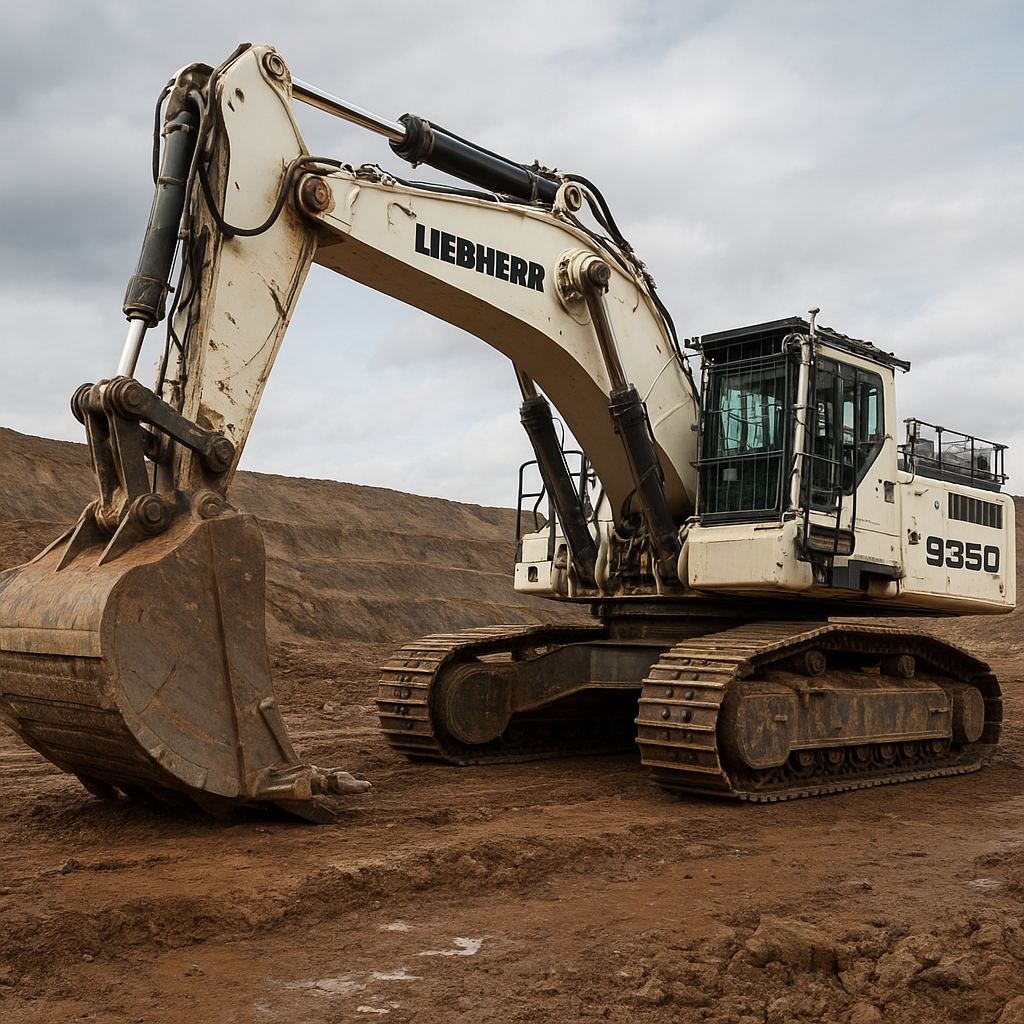
The Liebherr R 9350 is a purpose-built hydraulic mining excavator designed for heavy-duty material handling in surface mining and large-scale quarry operations. Combining robust mechanical architecture with advanced hydraulic and electronic control systems, this machine addresses the demanding requirements of loading large haul trucks, stripping overburden and handling bulk materials. In the following sections you will find an overview of the machine’s design and features, typical applications, performance and technical information, maintenance and lifecycle considerations, and current trends shaping the use of large hydraulic excavators such as the R 9350.
Overview and key design features
The Liebherr R 9350 is engineered around principles of durability, serviceability and operational productivity. At its core, the machine integrates a heavy-duty undercarriage and superstructure, a reinforced boom and stick, and high-capacity hydraulic systems to generate the forces required in mining environments. Several design elements stand out:
- Liebherr construction quality: Built with high-grade steel, reinforced structures and attention to fatigue-critical areas to withstand continuous, high-cycle workloads.
- R 9350 geometry: A boom and stick combination optimized for reach, digging depth and bucket fill, enabling effective bench operation and truck loading.
- Hydraulics: High-flow, pressure-optimized pumps and large-diameter piping for consistent hydraulic performance under heavy loads, improving cycle times and attachment control.
- Engine and emissions: Powerful diesel engines paired with modern emissions control technology (Stage V / Tier 4 Final where applicable) to meet global regulatory requirements while delivering the torque needed for excavation.
- Operator comfort: Ergonomically designed cab with climate control, sound insulation, panoramic visibility, and advanced controls that reduce operator fatigue and improve precision.
- Serviceability: Ground-level access to routine service points, modular component design, and long-life wear parts reduce downtime and simplify maintenance.
Applications and typical operational roles
The R 9350 is primarily associated with large-scale surface mining operations. Its strength is moving high volumes of material efficiently and reliably. Typical applications include:
- Open-pit mining: Removing overburden, loading haul trucks, and handling stockpiled ore or waste materials.
- Quarrying: Loading primary crushers and heavy haul trucks, benching, and ripping consolidated rock using specialized attachments.
- Bulk material handling: Transfer and stockpiling in ports, terminals and large industrial sites where big buckets and fast cycles are essential.
- Mine development: Excavating access ramps, sump areas and preparation works where controlled, powerful digging is required.
Why the R 9350 is chosen for these roles
- High bucket capacities and robust linkage allow efficient material movement per cycle.
- Durability under continuous operation minimizes unscheduled stops and keeps production targets on track.
- Flexibility in attachments (rock buckets, ripper, specialized handling tools) adapts the machine to varied tasks across a site.
- Integrated fleet and telematics systems enable easier coordination with haul truck fleets and maintenance teams.
Performance, capacity and technical information
While specific configurations vary depending on customer requirements and optional equipment, several performance characteristics define the R 9350’s capability envelope. The following figures are representative ranges commonly associated with large hydraulic mining excavators in this class; exact numbers depend on specification, bucket type and configuration.
- Operating weight: Typically in the upper-tonnage range for medium-to-large mining excavators; customers select counterweight and undercarriage variants to match site demands.
- Bucket capacity: Standard to large mining buckets are fitted—capacities commonly range from medium-sized buckets to high-volume shapes that maximize material moved per cycle. Typical bucket capacities for machines in this class can range from several cubic meters up to double-digit cubic meters depending on material density and application.
- Engine power: Powerful diesel engines provide the torque and horsepower necessary for excavation and hydraulic demand. Modern units are engineered to balance fuel efficiency with peak power delivery.
- Digging force and breakout: Reinforced boom/stick geometry and robust hydraulic cylinders deliver high breakout and crowd forces to penetrate tough benches and load dense material.
- Cycle times: Optimized hydraulics and operator controls mean faster, consistent cycles—translating to improved truck loading rates and site productivity.
Manufacturers typically present a detailed specification sheet for each configuration, listing exact operating weight, engine model and rating, hydraulic pump flow and pressure, bucket options and reach/dig depths. Customers choose from factory configurations or specialist mining packages that adjust the machine’s counterweight, undercarriage length and bucket linkage to align with truck match and site-specific tasks.
Fuel efficiency and emissions
Fuel consumption is a major cost driver in mining. The R 9350, like its class peers, focuses on maximizing fuel efficiency through:
- Electronically controlled engines that optimize fuel delivery for load conditions.
- Hydraulic systems designed to recover and manage energy (e.g., load-sensing systems or variable displacement pumps) and reduce parasitic losses.
- Smart machine controls that help operators maintain efficient cycles and reduce unnecessary idling.
Where applicable, emissions systems (exhaust aftertreatment, particulate filters and SCR) ensure compliance with Stage V / Tier 4 Final standards, reducing NOx and particulate output without sacrificing performance.
Operator environment, controls and safety systems
Mining excavators place a premium on operator visibility, ergonomics and safe operation. The R 9350 addresses these areas with:
- Spacious cab with reduced vibration and noise, adjustable seating and intuitive joystick controls.
- Advanced displays providing machine diagnostics, fuel usage, hydraulic status and job cycle feedback to assist operators in maximizing productivity.
- Visibility aids such as cameras, mirrors and optional proximity detection systems for safer interaction with haul trucks and site personnel.
- Robust access ladders, handrails and anti-slip platforms to support safe movement during inspection and maintenance tasks.
Automation and fleet integration
Modern mining operations increasingly use automation and digital tools. The R 9350 can be integrated into fleet management and telematics solutions to monitor location, fuel consumption, hours, maintenance alerts and production metrics. Some operators deploy semi-autonomous features (assisted digging, truck-loading optimization) that improve consistency and reduce reliance on operator skill alone. Remote monitoring enables predictive maintenance and real-time troubleshooting, which helps reduce unplanned downtime.
Maintenance, service life and total cost of ownership
Total cost of ownership (TCO) in mining is influenced by acquisition cost, fuel, maintenance, parts replacement, and machine availability. Key features that help reduce TCO for machines like the R 9350 include:
- Ease of maintenance: centralized service points, modular component replacement and long-life lubrication points reduce maintenance time.
- Wear-part design: boltable wear edges, replaceable tooth systems and robust track components extend intervals between major overhauls.
- Support network: global parts availability, factory-trained technicians and extended warranty/service agreements help maintain high uptime in remote locations.
- Resale value: proven platforms from established manufacturers often retain higher secondary-market value, which factors into lifecycle economics.
Routine preventive maintenance schedules supported by telematics-driven predictive alerts can significantly increase productive availability and lower lifecycle costs. Mines often track metrics such as mean time between failures (MTBF), parts consumption rate, and fuel burn per tonne moved to evaluate machine performance over time.
Attachments and customization
One of the R 9350’s strengths is adaptability. A variety of factory and aftermarket attachments allow the excavator to perform specialty tasks. Typical attachments and options are:
- Mining buckets: General purpose, rock, high-capacity and abrasion-resistant variants tailored to the material.
- Rippers and hydraulic breakers for pre-loosening material and secondary fragmentation.
- Quick couplers and custom linkages to speed attachment changes and improve job-site flexibility.
- Enhanced cooling packages, cold-weather kits or dust-protection features for extreme environments.
Comparisons, market position and competitors
The R 9350 competes in a market segment that includes well-known heavy-equipment manufacturers. Operators typically compare machines on:
- Payload per cycle and truck matching capability.
- Fuel efficiency and lifecycle fuel cost.
- Uptime and support networks in the operating region.
- Operator comfort and productivity aids.
Competitors in the same class may include models from other major OEMs that emphasize similar attributes—durability, high payload handling and low operating costs. Selection often depends on site-specific criteria, fleet uniformity and local service support.
Environmental and regulatory considerations
Mining sites are increasingly evaluated for environmental performance. Machines such as the R 9350 contribute to meeting environmental and regulatory goals through reduced fuel intensity per tonne moved, improved emissions control, and quieter, more efficient operation. Additional measures include:
- Use of low-emission engines and aftertreatment systems where required.
- Fuel-management programs and idle-reduction strategies.
- On-site maintenance practices to minimize leaks, spills and wasted consumables.
- Exploration of alternative power sources, such as hybrid systems or trolley-assisted operation, where feasible.
Case studies and operational examples
Across mining operations, large hydraulic excavators like the R 9350 are typically deployed in coordinated work cycles with rigid-frame haul trucks. Example workflows include:
- Bench excavation: Excavator digs and loads haul trucks in a continuous cycle; matching bucket size and truck payload is crucial to minimize truck waiting time and maximize payload efficiency.
- Selective ore handling: Excavator works alongside graders and dozers for selective loading and segregation of ore and waste.
- Stockpile management: Excavator shapes and transfers material to conveyors or stockpiles, often operating for extended shifts with minimal interruption.
Operators report improvements in productivity when excavator sizing, operator training and site logistics are optimized together—highlighting how machine capability alone is only one element of successful deployment.
Future trends and innovations relevant to the R 9350 class
Looking ahead, several technological and operational trends are shaping how machines like the R 9350 evolve:
- Electrification and hybridization: Trials of electric drives, hybrid powertrains and trolley-assist systems reduce diesel dependency and can lower operating emissions and fuel costs in suitable sites.
- Autonomy and semi-autonomous features: Increased automation for repetitive tasks (truck loading, bench profiling) improves safety and consistency while reducing cycle variability.
- Telematics and data-driven optimization: Greater use of predictive analytics to schedule maintenance, optimize fuel use and improve fleet coordination.
- Materials and wear technologies: Advanced alloys and wear-resistant coatings extend component life and reduce downtime associated with replacements.
These trends suggest that future configurations of machines like the R 9350 will be more integrated with site-wide digital systems, more energy-efficient, and designed for reduced environmental footprint while maintaining high productivity.
Summary
The Liebherr R 9350 represents a class of heavy hydraulic excavators tailored to the rigorous demands of modern surface mining and large-scale material handling. Emphasizing durability, hydraulic performance, operator comfort and serviceability, the machine is aimed at maximizing productivity while controlling lifecycle costs. Its adaptability through attachments and options, combined with fleet integration and telematics, makes it a practical choice for operators seeking a robust, high-capacity excavator capable of meeting diverse mining tasks. Ongoing trends in electrification, automation and data analytics will continue to shape operational strategies and the future evolution of machines in this category.
)
)