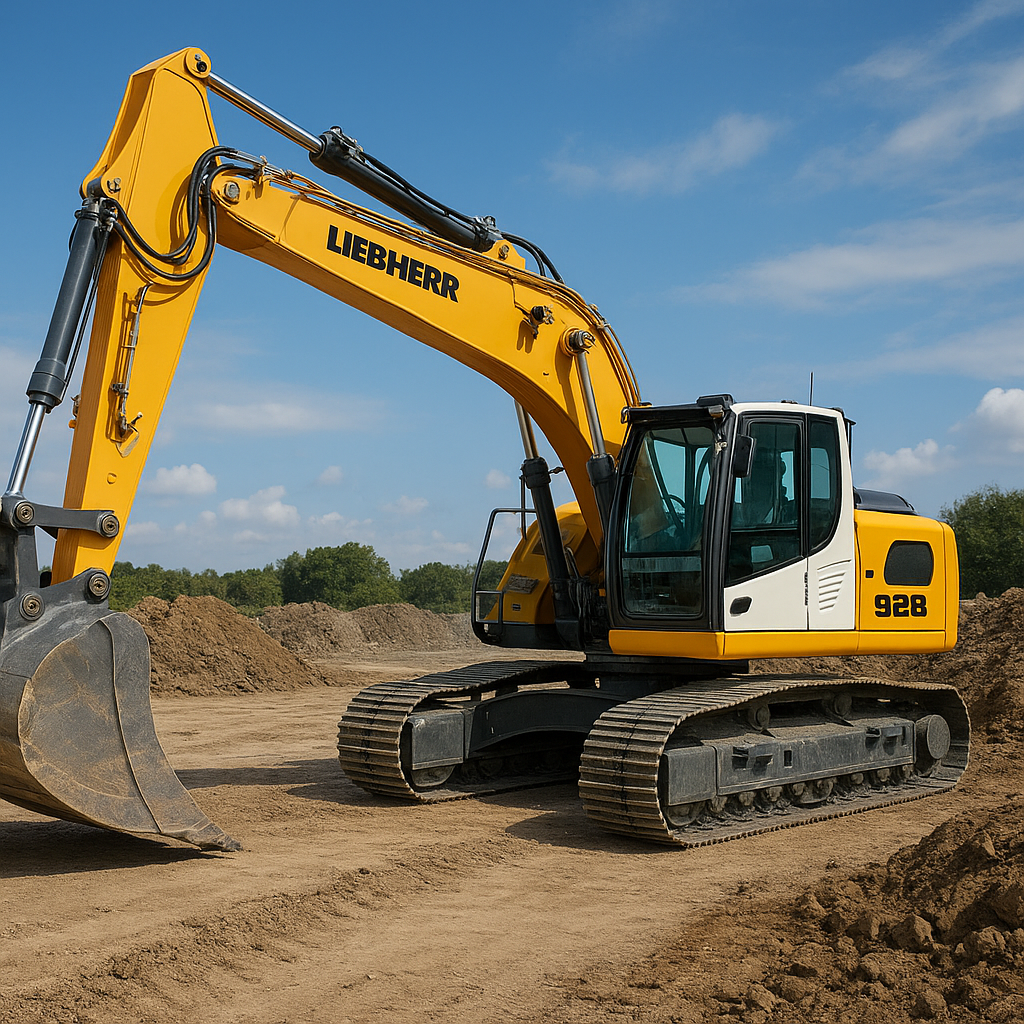
The Liebherr R 926 Compact is a versatile, mid-size crawler excavator designed for demanding work in confined urban and industrial environments. Combining a reduced tail swing with robust lifting and digging capabilities, this model aims to deliver the performance of a full-size machine while retaining the maneuverability of a compact class excavator. In this article we will explore the machine’s main technical features, typical fields of application, operational advantages, and practical considerations for fleet managers, operators and rental companies. You will also find typical performance and fuel consumption figures, attachment options and maintenance tips to help you evaluate the R 926 Compact for specific projects.
Design philosophy and technical overview
The Liebherr R 926 Compact is based on the manufacturer’s concept of a compact radius excavator: a machine that keeps the counterweight within the width of the tracks to reduce the risk of collisions with obstacles and optimize work in tight spaces. This design makes the R 926 Compact particularly suitable for inner-city construction, road rehabilitation and utility installation where space is limited and maneuverability is crucial.
Main components and drivetrain
At the heart of the R 926 Compact is a robust diesel engine coupled with Liebherr’s proven hydraulic systems. Depending on model year and market, the engine power typically falls into the mid-to-high power band for the 20–26 tonne class. The hydraulic system is engineered to provide smooth, coordinated movements between boom, arm and bucket while delivering the lifting capacity expected from machines in this category.
- Hydraulics: Variable-flow load-sensing pumps or efficient piston pumps provide energy where it is needed, improving both responsiveness and fuel economy.
- Undercarriage: Reinforced crawler frames, optional adjustable track widths and heavy-duty sprockets ensure stability on uneven ground and extend component life.
- Cab and controls: Ergonomic layout, adjustable seat, climate control and a modern instrument cluster improve operator comfort and productivity during long shifts.
Typical specifications (approximate)
Specifications vary according to configuration, attachments and market regulations. The figures below are representative ranges to help understand the machine’s class and capabilities:
- Operating weight: approximately 22–26 tonnes (22,000–26,000 kg), depending on undercarriage and counterweight options.
- Engine power: typically in the range of 120–170 kW (160–230 hp), depending on the emission standard and year of manufacture.
- Bucket capacity: commonly 0.9–1.8 m³ for standard earthmoving buckets.
- Maximum digging depth: roughly 6.0–6.8 m with the standard dipper arm, with longer arms available for extended reach.
- Maximum reach: around 9.5–10.5 m at ground level, depending on boom configuration.
- Travel speed: typical travel speeds up to 5–6 km/h in low gear and higher in high gear.
- Fuel consumption: highly variable; typical working consumption is approximately 8–18 L/h depending on load profile and duty cycle.
Note: the R 926 Compact has been offered in different markets with engines meeting regional emission standards (e.g., Stage IIIB, Stage IV, Tier 4 Interim), so exact power and emissions equipment can vary by year and location.
Applications and industries
The R 926 Compact’s combination of power, reach and compact footprint makes it highly adaptable across a wide array of applications. Its primary strengths become apparent in jobs where space constraints, frequent repositioning and diverse attachment use are required.
Urban construction and infrastructure
In inner-city sites where streets are narrow and working adjacent to buildings is common, the machine’s reduced swing radius is a major asset. Typical tasks include:
- Trench excavation for utilities such as water, gas and telecommunications.
- Repair and replacement of sewer and stormwater mains.
- Road surface reconstruction and curb installation.
- Foundations for small-to-medium structures and retaining walls.
Municipal works and landscaping
Municipalities and landscape contractors value the R 926 Compact for tasks like tree-planting, park construction and surface remediation where precision and minimal ground disturbance are important. The machine’s ability to work close to structures without the counterweight overhanging sidewalks reduces the need for traffic diversions.
Demolition and recycling
When equipped with demolition-specific attachments (hydraulic shear, concrete pulverizer, thumb or sorting grapple), the R 926 Compact can undertake selective demolition and material handling in confined industrial yards or urban demolition sites.
Pipeline and utility installation
For pipeline contractors, the balance of digging power and maneuverability makes the machine suitable for trenching in congested right-of-ways, loading spoil, and backfilling. Compact radius machines simplify work near existing services and minimize the chance of striking adjacent infrastructure.
Attachments, versatility and productivity
One of the R 926 Compact’s greatest strengths is the wide range of compatible attachments, which transform the excavator into a multi-purpose tool for various trades. Quick-change couplers reduce downtime between attachment swaps and increase utilisation on mixed-task projects.
- Buckets: general purpose, heavy-duty rock and grading buckets in multiple widths and volumes.
- Hydraulic breakers: for concrete and rock breaking—available in varying sizes for different impact energies.
- Grapples and thumbs: for sorting, demolition and material handling.
- Tilting and rotating couplers/tiltrotators: improve trench profiling, slope work and precise placement without repositioning the whole machine.
- Compaction plates: for trench compaction; vibratory plates or rollers that attach to the arm.
- Hydraulic shears and pulverizers: for selective demolition and processing of concrete structures.
Combining high hydraulic flow and proportional control, the R 926 Compact supports attachments that demand significant oil volume while maintaining smooth control for operator precision. In rental and multi-purpose fleet contexts, this adaptability drives higher utilization and faster return on investment.
Productivity features
Liebherr equips its machines with features designed to increase cycle times and reduce fuel consumption:
- Power management: adaptive engine mapping and hydraulic flow distribution to match power delivery to the task.
- Auto-idle and eco modes: reduce engine speed during idling or light work, saving fuel and reducing noise.
- Regenerative hydraulics: energy recovery during boom lowering can reduce pump load and improve efficiency.
- Work modes: selectable modes for heavy lifting vs. fine grading to optimize hydraulic response.
Operator experience, safety and emissions
Operator comfort and safety are key design priorities in modern excavators, and the R 926 Compact addresses these through cab layout, visibility, and electronic assistance systems.
Cab ergonomics and visibility
- Large glazing and narrow pillars improve sightlines to the work area and attachment tips, which is critical in confined sites.
- Comfort features such as heated, air-suspended seats, adjustable joystick consoles and multi-language displays help reduce fatigue and increase precision.
- Optional camera systems (rear and side cameras) and proximity sensors enhance awareness when working near pedestrians or traffic.
Safety systems
- ROPS/FOPS-certified cab structures protect the operator in rollovers and falling object scenarios.
- Hydraulic locking systems and safe-lock quick couplers reduce the risk of accidental attachment release.
- Load moment indicators, overload warning systems and stability assistants are often available to help prevent tipping or overloading.
- LED work lights and audible alarms increase visibility for night work and busy sites.
Emissions and environmental considerations
Depending on the production year and regional market, the R 926 Compact is offered with engines compliant with various emission standards (for example Stage IIIB, Stage IV or Tier 4 Final equivalents in certain markets). Common environmental features include diesel particulate filters, selective catalytic reduction (SCR) in higher-tier engines and engine-control strategies that minimize consumption. Liebherr’s telematics platform, LiDAT, available as an option on many machines, allows fleet managers to monitor fuel consumption, idle times and maintenance intervals remotely, supporting greener and more cost-effective operations.
Maintenance, reliability and total cost of ownership
Reliability and serviceability are fundamental to minimizing downtime and controlling the total cost of ownership (TCO). The R 926 Compact is engineered for straightforward access to routine service points and for robust component lifetimes under heavy use.
Serviceability
- Grouped service points: filters, fluid checks and battery access are typically grouped for quick daily inspection.
- Robust undercarriage components: sealed pins and bushings, heavy-duty rollers and sprockets extend life under abrasive conditions.
- Accessible hydraulic components: pumps and directional valves are positioned to reduce removal time for major repairs.
Maintenance intervals and recommended practices
Routine maintenance schedules depend on operating conditions, but common recommendations include daily visual inspections, oil and filter changes according to hours of operation, and periodic hydraulic oil and coolant checks. For machines on rental rotation or heavy work cycles, a more frequent preventive maintenance plan reduces the chance of catastrophic failure and keeps machines in service.
Resale and fleet planning
Liebherr machines generally retain solid resale values due to brand reputation, build quality and dealer support. For fleet managers considering purchase vs rental, the R 926 Compact often strikes a balance: it is substantial enough for demanding jobs while still compact enough to serve multiple job types, increasing utilization across projects. Telematics data (fuel use, hours, idle time) helps in making data-driven decisions on replacement cycles and maintenance budgeting.
Practical considerations for procurement and operation
Before acquiring an R 926 Compact, consider the following practical aspects to match the machine to project requirements and ensure optimal lifecycle economics:
- Job profile: define the typical tasks—trenching, lifting, demolition—and choose boom/arm and attachment packages accordingly.
- Transport and access: despite its compact radius, transport permits, axle loads and travel clearance should be verified for urban deliveries.
- Attachments inventory: stocking the right buckets and tools increases the machine’s versatility and reduces on-site delays.
- Operator training: modern electronic and hydraulic features can be maximized with operator training to improve efficiency and reduce wear.
- Warranty and support: evaluate local dealer support, availability of spare parts and optional extended warranties or maintenance contracts.
Economic example (illustrative)
For budgeting purposes, here is a simplified, illustrative example for operating a mid-sized compact excavator like the R 926 Compact in a mixed civil/utility environment:
- Average daily operating hours: 6–8 hours
- Typical fuel consumption: 10–14 L/h → 60–112 L/day
- Maintenance and consumables: variable; plan for scheduled services at 250/500/1000-hour intervals
- Depreciation and financing: dependent on purchase price and resale expectations; rental alternatives often used to avoid capital tie-up
These values should be adjusted to reflect local fuel prices, labor rates and the exact machine specification.
Conclusion and outlook
The Liebherr R 926 Compact occupies an important niche where the need for substantial digging and lifting power intersects with space-constrained environments. Its compact radius design, wide range of attachments, and focus on operator comfort and serviceability make it a flexible choice for contractors, municipal fleets and rental companies. While exact technical specifications can vary between production years and market configurations, the machine typically offers the performance expected of the 20–26 tonne class with design refinements aimed at urban applications.
When considering the R 926 Compact, prioritize a configuration that matches your core tasks, evaluate available service and telematics support, and plan attachment packages that maximize utility across different jobs. Properly matched and well-maintained, the R 926 Compact can be a highly productive and cost-efficient asset in congested work environments where both power and agility are required.
)
)